Kirjojen hintavertailu – 12 859 818 kirjaa ja 27 kauppaa

Kirjailija

Lawrence Freedman

Kirjat ja teokset yhdessä paikassa: 49 kirjaa, julkaisuja vuosilta 1977–2026, suosituimpiin kuuluu Samhälle i kris : vår förmåga till anpassning och omorientering. Vertaile teosten hintoja ja tarkista saatavuus suomalaisista kirjakaupoista.

49 kirjaa

Kirjojen julkaisuvuodet: 1977–2026.

The Future of War: A History

The Future of War: A History

Lawrence Freedman

PublicAffairs
2017
sidottu

Halvin toimitettuna 34,80 €

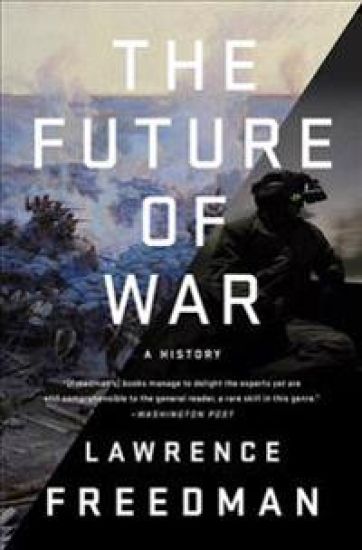
An award-winning military historian, professor, and political adviser delivers the definitive story of warfare in all its guises and applications, showing what has driven and continues to drive this uniquely human form of political violence. Questions about the future of war are a regular feature of political debate, strategic analysis, and popular fiction. Where should we look for new dangers? What cunning plans might an aggressor have in mind? What are the best forms of defense? How might peace be preserved or conflict resolved? From the French rout at Sedan in 1870 to the relentless contemporary insurgencies in Iraq and Afghanistan, Lawrence Freedman, a world-renowned military thinker, reveals how most claims from the military futurists are wrong. But they remain influential nonetheless. Freedman shows how those who have imagined future war have often had an idealized notion of it as confined, brief, and decisive, and have regularly taken insufficient account of the possibility of long wars-hence the stubborn persistence of the idea of a knockout blow, whether through a dashing land offensive, nuclear first strike, or cyberattack. He also notes the lack of attention paid to civil wars until the West began to intervene in them during the 1990s, and how the boundaries between peace and war, between the military, the civilian, and the criminal are becoming increasingly blurred. Freedman's account of a century and a half of warfare and the (often misconceived) thinking that precedes war is a challenge to hawks and doves alike, and puts current strategic thinking into a bracing historical perspective.
The Transformation of Strategic Affairs

The Transformation of Strategic Affairs

Lawrence Freedman

Routledge
2017
sidottu
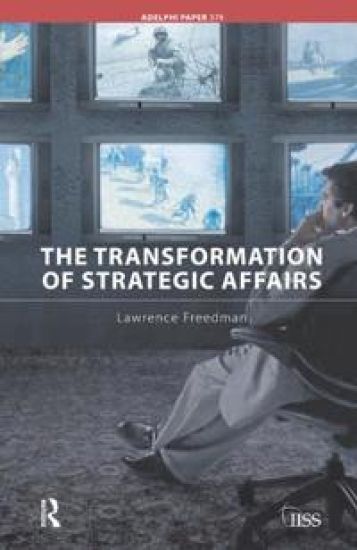
This book analyzes the strategic implications of the shift in focus for the US Armed Forces from regular to irregular war. Lawrence Freedman closely examines the difficulty the US Armed Forces face in shifting their focus from preparing for regular wars, in which combat is separated from civil society, to irregular wars, in which combat is integrated with civil society. He argues that the political context of contemporary irregular wars requires that the purpose and practice of western forces be governed by liberal values, showing that this is also the case with regular wars, to the extent they occur, but it is the integration with civil society that makes the application of liberal values so challenging. The Transformation of Strategic Affairs suggests that this challenge becomes easier to meet when military operations are understood to contribute to the development of a compelling narrative about the likely course and consequence of a conflict, in which
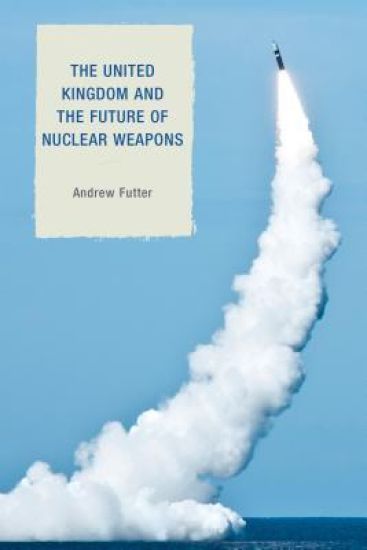
The United Kingdom and the Future of Nuclear Weapons

The United Kingdom and the Future of Nuclear Weapons

Lawrence Freedman

Rowman Littlefield
2016
sidottu
Since 1969, the United Kingdom always has always had one submarine armed with nuclear-tipped ballistic missiles underwater, undetected, in constant communication, ready at a set notice to fire at targets anywhere in the world. This is part of its Trident Programme, which includes the development, procurement, and operation of the current generation of British nuclear weapons, as well as the means to deliver them. Operated by the Royal Navy and based at Clyde Naval Base on Scotland’s west coast, it is the most expensive and most powerful capability of the British military forces. In 2016, the United Kingdom had to decide on whether to go ahead and build the next generation of nuclear submarines that will allow the UK to remain in the nuclear business well into the second half of this century. The book presents the political, cultural, technical, and strategic aspects of Trident to provide a thoughtful overview of the UK’s complex relationship with nuclear weapons. The authors, both scholars and practitioners, bring together diverse perspectives on the issue, discussing the importance of UK nuclear history as well as the political, legal, and diplomatic aspects of UK nuclear weapons—internationally and domestically. Also addressed are the new technical, military, and strategic challenges to the UK nuclear thinking and strategy.
Signals of War

Signals of War

Lawrence Freedman; Virginia Gamba-Stonehouse

Princeton University Press
2016
sidottu
The 1982 Falklands War was not only one of the most extraordinary military confrontations of recent years but also a turning point in the politics of Britain and Argentina. This unusual book makes it possible for us to follow the development of the war from both sides, as two leading experts from the belligerents present an integrated, authoritative, and engrossing account of its origins and course. The work unravels the complex series of events leading to the occupation of the Falkland Islands on April 2, 1982 by Argentine forces and then follows the conflict through to their surrender to the British on June 14. The authors weave together the development of the military confrontation with the attempts by Americans, Peruvians, and the United Nations to help find solutions. Originally published in 1991. The Princeton Legacy Library uses the latest print-on-demand technology to again make available previously out-of-print books from the distinguished backlist of Princeton University Press. These editions preserve the original texts of these important books while presenting them in durable paperback and hardcover editions. The goal of the Princeton Legacy Library is to vastly increase access to the rich scholarly heritage found in the thousands of books published by Princeton University Press since its founding in 1905.
U.S. Intelligence and the Soviet Strategic Threat: Updated Edition
The author examines in detail the organization of the U. S. intelligence community, its attempts to monitor and predict the development of Soviet forces from the early days of the cold war, and how these attempts affected American policy and weapons production. Originally published in 1987. The Princeton Legacy Library uses the latest print-on-demand technology to again make available previously out-of-print books from the distinguished backlist of Princeton University Press. These editions preserve the original texts of these important books while presenting them in durable paperback and hardcover editions. The goal of the Princeton Legacy Library is to vastly increase access to the rich scholarly heritage found in the thousands of books published by Princeton University Press since its founding in 1905.
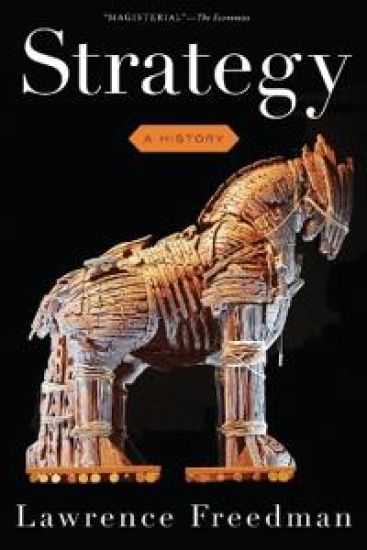
Strategy

Strategy

Lawrence Freedman

Oxford University Press Inc
2015
nidottu

Halvin toimitettuna 30,30 €

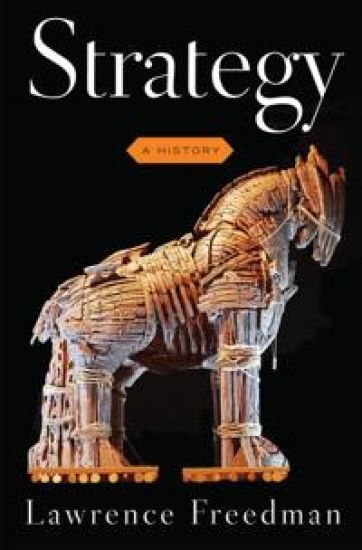
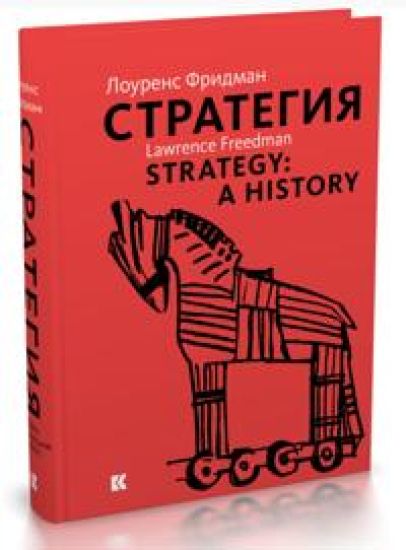
Selected as a Financial Times Best Book of 2013 In Strategy: A History, Sir Lawrence Freedman, one of the world's leading authorities on war and international politics, captures the vast history of strategic thinking, in a consistently engaging and insightful account of how strategy came to pervade every aspect of our lives. The range of Freedman's narrative is extraordinary, moving from the surprisingly advanced strategy practiced in primate groups, to the opposing strategies of Achilles and Odysseus in The Iliad, the strategic advice of Sun Tzu and Machiavelli, the great military innovations of Baron Henri de Jomini and Carl von Clausewitz, the grounding of revolutionary strategy in class struggles by Marx, the insights into corporate strategy found in Peter Drucker and Alfred Sloan, and the contributions of the leading social scientists working on strategy today. The core issue at the heart of strategy, the author notes, is whether it is possible to manipulate and shape our environment rather than simply become the victim of forces beyond one's control. Time and again, Freedman demonstrates that the inherent unpredictability of this environment-subject to chance events, the efforts of opponents, the missteps of friends-provides strategy with its challenge and its drama. Armies or corporations or nations rarely move from one predictable state of affairs to another, but instead feel their way through a series of states, each one not quite what was anticipated, requiring a reappraisal of the original strategy, including its ultimate objective. Thus the picture of strategy that emerges in this book is one that is fluid and flexible, governed by the starting point, not the end point. A brilliant overview of the most prominent strategic theories in history, from David's use of deception against Goliath, to the modern use of game theory in economics, this masterful volume sums up a lifetime of reflection on strategy.
Signals of War

Signals of War

Lawrence Freedman; Virginia Gamba-Stonehouse

Princeton University Press
2014
pokkari
The 1982 Falklands War was not only one of the most extraordinary military confrontations of recent years but also a turning point in the politics of Britain and Argentina. This unusual book makes it possible for us to follow the development of the war from both sides, as two leading experts from the belligerents present an integrated, authoritative, and engrossing account of its origins and course. The work unravels the complex series of events leading to the occupation of the Falkland Islands on April 2, 1982 by Argentine forces and then follows the conflict through to their surrender to the British on June 14. The authors weave together the development of the military confrontation with the attempts by Americans, Peruvians, and the United Nations to help find solutions. Originally published in 1991. The Princeton Legacy Library uses the latest print-on-demand technology to again make available previously out-of-print books from the distinguished backlist of Princeton University Press. These editions preserve the original texts of these important books while presenting them in durable paperback and hardcover editions. The goal of the Princeton Legacy Library is to vastly increase access to the rich scholarly heritage found in the thousands of books published by Princeton University Press since its founding in 1905.
U.s. Intelligence and the Soviet Strategic Threat

U.s. Intelligence and the Soviet Strategic Threat

Lawrence Freedman; Lawrence (FRW) Freedman

Princeton University Press
2014
pokkari
The author examines in detail the organization of the U. S. intelligence community, its attempts to monitor and predict the development of Soviet forces from the early days of the cold war, and how these attempts affected American policy and weapons production. Originally published in 1987. The Princeton Legacy Library uses the latest print-on-demand technology to again make available previously out-of-print books from the distinguished backlist of Princeton University Press. These editions preserve the original texts of these important books while presenting them in durable paperback and hardcover editions. The goal of the Princeton Legacy Library is to vastly increase access to the rich scholarly heritage found in the thousands of books published by Princeton University Press since its founding in 1905.
Strategy

Strategy

Lawrence Freedman

Oxford University Press Inc
2013
sidottu

Halvin toimitettuna 29,70 €

In Strategy: A History, Sir Lawrence Freedman, one of the world's leading authorities on war and international politics, captures the vast history of strategic thinking, in a consistently engaging and insightful account of how strategy came to pervade every aspect of our lives. The range of Freedman's narrative is extraordinary, moving from the surprisingly advanced strategy practiced in primate groups, to the opposing strategies of Achilles and Odysseus in The Iliad, the strategic advice of Sun Tzu and Machiavelli, the great military innovations of Baron Henri de Jomini and Carl von Clausewitz, the grounding of revolutionary strategy in class struggles by Marx, the insights into corporate strategy found in Peter Drucker and Alfred Sloan, and the contributions of the leading social scientists working on strategy today. The core issue at the heart of strategy, the author notes, is whether it is possible to manipulate and shape our environment rather than simply become the victim of forces beyond one's control. Time and again, Freedman demonstrates that the inherent unpredictability of this environment-subject to chance events, the efforts of opponents, the missteps of friends-provides strategy with its challenge and its drama. Armies or corporations or nations rarely move from one predictable state of affairs to another, but instead feel their way through a series of states, each one not quite what was anticipated, requiring a reappraisal of the original strategy, including its ultimate objective. Thus the picture of strategy that emerges in this book is one that is fluid and flexible, governed by the starting point, not the end point. A brilliant overview of the most prominent strategic theories in history, from David's use of deception against Goliath, to the modern use of game theory in economics, this masterful volume sums up a lifetime of reflection on strategy.
NATO in Search of a Vision

NATO in Search of a Vision

Lawrence Freedman

Georgetown University Press
2010
pokkari
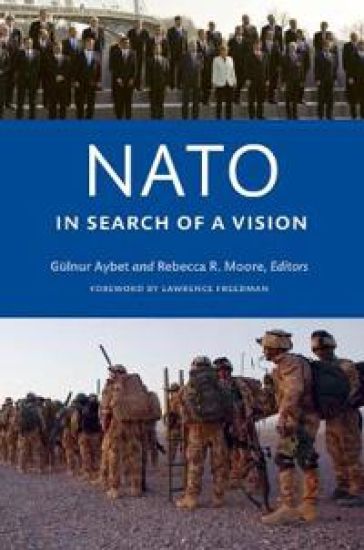
As the NATO Alliance enters its seventh decade, it finds itself involved in an array of military missions ranging from Afghanistan to Kosovo to Sudan. It also stands at the center of a host of regional and global partnerships. Yet, NATO has still to articulate a grand strategic vision designed to determine how, when, and where its capabilities should be used, the values underpinning its new missions, and its relationship to other international actors such as the European Union and the United Nations. The drafting of a new strategic concept, begun during NATO's 60th anniversary summit, presents an opportunity to shape a new transatlantic vision that is anchored in the liberal democratic principles so crucial to NATO's successes during its Cold War years. Furthermore, that vision should be focused on equipping the Alliance to anticipate and address the increasingly global and less predictable threats of the post-9/11 world. This volume brings together scholars and policy experts from both sides of the Atlantic to examine the key issues that NATO must address in formulating a new strategic vision. With thoughtful and reasoned analysis, it offers both an assessment of NATO's recent evolution and an analysis of where the Alliance must go if it is to remain relevant in the twenty-first century.
A Choice of Enemies

A Choice of Enemies

Lawrence Freedman

PublicAffairs,U.S.
2009
pokkari
It is in the Middle East that the U. S. has been made to confront its attitudes on the use of force, the role of allies, and international law. The history of the U. S. in the Middle East, then, becomes an especially revealing mirror on America's view of its role in the wider world. In this wise, objective, and illuminating history, Lawrence Freedman shows how three key events in 1978-1979 helped establish the foundations for U. S. involvement in the Middle East that would last for thirty years, without offering any straightforward or bloodless exit options: the Camp David summit leading to the Israel-Egypt Treaty the Iranian Islamic revolution leading to the Shah's departure followed by the hostage crisis and the socialist revolution in Afghanistan, resulting in the doomed Soviet intervention. Drawing on his considerable expertise, Freedman makes clear how America's strategic choices in those and subsequent crises led us to where we are today.
A Choice Of Enemies

A Choice Of Enemies

Lawrence Freedman

Weidenfeld Nicolson
2009
nidottu
Prize-winning historian Lawrence Freedman takes an exceptionally clear-eyed look at America's strategic predicament in the Middle East, over the past 30 years. The United States is locked into three prolonged conflicts without much hope of early resolution. Iran is pursuing a nuclear programme; the aftermath of the overthrow of Saddam Hussein has seen unrelenting intercommunal violence; and the Taliban have got back into Afghanistan. Lawrence Freedman teases out the roots of each engagement over the last thirty years and demonstrates with clarity and scholarship the influence of these conflicts upon each other. The story is complex and often marked by great drama. First, the countries in dispute with America are not themselves natural allies; second, their enmity was not, at first, America's choice. Third, the region's problems cannot all be traced to the Arab-Israeli dispute. Unique in its focus, this book will offer not only new revelations but also remind us of what has been forgotten or has never been put in context.
The Official History of the Falklands Campaign, Volume 2
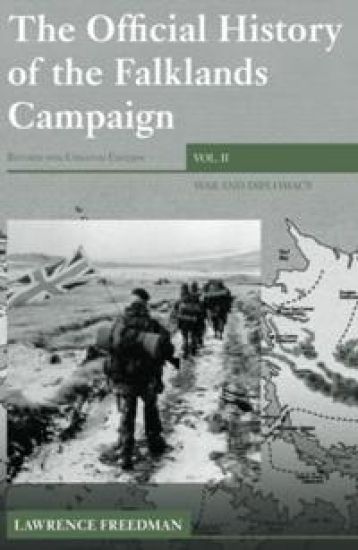
In the second volume of his official history of the Falklands Campaign, Lawrence Freedman provides a detailed and authoritative account of one of the most extraordinary periods in recent British political history and a vivid portrayal of a government at war. After the shock of the Argentine invasion of the Falklands in April 1982, Margaret Thatcher faced the crisis that came to define her premiership as she determined to recover the islands. The book covers all aspects of the campaign - economic and diplomatic as well as military - demonstrating the extent of the gamble that the government took. There are important accounts of the tensions in relations with the United States, concerns among the military commanders about the risks they were expected to take, the problems of dealing with the media and the attempts to reach a negotiated settlement. This definitive account describes in dramatic detail events such as the sinking of the Belgrano, the Battle of Goose Green and the final push to Stanley. Special attention is also paid to the aftermath of the war, including the various enquiries, and the eventual restoration of diplomatic relations with Argentina. This paperback edition has been updated, corrected and contains some new material.
Strategija. Vojna, revoljutsija, biznes

Strategija. Vojna, revoljutsija, biznes

Lawrence Freedman

Kuchkovo Pole
2006
sidottu
Kniga Lourensa Fridmana (r. 1948), professora voennykh issledovanij Korolevskogo kolledzha Londona schitaetsja luchshim posobiem po strategii poslednego desjatiletija. Eto blestjaschij analiz strategii kak politicheskogo, voennogo i ekonomicheskogo metoda planirovanija. Otkryvaja knigu slovami Majka Tajsona - "Plan est u kazhdogo - poka on ne poluchit v cheljust", - Fridman razvivaet povestvovanie o prodvinutom povedenii primatov i generalnom protivopostavlenii sily i khitrosti, "Iliady" i "Odissei" u drevnikh grekov. Gerojami knigi Fridmana stanovjatsja biblejskie David i Goliaf, miltonovskij Satana, Sun Tszy i Makiavelli, a takzhe general napoleonovskoj armii Anri de Zhomini i prusskij voenachalnik Karl fon Klauzevits, voevavshij za russkikh pri Borodino. Kniga Klauzevitsa "O vojne" (1830) okazyvaetsja olitsetvoreniem idej, protiv kotorykh vystupaet Lev Tolstoj, imenuemyj Fridmanom "antistrategom". Karl Marks, Aleksandr Gertsen i Mikhail Bakunin kak geroi glavy "Strategii snizu" oboznachajut revoljutsionnye podkhody v klassovoj borbe, a biznes i menedzhment opisyvajutsja novejshimi teorijami igr, bikheviorizmom i drugimi primerami, demonstrirujuschimi predely ratsionalnogo vybora. Tak, cherez mify i kanony, istoriju vojn i politiku Fridman prikhodit k obschej teorii stratagem i stsenariev, aktualnykh v sovremennoj sotsiologii, kinematografe i biznese.
The Transformation of Strategic Affairs

The Transformation of Strategic Affairs

Lawrence Freedman

Routledge
2006
nidottu
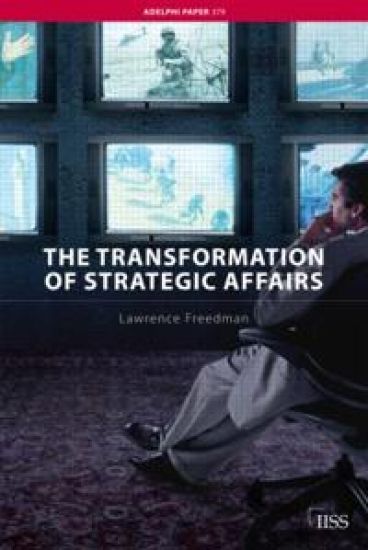
This book analyzes the strategic implications of the shift in focus for the US Armed Forces from regular to irregular war. Lawrence Freedman closely examines the difficulty the US Armed Forces face in shifting their focus from preparing for regular wars, in which combat is separated from civil society, to irregular wars, in which combat is integrated with civil society. He argues that the political context of contemporary irregular wars requires that the purpose and practice of western forces be governed by liberal values, showing that this is also the case with regular wars, to the extent they occur, but it is the integration with civil society that makes the application of liberal values so challenging. The Transformation of Strategic Affairs suggests that this challenge becomes easier to meet when military operations are understood to contribute to the development of a compelling narrative about the likely course and consequence of a conflict, in which these values are shown to be respected. At the same time, however, while it is vital that the employment of armed force remains sensitive at all times to the underlying political context, and sensitive to the role of narratives in shaping this context, the book shows that a key test of success will always be the defeat of the opposing forces. The ‘war on terror’ has highlighted these issues, and this Adelphi Paper concludes with much-needed suggestions for a strategic response. This book will be of great interest to students of the US Armed Forces, politics, strategic studies and military history.
The Official History of the Falklands Campaign, Volume 2
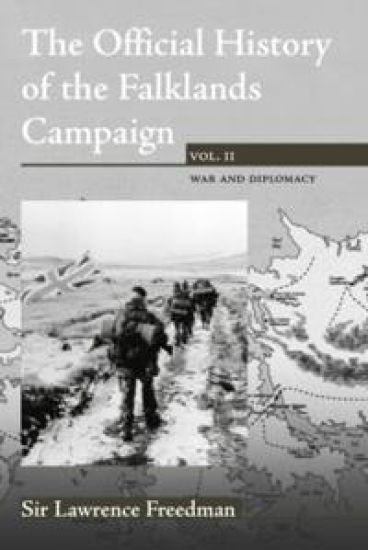
In this official history of the Falklands Campaign, Lawrence Freedman provides a detailed and authoritative account of one of the most extraordinary periods in recent British political history and a vivid portrayal of a government at war. After the shock of the Argentine invasion of the Falklands in April 1982, Margaret Thatcher faced the crisis that came to define her premiership as she determined to recover the islands. Freedman covers all aspects of the campaign - economic and diplomatic as well as military - and demonstrates the extent of the gamble that the government took. There are important accounts of the tensions in relations with the United States, concerns among the military commanders about the risks they were expected to take, the problems of dealing with the media and the attempts to reach a negotiated settlement. This definitive account describes in dramatic detail events such as the sinking of the Belgrano, the battle of Goose Green and the final push to Stanley. Special attention is also paid to the aftermath of the war, including the various enquiries, and the eventual restoration of diplomatic relations with Argentina.
The Official History of the Falklands Campaign, Volume 1
Drawing on a vast range of previously classified government archives as well as interviews with key participants, this first volume of the official history of the Falklands Campaign is the most authoritative account of the origins of the 1982 war. In the first chapters the author analyzes the long history of the dispute between Argentina and Britain over the sovereignty of the Islands, the difficulties faced by successive governments in finding a way to reconcile the opposed interests of the Argentines and the islanders, and the constant struggle to keep the Islands viable. He subsequently gives a complete account of how what started as an apparently trivial incident over an illegal landing by scrap-metal merchants on the island of South Georgia turned into a major crisis. Thanks to his access to classified material, Lawrence Freedman has been able to produce a detailed and authoritative analysis which extends the coverage given by the Franks Committee Report of 1983. This volume is ultimately an extremely readable account of these events, charting the growing realization within the British government of the seriousness of the situation, culminating in the Argentine invasion of the Falkland Islands at the start of April 1982.
Deterrence

Deterrence

Lawrence Freedman

Polity Press
2004
nidottu

Halvin toimitettuna 29,80 €

As a concept, deterrence has launched a thousand books and articles. It has dominated Western strategic thinking for more than four decades. In this important and groundbreaking new book, Lawrence Freedman develops a distinctive approach to the evaluation of deterrence as both a state of mind and a strategic option. This approach is applied to post-cold war crisis management, and the utility and relevance of the concept is addressed in relation to US strategic practice post-9/11, particularly in the light of the apparent preference of the Bush Administration for the alternative concept of pre-emption. The study of deterrence has been hampered by the weight of the intellectual baggage accumulated since the end of the Second World War. Exaggerated notions of what deterrence might achieve were developed, only to be to knocked down by academic critique. In this book, Freedman charts the evolution of the contemporary concept of deterrence, and discusses whether - and how - it still has relevance in today's world. He considers constructivist as well as realist approaches and draws on criminological as well as strategic studies literature to develop a concept of a norms-based, as opposed to an interest-based, deterrence. This book will be essential reading for students of politics and international relations as well as all those interested in contemporary strategic thought.
Deterrence

Deterrence

Lawrence Freedman

Polity Press
2004
sidottu
As a concept, deterrence has launched a thousand books and articles. It has dominated Western strategic thinking for more than four decades. In this important and groundbreaking new book, Lawrence Freedman develops a distinctive approach to the evaluation of deterrence as both a state of mind and a strategic option. This approach is applied to post-cold war crisis management, and the utility and relevance of the concept is addressed in relation to US strategic practice post-9/11, particularly in the light of the apparent preference of the Bush Administration for the alternative concept of pre-emption. The study of deterrence has been hampered by the weight of the intellectual baggage accumulated since the end of the Second World War. Exaggerated notions of what deterrence might achieve were developed, only to be to knocked down by academic critique. In this book, Freedman charts the evolution of the contemporary concept of deterrence, and discusses whether - and how - it still has relevance in today's world. He considers constructivist as well as realist approaches and draws on criminological as well as strategic studies literature to develop a concept of a norms-based, as opposed to an interest-based, deterrence. This book will be essential reading for students of politics and international relations as well as all those interested in contemporary strategic thought.