Kirjailija
Lawrence Friedman
Kirjat ja teokset yhdessä paikassa: 27 kirjaa, julkaisuja vuosilta 1988–2026, suosituimpiin kuuluu Mind and Meaning. Vertaile teosten hintoja ja tarkista saatavuus suomalaisista kirjakaupoista.
27 kirjaa
Kirjojen julkaisuvuodet: 1988–2026.

The Law of American State Constitutions
Robert F. Williams; Lawrence Friedman
OXFORD UNIVERSITY PRESS INC
2023
sidottu
The second edition of The Law of American State Constitutions provides complete coverage of the legal doctrines surrounding, applying to, and arising from American state constitutions and their judicial interpretation. Drawing on examples from specific states, Professors Williams and Friedman analyze the nature and function of state constitutions in contrast to the federal Constitution, including rights, separation of powers, issues of interpretation, and the processes for amendment and revision. In this edition, Williams and Friedman focus on recent developments, including the state constitutional dimensions of same-sex marriage and the reaction of state courts to U. S. Supreme Court decision making. This edition of The Law of American State Constitutions remains an important analytical tool that explains the unique character and the range of interpretive approaches to these constitutions. It covers the structure of state governments under state constitutions as well as the distribution of powers among the legislative, executive, and judicial branches. Like the first edition, this edition presents a complete picture of state constitutional law and the attributes and features that make this body of law so distinctive.
Freud's Papers on Technique and Contemporary Clinical Practice
Lawrence Friedman
CRC Press Inc
2018
nidottu
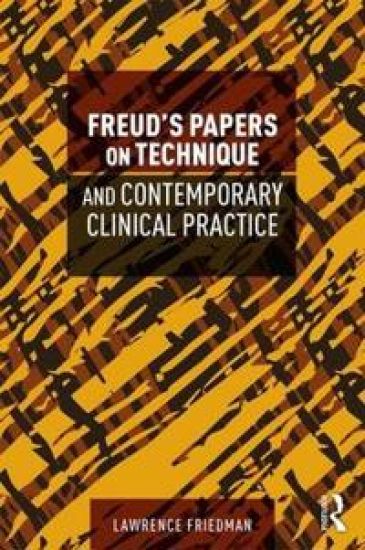
Freud’s Papers on Technique is usually treated as an assemblage of papers featuring a few dated rules of conduct that are either useful in some way, or merely customary, or bullying, arbitrary and presumptuous. Lawrence Friedman reveals Papers on Technique to be nothing of the sort. Freud’s book, he argues, is nothing less than a single, consecutive, real-time, log of Freud’s painful discovery of a unique mind-set that can be produced in patients by a certain stance of the analyst. What people refer to as "the rules", such as anonymity, neutrality and abstinence, are the lessons Freud learned from painful experience when he tried to reproduce the new, free mind-set. Friedman argues that one can see Freud making this empirical discovery gradually over the sequence of papers. He argues that we cannot understand the famous images, such the analyst-as-surgeon, or mirror, without seeing how they figure in this series of experiments. Many of the arguments in the profession turn out to be unnecessary once this is grasped. Freud’s book is not a book of rules but a description of what happens if one does one thing or another; the choice is the therapist’s, as is the choice to use them together to elicit the analytic experience. In the light of this understanding, Friedman discusses aspects of treatments that are guided by these principles, such as enactment, the frame, what lies beyond interpretation, the kind of tensions that are set up between analyst and patient, the question of special analytic love, the future of analytic technique, and a possible basis for defining Freudian psychoanalysis. Finally, he makes concrete suggestions for teaching the Papers on Technique. Freud's Papers on Technique and Contemporary Clinical Practice will appeal to all psychoanalysts and psychoanalytic psychotherapists concerned about the empirical basis of their customary procedures and the future of their craft.
Freud's Papers on Technique and Contemporary Clinical Practice
Lawrence Friedman
CRC Press Inc
2018
sidottu
Freud’s Papers on Technique is usually treated as an assemblage of papers featuring a few dated rules of conduct that are either useful in some way, or merely customary, or bullying, arbitrary and presumptuous. Lawrence Friedman reveals Papers on Technique to be nothing of the sort. Freud’s book, he argues, is nothing less than a single, consecutive, real-time, log of Freud’s painful discovery of a unique mind-set that can be produced in patients by a certain stance of the analyst. What people refer to as "the rules", such as anonymity, neutrality and abstinence, are the lessons Freud learned from painful experience when he tried to reproduce the new, free mind-set. Friedman argues that one can see Freud making this empirical discovery gradually over the sequence of papers. He argues that we cannot understand the famous images, such the analyst-as-surgeon, or mirror, without seeing how they figure in this series of experiments. Many of the arguments in the profession turn out to be unnecessary once this is grasped. Freud’s book is not a book of rules but a description of what happens if one does one thing or another; the choice is the therapist’s, as is the choice to use them together to elicit the analytic experience. In the light of this understanding, Friedman discusses aspects of treatments that are guided by these principles, such as enactment, the frame, what lies beyond interpretation, the kind of tensions that are set up between analyst and patient, the question of special analytic love, the future of analytic technique, and a possible basis for defining Freudian psychoanalysis. Finally, he makes concrete suggestions for teaching the Papers on Technique. Freud's Papers on Technique and Contemporary Clinical Practice will appeal to all psychoanalysts and psychoanalytic psychotherapists concerned about the empirical basis of their customary procedures and the future of their craft.

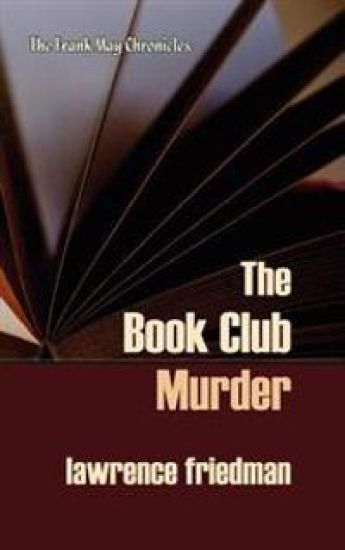
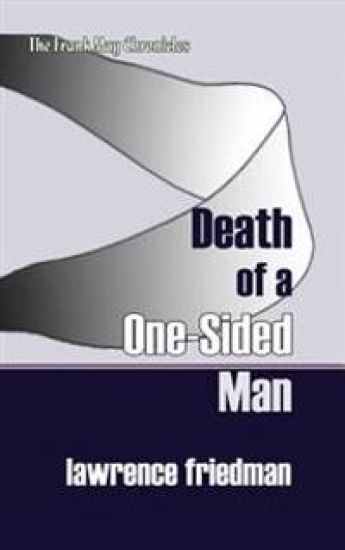
Frank May's law practice is mostly estate planning. Nothing is further from his mind than murder ... but mysterious deaths somehow seem to pursue him anyway. This time, it's the body of a woman, murdered and hidden on the grounds of the home in Los Altos Hills, California, owned by a new, young client, Freddy Lucas. Freddy was adopted by a couple who disappeared in the Amazon jungle; he was raised by his immensely rich great-aunt, Clara Fisk, who left him most of her money - but who also left a sizable gift to Freddy's mother, if she turned out to be alive. Many women come out of the woodwork to claim this fortune. One of them, with the most plausible story, becomes the murder victim. Who on earth could have killed her, and why? And what role, if any, was played by Aunt Clara's sensational diary, which seemed to describe yet another murder? Almost in spite of himself, Frank seeks to find the solution to this tangled affair. Part of the series The Frank May Chronicles, by Stanford Law Professor Lawrence Friedman and from Quid Pro Books.

The Case for Congress: Separation of Powers and the War on Terror examines the constitutional relationship between Congress and the President in the post-September 11 world, arguing that Congress should exercise its legitimate authority in guiding United States policy. While many commentators have focused on the extent of the President's national security and foreign affairs authority, both domestically and abroad, this title focuses on the constitutional authority of Congress to serve as a check on executive power. As a national consensus has developed around the notion that the Bush administration made grave errors in its policy decisions, a reminder of the leading role that Congress can play in those decisions is particularly appropriate. Unlike scholarly work devoted either to detailing or criticizing the Bush administration's policy decisions, this accessible and balanced book focuses on the policies themselves, and on the way in which Congress can influence those policies for the better. The authors further offer specific and useful recommendations for legislative measures that may correct existing policy deficiencies and promote sounder decision-making in the area of national security and foreign affairs.


In this newly revised work, Lawrence Friedman presents a comprehensive and accessible survey of New Hampshire constitutional history and constitutional law. One of the oldest written constitutions in the United States, the New Hampshire Constitution pre-dates the federal constitution and, with the Massachusetts Constitution, served as a model for many of the state constitutions that followed. This volume recounts the history of its drafting and development over the past 200 years and reviews in detail both the constitutional provisions that frame the state government as well as those that secure individual rights against government infringement. The book reviews the major cases decided under each provision and provides commentary on the continued development of state constitutional law in New Hampshire. The second edition provides revisions throughout the book updating each commentary with the latest cases including those involving the state constitutional right to education, along with cutting-edge issues of search and seizure law, making it the most comprehensive, single-volume guide to the New Hampshire Constitution. The Oxford Commentaries on the State Constitutions of the United States is an important series that reflects a renewed international interest in constitutional history and provides expert insight into each of the 50 state constitutions. Each volume in this innovative series contains a historical overview of the state's constitutional development, a section-by-section analysis of its current constitution, and a comprehensive guide to further research. Under the expert editorship of Professor G. Alan Tarr, Director of the Center on State Constitutional Studies at Rutgers University, this series provides essential reference tools for understanding state constitutional law. Books in the series can be purchased individually or as part of a complete set, giving readers unmatched access to these important political documents.
Over the past decades, Lawrence Friedman has emerged as one of the most erudite and provocative theoriss in contemporary psychotherapy. The Anatomy of Psychotherapy interweaves Friedman's major contributions to the analytic and psychiatric literature with extensive new material in arriving at an extraordinarily rich and nuanced appreciation of psychotherapy. The Anatomy of Psychotherapy describes how the therapist makes use of theories and styles in order to achieve equilibrium under stress. This stress, according to Friedman, is related to the "absolute ambiguity" that is essential to psychotherapy. To cope with this ambiguity, the therapist alternates among three different roles, those of reader, historian, and pragmatic operator. Friedman examines these "disambiguating postures" in detail, paying special attention to their bearing on the therapist's narrative prejudice, the relativity of his knowledge, and the relationship of his work to natural science and hermeneutics. Brilliantly constructed and masterfully written, The Anatomy of Psychotherapy traverses the same basic themes in each of its six sections. Readers who are interested in theory can hone in on relevant topics or the work of particular theorists. Readers seeking insight into the demands of daily clinical work, on the other hand, can bypass the systematic studies and immerse themselves in Friedman's engrossing reflections on the experience of psychotherapy. Best served will be those who ponder Friedman's writings and therapy as complementary meditations issuing from a single, unifying vision, one in which psychotherapy, in both its promise and frustrations, becomes a subtle interplay among theories about psychotherapy, the personal styles of psychotherapists, and the practical exigencies of aiding those in distress.
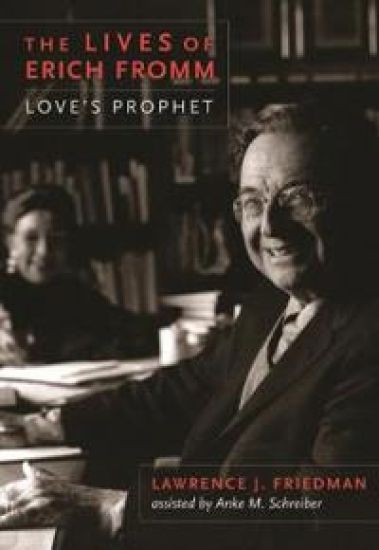
Erich Fromm was a political activist, psychologist, psychoanalyst, philosopher, and one of the most important intellectuals of the twentieth century. Known for his theories of personality and political insight, Fromm dissected the sadomasochistic appeal of brutal dictators while also eloquently championing love-which, he insisted, was nothing if it did not involve joyful contact with others and humanity at large. Admired all over the world, Fromm continues to inspire with his message of universal brotherhood and quest for lasting peace. The first systematic study of Fromm's influences and achievements, this biography revisits the thinker's most important works, especially Escape from Freedom and The Art of Loving, which conveyed important and complex ideas to millions of readers. The volume recounts Fromm's political activism as a founder and major funder of Amnesty International, the National Committee for a Sane Nuclear Policy, and other peace groups. Consulting rare archival materials across the globe, Lawrence J. Friedman reveals Fromm's support for anti-Stalinist democratic movements in Central and Eastern Europe and his efforts to revitalize American democracy. For the first time, readers learn about Fromm's direct contact with high officials in the American government on matters of war and peace while accessing a deeper understanding of his conceptual differences with Freud, his rapport with Neo-Freudians like Karen Horney and Harry Stack Sullivan, and his association with innovative artists, public intellectuals, and world leaders. Friedman elucidates Fromm's key intellectual contributions, especially his innovative concept of "social character," in which social institutions and practices shape the inner psyche, and he clarifies Fromm's conception of love as an acquired skill. Taking full stock of the thinker's historical and global accomplishments, Friedman portrays a man of immense authenticity and spirituality who made life in the twentieth century more humane than it might have been.

Operations Research: Methods and Problems
Maurice Sasieni; Arthur Yaspan; Lawrence Friedman
Literary Licensing, LLC
2013
nidottu
Operations Research: Methods and Problems
Maurice Sasieni; Arthur Yaspan; Lawrence Friedman
Literary Licensing, LLC
2013
sidottu
Operations Research: Methods and Problems is a comprehensive textbook that provides an in-depth understanding of the principles, techniques, and applications of operations research. Written by Maurice Sasieni, an eminent scholar in the field of operations research, the book covers a wide range of topics, including linear programming, network analysis, queuing theory, simulation, decision analysis, and game theory. The book is divided into three parts. Part I provides an introduction to operations research and discusses the basic concepts and techniques used in the field. Part II covers the various methods and models used in operations research, including linear programming, network analysis, and queuing theory. Part III presents a range of problems and case studies that illustrate the practical applications of operations research in various fields, such as transportation, manufacturing, and healthcare. The book is written in a clear and concise manner, making it accessible to readers with a basic understanding of mathematics. It includes numerous examples, exercises, and case studies that help readers develop their problem-solving skills and apply the concepts and techniques learned in the book. Overall, Operations Research: Methods and Problems is an essential resource for students, researchers, and practitioners in the field of operations research. It provides a comprehensive overview of the subject and equips readers with the knowledge and skills needed to solve complex problems in various domains. This scarce antiquarian book is a facsimile reprint of the old original and may contain some imperfections such as library marks and notations. Because we believe this work is culturally important, we have made it available as part of our commitment for protecting, preserving, and promoting the world's literature in affordable, high quality, modern editions, that are true to their original work.
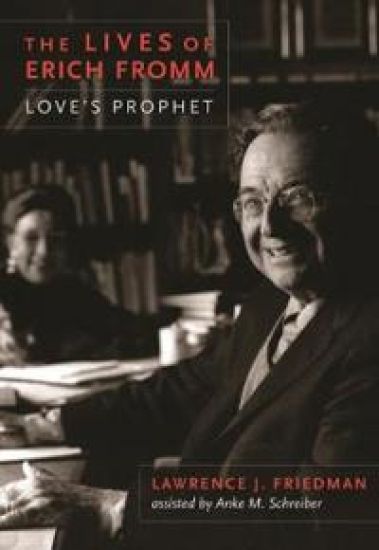
Erich Fromm was a political activist, psychologist, psychoanalyst, philosopher, and one of the most important intellectuals of the twentieth century. Known for his theories of personality and political insight, Fromm dissected the sadomasochistic appeal of brutal dictators while also eloquently championing love-which, he insisted, was nothing if it did not involve joyful contact with others and humanity at large. Admired all over the world, Fromm continues to inspire with his message of universal brotherhood and quest for lasting peace. The first systematic study of Fromm's influences and achievements, this biography revisits the thinker's most important works, especially Escape from Freedom and The Art of Loving, which conveyed important and complex ideas to millions of readers. The volume recounts Fromm's political activism as a founder and major funder of Amnesty International, the National Committee for a Sane Nuclear Policy, and other peace groups. Consulting rare archival materials across the globe, Lawrence J. Friedman reveals Fromm's support for anti-Stalinist democratic movements in Central and Eastern Europe and his efforts to revitalize American democracy. For the first time, readers learn about Fromm's direct contact with high officials in the American government on matters of war and peace while accessing a deeper understanding of his conceptual differences with Freud, his rapport with Neo-Freudians like Karen Horney and Harry Stack Sullivan, and his association with innovative artists, public intellectuals, and world leaders. Friedman elucidates Fromm's key intellectual contributions, especially his innovative concept of "social character," in which social institutions and practices shape the inner psyche, and he clarifies Fromm's conception of love as an acquired skill. Taking full stock of the thinker's historical and global accomplishments, Friedman portrays a man of immense authenticity and spirituality who made life in the twentieth century more humane than it might have been.