Kirjojen hintavertailu – 12 903 724 kirjaa ja 27 kauppaa

Kirjailija

Lawrence M. Friedman

Kirjat ja teokset yhdessä paikassa: 31 kirjaa, julkaisuja vuosilta 1998–2026, suosituimpiin kuuluu Fundamentals of Clinical Trials. Vertaile teosten hintoja ja tarkista saatavuus suomalaisista kirjakaupoista.

Nimi esiintyy myös muodoissa: Lawrence M Friedman

31 kirjaa

Kirjojen julkaisuvuodet: 1998–2026.

Fundamentals of Clinical Trials

Fundamentals of Clinical Trials

Lawrence M. Friedman; Curt D. Furberg; David L. DeMets; David M. Reboussin; Christopher B. Granger

Springer International Publishing AG
2015
sidottu
This is the fifth edition of a very successful textbook on clinical trials methodology, written by recognized leaders who have long and extensive experience in all areas of clinical trials. The three authors of the first four editions have been joined by two others who add great expertise. A chapter on regulatory issues has been included and the chapter on data monitoring has been split into two and expanded. Many contemporary clinical trial examples have been added. There is much new material on adverse events, adherence, issues in analysis, electronic data, data sharing and international trials. This book is intended for the clinical researcher who is interested in designing a clinical trial and developing a protocol. It is also of value to researchers and practitioners who must critically evaluate the literature of published clinical trials and assess the merits of each trial and the implications for the care and treatment of patients. The authors use numerous examplesof published clinical trials to illustrate the fundamentals. The text is organized sequentially from defining the question to trial closeout. One chapter is devoted to each of the critical areas to aid the clinical trial researcher. These areas include pre-specifying the scientific questions to be tested and appropriate outcome measures, determining the organizational structure, estimating an adequate sample size, specifying the randomization procedure, implementing the intervention and visit schedules for participant evaluation, establishing an interim data and safety monitoring plan, detailing the final analysis plan and reporting the trial results according to the pre-specified objectives. Although a basic introductory statistics course is helpful in maximizing the benefit of this book, a researcher or practitioner with limited statistical background would still find most if not all the chapters understandable and helpful. While the technical material has been kept to aminimum, the statistician may still find the principles and fundamentals presented in this text useful.

Fundamentals of Clinical Trials

Fundamentals of Clinical Trials

Lawrence M. Friedman; Curt D. Furberg; David L. DeMets; David M. Reboussin; Christopher B. Granger

Springer International Publishing AG
2015
nidottu

Halvin toimitettuna 64,50 €

This is the fifth edition of a very successful textbook on clinical trials methodology, written by recognized leaders who have long and extensive experience in all areas of clinical trials. The three authors of the first four editions have been joined by two others who add great expertise. A chapter on regulatory issues has been included and the chapter on data monitoring has been split into two and expanded. Many contemporary clinical trial examples have been added. There is much new material on adverse events, adherence, issues in analysis, electronic data, data sharing and international trials. This book is intended for the clinical researcher who is interested in designing a clinical trial and developing a protocol. It is also of value to researchers and practitioners who must critically evaluate the literature of published clinical trials and assess the merits of each trial and the implications for the care and treatment of patients. The authors use numerous examplesof published clinical trials to illustrate the fundamentals. The text is organized sequentially from defining the question to trial closeout. One chapter is devoted to each of the critical areas to aid the clinical trial researcher. These areas include pre-specifying the scientific questions to be tested and appropriate outcome measures, determining the organizational structure, estimating an adequate sample size, specifying the randomization procedure, implementing the intervention and visit schedules for participant evaluation, establishing an interim data and safety monitoring plan, detailing the final analysis plan and reporting the trial results according to the pre-specified objectives. Although a basic introductory statistics course is helpful in maximizing the benefit of this book, a researcher or practitioner with limited statistical background would still find most if not all the chapters understandable and helpful. While the technical material has been kept to aminimum, the statistician may still find the principles and fundamentals presented in this text useful.

Law, Science, and Technology

Law, Science, and Technology

Lawrence M. Friedman

Bloomsbury Publishing Plc
2026
Nidottu
Through a series of historical analyses, Friedman explores the relationship between the legal system and the development of modern science and technology. The scientific revolution produced major changes in culture; and these in turn led to changes in government and law. The book covers, among other topics, the transportation revolution; the camera and the entertainment industry; the “germ theory” and its influence on modern society; and the role of culture and technology in the sexual revolution.
The Crime Conundrum

The Crime Conundrum

Lawrence M Friedman; George Fisher

TAYLOR FRANCIS LTD
2024
nidottu
There may be areas of human life in which people have profited from understanding history, but criminal justice is definitely not one of them. In this field, each generation seems to undo the last generation's reforms. Each generation resurrects old failures and trots them out as new. A previous generation hailed indeterminate sentencing as a great
Personal Identity in the Modern World

Personal Identity in the Modern World

Lawrence M. Friedman

ROWMAN LITTLEFIELD
2024
nidottu
In a society of strangers, there develops what can be called crimes of mobility -- forms of criminality rare in traditional societies: bigamy, the confidence game, and blackmail, for example. What they have in common is a kind of fraudulent role-playing, which the new society makes possible. This book explores the social and legal consequences of social and geographical mobility in the United States and Great Britain from the beginning of the 19th century on. Personal identity became more fluid. Lines between classes blurred. Impostors abound.
The Walled Garden

The Walled Garden

Lawrence M. Friedman; Joanna L. Grossman

ROWMAN LITTLEFIELD
2024
nidottu
Privacy, in human history, is a relatively recent concept. Nobody had much privacy in the Middle Ages. Even kings and queens lacked privacy: it was an age when crowds watched a queen give birth, and the king received visitors while on the chamber pot. Technology and concepts of privacy grew up together—as both friends and enemies. For example, the late 19th century invention of the candid camera made it possible, for the first time, to take someone’s picture without that person’s consent. This fact was in the background of the classic article by Warren and Brandeis that launched the right of privacy. Today, we have smart phones with cameras, selfies, the Internet, surveillance cameras, and tools that can look through walls, smell through walls, see through walls. Dangers to privacy have multiplied enormously, and we have only just begin figuring how to handle the change. This book is timely as our basic understandings of privacy are challenged by modern technology, changing social mores, and evolving legal understandings that both reflect and reinforce underlying changes in society. It is likely to be of interest to graduate and undergraduate students, scholars, and potentially other professionals with an interest in law and social norms.
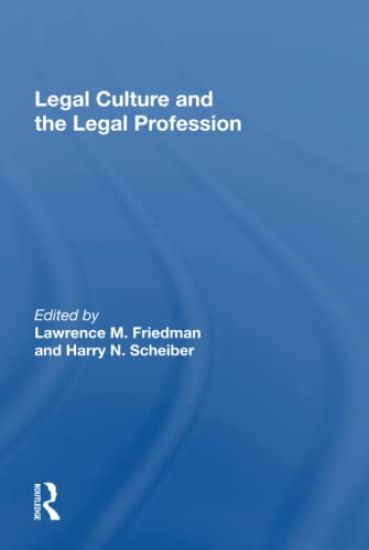
Legal Culture And The Legal Profession

Legal Culture And The Legal Profession

Lawrence M Friedman

TAYLOR FRANCIS LTD
2023
nidottu
Distinguished scholars in law and the social sciences examine the state of American legal culture, particularly adversarial legalism, in light of the criticisms of the current anti-lawyer movement. They assess the strengths and weaknesses of this culture, its impact on the broader society, and its recent spread to other countries. The American legal system is under heavy attack for the impact it is supposed to have on American culture and society generally. A common complaint of the anti-lawyer movement is that under the influence of lawyers we have become a litigious society, in the process undermining traditional American values such as self-reliance and responsibility. In this volume a group of distinguished scholars in law and the social sciences explores these questions. Neither an apology for lawyers nor a critique, Legal Culture and the Legal Profession examines the successes and the problems of the U. S. legal system, its impact on the broader culture, and the spread of American legal culture abroad.
Law, Science, and Technology

Law, Science, and Technology

Lawrence M. Friedman

ROWMAN LITTLEFIELD
2023
sidottu
Through a series of historical analyses, Friedman explores the relationship between the legal system and the development of modern science and technology. The scientific revolution produced major changes in culture; and these in turn led to changes in government and law. The book covers, among other topics, the transportation revolution; the camera and the entertainment industry; the “germ theory” and its influence on modern society; and the role of culture and technology in the sexual revolution.
Personal Identity in the Modern World

Personal Identity in the Modern World

Lawrence M. Friedman

BLOOMSBURY PUBLISHING PLC
2022
sidottu
In a society of strangers, there develops what can be called crimes of mobility -- forms of criminality rare in traditional societies: bigamy, the confidence game, and blackmail, for example. What they have in common is a kind of fraudulent role-playing, which the new society makes possible. This book explores the social and legal consequences of social and geographical mobility in the United States and Great Britain from the beginning of the 19th century on. Personal identity became more fluid. Lines between classes blurred. Impostors abound.
The Walled Garden

The Walled Garden

Lawrence M. Friedman; Joanna L. Grossman

BLOOMSBURY PUBLISHING PLC
2022
sidottu
Privacy, in human history, is a relatively recent concept. Nobody had much privacy in the Middle Ages. Even kings and queens lacked privacy: it was an age when crowds watched a queen give birth, and the king received visitors while on the chamber pot. Technology and concepts of privacy grew up together—as both friends and enemies. For example, the late 19th century invention of the candid camera made it possible, for the first time, to take someone’s picture without that person’s consent. This fact was in the background of the classic article by Warren and Brandeis that launched the right of privacy. Today, we have smart phones with cameras, selfies, the Internet, surveillance cameras, and tools that can look through walls, smell through walls, see through walls. Dangers to privacy have multiplied enormously, and we have only just begin figuring how to handle the change. This book is timely as our basic understandings of privacy are challenged by modern technology, changing social mores, and evolving legal understandings that both reflect and reinforce underlying changes in society. It is likely to be of interest to graduate and undergraduate students, scholars, and potentially other professionals with an interest in law and social norms.
Legal Culture And The Legal Profession

Legal Culture And The Legal Profession

Lawrence M Friedman

TAYLOR FRANCIS LTD
2021
sidottu
Distinguished scholars in law and the social sciences examine the state of American legal culture, particularly adversarial legalism, in light of the criticisms of the current anti-lawyer movement. They assess the strengths and weaknesses of this culture, its impact on the broader society, and its recent spread to other countries. The American legal system is under heavy attack for the impact it is supposed to have on American culture and society generally. A common complaint of the anti-lawyer movement is that under the influence of lawyers we have become a litigious society, in the process undermining traditional American values such as self-reliance and responsibility. In this volume a group of distinguished scholars in law and the social sciences explores these questions. Neither an apology for lawyers nor a critique, Legal Culture and the Legal Profession examines the successes and the problems of the U. S. legal system, its impact on the broader culture, and the spread of American legal culture abroad.
The Crime Conundrum

The Crime Conundrum

Lawrence M Friedman; George Fisher

Routledge
2020
sidottu
There may be areas of human life in which people have profited from understanding history, but criminal justice is definitely not one of them. In this field, each generation seems to undo the last generation's reforms. Each generation resurrects old failures and trots them out as new. A previous generation hailed indeterminate sentencing as a great
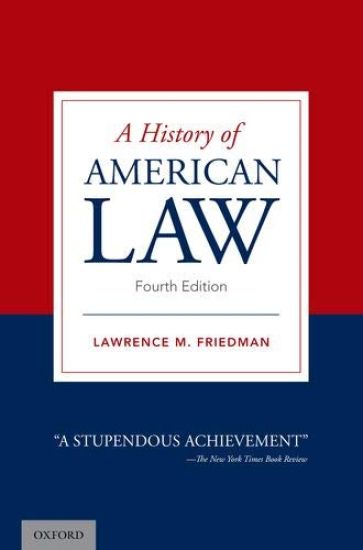
A History of American Law

A History of American Law

Lawrence M. Friedman

Oxford University Press Inc
2019
nidottu
Renowned legal historian Lawrence Friedman presents an accessible and authoritative history of American law from the colonial era to the present day. This fully revised fourth edition incorporates the latest research to bring this classic work into the twenty-first century. In addition to looking closely at timely issues like race relations, the book covers the changing configurations of commercial law, criminal law, family law, and the law of property. Friedman furthermore interrogates the vicissitudes of the legal profession and legal education. The underlying theory of this eminently readable book is that the law is the product of society. In this way, we can view the history of the legal system through a sociological prism as it has evolved over the years.
A History of American Law

A History of American Law

Lawrence M. Friedman

Oxford University Press Inc
2019
sidottu
Renowned legal historian Lawrence Friedman presents an accessible and authoritative history of American law from the colonial era to the present day. This fully revised fourth edition incorporates the latest research to bring this classic work into the twenty-first century. In addition to looking closely at timely issues like race relations, the book covers the changing configurations of commercial law, criminal law, family law, and the law of property. Friedman furthermore interrogates the vicissitudes of the legal profession and legal education. The underlying theory of this eminently readable book is that the law is the product of society. In this way, we can view the history of the legal system through a sociological prism as it has evolved over the years.
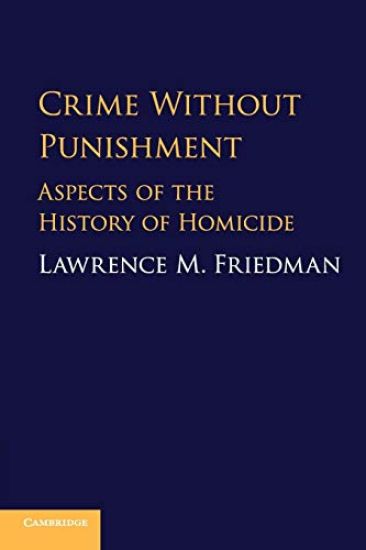
Crime without Punishment

Crime without Punishment

Lawrence M. Friedman

Cambridge University Press
2019
pokkari
In this compelling book, Lawrence M. Friedman looks at situations where killing is condemned by law but not by social norms and, therefore, is rarely punished. He shows how penal codes categorize homicides by degree of intent, which are in turn based on society's sense of moral outrage. Despite being officially defined as murder, many homicides have historically gone unpunished. Friedman looks at early vigilante justice, crimes of passion, murder of necessity, mercy killings, and assisted suicides. In his explorations of these unpunished homicides, Friedman probes what these circumstances tell us about conflicts in social and cultural norms, and the interaction of law and society.
Crime without Punishment

Crime without Punishment

Lawrence M. Friedman

Cambridge University Press
2018
sidottu
In this compelling book, Lawrence M. Friedman looks at situations where killing is condemned by law but not by social norms and, therefore, is rarely punished. He shows how penal codes categorize homicides by degree of intent, which are in turn based on society's sense of moral outrage. Despite being officially defined as murder, many homicides have historically gone unpunished. Friedman looks at early vigilante justice, crimes of passion, murder of necessity, mercy killings, and assisted suicides. In his explorations of these unpunished homicides, Friedman probes what these circumstances tell us about conflicts in social and cultural norms, and the interaction of law and society.
American Law

American Law

Lawrence M. Friedman; Hayden Grant M.

Oxford University Press Inc
2017
nidottu
This book provides an introduction to the American legal system for a broad readership. Its focus is on law in practice, on the role of the law in American society, and how the social context affects the living law of the United States. It covers the institutions of law creation and application, law in American government, American legal culture and the legal profession, American criminal and civil justice, and civil rights. Clearly written, the book has been widely used in both undergraduate and graduate courses as an introduction to the legal system; it will be useful, too, to a general audience interested in understanding how this vital social system works. _ This new edition, which keeps the same basic structure of earlier editions, has been revised and brought up to date, reflecting the way the legal system has adapted to the complex new world of the twenty-first century.
American Law

American Law

Lawrence M. Friedman; Grant M. Hayden

Oxford University Press Inc
2016
sidottu
This book provides an introduction to the American legal system for a broad readership. Its focus is on law in practice, on the role of the law in American society, and how the social context affects the living law of the United States. It covers the institutions of law creation and application, law in American government, American legal culture and the legal profession, American criminal and civil justice, and civil rights. Clearly written, the book has been widely used in both undergraduate and graduate courses as an introduction to the legal system; it will be useful, too, to a general audience interested in understanding how this vital social system works. _ This new edition, which keeps the same basic structure of earlier editions, has been revised and brought up to date, reflecting the way the legal system has adapted to the complex new world of the twenty-first century.
Impact

Impact

Lawrence M. Friedman

Harvard University Press
2016
sidottu
Laws and regulations are ubiquitous, touching on many aspects of individual and corporate behavior. But under what conditions are laws and rules actually effective? A huge amount of recent work in political science, sociology, economics, criminology, law, and psychology, among other disciplines, deals with this question. But these fields rarely inform one another, leaving the state of research disjointed and disorganized. Lawrence M. Friedman finds order in this cacophony. Impact gathers recent findings into one overarching analysis and lays the groundwork for a cohesive body of work in what Friedman labels “impact studies.” The first important factor that has a bearing on impact is communication. A rule or law has no effect if it never reaches its intended audience. The public’s fund of legal knowledge, the clarity of the law, and the presence of information brokers all influence the flow of information from lawmakers to citizens. After a law is communicated, subjects sometimes comply, sometimes resist, and sometimes adjust or evade. Three clusters of motives help shape which reaction will prevail: first, rewards and punishments; second, peer group influences; and third, issues of conscience, legitimacy, and morality. When all of these factors move in the same direction, law can have a powerful impact; when they conflict, the outcome is sometimes unpredictable.
The Big Trial

The Big Trial

Lawrence M. Friedman

University Press of Kansas
2015
sidottu
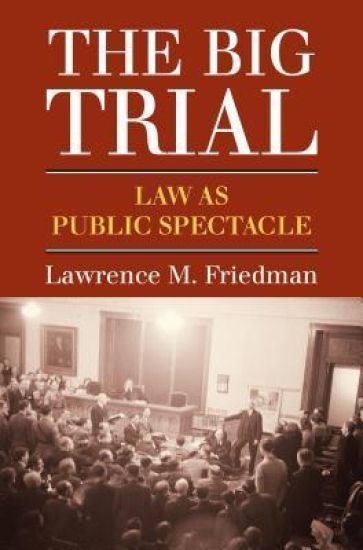
The trial of O. J. Simpson was a sensation, avidly followed by millions of people, but it was also, in a sense, nothing new. One hundred years earlier the Lizzie Borden trial had held the nation in thrall. The names (and the crimes) may change, but the appeal is enduring—and why this is, how it works, and what it means are what Lawrence Friedman investigates in The Big Trial. What is it about these cases that captures the public imagination? Are the “headline trials” of our period different from those of a century or two ago? And what do we learn from them, about the nature of our society, past and present? To get a clearer picture, Friedman first identifies what certain headline trials have in common, then considers particular cases within each grouping. The political trialz, for instance, embraces treason and spying, dissenters and radicals, and, to varying degrees, corruption and fraud. Celebrity trials involve the famous—whether victims, as in the case of Charles Manson, or defendants as disparate as Fatty Arbuckle and William Kennedy Smith—but certain high-profile cases, such as those Friedman categorizes as tabloid trials, can also create celebrities. The fascination of whodunit trials can be found in the mystery surrounding the case: Are we sure about O. J. Simpson? What about Claus von Bulow—tried, in another sensational case, for sending his wife into a coma? An especially interesting type of case Friedman groups under the rubric worm in the bud. These are cases, such as that of Lizzie Borden, that seem to put society itself on trial; they raise fundamental social questions and often suggest hidden and secret pathologies. And finally, a small but important group of cases proceed from moral panic, the Salem witchcraft trials being the classic instance, though Friedman also considers recent examples. Though they might differ in significant ways, these types of trials also have important similarities. Most notably, they invariably raise questions about identity (Who is this defendant? A villain? An innocent unfairly accused?). And in this respect, The Big Trial shows us, the headline trial reflects a critical aspect of modern society. Reaching across the nineteenth and twentieth centuries to the latest outrage, from congressional hearings to lynching and vigilante justice to public punishment, from Dr. Sam Sheppard (the “fugitive”) to Jeffrey Dahmer (the “cannibal”), The Rosenbergs to Timothy McVeigh, the book presents a complex picture of headline trials as displays of power—moments of “didactic theater” that demonstrate in one way or another whether a society is fair, whom it protects, and whose interest it serves.