
Kirjailija
Leo Tolstoy
Kirjat ja teokset yhdessä paikassa: 1 277 kirjaa, julkaisuja vuosilta 1859–2026, suosituimpiin kuuluu Classic Short Story Collection: Charles Dickens, Leo Tolstoy, Fyodor Dostoyevsky, Franz Kafka, Jack London, and Oscar Wilde. Vertaile teosten hintoja ja tarkista saatavuus suomalaisista kirjakaupoista.
1 277 kirjaa
Kirjojen julkaisuvuodet: 1859–2026.
Anna Karenina is a novel by the Russian writer Leo Tolstoy, published in serial installments from 1873 to 1877 in the periodical The Russian Messenger. Tolstoy clashed with editor Mikhail Katkov over political issues that arose in the final installment (Tolstoy's negative views of Russian volunteers going to fight in Serbia); therefore, the novel's first complete appearance was in book form in 1878. Widely regarded as a pinnacle in realist fiction, Tolstoy considered Anna Karenina his first true novel, after he came to consider War and Peace to be more than a novel. Fyodor Dostoyevsky declared it "flawless as a work of art." His opinion was shared by Vladimir Nabokov, who especially admired "the flawless magic of Tolstoy's style," and by William Faulkner, who described the novel as "the best ever written." The novel remains popular, as demonstrated by a 2007 poll of 125 contemporary authors in Time, which declared that Anna
Anna Karenina is a novel by the Russian writer Leo Tolstoy, published in serial installments from 1873 to 1877 in the periodical The Russian Messenger. Tolstoy clashed with editor Mikhail Katkov over political issues that arose in the final installment (Tolstoy's negative views of Russian volunteers going to fight in Serbia); therefore, the novel's first complete appearance was in book form in 1878. Widely regarded as a pinnacle in realist fiction, Tolstoy considered Anna Karenina his first true novel, after he came to consider War and Peace to be more than a novel. Fyodor Dostoyevsky declared it "flawless as a work of art." His opinion was shared by Vladimir Nabokov, who especially admired "the flawless magic of Tolstoy's style," and by William Faulkner, who described the novel as "the best ever written." The novel remains popular, as demonstrated by a 2007 poll of 125 contemporary authors in Time, which declared that Anna Karenina is the "greatest book ever written."
Anna Karenina is a novel by the Russian writer Leo Tolstoy, published in serial installments from 1873 to 1877 in the periodical The Russian Messenger. Tolstoy clashed with editor Mikhail Katkov over political issues that arose in the final installment (Tolstoy's negative views of Russian volunteers going to fight in Serbia); therefore, the novel's first complete appearance was in book form in 1878. Widely regarded as a pinnacle in realist fiction, Tolstoy considered Anna Karenina his first true novel, after he came to consider War and Peace to be more than a novel. Fyodor Dostoyevsky declared it "flawless as a work of art." His opinion was shared by Vladimir Nabokov, who especially admired "the flawless magic of Tolstoy's style," and by William Faulkner, who described the novel as "the best ever written." The novel remains popular, as demonstrated by a 2007 poll of 125 contemporary authors in Time, which declared that Anna Karenina is the "greatest book ever written."
Anna Karenina is a novel by the Russian writer Leon Tolstoy, published in serial installments from 1873 to 1877 in the periodical The Russian Messenger. Tolstoy clashed with editor Mikhail Katkov over political issues that arose in the final installment (Tolstoy's unpopular views of volunteers going to Serbia); therefore, the novel's first complete appearance was in book form. Widely regarded as a pinnacle in realist fiction, Tolstoy considered Anna Karenina his first true novel, when he came to consider War and Peace to be more than a novel. Fyodor Dostoevsky declared it to be "flawless as a work of art". His opinion was shared by Vladimir Nabokov, who especially admired "the flawless magic of Tolstoy's style", and by William Faulkner, who described the novel as "the best ever written". The novel is currently enjoying popularity, as demonstrated by a recent poll of 125 contemporary authors by J. Peder Zane, published in 2007 in "The Top Ten" in Time, which declared that Anna Karenina is the "greatest novel ever written"".. The novel opens with a scene introducing Prince Stepan Arkadyevich Oblonsky ("Stiva"), a Moscow aristocrat and civil servant who has been unfaithful to his wife Darya Alexandrovna ("Dolly"). Dolly has discovered his affair with the family's governess, and the household and family are in turmoil. Stiva's affair and his reaction to his wife's distress show an amorous personality that he cannot seem to suppress. In the midst of the turmoil, Stiva informs the household that his married sister, Anna Arkadyevna Karenina, is coming to visit from Saint Petersburg. Meanwhile, Stiva's childhood friend, Konstantin Dmitrievich Levin ("Kostya"), arrives in Moscow with the aim of proposing to Dolly's youngest sister, Princess Katerina Alexandrovna Shcherbatskaya ("Kitty"). Levin is a passionate, restless, but shy aristocratic landowner who, unlike his Moscow friends, chooses to live in the country on his large estate. He discovers that Kitty is also being pursued by Count Alexei Kirillovich Vronsky, an army officer. Whilst at the railway station to meet Anna, Stiva bumps into Vronsky who is there to meet his mother, the Countess Vronskaya. Anna and Vronskaya have traveled and talked together in the same carriage. As the family members are reunited, and Vronsky sees Anna for the first time, a railway worker accidentally falls in front of a train and is killed. Anna interprets this as an "evil omen." Vronsky, however, is infatuated with her. Anna is uneasy about leaving her young son, Sergei ("Seryozha"), alone for the first time. At the Oblonsky home, Anna talks openly and emotionally to Dolly about Stiva's affair and convinces her that Stiva still loves her despite the infidelity. Dolly is moved by Anna's speeches and decides to forgive Stiva. Kitty, who comes to visit Dolly and Anna, is just eighteen. In her first season as a debutante, she is expected to make an excellent match with a man of her social standing. Vronsky has been paying her considerable attention, and she expects to dance with him at a ball that evening. Kitty is very struck by Anna's beauty and personality and becomes infatuated with her just as Vronsky is. When Levin proposes to Kitty at her home, she clumsily turns him down, believing she is in love with Vronsky and that he will propose to her, and encouraged to do so by her mother who believes Vronsky would be a better match. At the big ball Kitty expects to hear something definitive from Vronsky, but he dances with Anna, choosing her as a partner over a shocked and heartbroken Kitty. Levin, crushed by Kitty's refusal, returns to his estate, abandoning any hope of marriage. Anna returns to her husband Alexei Alexandrovich Karenin, a senior government official, and her son Seryozha in Saint Petersburg. On seeing her husband for the first time since her encounter with Vronsky, Anna realises that she finds him unattractive, though she tells herself he is a good man.."
The artistic work of Leo Tolstoy has been described as "nothing less than one tremendous diary kept for over fifty years." This particular "diary" begins with Tolstoy's first published work, which was written when he was only 23. A semi-autobiographical work, it recounts two days in the childhood of 10-year-old Nikolai Irtenev, recreating vivid impressions of people, place and events with the exuberant perspective of a child enriched by the ironic retrospective understanding of an adult.
Anna Karenina is a novel by the Russian writer Leo Tolstoy, published in serial installments from 1873 to 1877 in the periodical The Russian Messenger. Tolstoy clashed with editor Mikhail Katkov over political issues that arose in the final installment (Tolstoy's negative views of Russian volunteers going to fight in Serbia); therefore, the novel's first complete appearance was in book form in 1878. Widely regarded as a pinnacle in realist fiction, Tolstoy considered Anna Karenina his first true novel, after he came to consider War and Peace to be more than a novel. Fyodor Dostoyevsky declared it "flawless as a work of art." His opinion was shared by Vladimir Nabokov, who especially admired "the flawless magic of Tolstoy's style," and by William Faulkner, who described the novel as "the best ever written." The novel remains popular, as demonstrated by a 2007 poll of 125 contemporary authors in Time, which declared that Anna
War and Peace (Special Edition)
Leo Tolstoy
Createspace Independent Publishing Platform
2017
pokkari
War and Peace is a novel by Leo Tolstoy, first published from 1865 to 1869 in Russkii Vestnik, which tells the story of Russian society during the Napoleonic Era. It is usually described as one of Tolstoy's two major masterpieces (the other being Anna Karenina) as well as one of the world's greatest novels. War and Peace offered a new kind of fiction, with a great many characters caught up in a plot that covered nothing less than the grand subjects indicated by the title, combined with the equally large topics of youth, marriage, age, and death. Though it is often called a novel today, it broke so many conventions of the form that it was not considered a novel in its time. Indeed, Tolstoy himself considered Anna Karenina (1878) to be his first attempt at a novel in the European sense.

War And Peace: 100 Influential Quotes
Leo Tolstoy
Createspace Independent Publishing Platform
2017
nidottu
"Man cannot possess anything as long as he fears death. But to him who does not fear it, everything belongs. If there was no suffering, man would not know his limits, would not know himself. "
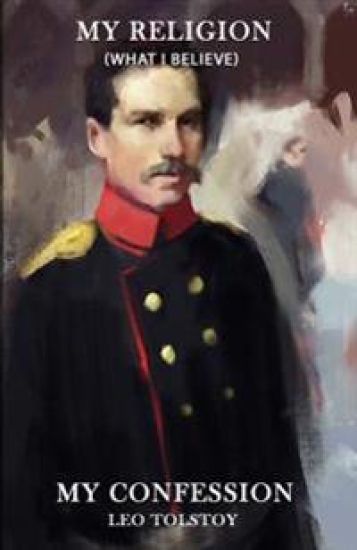
My Religion (What I Believe), My Confession
Leo Tolstoy
Createspace Independent Publishing Platform
2017
nidottu
Halvin toimitettuna 15,20 €
"My Religion" is a book by Leo Tolstoy written during the period of 1883-1884. It is dedicated to the issue which was the most burning one for the author. Being a Christian and a genius, he needed to study the basis of the religion himself. This edition of the book was banned following its publication in Russia. "My Confession" is a 1879 work by Leo Tolstoy. This book describes the long way the writer had to go before being able to say his life was not empty. The Russian clerical censorship banned the book from publication. However, "My Confession" spread across the country in manuscripts.
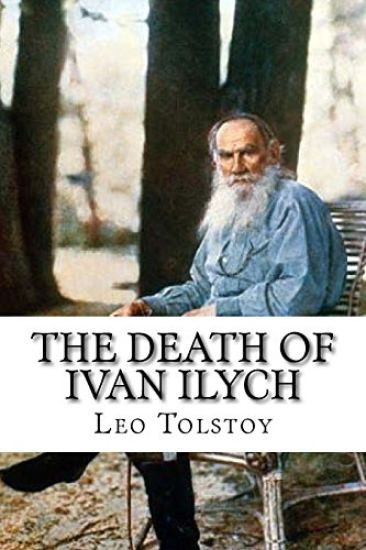
During an interval in the Melvinski trial in the large building of the Law Courts the members and public prosecutor met in Ivan Egorovich Shebek's private room, where the conversation turned on the celebrated Krasovski case. Fedor Vasilievich warmly maintained that it was not subject to their jurisdiction, Ivan Egorovich maintained the contrary, while Peter Ivanovich, not having entered into the discussion at the start, took no part in it but looked through the Gazette which had just been handed in. "Gentlemen," he said, "Ivan Ilych has died " "You don't say so " "Here, read it yourself," replied Peter Ivanovich, handing Fedor Vasilievich the paper still damp from the press. Surrounded by a black border were the words: "Praskovya Fedorovna Golovina, with profound sorrow, informs relatives and friends of the demise of her beloved husband Ivan Ilych Golovin, Member of the Court of Justice, which occurred on February the 4th of this year 1882. The funeral will take place on Friday at one o'clock in the afternoon."
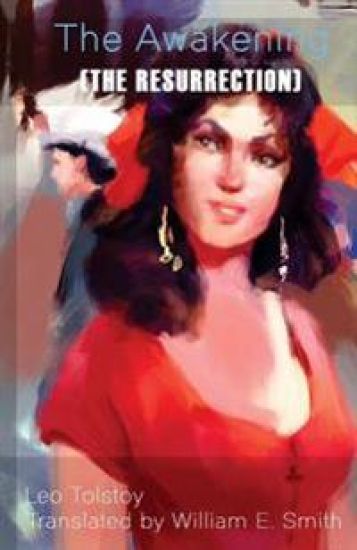
"The Awakening" is a book by Leo Tolstoy written during the period of 1889-1899. It tells the story of a nobleman overburdened with the sin he has committed. This sin concerns a young peasant woman whom he seduced and then left. He lives the ordinary life of a self-proud rich man until he encounters his former lover. The place where they see each other is the court, and the girl is being accused. This is the translation by William E. Smith, which is easy to read and understand. It is one of the best translations of the work ever published.
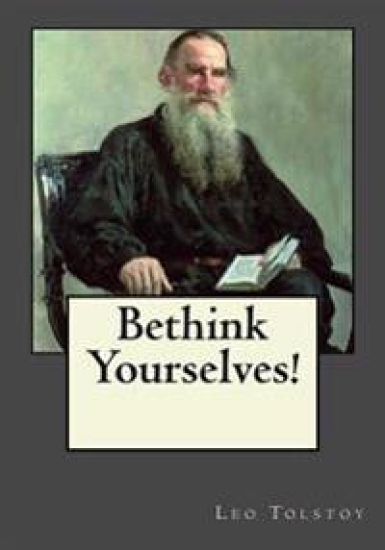
Count Lev Nikolayevich Tolstoy, usually referred to in English as Leo Tolstoy, was a Russian writer who is regarded as one of the greatest authors of all time. Born to an aristocratic Russian family in 1828, he is best known for the novels War and Peace (1869) and Anna Karenina (1877), often cited as pinnacles of realist fiction. He first achieved literary acclaim in his twenties with his semi-autobiographical trilogy, Childhood, Boyhood, and Youth (1852-1856), and Sevastopol Sketches (1855), based upon his experiences in the Crimean War. Tolstoy's fiction includes dozens of short stories and several novellas such as The Death of Ivan Ilyich, Family Happiness, and Hadji Murad. He also wrote plays and numerous philosophical essays.
Leo Tolstoy: 100 Influential Quotes on Peace and Tranquility
Helen Towers; Leo Tolstoy
Createspace Independent Publishing Platform
2017
nidottu