Kirjailija
Leo Tolstoy
Kirjat ja teokset yhdessä paikassa: 1 277 kirjaa, julkaisuja vuosilta 1859–2026, suosituimpiin kuuluu Classic Short Story Collection: Charles Dickens, Leo Tolstoy, Fyodor Dostoyevsky, Franz Kafka, Jack London, and Oscar Wilde. Vertaile teosten hintoja ja tarkista saatavuus suomalaisista kirjakaupoista.
1 277 kirjaa
Kirjojen julkaisuvuodet: 1859–2026.
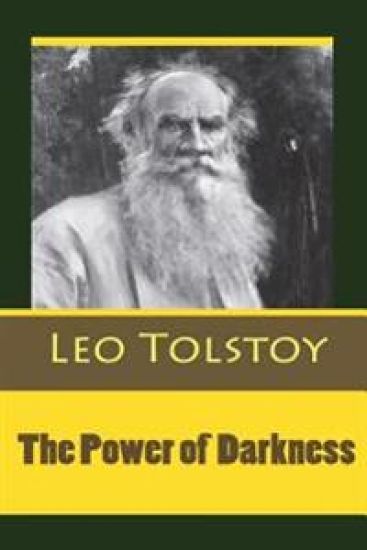
The Power of Darkness: A dram in five acts
Leo Tolstoy
Createspace Independent Publishing Platform
2017
nidottu
Extract: THE POWER OF DARKNESS ACT I The Act takes place in autumn in a large village. The Scene represents Peter's roomy hut. Peter is sitting on a wooden bench, mending a horse-collar. An sya and Akoul na are spinning, and singing a part-song. PETER looking out of the window] The horses have got loose again. If we don't look out they'll be killing the colt. Nik ta Hey, Nik ta Is the fellow deaf? Listens. To the women] Shut up, one can't hear anything. NIK TA from outside] What? PETER. Drive the horses in. NIK TA. We'll drive 'em in. All in good time. PETER shaking his head] Ah, these labourers If I were well, I'd not keep one on no account. There's nothing but bother with 'em. Rises and sits down again] Nik ta ... It's no good shouting. One of you'd better go. Go, Ako l, drive 'em in. AKOUL NA. What? The horses? PETER. What else? AKOUL NA. All right. Exit]. PETER. Ah, but he's a loafer, that lad ... no good at all. Won't stir a finger if he can help it. AN SYA. You're so mighty brisk yourself. When you're not sprawling on the top of the oven you're squatting on the bench. To goad others to work is all you're fit for. PETER. If one weren't to goad you on a bit, one'd have no roof left over one's head before the year's out. Oh what people AN SYA. You go shoving a dozen jobs on to one's shoulders, and then do nothing but scold. It's easy to lie on the oven and give orders. PETER sighing] Oh, if 'twere not for this sickness that's got hold of me, I'd not keep him on another day. AKOUL NA off the scene] Gee up, gee, woo. A colt neighs, the stamping of horses' feet and the creaking of the gate are heard]. PETER. Bragging, that's what he's good at. I'd like to sack him, I would indeed. AN SYA mimicking him] "Like to sack him." You buckle to yourself, and then talk. AKOUL NA enters] It's all I could do to drive 'em in. That piebald always will ... PETER. And where's Nik ta? AKOUL NA. Where's Nik ta? Why, standing out there in the street. PETER. What's he standing there for? AKOUL NA. What's he standing there for? He stands there jabbering. PETER. One can't get any sense out of her Who's he jabbering with? AKOUL NA does not hear] Eh, what? Peter waves her off. She sits down to her spinning. NAN running in to her mother] Nik ta's father and mother have come. They're going to take him away. It's true AN SYA. Nonsense ........
The Live Corpse: A Play in six acts
Leo Tolstoy
Createspace Independent Publishing Platform
2017
nidottu
Extract: Scene 1 A dirty room in a low-class restaurant. A table, at which people sit drinking tea and v dka. In the foreground a small table, at which sits F dya, tattered, and much come down in the world. With him is Petushk v, a gentle, mild man with long hair, of clerical appearance. Both are slightly drunk. PETUSHK V. I understand, I understand. That is true love Yes? Go on. F DYA. Well, you know, if a woman of our class showed such feeling and sacrificed everything for the man she loved.... But she was a gipsy, brought up to money-hunting, and yet she had this self-sacrificing love Gave everything, and wanted nothing herself The contrast was so wonderful PETUSHK V. Yes, in art we call it "value." You can only get quite bright red by putting green round it. But that's not to the point. I understand, quite understand. F DYA. Yes, and I believe the one good action of my life is that I never took advantage of her love. And do you know why? PETUSHK V. Pity. F DYA. Oh no I never felt pity for her. What I felt for her was always rapturous admiration-and when she sang Ah, how she sang-and perhaps still sings I always regarded her as far above me. I did not ruin her, simply because I loved her; loved her truly. And now she's a good, happy memory Drinks]. PETUSHK V. Yes, I understand, I understand. It's ideal. F DYA. I'll tell you something. I have had my passions, and once I was in love with a lady-very handsome-and I loved her nastily, like a dog. She gave me a rendezvous. And I did not go, because I thought it was treating the husband shabbily. And it is strange that, even now, when I remember it I want to feel pleased and to approve of myself for having acted honourably, but I always repent as if I had committed a sin But in the case of M sha, on the contrary, I am always pleased-pleased that I did not pollute that feeling of mine.... I may fall lower still, sell all I have on me, be covered with lice and sores-but this jewel ... no, not jewel, but ray of sunshine, is still with me and in me. PETUSHK V. I understand, I understand And where is she now?.......
Extract: ACT I Scene 1 The scene represents the verandah of a fine country-house, in front of which a croquet-lawn and tennis-court are shown, also a flower-bed. The children are playing croquet with their governess. Mary Iv novna Sar ntsova, a handsome elegant woman of forty; her sister, Alex ndra Iv novna K hovtseva, a stupid, determined woman of forty-five; and her husband, Peter Semy novich K hovtsef, a fat flabby man, dressed in a summer suit, with a pince-nez, are sitting on the verandah at a table with a samov r and coffee-pot. Mary Iv novna Sar ntsova, Alex ndra Iv novna K hovtseva, and Peter Semy novich K hovtsev are drinking coffee, and the latter is smoking. ALEX NDRA IV NOVNA. If you were not my sister, but a stranger, and Nicholas Iv novich not your husband, but merely an acquaintance, I should think all this very original, and perhaps I might even encourage him, J'aurais trouv tout a tr s gentil; 1] but when I see that your husband is playing the fool-yes, simply playing the fool-then I can't help telling you what I think about it. And I shall tell your husband, Nicholas, too. Je lui dirai son fait, ma ch re. 2] I am not afraid of anyone. MARY IV NOVNA. I don't feel the least bit hurt; don't I see it all myself? but I don't think it so very important. ALEX NDRA IV NOVNA. No. You don't think so, but I tell you that, if you let it go on, you will be beggared. Du train que cela va ... 3] PETER SEMY NOVICH. Come Beggared indeed Not with an income like theirs. ALEX NDRA IV NOVNA. Yes, beggared And please don't interrupt me, my dear Anything a man does always seems right to you PETER SEMY NOVICH. Oh I don't know. I was saying--.....
On the significance of science and art
Leo Tolstoy
Createspace Independent Publishing Platform
2017
nidottu
Extract: CHAPTER I. . . . 169] The justification of all persons who have freed themselves from toil is now founded on experimental, positive science. The scientific theory is as follows: - "For the study of the laws of life of human societies, there exists but one indubitable method, -the positive, experimental, critical method "Only sociology, founded on biology, founded on all the positive sciences, can give us the laws of humanity. Humanity, or human communities, are the organisms already prepared, or still in process of formation, and which are subservient to all the laws of the evolution of organisms. "One of the chief of these laws is the variation of destination among the portions of the organs. Some people command, others obey. If some have in superabundance, and others in want, this arises not from the will of God, not because the empire is a form of manifestation of personality, but because in societies, as in organisms, division of labor becomes indispensable for life as a whole. Some people perform the muscular labor in societies; others, the mental labor." Upon this doctrine is founded the prevailing justification of our time. Not long ago, their reigned in the learned, cultivated world, a moral philosophy, according to which it appeared that every thing which exists is reasonable; that there is no such thing as evil or good; and that it is unnecessary for man to war against evil, but that it is only necessary for him to display intelligence, -one man in the military service, another in the judicial, another on the violin. There have been many and varied expressions of human wisdom, and these phenomena were known to the men of the nineteenth century........
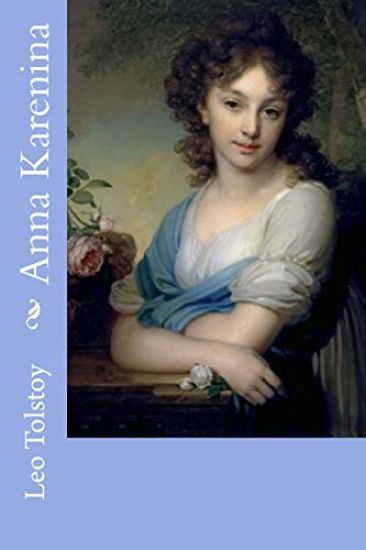
Anna Karenina is a novel by the Russian writer Leo Tolstoy, published in serial installments. Tolstoy clashed with editor Mikhail Katkov over political issues that arose in the final installment of Tolstoy's negative views of Russian volunteers going to fight in Serbia; therefore, the novel's first complete appearance was in book form in 1878. Widely regarded as a pinnacle in realist fiction, Tolstoy considered Anna Karenina his first true novel, after he came to consider War and Peace to be more than a novel. Fyodor Dostoyevsky declared it "flawless as a work of art." His opinion was shared by Vladimir Nabokov, who especially admired "the flawless magic of Tolstoy's style," and by William Faulkner, who described the novel as "the best ever written." The novel remains popular, as demonstrated by a 2007 poll of 125 contemporary authors in Time, which declared that Anna Karenina is the "greatest book ever written."
The Kingdom of God Is Within You (Fine Print)
Leo Tolstoy
Createspace Independent Publishing Platform
2016
nidottu
Napoléon Et La Campagne de Russie: Physiologie de la Guerre 4e Édition
Leo Tolstoy
Hachette Livre - BNF
2016
pokkari

War and Peace is a novel divided by that maps the history of the French invasion of Russia, and the impact of the Napoleonic era on Tsarist society, all through the stories of five Russian families. Tolstoy himself said that War and Peace was "not a novel, even less is it a poem, and still less a historical chronicle". Large sections, especially in the later chapters, are philosophical discussion rather than narrative. Part I includes Books One throu Eight Part II includes Books Nine throu Fifteen
This trilogy of short novels, taken as a whole, recounts the young narrator’s early life up to his university days, each episode told through the perceptions, points of view and emotions felt by the protagonist at the time. Based on Tolstoy’s own life and experiences, this fictionalized account of a young man growing into the world combines anecdote with frank personal assessment and philosophical extrapolation, as the author’s Stendhalian take on the confessional genre confronts and blurs the notions of reality and imagination. Tolstoy’s first published work, which launched him on a successful writing career, Childhood, Boyhood, Youth – besides offering an early display of his storytelling and stylistic abilities – provides the reader with invaluable insight into the personal and literary development of one of the greatest writers of all time."
/LÄTTLÄST/Anna Karenina är en mycket vacker kvinna. Hon bor i den ryska staden Sankt Petersburg. Hon är gift och har en son. Hon möter den rike greven Vronskij och blir förälskad. Men om hon lämnar sin man kanske hon förlorar sin älskade son. Anna Karenina är en av världens mest kända kärleksromaner. Leo Tolstoj skrev den i slutet av 1800-talet. Nu har Johan Werkmäster skrivit om den till lättläst svenska. Lättlästnivå: 6(1 är lättast och 6 svårast)