Kirjailija
Leo Tolstoy
Kirjat ja teokset yhdessä paikassa: 1 277 kirjaa, julkaisuja vuosilta 1859–2026, suosituimpiin kuuluu Classic Short Story Collection: Charles Dickens, Leo Tolstoy, Fyodor Dostoyevsky, Franz Kafka, Jack London, and Oscar Wilde. Vertaile teosten hintoja ja tarkista saatavuus suomalaisista kirjakaupoista.
1 277 kirjaa
Kirjojen julkaisuvuodet: 1859–2026.
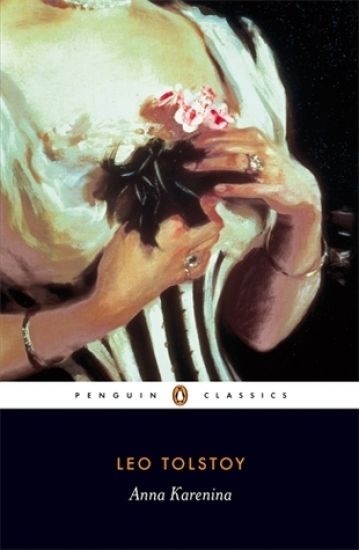
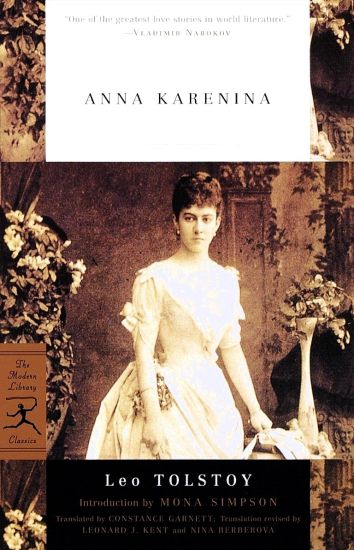
'One of the greatest love stories in world literature' Vladimir NabokovThe heroine of Tolstoy's epic of love and self-destruction, Anna Karenina has beauty, wealth, popularity and an adored son, but feels that her life is empty until she encounters the impetuous officer Count Vronsky. Their subsequent affair scandalizes society and family alike, and brings jealousy and bitterness in its wake. Contrasting with this is the vividly observed story of Levin, a man striving to find contentment and a meaning to his life - and also a self-portrait of Tolstoy himself. This award-winning translation has been acclaimed as the definitive English version of Tolstoy's masterpiece. Translated by RICHARD PEVEAR and LARISSA VOLOKHONSKY with a Preface by JOHN BAYLEY
A powerful translation of the classic Russian novel - retells the tale of rebellious Anna and her ill-fated, adulterous romance with Count Vronsky amid the turmoil of nineteenth-century Russia. Reissue.
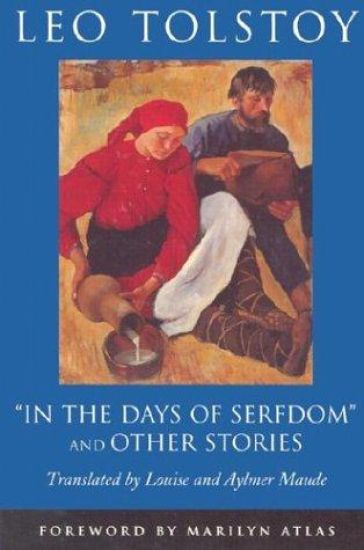
"In the Days of Serfdom" and Other Stories, originally published in 1911, presents in miniature themes developed in Tolstoy's longer works War and Peace and Anna Karenina. The compelling stories in this collection have largely been ignored by contemporary scholars and teachers because of their general unavailability. Available once again, the stories reveal new thematic and stylisitic dimensions to Tolstoy's oeuvre. While not all of the stories deal with actual serfdom, they all address the legacy of serfdom, of choicelessness, in Tolstoy's Russia. These stories are also thoroughly modern, concerned as they are with the market economy, changing values, and women's roles in society. Artistically and historically significant, they constitute ethical and spiritual questionings that deal with lives out of control, with characters making sense of the experience of living.
Often called the greatest novel ever written, War and Peace is at once an epic of the Napoleonic Wars, a philosophical study, and a celebration of the Russian spirit. Tolstoy's genius is seen clearly in the multitude of characters in this massive chronicle - all of them fully realized and equally memorable. Out of this complex narrative emerges a profound examination of the individual's place in the historical process, one that makes it clear why Thomas Mann praised Tolstoy for his Homeric powers and placed War and Peace in the same category as the Iliad: "To read him... is to find one's way home ... to everything within us that is fundamental and sane."
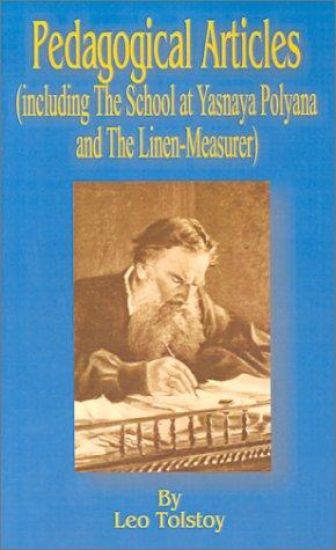
Pedagogical Articles (Including The School at Yasnaya Poyana and The Linen-Measurer)
Leo Tolstoy
Fredonia Books (NL)
2002
pokkari
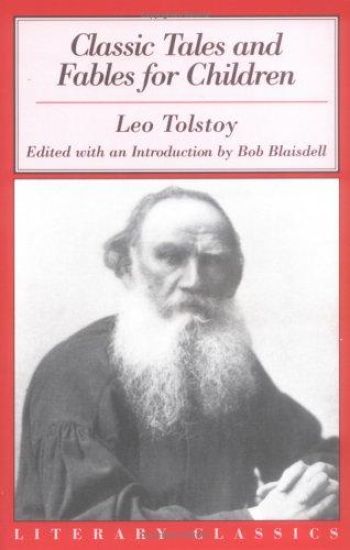
Renowned Russian novelist Leo Tolstoy had an abiding interest in children and in children's literature. At the age of twenty-one, he started a school for peasant children on his family's estate, and after returning from a stint in the military, he founded another, experimental school with the motto, "Come when you like, leave when you like." Fascinated by the simple charm and the fresh innocence with which the children of his schools told stories, several years later, when Tolstoy began writing about his own childhood, he emulated the uncomplicated narrative style and disarming directness of the tales told by the children of his acquaintance. After completing War and Peace, he incorporated these stories in a series of easy readers, and continued to work on them even while writing Anna Karenina. Known as The ABC Book (Azbuka) and subsequently The New ABC Book (Novy Azbuka), these marvelous readers were widely adopted in Russia and were still in use in the Soviet era. The tales and fables in this volume come mainly from these two well-loved primers. Part I consists of stories about his own childhood, all told with beautiful simplicity. Part II contains Tolstoy's free adaptations of fables from Aesop and from Hindu tradition. Part III is devoted solely to his longest and most famous children's work, the fairy tale "Ivan the Fool and His Two Brothers." Never patronizing and often humorous, these small gems reveal Tolstoy's deep appreciation for and understanding of children's artistic and moral sensibilities.
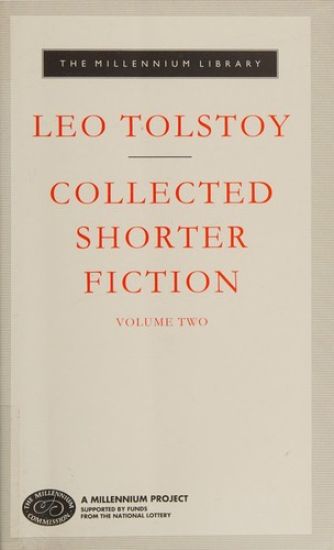
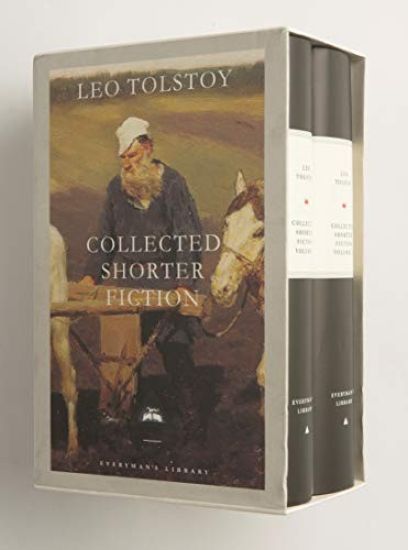
Volume 1 of the Everyman Collected Shorter Fiction is dominated by the characteristic experiences of his early life as soldier, land-owner, husband and father, the life which shaped Anna Karenina and War and Peace.
Written over a period of more than half a century, Tolstoy’s enchanting short stories and novellas reflect every aspect of his developing art and outlook. Volume 2 reveals how these spiritual intimations flowered into a series of extraordinary late masterpieces which equal anything in the earlier novels for intensity and power. Readers of The Death of Ivan Ilych, The Kreutzer Sonata, Father Sergius, Master and Man and Hadji Murad will recognize the brilliant younger novelist, now transfigured by his passionate quest for salvation and forgiveness.
Collected Shorter Fiction Boxed Set (2 Volumes)
Leo Tolstoy
Everyman's Library
2001
sidottu
Halvin toimitettuna 48,20 €
Written over a period of more than half a century, Tolstoy’s enchanting short stories and novellas reflect every aspect of his developing art and outlook. Volume 1 of the Everyman Collected Shorter Fiction is dominated by the characteristic experiences of his early life as soldier, land-owner, husband and father, the life which shaped Anna Karenina and War and Peace. It also includes several short fables which point to his later preoccupation with the religious life. Volume 2 reveals how these spiritual intimations flowered into a series of extraordinary late masterpieces which equal anything in the earlier novels for intensity and power. Readers of The Death of Ivan Ilych, The Kreutzer Sonata, Father Sergius, Master and Man and Hadji Murad will recognize the brilliant younger novelist, now transfigured by his passionate quest for salvation and forgiveness.
Considered by some to be the greatest novel ever written, Anna Karenina is Tolstoy's classic tale of love and adultery set against the backdrop of high society in Moscow and Saint Petersburg. A rich and complex masterpiece, the novel charts the disastrous course of a love affair between Anna, a beautiful married woman, and Count Vronsky, a wealthy army officer. Tolstoy seamlessly weaves together the lives of dozens of characters, and in doing so captures a breathtaking tapestry of late-nineteenth-century Russian society. As Matthew Arnold wrote in his celebrated essay on Tolstoy, "We are not to take Anna Karenina as a work of art; we are to take it as a piece of life."
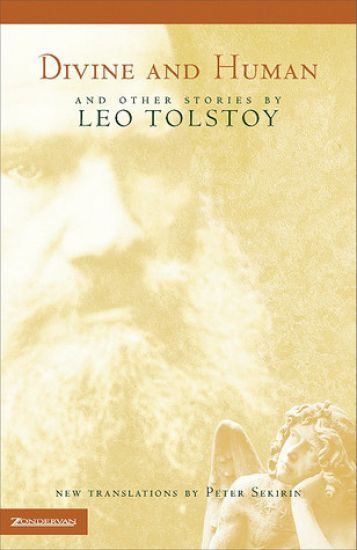
Divine and Human: And Other Stories by Leo Tolstoy
Leo Tolstoy; Peter Sekirin
ZONDERVAN
2000
nidottu
Divine and Human stands apart as both a landmark in literary history and master-piece of spiritual and ethical reflection. Suppressed in turn by the tzarist and Soviet regime, the tales contained in this book have, for the most part, never been published in English until now. Emerging at last, they offer western readers fresh glimpses of novelist and philosopher Leo Tolstoy. Divine and Human consists of choice selections from The Sunday Reading Stories, the second volume in a two-part work titled The Circle of Reading. In the words of translator Peter Sekirin, "Tolstoy considered The Circle of Reading to be the major work of his life. Considering its difficult history, it is not surprising that only recently has it been rediscovered." From its sparkling vignettes to its lengthier stories, Divine and Human probes the complexities of life and faith. Its characters range the spectrum of human emotions and qualities, from hatred to love and joy to grief; from sublime nobility to grotesque self-absorption. Tolstoy's world, though far-removed from today's information age, becomes our world -- indeed, has always been and always will be our world. Motor cars may have replaced horse-drawn cars, but human hearts remain the same, and questions of truth, mercy, forgiveness, devotion, justice, and the nature of God knock as insistently on the doors of our lives today as they did in Tolstoy's time. Welcome, then, to Divine and Human: a buried treasure at last unearthed, and certain to be prized by Tolstoy readers and lovers of great literature.