Kirjailija
Louisa May Alcott
Kirjat ja teokset yhdessä paikassa: 1 912 kirjaa, julkaisuja vuosilta 1881–2027, suosituimpiin kuuluu Jo's Boys, And How They Turned Out. Vertaile teosten hintoja ja tarkista saatavuus suomalaisista kirjakaupoista.
1 912 kirjaa
Kirjojen julkaisuvuodet: 1881–2027.
Hospital SketchesLouisa May Alcott 1862 Hospital Sketches (1863) is a compilation of four sketches based on letters Louisa May Alcott sent home during the six weeks she spent as a volunteer nurse for the Union Army during the American Civil War in Georgetown. Tribulation Periwinkle opens the story by complaining, "I want something to do." She dismisses suggestions to write a book, teach, get married, or start acting. When her younger brother suggests she "go nurse the soldiers", she immediately responds, "I will " After substantial hardship in trying to obtain a spot, she has further difficulty finding a place on the train. She then describes her travel through New York, Philadelphia, and Baltimore en route to Washington DC. Immediately after her arrival, Periwinkle must attend to the wounded from the Battle of Fredericksburg. Her first assignment is washing them before putting them to bed. She converses with the various wounded soldiers, including an Irishman and a Virginia blacksmith. The death of the blacksmith, a man named John, in particular touches her deeply. After the Civil War broke out, the town of Concord, Massachusetts rallied, inspiring many young men to volunteer. The company assembled on the town common on April 19, 1861, the anniversary of the Battles of Lexington and Concord as they set off. Louisa May Alcott wrote to her friend Alf Whitman that it was "a sight to behold". She was disappointed that she had to stay behind, lamenting, "as I can't fight, I will content myself with working with those who can." She joined local women who volunteered to sew clothes and provide other supplies. On her 30th birthday on November 29, 1862, she made up her mind to do more. She recorded in her journal, "Thirty years old. Decide to go to Washington as a nurse if I could find a place." She received her orders on December 11 and made her way to Georgetown, outside of Washington, D. C. While working as a nurse, Alcott contracted typhoid fever and was treated with mercury in the form of calomel. She survived but later recorded, "I was never ill before this time, and never well afterward." While serving as a nurse, Alcott wrote several letters to her family in Concord. At the urging of others, she prepared them for publication, slightly altering and fictionalizing them. The narrator of the stories was renamed Tribulation Periwinkle but the sketches are virtually authentic to Alcott's real experiences. The first of the sketches was published on May 22, 1863, in the abolitionist magazine Boston Commonwealth edited by family friend Franklin Benjamin Sanborn. The final sketch was published on June 26. Alcott herself did not care much for the writings, dismissing the idea that they were "witty", and admitted, "I wanted money." The pieces received great critical and popular acclaim making Alcott an overnight success.
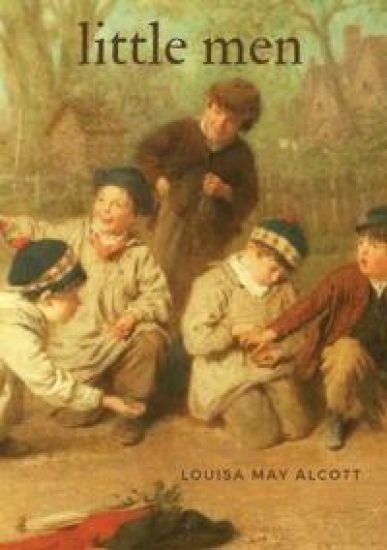
Little Men Louisa May AlcottLittle Men, or Life at Plumfield with Jo's Boys, is a children's novel by American author Louisa May Alcott (1832-1888), which was first published in 1871 by Roberts Brothers. The novel reprises characters from Little Women and acts as a sequel, or second book in an unofficial Little Women trilogy. The trilogy ends with Alcott's 1886 novel, Jo's Boys, and How They Turned Out: A Sequel to "Little Men." Alcott's story recounts the life of Jo Bhaer, her husband, and the various children at Plumfield Estate School. Alcott's classic novel has been adapted to a 1934 film, a 1940 film, a television series, and a Japanese animated television series. Alcott's novel narrates six months in the life of the students at Plumfield, a school run by German Professor Friedrich and his wife, Mrs. Josephine Bhaer (n e March). The idea of the school is first suggested at the very end of Little Women, Part Two, when Jo inherits Plumfield Estate from her late Aunt March. The story was originally inspired by the death of Alcott's brother-in-law, which is revealed in one of the last chapters, when a beloved character, John Brooke, from Little Women dies. Alcott's first inspiration for bringing educational ideals into the home and the development of a home-like model into the classroom, stems from her father, Amos Bronson Alcott, "an educational reformer and prominent Transcendentalist." As a "Transcendentalist visionary," her father was considered unconventional even among his reform contemporaries. Educational theorists such as Johann Heinrich Pestalozzi, also provided the inspiration for Alcott's educational methodologies and "stressed the need for the school to be as homelike as possible." As an educational reformer, Alcott's father believed education, "should simply turn the child's mind inward to recognize that divinity." Alcott's father also "believed that the theatrical performance of moral allegories by children would train them in the self-restraint that was the basis of domestic harmony and happiness." Bronson Alcott's appeal to children's imagination "was part of an effort to harness the child's imaginative powers to the pursuit of the passionless life." Alcott incorporates family dramatizations for the children of Plumfield to teach children "how to control every aspect of their self-expression." The story begins with the arrival of Nat Blake, a shy young orphan who is gifted at playing the violin and telling fibs. Nat narrates the story and introduces each character which features several cameo appearances from characters from the original Little Women novel. There are ten boys attending the school already. Then, Nat comes to Plumfield, followed by his friend Dan. After that, Nan arrives and becomes a companion for Daisy, the only girl. Jo's sons, Rob and Teddy, are younger than the others. Rob, Teddy, Daisy and Nan are not counted among the pupils. Plumfield is not run by conventional means. All the children have their own gardens and their own pets and are encouraged to experiment with running businesses. Pillow fights are permitted on Saturdays, subject to a time limit. Children are treated as individuals, with a strong emphasis on gently molding their characters.
Louisa May AlcottFlower Fables THE summer moon shone brightly down upon the sleeping earth, while far away from mortal eyes danced the Fairy folk. Fire-flies hung in bright clusters on the dewy leaves, that waved in the cool night-wind and the flowers stood gazing, in very wonder, at the little Elves, who lay among the fern-leaves, swung in the vine-boughs, sailed on the lake in lily cups, or danced on the mossy ground, to the music of the hare-bells, who rung out their merriest peal in honor of the night. Under the shade of a wild rose sat the Queen and her little Maids of Honor, beside the silvery mushroom where the feast was spread. "Now, my friends," said she, "to while away the time till the bright moon goes down, let us each tell a tale, or relate what we have done or learned this day. I will begin with you, Sunny Lock," added she, turning to a lovely little Elf, who lay among the fragrant leaves of a primrose. With a gay smile, "Sunny Lock" began her story. "As I was painting the bright petals of a blue bell, it told me this tale." THREE little Fairies sat in the fields eating their breakfast each among the leaves of her favorite flower, Daisy, Primrose, and Violet, were happy as Elves need be. The morning wind gently rocked them to and fro, and the sun shone warmly down upon the dewy grass, where butterflies spread their gay wings, and bees with their deep voices sung among the flowers while the little birds hopped merrily about to peep at them. On a silvery mushroom was spread the breakfast little cakes of flower-dust lay on a broad green leaf, beside a crimson strawberry, which, with sugar from the violet, and cream from the yellow milkweed, made a fairy meal, and their drink was the dew from the flowers' bright leaves. "Ah me," sighed Primrose, throwing herself languidly back, "how warm the sun grows give me another piece of strawberry, and then I must hasten away to the shadow of the ferns. But while I eat, tell me, dear Violet, why are you all so sad? I have scarce seen a happy face since my return from Rose Land dear friend, what means it?" "I will tell you," replied little Violet, the tears gathering in her soft eyes. "Our good Queen is ever striving to keep the dear flowers from the power of the cruel Frost-King many ways she tried, but all have failed. She has sent messengers to his court with costly gifts but all have returned sick for want of sunlight, weary and sad we have watched over them, heedless of sun or shower, but still his dark spirits do their work, and we are left to weep over our blighted blossoms. Thus have we striven, and in vain and this night our Queen holds council for the last time. Therefore are we sad, dear Primrose, for she has toiled and cared for us, and we can do nothing to help or advise her now."
A Merry Christmas and Other Christmas Stories
Louisa May Alcott; Mark Twain; Charles Dickens
Les Prairies Numeriques
2020
pokkari
Classic literary masterpieces help us to remind the spirit of Christmas and celebrate the timeless truths of the holiday season. This collection of Christmas short stories and tales by classic writers features works from Charles Dickens, Louisa May Alcott, Lucy Maud Montgomery, Mark Twain, and more. A Merry Christmas and Other Christmas Stories: An Anthology of Short Stories Before the Great Tradition of Christmas is a book devoted to be enjoyed by the whole family during the Advent season. SHORT STORIES INCLUDED IN THIS BOOK: LOUISA MAY ALCOTT"A Christmas Dream, and How It Came to Be True""A Country Christmas"L. M. MONTGOMERY"Christmas at Red Butte""A Christmas Inspiration""A Christmas Mistake""Aunt Cyrilla's Christmas Basket"WILLIAM DEAN HOWELLS"Christmas Every Day"HARRIET BEECHER STOWE"Christmas; Or, the Good Fairy""Christmas in Poganuc"CHARLES DICKENS"A Christmas Dinner"MARK TWAIN"A Letter from Santa Claus"KATE DOUGLAS WIGGIN AND NORA A. SMITH"The Story of Christmas"RALPH HENRY BARBOUR"A College Santa Claus"
A Modern MephistophelesLouisa May AlcottLOUISA MAY ALCOTT WAS A 19TH CENTURY AMERICAN NOVELIST. HER NOVELS LITTLE WOMEN AND JO'S BOYS ARE HER BEST-KNOWN WORKS. ALCOTT BECAME A STRONG FEMINIST AND ABOLITIONIST. IN 1862-63 SHE WORKED AS A NURSE IN THE UNION HOSPITAL IN GEORGETOWN D C. A MODERN MEPHISTOPHELES IS A STORY FULL OF PSYCHOLOGICAL TENSION AND DRAMA. IT EXPLORES A POOR FAILING WRITER'S PRICE FOR GIVING HIS DEVOTION TO ANOTHER. THE NOVEL TOUCHES ON THE SUBJECTS OF SEXUALITY AND DRUG ABUSE. ALCOTT GIVES HER READER A STUDY IN HUMAN EVIL AND THE HORRIBLE CONSEQUENCES." A MODERN MEPHISTOPHELES" WAS WRITTEN AMONG THE EARLIER VOLUMES OF THE NO NAME SERIES, WHEN THE CHIEF IDEA OF THE AUTHORS WAS TO PUZZLE THEIR READERS BY DISGUISING THEIR STYLE AS MUCH AS POSSIBLE, THAT THEY MIGHT ENJOY THE GUESSING AND CRITICISM AS EACH NOVEL APPEARED. THIS BOOK WAS VERY SUCCESSFUL IN PRESERVING ITS INCOGNITO AND MANY PERSONS STILL INSIST THAT IT COULD NOT HAVE BEEN WRITTEN BY THE AUTHOR OF "LITTLE WOMEN." AS I MUCH ENJOYED TRYING TO EMBODY A SHADOW OF MY FAVORITE POEM IN A STORY, AS WELL AS THE AMUSEMENT IT HAS AFFORDED THOSE IN THE SECRET FOR SOME YEARS, IT IS CONSIDERED WELL TO ADD THIS VOLUME TO THE FEW ROMANCES WHICH ARE OFFERED, NOT AS FINISHED WORK BY ANY MEANS, BUT MERELY ATTEMPTS AT SOMETHING GRAVER THAN MAGAZINE STORIES OR JUVENILE LITERATURE. WITHOUT, A MIDWINTER TWILIGHT, WHERE WANDERING SNOWFLAKES EDDIED IN THE BITTER WIND BETWEEN A LEADEN SKY AND FROST-BOUND EARTH. WITHIN, A GARRET GLOOMY, BARE, AND COLD AS THE BLEAK NIGHT COMING DOWN. A HAGGARD YOUTH KNELT BEFORE A LITTLE FURNACE, KINDLING A FIRE, WITH AN EXPRESSION OF QUIET DESPERATION ON HIS FACE, WHICH MADE THE SIMPLE OPERATION STRANGE AND SOLEMN. A PILE OF MANUSCRIPT LAY BESIDE HIM, AND IN THE HOLLOW EYES THAT WATCHED THE WHITE LEAVES BURN WAS A TRAGIC SHADOW, TERRIBLE TO SEE, -FOR HE WAS OFFERING THE FIRST-BORN OF HEART AND BRAIN AS SACRIFICE TO A HARD FATE. SLOWLY THE CHARCOAL CAUGHT AND KINDLED, WHILE A LIGHT SMOKE FILLED THE ROOM. SLOWLY THE YOUTH STAGGERED UP, AND, GATHERING THE TORN SHEETS, THRUST THEM INTO HIS BOSOM, MUTTERING BITTERLY, "OF ALL MY HOPES AND DREAMS, MY WEARY WORK AND PATIENT WAITING, NOTHING IS LEFT BUT THIS. POOR LITTLE BOOK, WE'LL GO TOGETHER, AND LEAVE NO TRACE BEHIND." THROWING HIMSELF INTO A CHAIR, HE LAID HIS HEAD DOWN UPON THE TABLE, WHERE NO FOOD HAD BEEN FOR DAYS, AND, CLOSING HIS EYES, WAITED IN STERN SILENCE FOR DEATH TO COME AND TAKE HIM. NOTHING BROKE THE STILLNESS BUT THE SOFT CRACKLE OF THE FIRE, WHICH BEGAN TO FLICKER WITH BLUE TONGUES OF FLAME, AND CAST A LURID GLOW UPON THE MOTIONLESS FIGURE WITH ITS HIDDEN FACE. DEEPER GREW THE WINTRY GLOOM WITHOUT, RUDDIER SHONE THE FATEFUL GLEAM WITHIN, AND HEAVY BREATHS BEGAN TO HEAVE THE BREAST SO TIRED OF LIFE.
A Garland For Girls (1887) Being Boston girls, of course they got up a club for mental improvement, and, as they were all descendants of the Pilgrim Fathers, they called it the Mayflower Club. A very good name, and the six young girls who were members of it made a very pretty posy when they met together, once a week, to sew, and read well-chosen books. At the first meeting of the season, after being separated all summer, there was a good deal of gossip to be attended to before the question, "What shall we read?" came up for serious discussion. Anna Winslow, as president, began by proposing "Happy Dodd " but a chorus of "I've read it " made her turn to her list for another title. "'Prisoners of Poverty' is all about workingwomen, very true and very sad but Mamma said it might do us good to know something of the hard times other girls have," said Anna, soberly for she was a thoughtful creature, very anxious to do her duty in all ways. "I'd rather not know about sad things, since I can't help to make them any better," answered Ella Carver, softly patting the apple blossoms she was embroidering on a bit of blue satin. "But we might help if we really tried, I suppose you know how much Happy Dodd did when she once began, and she was only a poor little girl without half the means of doing good which we have," said Anna, glad to discuss the matter, for she had a little plan in her head and wanted to prepare a way for proposing it." Yes, I'm always saying that I have more than my share of fun and comfort and pretty things, and that I ought and will share them with some one. But I don't do it and now and then, when I hear about real poverty, or dreadful sickness, I feel so wicked it quite upsets me. If I knew HOW to begin, I really would. But dirty little children don't come in my way, nor tipsy women to be reformed, nor nice lame girls to sing and pray with, as it all happens in books," cried Marion Warren, with such a remorseful expression on her merry round face that her mates laughed with one accord. "I know something that I COULD do if I only had the courage to begin it. But Papa would shake his head unbelievingly, and Mamma worry about its being proper, and it would interfere with my music, and everything nice that I especially wanted to go to would be sure to come on whatever day I set for my good work, and I should get discouraged or ashamed, and not half do it, so I don't begin, but I know I ought." And Elizabeth Alden rolled her large eyes from one friend to another, as if appealing to them to goad her to this duty by counsel and encouragement of some sort.
This book contains four short stories by Louisa May Alcott: A Modern Cinderella, Debby's Debut, The Brothers, and Nelly's Hospital. A short story published in 1860 considered "modern"? Louisa May Alcott bestows a truly amusing and thoroughly modern retelling of The Brothers Grimm's Cinderella. Little Women is certainly Louisa May Alcott's best known book, but don't miss her refreshing version of this classic fairy tale, A Modern Cinderella. Alcott pokes fun throughout, describing a "cool blonde" as "having many cares those happy little housewives never know." What modern gal doesn't appreciate that those old, worn out shoes are dependable and will take you far--forget impractical glass slipper or stilettos Decide which version you prefer. Extract: A MODERN CINDERELLA OR, THE LITTLE OLD SHOEHOW IT WAS LOST Among green New England hills stood an ancient house, many-gabled, mossy-roofed, and quaintly built, but picturesque and pleasant to the eye for a brook ran babbling through the orchard that encompassed it about, a garden-plat stretched upward to the whispering birches on the slope, and patriarchal elms stood sentinel upon the lawn, as they had stood almost a century ago, when the Revolution rolled that way and found them young. One summer morning, when the air was full of country sounds, of mowers in the meadow, black-birds by the brook, and the low of kine upon the hill-side, the old house wore its cheeriest aspect, and a certain humble history began." Nan ""Yes, Di." And a head, brown-locked, blue-eyed, soft-featured, looked in at the open door in answer to the call. Just bring me the third volume of 'Wilhelm Meister, ' there's a dear. It's hardly worth while to rouse such a restless ghost as I, when I'm once fairly laid." As she spoke, Di pulled up her black braids, thumped the pillow of the couch where she was lying, and with eager eyes went down the last page of her book." Nan ""Yes, Laura," replied the girl, coming back with the third volume for the literary cormorant, who took it with a nod, still too content upon the "Confessions of a Fair Saint" to remember the failings of a certain plain sinner." Don't forget the Italian cream for dinner. I depend upon it for it's the only thing fit for me this hot weather." And Laura, the cool blonde, disposed the folds of her white gown more gracefully about her, and touched up the eyebrow of the Minerva she was drawing." Little daughter ""Yes, father.""Let me have plenty of clean collars in my bag, for I must go at once and some of you bring me a glass of cider in about an hour --I shall be in the lower garden." The old man went away into his imaginary paradise, and Nan into that domestic purgatory on a summer day, -- the kitchen. There were vines about the windows, sunshine on the floor, and order everywhere but it was haunted by a cooking-stove, that family altar whence such varied incense rises to appease the appetite of household gods, before which such dire incantations are pronounced to ease the wrath and woe of the priestess of the fire, and about which often linger saddest memories of wasted temper, time, and toil.
A Whisper in the Darkby Louisa May Alcott As we rolled along, I scanned my companion covertly, and saw much to interest a girl of seventeen. My uncle was a handsome man, with all the polish of foreign life fresh upon him yet it was neither comeliness nor graceful ease which most attracted me for even my inexperienced eye caught glimpses of something stern and sombre below these external charms, and my long scrutiny showed me the keenest eye, the hardest mouth, the subtlest smile I ever saw, -a face which in repose wore the look which comes to those who have led lives of pleasure and learned their emptiness. He seemed intent on some thought that absorbed him, and for a time rendered him forgetful of my presence, as he sat with folded arms, fixed eyes, and restless lips. While I looked, my own mind was full of deeper thought than it had ever been before for I was recalling, word for word, a paragraph in that half-read letter: "At eighteen Sybil is to marry her cousin, the compact having been made between my brother and myself in their childhood. My son is with me now, and I wish them to be together during the next few months, therefore my niece must leave you sooner than I at first intended. Oblige me by preparing her for an immediate and final separation, but leave all disclosures to me, as I prefer the girl to remain ignorant of the matter for the present." That displeased me. Why was I to remain ignorant of so important an affair? Then I smiled to myself, remembering that I did know, thanks to the wilful curiosity that prompted me to steal a peep into the letter that Madame Bernard had pored over with such an anxious face. I saw only a single paragraph, for my own name arrested my eye and, though wild to read all, I had scarcely time to whisk the paper back into the reticule the forgetful old soul had left hanging on the arm of her chair. It was enough, however, to set my girlish brain in a ferment, and keep me gazing wistfully at my uncle, conscious that my future now lay in his hands for I was an orphan and he my guardian, though I had seen him but seldom since I was confided to madame a six years' child. Presently my uncle became cognizant of my steady stare, and returned it with one as steady for a moment, then said, in a low, smooth tone, that ill accorded with the satirical smile that touched his lips,"I am a dull companion for my little niece. How shall I provide her with pleasanter amusement than counting my wrinkles or guessing my thoughts?" I was a frank, fearless creature, quick to feel, speak, and act, so I answered readily,"Tell me about my cousin Guy. Is he as handsome, brave, and clever as madame says his father was when a boy?" My uncle laughed a short laugh, touched with scorn, whether for madame, himself, or me I could not tell, for his countenance was hard to read." A girl's question and artfully put nevertheless I shall not answer it, but let you judge for yourself.""But, sir, it will amuse me and beguile the way. I feel a little strange and forlorn at leaving madame, and talking of my new home and friends will help me to know and love them sooner. Please tell me, for I've had my own way all my life, and can't bear to be crossed."
... Le joli tra neau rouge dont ils parlaient portait un petit gar on qui semblait tout sourire et tout soleil, tant ses dents taient blanches, ses cheveux dor s et toute sa personne anim e et heureuse. Sa compagne ressemblait une petite Boh mienne, avec ses yeux et ses cheveux noirs, ses joues de la m me couleur que son capuchon carlate et sa figure pleine de vie et de gaiet . Elle se tenait d'une seule main et de l'autre agitait en triomphe le fichu bleu de Jack...
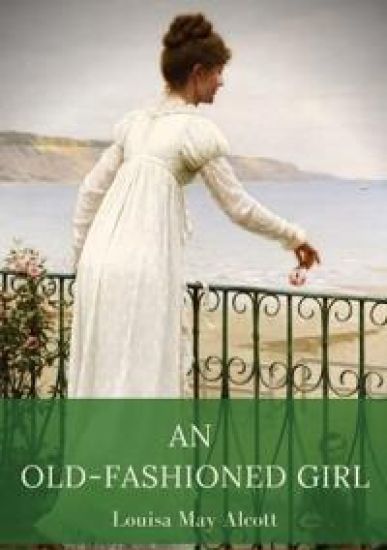
An Old-Fashioned GirlLouisa May Alcott 1869 An Old-Fashioned Girl is a novel by Louisa May Alcott first published in 1869. The first six chapters of the novel were serialised in the Merry's Museum magazine between July and August 1869. Alcott added another thirteen chapters before publishing the novel. The book revolves around Polly Milton, the old-fashioned girl of the title, who visits the wealthy family of her friend Fanny Shaw in the city and is overwhelmed by their fashionable life they lead and disturbed to see how the family members fail to understand one another and demonstrate little affection. She is largely content to remain on the fringes of their social life but exerts a powerful influence over their emotional lives and family relations. The novel was the basis of a 1949 musical film starring Gloria Jean as Polly. Polly Milton, a bright 14-year-old country girl, visits her friend Fanny Shaw and her wealthy family in the city for the first time. Poor Polly is overwhelmed by the splendor at the Shaws' and their urbanized, fashionable lifestyles, expensive clothes and other habits she has never been exposed to, and, for the most part, dislikes. Fanny's friends ignore her because of her different behavior and simple clothing, Fanny's brother Tom teases her, and Fan herself can't help considering her unusual sometimes. However, Polly's warmth, support, and kindness eventually win the hearts of all the family members, and her old-fashioned ways teach them a lesson they would never forget. Over the next six years, Polly visits the Shaws every year and comes to be considered a member of the family. Later, Polly comes back to the city to become a music teacher and struggles with professional issues and internal emotions. Later in the book, Polly finds out that the prosperous Shaws are on the brink of bankruptcy, and she guides them to the realization that wholesome family life is the only thing they will ever need, not money or decoration. With the comfort of the ever-helpful Polly, the family gets to change for the better and to find a happier life for all of them. After being rejected by his fianc e, Trix, Tom procures a job out West, with Polly's brother Ned, and heads off to help his family and compensate for all the money he has wasted in frivolous expenditures. At that point in the book, we see that Polly and Tom seem to have developed strong feelings for one another. At the end of the book, Tom returns from the West and finally gets engaged to his true love, Polly.
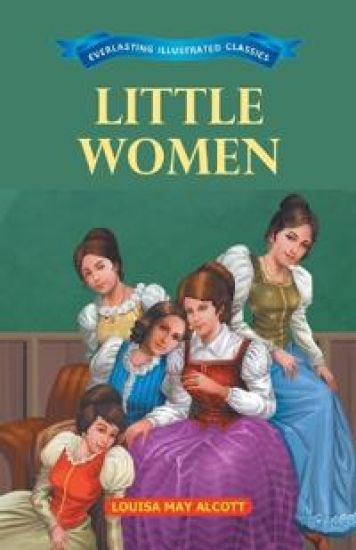
Louisa May Alcott’s timeless text, illustrated with movie stills from Greta Gerwig’s star-studded film adaptation—now with eight full-color removable mini-posters! Readers have been falling for the timeless story of sisters Meg, Jo, Beth, and Amy as they navigate hardship and adventure in post-Civil War Concord, Massachusetts, for more than 150 years. This new paperback edition of the classic novel is illustrated throughout with gorgeous black-and-white photos from the film adaptation written for the screen and directed by Greta Gerwig, and starring Timothée Chalamet, Chris Cooper, Laura Dern, Louis Garrel, James Norton, Bob Odenkirk, Florence Pugh, Saoirse Ronan, Eliza Scanlen, Meryl Streep, and Emma Watson, is perfect for a new generation of fans. It is the ultimate introduction to Louisa May’s Alcott’s classic tale as well as a must-have for fans of the film.
Entre los 100 mejores libros juveniles de todos los tiempos seg n la revista TIMES 2020 Una preciosa edici n ilustrada de Mujercitas, de Louisa May Alcott, una historia universal, apreciada por generaciones de ni as durante m s de ciento cincuenta a os. El se or March se ha marchado a la guerra y sus cuatro hijas deben quedarse en casa con su madre, su t a y sus amigos, en medio del bullicio de la vida burguesa de Nueva Inglaterra. Meg, Beth, Amy y Jo, las cuatro hermanas March, tienen intereses muy distintos, pero juntas viven y sufren los cambios que conlleva hacerse un lugar en el mundo y, lo m s complicado de todo, crecer. Cl sicos inolvidables para disfrutar, compartir y dejar volar la imaginaci n. ENGLISH DESCRIPTION TIMES 2020 100 Best YA of All Times A beautiful illustrated edition of Little Women, by Louisa May Alcott, a universal story, appreciated by generations of girls for over one hundred and fifty years. Mr. March has gone off to war, and his four daughters must stay home with their mother, their aunt, and their friends, amid the bustle of the New England bourgeois life. Meg, Beth, Amy and Jo, the four March sisters, have very different interests, but together they live and endure the changes that come with making a place in the world and, most complicated of all, growing up. Unforgettable classics to enjoy, share, and allow your imagination to run wild.
The novel follows the lives of four sisters detailing their passage from childhood to womanhood, and is loosely based on the author and her three sisters. Jo, Meg, Beth, and Amy March are four sisters living with their mother in New England. Their father is away serving as a chaplain in the Civil War, and the sisters struggle to support themselves and keep their household running despite the fact that the family recently lost its fortune. In the process, they become close friends with their wealthy neighbour. As the girls grow older, each faces her own personal demons and moral challenges. The girls are guided in their personal growth by their mother, and by their religious faith. The family's tight bonds are forever changed when Meg falls in love....
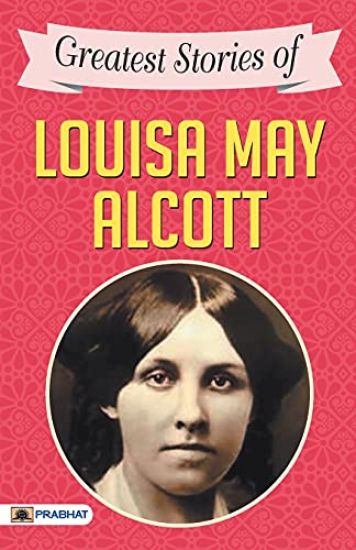
Louisa May Alcott (November 29, 1832 - March 6, 1888) was an American novelist, short story writer and poet best known as the author of the novel Little Women (1868) and its sequels Little Men (1871) and Jo's Boys (1886). She began her writing career at an early age, with short stories for newspapers and magazines. What began as a series of stories in the 1860s became the classic American children's novel we know today as Little Women.
This book has been considered by academicians and scholars of great significance and value to literature. This book forms a part of the knowledge base for future generations. So that the book is never forgotten we have re-typed, re-formatted, and re-published the book in a very modern format. Hence every reader would get a new book but without losing its old charm and feel. We at Alpha Editions, work towards the restoration of old and rare books so that they are never forgotten and are always available for the future generations.