Kirjojen hintavertailu – 12 859 819 kirjaa ja 27 kauppaa

Kirjailija

Ludwig Feuerbach

Kirjat ja teokset yhdessä paikassa: 110 kirjaa, julkaisuja vuosilta 1956–2025, suosituimpiin kuuluu Ludwig Feuerbachs Sämmtliche Werke. Vertaile teosten hintoja ja tarkista saatavuus suomalaisista kirjakaupoista.

110 kirjaa

Kirjojen julkaisuvuodet: 1956–2025.

The Essence of Religion: God the Image of Man, Man's Dependence on Nature, the Last and Only Source of Religion
""The Essence of Religion"" is a philosophical work by Ludwig Feuerbach that explores the relationship between God, man, and nature. Feuerbach argues that God is simply a projection of human desires and needs, and that religion is ultimately a reflection of humanity's dependence on nature. He contends that the concept of God is a way for humans to understand their own existence and place in the world, and that the true source of religion is the natural world itself. Feuerbach's ideas were influential in the development of modern atheism and secular humanism, and his work continues to be studied and debated by scholars of philosophy and theology. This book is a must-read for anyone interested in the intersection of religion, philosophy, and human nature. This Is A New Release Of The Original 1890 Edition. This scarce antiquarian book is a facsimile reprint of the old original and may contain some imperfections such as library marks and notations. Because we believe this work is culturally important, we have made it available as part of our commitment for protecting, preserving, and promoting the world's literature in affordable, high quality, modern editions, that are true to their original work.

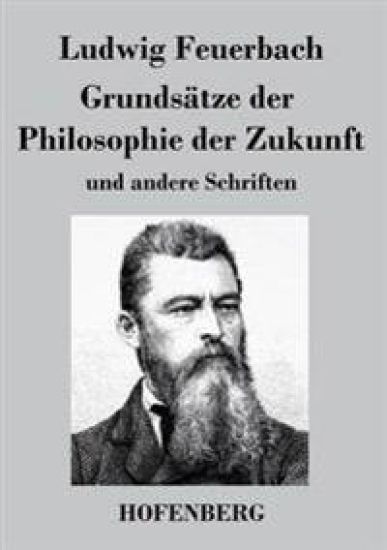
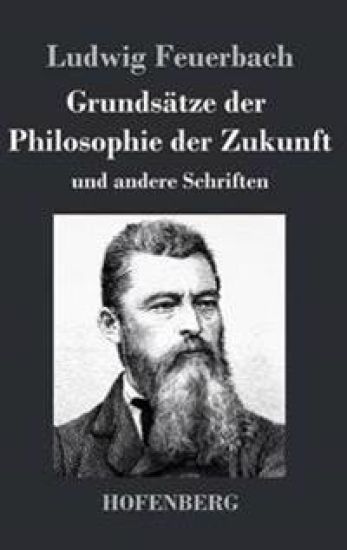
Geschichte der neuern Philosophie: von Bacon von Verulam bis Benedikt Spinoza

Geschichte der neuern Philosophie: von Bacon von Verulam bis Benedikt Spinoza

Ludwig Feuerbach

Createspace Independent Publishing Platform
2013
nidottu
Ludwig Feuerbach: Geschichte der neuern Philosophie von Bacon von Verulam bis Benedikt Spinoza Edition Holzinger. Taschenbuch Berliner Ausgabe, 2016, 4. Auflage Vollst ndiger, durchgesehener Neusatz mit einer Biographie des Autors bearbeitet und eingerichtet von Michael Holzinger Die Darstellung ging aus Vorlesungen hervor, die Feuerbach Anfang der drei iger Jahre in Erlangen gehalten hatte. Erstdruck: Ansbach 1833. Hier nach der 1847 publizierten Fassung letzter Hand: Ludwig Feuerbach's s mmtliche Werke, Bd. 4, Leipzig 1847. Textgrundlage ist die Ausgabe: Ludwig Feuerbach: Geschichte der neuern Philosophie von Bacon bis Spinoza. Herausgegeben von Joachim H ppner, Leipzig: Reclam, 1976. Herausgeber der Reihe: Michael Holzinger Reihengestaltung: Viktor Harvion Gesetzt aus der Minion Pro, 10 pt.
The Fiery Brook

The Fiery Brook

Ludwig Feuerbach

Verso Books
2013
nidottu
Ludwig Feuerbach's departure from the traditional philosophy of Hegel opened a door for generations of radical philosophical thinkers, foremost among them the young Karl Marx. Indeed, much of early Marx is unintelligible without reference to certain fundamental Feuerbachian texts. The selections in this volume, few of them available in translation elsewhere, reveal Feuerbach's fundamental criticisms of the 'old philosophy' of Hegel and advance his own humanistic thought, grounded in life and sensuality. The reader can readily grasp the liberating influence of this unjustly neglected philosopher.
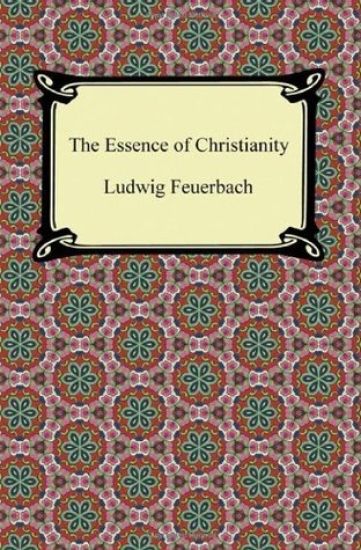
The Essence of Christianity

The Essence of Christianity

Ludwig Feuerbach

Cambridge University Press
2011
pokkari
Ludwig Feuerbach (1804–72), the German philosopher and a founding member of the Young Hegelians, a group of radical thinkers influenced by G. W. F. Hegel (1770–1831), was an outspoken critic of religion, and the 1841 publication of this work established his reputation. In the first part of the book he examines what he calls the 'anthropological essence' of religion, and in the second he looks at its 'false or theological essence', arguing that the idea of God is a manifestation of human consciousness. These ideas provoked strong reactions in Germany, and soon other European intellectuals wanted to read Feuerbach's book. The 1843 second edition was translated by Marian Evans (1819–80) - who would become better known by her pen name of George Eliot - and published in Britain in 1854. Evans was influenced by Feuerbach's work, and many of his humanist ideas about religion are reflected in her novels.