Kirjailija
Luigi Pirandello
Kirjat ja teokset yhdessä paikassa: 327 kirjaa, julkaisuja vuosilta 1957–2026, suosituimpiin kuuluu One, None And A Hundred-Thousand(Illustrated). Vertaile teosten hintoja ja tarkista saatavuus suomalaisista kirjakaupoista.
327 kirjaa
Kirjojen julkaisuvuodet: 1957–2026.
A brand new adaptation of Pirandello's first play No one has ever seen Signor Ponza's wife and her mother, Signora Frola together. Also, the neighbours have become suspicious because Signora Ponza never leaves her home and start asking questions. Ponza claims that this wife is really his second wife, the first having died in an earthquake that destroyed all records. Meanwhile his wife only pretends to be Signora Frola's daughter to humour Signora Frola, who, he claims, is insane. Thoroughly bewildered, Agazzi demands to meet Ponza's wife, who arrives heavily veiled proclaiming herself as both the daughter of Signora Frola and the second wife of Signor Ponza. Absolutely! {Perhaps} is brilliant comedy on the elusive nature of identity and reality and, like all of Pirandello's work, shows truth as subjective and relative and drama itself a mystery. Absolutely! {Perhaps} is published to coincide with the production at London's Wyndham's theatre starring Joan Plowright and directed by Franco Zeffirelli.
Sitruunoita Sisiliasta ja muita novelleja
Luigi Pirandello
LIKE
2007
Kovakantinen
Halvin toimitettuna 24,90 €
ARVOSTETUN NOBEL-KIRJAILIJAN TEKSTEJÄ VIHDOIN SUOMEKSI Luigi Pirandello (1867-1936) tunnetaan Suomessa erityisesti teatterin uudistajana. Hänen tuotannostaan tärkeimpiä ovat kuitenkin novellit, joita hän kirjoitti 240 ja muokkasi yli puolet näytelmistäänkin niistä. Sitruunoita Sisiliassa -kokoelmassa on 20 novellia. Niiden aiheet ovat ajankohtaisia vielä tänäkin päivänä. Pirandello kirjoittaa muun muassa huostaan otettavasta alkoholistiperheen lapsesta, itsensä etsimisestä ja rahan vallasta. Pirandellon omaa elämää sävytti köyhyys ja suvussa ilmenneet mielenterveysongelmat, ja näitä aiheita hän on siirtänyt novelleihinsa. Novellit ovat usein dramaattisia, koomisiakin, ja jännitys sekä yllätyksellisyys säilyvät viimeisille riveille saakka. Näyttämönä on takapajuinen Sisilian maaseutu tai suurkaupunki: Pirandello syntyi Sisiliassa ja päätyi Saksan kautta Roomaan. Urho Kekkonen poimi Pirandellolta kuuluisan sitaattinsa "Niin on jos siltä näyttää". "Sitruunoista Sisiliasta antaa monipuolisen ja yllättävän modernin kuvan Pirandellosta novellin taitajana. Ne luettuaan alkaa Pirandellon tavoin epäillä omaa identiteettiään ja kysellä, mikä on ihminen ja mitä hän tekee maailmassa." – Otto Lappalainen, Kiiltomato
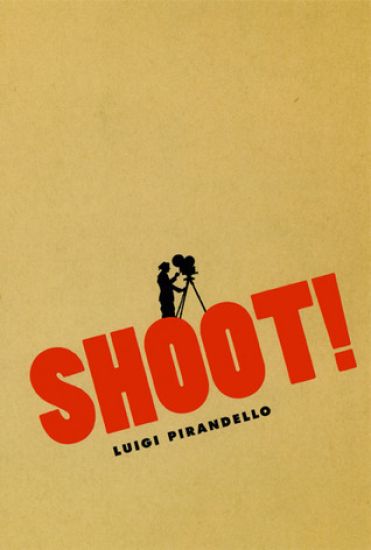
Originally published in Italian in 1915, "Shoot!" is one of the first novels to take as its subject the heady world of early motion pictures. Based on the absurdist journals of fictional Italian camera operator Serafino Gubbio, "Shoot!" documents the infancy of film in Europe - complete with proto-divas, laughable production schedules, and cost-cutting measures with priceless effects - and offers a glimpse of the modern world through the camera's lens. "Shoot!", presented here in its 1927 English translation, is a classic example of Nobel Prize - winning Sicilian playwright Luigi Pirandello's (1867-1936) literary talent and genius for blurring the line between art and reality. From the film studio Kosmograph, Pirandello's Gubbio steadily winds the crank of his camera by day and scribbles with his pen by night, revealing the world, both mundane and melodramatic, that unfolds in front of his camera. Through Gubbio's narrative - saturated with fantasy and folly - Pirandello grapples with the philosophical implications of modernity. Like much of Pirandello's work, "Shoot!" parodies human weaknesses, drawing attention to the themes of isolation and madness as emerging tendencies in the modern world. Enhanced by new critical commentaries, "Shoot!" is an entertaining caricature, capturing early twentieth-century Italian filmmaking and revealing its truths as only a parody can.
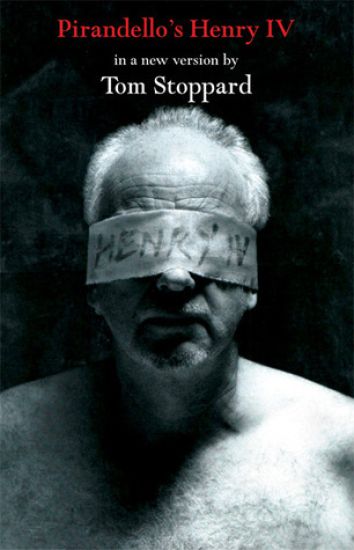
In this meeting of two of the twentieth century's greatest playwrights. Tom Stoppard has reinvigorated Luigi Pirandello's masterpiece of madness and sanity. After a fall from his horse, an Italian aristocrat believes he is the obscure medieval German emperor Henry IV. After twenty years of living this royal illusion, his beloved appears with a noted psychiatrist to shock the madman back to sanity. Their efforts expose that for the past twelve years the nobleman has in fact been sane. With his mask of madness unveiled, the aristocrat launches an offensive to deflect their unwanted attention. While Pirandello's characters race linguistically about in Stoppardian dervishes, battling for the upper hand--and the greatest laughs--one question emerges: What constitutes sanity?
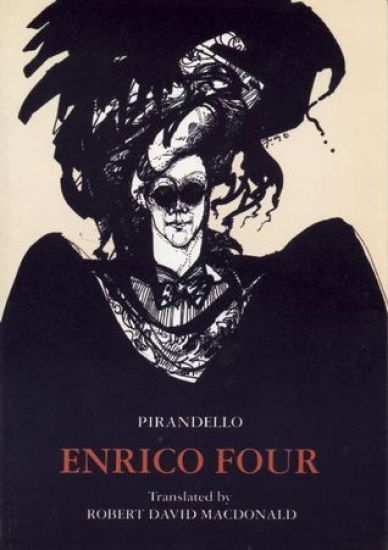
Premiered in this translation by the Citizens Theatre Company, Glasgow. Pirandello's study of perceptions has become a twentieth-century classic which invites us to consider our personal madness in offering a different face to everyone we meet.
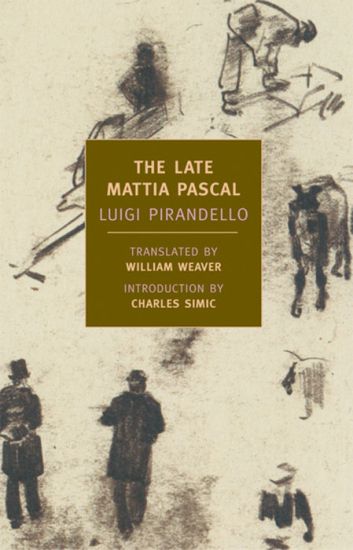
Mattia Pascal endures a life of drudgery in a provincial town. Then, providentially, he discovers that he has been declared dead. Realizing he has a chance to start over, to do it right this time, he moves to a new city, adopts a new name, and a new course of life--only to find that this new existence is as insufferable as the old one. But when he returns to the world he left behind, it's too late: his job is gone, his wife has remarried. Mattia Pascal's fate is to live on as the ghost of the man he was. An explorer of identity and its mysteries, a connoisseur of black humor, Nobel Prize winner Luigi Pirandello is among the most teasing and profound of modern masters. The Late Mattia Pascal, here rendered into English by the outstanding translator William Weaver, offers an irresistible introduction to this great writer's work
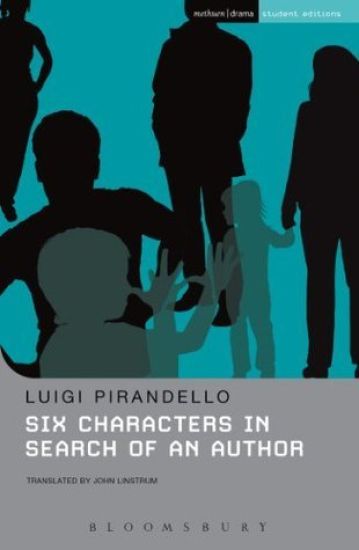
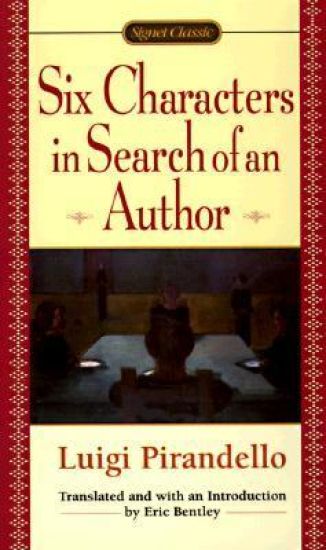
Six people arrive in a theatre during rehearsals for a play. But they are not ordinary people. They are the characters of a play that has not yet been written. Trapped inside a traumatic event from which they long to escape, they desperately need a writer to complete their story and release them. Intrigued by their situation, the director invites them to act out the key events of their lives ... Pirandello's best-known play and one of the most extraordinary and mysterious plays of the 20th century, Six Characters speaks directly to an age of uncertainty: where do we come from, where are we going, how do we become what we want to be?
Drama Classics: The World's Great Plays at a Great Little Price Luigi Pirandello's 1921 play about the nature of theatre and the problems of theatricality, in which six characters, whose author has abandoned them mid-process, turn up at a rehearsal and demand to be played by the actors present in order to resolve their tragedy and become 'real'. This edition of Six Characters in Search of an Author, in the Nick Hern Books Drama Classics series, is translated and introduced by Stephen Mulrine.
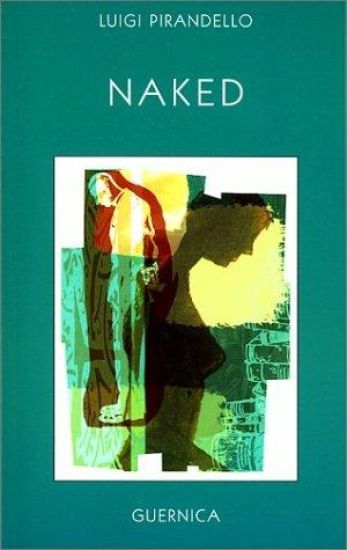
Typically provocative, at once comic and tragic, Pirandello's "Naked" ("Vestire gli ignudi") uncovers the machinery of guilt, deceit, and betrayal underlying the motives of five people. The heroine is a young governess who has been reduced to despair by a series of misfortunes. Dismissed from service when the baby in her care fell from a terrace to its death; abandoned by her prospective husband and penniless; she turns to prostitution but fails at this too and poisons herself. She nevertheless does not die - and the action turns farcical, resembling a contemporary media event. She invents a romantic tale about her history which appears in a newspaper and generates more than casual interest in four men: the newspaper reporter; a best-selling writer who rescues her; her faithless lover; and her former employer; all of whom pursue her, demanding she account for her lies. As she feels hounded beyond endurance, her situation grows increasingly dark. The unexpected ending shocks the audience into new awareness about the consequences of fantasy and illusion in our daily lives.
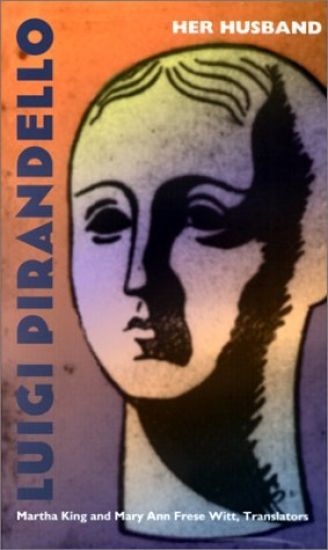
One of the twentieth century’s greatest literary artists and winner of the Nobel prize in 1934, Luigi Pirandello wrote the novel Her Husband in 1911, before he produced any of the well-known plays with which his name is most often associated today. Her Husband-translated here for the first time into English-is a profoundly entertaining work, by turns funny, bitingly satirical, and tinged with anguish. As important as any of the other works in Pirandello’s oeuvre, it portrays the complexities of male/female relations in the context of a newly emerging, small but vocal Italian feminist movement. Evoking in vivid detail the literary world in Rome at the turn of the century, Her Husband tells the story of Silvia Roncella, a talented young female writer, and her husband Giustino Boggiolo. The novel opens with their arrival in Rome after having left their provincial southern Italian hometown following the success of Silvia’s first novel, the rather humorously titled House of Dwarves. As his wife’s self-appointed (and self-important) promoter, protector, counselor, and manager, Giustino becomes the primary target of Pirandello’s satire. But the couple’s relationship-and their dual career-is also complicated by a lively supporting cast of characters, including literary bohemians with avant-garde pretensions and would-be aristocratic esthetes who are all too aware of the newly acquired power of journalists and the publishing establishment to make or break their careers. Having based many of the characters-including Silvia and Giustino-on actual literary acquaintances of his, Pirandello reacted to the novel’s controversial reception by not allowing it to be reprinted after the first printing sold out. Not until after his death were copies again made available in Italy. Readers will find Her Husband eerily evocative of the present in myriad ways-not the least of which is contemporary society’s ongoing transformation wrought by the changing roles of men and women, wives and husbands.
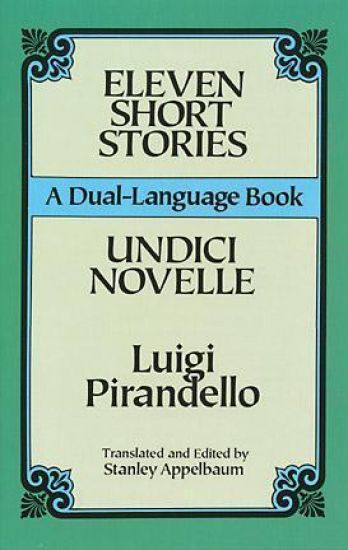
Winner of the 1934 Nobel Prize for literature, Luigi Pirandello (1867 - 1936) is best known for such landmark plays as Six Characters in Search of an Author. One of the great literary figures of the twentieth century, he also distinguished himself in a vast outpouring of short stories, poetry, novels, and essays. The stories often provided the seeds for later novels and plays. The 11 tales included in this collection are among his best. Presented in the original Italian with excellent new English translations on facing pages, they offer students of Italian language and literature a unique learning aid and a treasury of superb fiction by a modern master. The stories range in time from the earliest known tale, Little Hut, a study of rural passions written in 1884, to Mrs. Frola and Mr. Ponza, Her Son-in-Law, a quintessential Pirandello story about the relativity of truth and the impossibility of penetrating other people's minds. Published in 1917, it formed the basis of Pirandello's first major play, Right You Are If You Think You Are. In addition to these narratives, the volume also includes Citrons from Sicily, With Other Eyes, A Voice, The Fly, The Oil Jar, It's Not to be Taken Seriously, Think it Over, Giacomino!, A Character's Tragedy, and A Prancing Horse. Accompanying the stories are a biographical and critical introduction to Pirandello and his work, brief introductions to each of the stories and explanatory footnotes.
Presents the classic play about literature and reality, first produced in 1921, in which six characters involved in their own family drama come to life at a theater in the midst of a rehearsal, insisting that the theatrical company complete their story
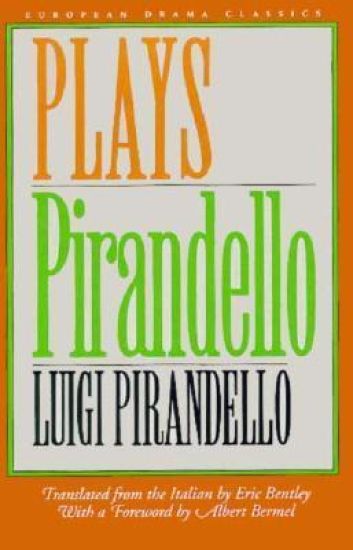
Luigi Pirandello is best known for his ability to create farcical tragedies that pit reality against appearance in such a way that objective truth is never revealed. Time magazine called Pirandello's work a fascinating precursor of the entire theater of the absurd -- the anguish over existence in Sartre and Camus, the guerilla warfare against ossified language and the mass mind in Ionesco, the bleak, alienated vision of Beckett, the sense of man eternally acting a role in Genet, and the use of the stage as a self-contained universe in Pinter. In new translations by acclaimed playwright and translator Eric Bentley, these versions of four of Pirandello's most celebrated plays -- Six Characters in Search of an Author, Emperor Henry, The Man with the Flower in His Mouth, and Right You Are -- are considered to be the standards for American productions. They capture the playwright's unique voice with remarkable precision, while at the same time attending to the rigors of the American stage.
Pirandello's masterpiece, a study in illusion and reality, follows a group of characters who try to fashion their fife stories into acceptable drama. Mr. Brustein's new rendering is accessible, contemporary, and highly speakable while retaining the flavor of the Italian original.
Pirandello's ingenious detective story about a young woman who is hounded by the press after the death of a child in her care. Nicholas Wright's version of Luigi Pirandello's 1922 play, Naked, was first performed at the Almeida Theatre, London, in February 1998, in a production starring Juliette Binoche.