Kirjojen hintavertailu – 12 859 829 kirjaa ja 27 kauppaa

Kirjailija

Manly P. Hall

Kirjat ja teokset yhdessä paikassa: 270 kirjaa, julkaisuja vuosilta 2003–2026, suosituimpiin kuuluu The Initiates of the Flame - Fully Illustrated Edition. Vertaile teosten hintoja ja tarkista saatavuus suomalaisista kirjakaupoista.

Nimi esiintyy myös muodoissa: Manly P Hall

270 kirjaa

Kirjojen julkaisuvuodet: 2003–2026.

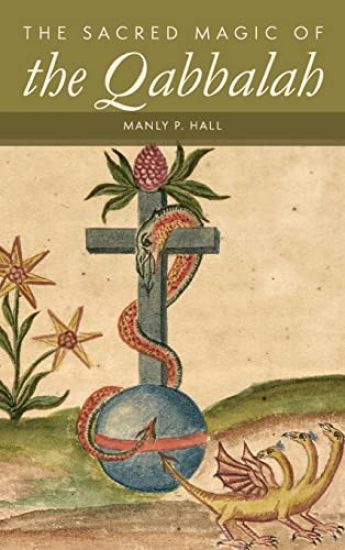
The Sacred Magic of the Qabbalah

The Sacred Magic of the Qabbalah

Manly P. Hall

Mockingbird Press
2022
sidottu
The Sacred Magic of the Qabbalah (1936) by writer and mystic Manly P. Hall, explores the doctrines of the Qabbalah, an ancient tradition that investigates the science and mystery of divine names and numbers. Author, lecturer, and mystic Manly P. Hall (b. 1901, d. 1990) wrote over 150 books and pamphlets, countless essays, and gave thousands of lectures over his 70-year career. Canadian-born, young Hall was first led to mysticism when he moved to Los Angeles at the age of 18. As a preacher and lecturer at the Church of the People in the 1920s, Hall shared the wisdom of Pythagoras, Plato, and the teachings of ancient traditions. During these years, he also met his wealthy patrons, Carolyn Lloyd, and her daughter, Estelle. With their financial backing, Hall was able to expand his research across the globe, learning more about age-old religions and amassing a sizeable library of rare books that he sent back to Los Angeles. In later years, these books would be collected at the Philosophical Research Society, a center of wisdom and learning. A prolific writer, Hall wrote consistently throughout his career, with titles like The Secret Teachings of All Ages (1928) and Lectures in Ancient Philosophy: An Introduction to Practical Ideals (1984). He also lectured frequently, attracting a record-setting audience at Carnegie Hall in 1942 with his talk titled "The Secret Destiny of America." The Sacred Magic of the Qabbalah is one of Hall's earlier works, first published in 1929 and republished in 1936. The work, while short, is broken into three distinct parts. Part one is titled Keys of the Sacred Wisdom, and describes the preparatory work that a student of the Qabbalah must do before being pure enough to receive these teachings. They must only be motivated by the "highest motives and purest ideals" if they hope to gain true understanding. This section also introduces the reader to the importance of the twenty-two hieroglyphic letters of the Hebrew alphabet and the ten sacred numbers. It is from the interactions of these letters that all creation originates. Part two is titled The Mystery of the Numbers. "The ancient Qabbalistic magic of the philosophers had nothing to do with fortune-telling, divination, or the so-called art of numerology..." Hall warns. This section explains the significance of the numbers one through ten. The number two, for example, is "symbolic of the dual system of human thought, which views everything either from the standpoint of opposites or comparison. Things are judged in their relation to other things, but seldom, if ever, weighed and measured according to their own intrinsic merits." It is only the mystic who sees that everything in creation can only be judged on its own merits. In part three, The Power of Invocation and the Science of Sacred Names, Hall explains the truth behind the ancient rituals of past ceremonial magicians. No need to draw a special circle and carefully place swords and scepters within it. The trappings of ritual are merely a metaphor. For "...the true Magus stood in the center of his circle, but the circle was the sphere of his experiences...for the circle is his own aura... The true magician was robed in the white garments of a purified body...he carried the living offerings of his daily labors, and there with the vowels and consonants of the celestial alphabet as his own being he blazed forth in the living name that invokes all things." Christianity, Hall argued, has maintained the "crystallized, external ritual" of magic, but the "sublime magic...is missing." It is form without function and leaves the Christian student with a hungry soul.
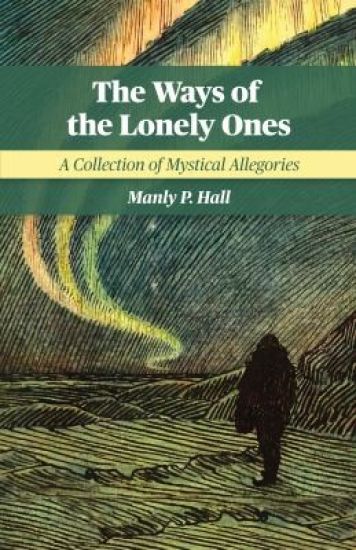
The Ways of the Lonely Ones: A Collection of Mystical Allegories
The Ways of the Lonely Ones: A Collection of Mystical Allegories (1925) by Manly P. Hall is a series of stories written to bring the truths of the world to the reader's heart, rather than merely to their intellect and reason. These eight tales tell the stories of seemingly ordinary people whose mystical experiences change the course of their lives and guide them to deeper truths. In the introduction, Hall writes, "Every individual who comes into the world is a Lonely One-a stranger in a strange land." The "Lonely Ones" of these stories are united in their search for greater understanding, as are the readers. In "Nature's Homage," Manly tells the tale of the Old Man of the Mountain, the "hermit of the mighty peaks." This man's deep connection with nature leads him to care for the mountain animals, and in return they care for him, bringing him food. He shares his story with a youth who comes to the mountain to hunt, leading the young man to foreswear hunting forever and to take responsibility for the creatures of the mountain when the hermit is gone. "The Maker of Gods" shares the story of a potter who is blessed with the ability to mold gods from clay, which then come to life and go home to their Father. As word spreads of his great deeds, the potter is visited by many who come to watch him work. He explains, "'From the clay of the earth and all things earthy must man mold the gods of his dreams; from the sticks and stones which surround him he must form the wings to bear aloft his innermost ideals.'" The story of "The One Who Turned Back" reveals a pure and generous philosopher who stands at the curtain between humankind and immortality after a long life of toil and care for his fellow creatures. He is told he need no longer struggle in the mortal darkness. Instead, he can step into a greater Light with "new worlds to conquer, new duties, new sorrows and a fuller understanding." But called back to the world by the broken heart of humanity, he must choose between this higher plane and returning to help those still in despair. In "The Guardian of Light," a pilgrim wanders the earth for many years seeking an answer to the riddle of life. Spying a Light shining high atop a high peak, he climbs to the top where he finds an old man draped in flowing robes. The old man holds a mysterious flame, but he is weary. He shares the truth of the Light with the pilgrim, who chooses to relieve the old man of his burden and free him to hold his greater Light among the stars. But the task is a weary one, and the pilgrim must pass through failure and despair before he can truly hold the Light. Manly P. Hall was just 21 years old when he wrote this impressive collection of allegories. Just three years earlier, he had moved from his native Canada to Los Angeles, where he quickly became a preacher at the Church of the People. This self-educated spiritual and mystical leader embarked on a 7-decade career of lectures, writings, and scholarship to share the truths of the greater universe. He wrote over 150 books and essays throughout his life, and gave a lecture at Carnegie Hall that set an attendance record in 1942. In the 1930s, Hall founded the Philosophical Research Society in Los Angeles, dedicated to the study of metaphysics, religion, and mythology. Throughout his lifetime, he traveled extensively and collected many works of philosophy to add to its library. Still in operation today, the PRS has a substantial library of over 50,000 volumes.
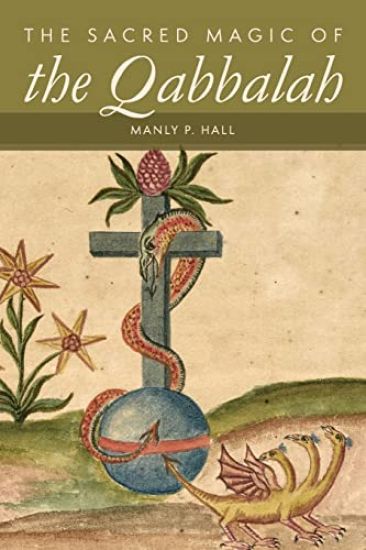
The Sacred Magic of the Qabbalah

The Sacred Magic of the Qabbalah

Manly P. Hall

Mockingbird Press
2022
nidottu
The Sacred Magic of the Qabbalah (1936) by writer and mystic Manly P. Hall, explores the doctrines of the Qabbalah, an ancient tradition that investigates the science and mystery of divine names and numbers. Author, lecturer, and mystic Manly P. Hall (b. 1901, d. 1990) wrote over 150 books and pamphlets, countless essays, and gave thousands of lectures over his 70-year career. Canadian-born, young Hall was first led to mysticism when he moved to Los Angeles at the age of 18. As a preacher and lecturer at the Church of the People in the 1920s, Hall shared the wisdom of Pythagoras, Plato, and the teachings of ancient traditions. During these years, he also met his wealthy patrons, Carolyn Lloyd, and her daughter, Estelle. With their financial backing, Hall was able to expand his research across the globe, learning more about age-old religions and amassing a sizeable library of rare books that he sent back to Los Angeles. In later years, these books would be collected at the Philosophical Research Society, a center of wisdom and learning. A prolific writer, Hall wrote consistently throughout his career, with titles like The Secret Teachings of All Ages (1928) and Lectures in Ancient Philosophy: An Introduction to Practical Ideals (1984). He also lectured frequently, attracting a record-setting audience at Carnegie Hall in 1942 with his talk titled "The Secret Destiny of America." The Sacred Magic of the Qabbalah is one of Hall's earlier works, first published in 1929 and republished in 1936. The work, while short, is broken into three distinct parts. Part one is titled Keys of the Sacred Wisdom, and describes the preparatory work that a student of the Qabbalah must do before being pure enough to receive these teachings. They must only be motivated by the "highest motives and purest ideals" if they hope to gain true understanding. This section also introduces the reader to the importance of the twenty-two hieroglyphic letters of the Hebrew alphabet and the ten sacred numbers. It is from the interactions of these letters that all creation originates. Part two is titled The Mystery of the Numbers. "The ancient Qabbalistic magic of the philosophers had nothing to do with fortune-telling, divination, or the so-called art of numerology..." Hall warns. This section explains the significance of the numbers one through ten. The number two, for example, is "symbolic of the dual system of human thought, which views everything either from the standpoint of opposites or comparison. Things are judged in their relation to other things, but seldom, if ever, weighed and measured according to their own intrinsic merits." It is only the mystic who sees that everything in creation can only be judged on its own merits. In part three, The Power of Invocation and the Science of Sacred Names, Hall explains the truth behind the ancient rituals of past ceremonial magicians. No need to draw a special circle and carefully place swords and scepters within it. The trappings of ritual are merely a metaphor. For "...the true Magus stood in the center of his circle, but the circle was the sphere of his experiences...for the circle is his own aura... The true magician was robed in the white garments of a purified body...he carried the living offerings of his daily labors, and there with the vowels and consonants of the celestial alphabet as his own being he blazed forth in the living name that invokes all things." Christianity, Hall argued, has maintained the "crystallized, external ritual" of magic, but the "sublime magic...is missing." It is form without function and leaves the Christian student with a hungry soul.
The Ways of the Lonely Ones: A Collection of Mystical Allegories
The Ways of the Lonely Ones: A Collection of Mystical Allegories (1925) by Manly P. Hall is a series of stories written to bring the truths of the world to the reader's heart, rather than merely to their intellect and reason. These eight tales tell the stories of seemingly ordinary people whose mystical experiences change the course of their lives and guide them to deeper truths. In the introduction, Hall writes, "Every individual who comes into the world is a Lonely One-a stranger in a strange land." The "Lonely Ones" of these stories are united in their search for greater understanding, as are the readers. In "Nature's Homage," Manly tells the tale of the Old Man of the Mountain, the "hermit of the mighty peaks." This man's deep connection with nature leads him to care for the mountain animals, and in return they care for him, bringing him food. He shares his story with a youth who comes to the mountain to hunt, leading the young man to foreswear hunting forever and to take responsibility for the creatures of the mountain when the hermit is gone. "The Maker of Gods" shares the story of a potter who is blessed with the ability to mold gods from clay, which then come to life and go home to their Father. As word spreads of his great deeds, the potter is visited by many who come to watch him work. He explains, "'From the clay of the earth and all things earthy must man mold the gods of his dreams; from the sticks and stones which surround him he must form the wings to bear aloft his innermost ideals.'" The story of "The One Who Turned Back" reveals a pure and generous philosopher who stands at the curtain between humankind and immortality after a long life of toil and care for his fellow creatures. He is told he need no longer struggle in the mortal darkness. Instead, he can step into a greater Light with "new worlds to conquer, new duties, new sorrows and a fuller understanding." But called back to the world by the broken heart of humanity, he must choose between this higher plane and returning to help those still in despair. In "The Guardian of Light," a pilgrim wanders the earth for many years seeking an answer to the riddle of life. Spying a Light shining high atop a high peak, he climbs to the top where he finds an old man draped in flowing robes. The old man holds a mysterious flame, but he is weary. He shares the truth of the Light with the pilgrim, who chooses to relieve the old man of his burden and free him to hold his greater Light among the stars. But the task is a weary one, and the pilgrim must pass through failure and despair before he can truly hold the Light. Manly P. Hall was just 21 years old when he wrote this impressive collection of allegories. Just three years earlier, he had moved from his native Canada to Los Angeles, where he quickly became a preacher at the Church of the People. This self-educated spiritual and mystical leader embarked on a 7-decade career of lectures, writings, and scholarship to share the truths of the greater universe. He wrote over 150 books and essays throughout his life, and gave a lecture at Carnegie Hall that set an attendance record in 1942. In the 1930s, Hall founded the Philosophical Research Society in Los Angeles, dedicated to the study of metaphysics, religion, and mythology. Throughout his lifetime, he traveled extensively and collected many works of philosophy to add to its library. Still in operation today, the PRS has a substantial library of over 50,000 volumes.
Lost Keys of Freemasonry

Lost Keys of Freemasonry

Manly P Hall

Lamp of Trismegistus
2022
pokkari
Manly P. Hall, masonic and esoteric scholar, traces the path followed by initiates to the ancient craft. Hall also recounts the ethical training required of a Freemason, and he profiles the character traits a Mason must "build" within himself. More than a mere social organization a few centuries old, Freemasonry can be regarded as a perpetuation of the philosophical mysteries and initiations of the ancients. This book reveals the unique and distinctive elements that have inspired generations of Masons. Thoughtful members of the craft, as well as outsiders, will appreciate its exploration of Masonic idealism and the eternal quest, from humble candidate to entered apprentice and master Mason.
Sepher Yetzirah and the Qabalah

Sepher Yetzirah and the Qabalah

Manly P Hall

Lamp of Trismegistus
2022
pokkari
Qabalistic scholar Manly P. Hall examines the origins and evolution of Hermetic Qabalah and the role of the Sepher Yetzirah in a wonderful and insightful essay. He also offers a fantastic, simplified, and unique translation of the Sepher Yetzirah, the Book of Formation, for which he consulted nine separate translations in four languages (English, German, Hebrew and Latin) in order to assemble the most accurate modern representation of this classic esoteric text.
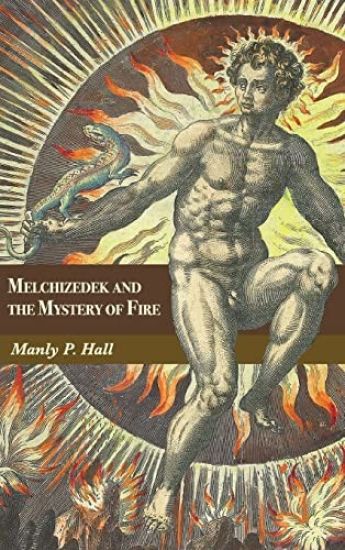
Melchizedek and the Mystery of Fire: A Treatise in Three Parts
Melchizedek and the Mystery of Fire: A Treatise in Three Parts (1926) is a short work by mystic and occultist Manly P. Hall. It explores the symbolism of ancient rituals in Christianity, and their sources in earlier religions and cultural traditions. It also explains the human body's "occult anatomy," giving meaning and symbolism to our very organs and glands. Canadian-born Manly P. Hall (1901-1990) was a writer and lecturer of mysticism for over 70 years. Introduced to the mysteries of the ancient world upon moving to Los Angeles in 1919, he quickly became a preacher at the Church of the People. At just 18 years old, he spoke about Pythagoras and Plato, along with newer doctrines like Theosophy and Rosicrucianism. Soon, this intense young man had caught the attention of the wealthy Carolyn Lloyd and her daughter, Estelle. The Lloyds became his patrons, funding an expedition around the world that gave Hall insight into ancient religions and traditions across the globe. He collected an extensive library of rare books of philosophy which he brought back with him to Los Angeles. Over a seven-decade career, Hall embarked on an ambitious career of writing and lectures, giving thousands of talks throughout his life including two at Carnegie Hall. He wrote 150 books and pamphlets, plus countless essays. One of his earlier works is Melchizedek and the Mystery of Fire. Melchizedek is a Biblical figure who first appears in Genesis 14:18-20. He was a priest-king who offered bread and wine to Abraham after returning from battle. This is often considered a precursor to the eucharist in the New Testament. The book does not focus on Melchizedek, but uses him as a starting point to explore the mysteries of ancient symbols and how they have been incorporated into modern religion-specifically Christianity. Hall believed that the stories of the Bible were allegorical and that there were secrets hidden within the parables. In his view, today's Christians and Biblical scholars, while well-intentioned, are unable to look beyond the traditions they have inherited to the truth within. Despite its short length, Melchizedek is packed full of information on mysticism. Incorporating ritual and legend from great ancient civilizations as varied as India, China, Mexico, and Japan, Hall demonstrates that the truth of humanity is rooted in similar stories across these cultures, and has continued into Biblical allegory. The final part of the work explores the human body, detailing the nerve centers, internal organs, spinal column, and glands. Hall associates different parts of the body with signs of the zodiac, and with places and events from the Bible and other spiritual stories. He felt that each human was a universe to himself, a living temple with its own High Priest. Hall continued to grow in popularity and prominence throughout the 1920s and 1930s. In the early 1930s, he founded the Philosophical Research Society, creating a home for metaphysical thought and education, and for his extensive library. While some of the books were unfortunately auctioned off after his death, over 25,000 remain. The center is still in operation today.
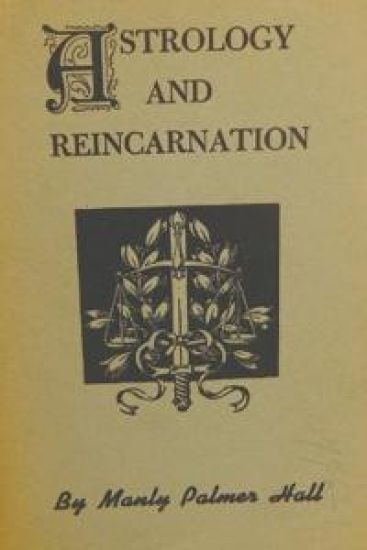
Astrology And Reincarnation

Astrology And Reincarnation

Manly P. Hall

Must Have Books
2022
nidottu

Halvin toimitettuna 12,00 €

A description of Karma as experienced by each individual astrological sign; includes Vedic and Tibetan methods for evaluating past and future lives from the birth chart. Astrology is another disputed subject which is gaining widespread public support. With computerization available, almost every aspect of prediction can be explored scientifically. Many prominent minds of the past have accepted both reincarnation and astrology, and it is only natural that the two beliefs have much in common. If we have lived before, it would be interesting to discover, if possible, the place, time, and circumstances of a previous embodiment. In many cases, of course, such knowledge might have traumatic effects. Most individuals find memories of the present life difficult to bear. The walls of the Borobudur, a magnificent Buddhist ruin on the island of Java, are decorated with scenes from the 600 previous lives of Gautama Buddha. Only the Perfectly Enlightened One could contemplate such a panorama of previous births with reasonable composure. To most Buddhists rebirth is a simple fact. It is one of the determining elements in the ethical and moral philosophies of these people. The question naturally arises: Would it be possible astrologically to prove beyond a shadow of doubt that reincarnation is an actual fact? Could a chart be set up at the time of death which would be the birth chart of the entity entering the spiritual world, and would it be possible for such a chart to reveal the condition of that entity in the after-death state as well as the time and place of its rebirth on the physical plane? Would it also be conceivable that a birth chart of the present life could provide some clue to the previous incarnation? Hindu philosophers would answer these questions in the affirmative, but Western thinkers have strong reservations.
Secret Destiny of America Hardcover

Secret Destiny of America Hardcover

Manly P Hall

LUSHENA BOOKS INC
2022
sidottu
From the author of the landmark Secret Teachings of All Ages comes two classic works on the mysterious origins and unique mission of America: The Secret Destiny of America and America's Assignment with Destiny. Focusing on often-forgotten moments in history, Manley P. Hall proposes that there was a Great Plan put forth one thousand years before our nation's founding: humanistic and mystical organizations wished for the continent to be the location for an experiment in self-government and religious freedom. As one of the leading esoteric scholars of the twentieth century, Hall offers an intriguing view of our past, discussing everything from the symbolism of the Great Seal of the U. S. to the prophecy announced at George Washington's birth.
Melchizedek and the Mystery of Fire

Melchizedek and the Mystery of Fire

Manly P Hall

LUSHENA BOOKS INC
2022
sidottu
In this essay, Hall clearly sets forth the relationship of the fire symbols to the life forces within the human body. Special treatment is given to the subjects of the ductless glands and the part which they play in the development of spiritual consciousness. Mr. Hall describes how man's body is a living temple and how the places of initiation and ritual in the temple's various chambers and passageways symbolize processes occurring in the human body.
Occult Anatomy of Man

Occult Anatomy of Man

Manly P Hall

LUSHENA BOOKS INC
2022
sidottu

Halvin toimitettuna 27,60 €

The Occult Anatomy of Man by noted writer, lecturer, and mystic Manly Palmer Hall seeks to explain the nature of the universe by looking inward - into the human body itself. As the author of over 150 books, pamphlets, and essays, Hall was a major voice in mystic and metaphysical circles. He rose to prominence in 1928 with the release of his most famous work, The Secret Teachings of All Ages. While continuing to write and give extensive lectures in California, Hall also founded the Philosophical Research Society in Los Angeles in 1934. The center is still in operation today, providing guidance and wisdom to those who seek it. One of Hall's early works is The Occult Anatomy of Man, in which Hall interprets the human body as the allegorical answer to the mysteries of the universe. Hall begins by reminding us that the holy writings of most "enlightened people" include some version of the concept that God made man in His own image. From this beginning, The Occult Anatomy of Man explores the idea that as a microcosm of the infinite, the human body contains the answers to the secrets of the universe. Hall states, " The priests of the ancient world] believed that every star in the heavens, every element in the earth, and every function in Nature was represented by a corresponding center, pole or activity within the human body." Unsurprisingly, Hall takes issue with literalists and historians and their interpretations of sacred texts. "Those who understand the Bible's] literal meaning understand the least of its meaning." To illustrate, he describes some of the symbolism in the Bible and lays out their paganistic roots: "The Christian cross comes from Egypt and India; the triple mitre from the faith of the Mithraics; the shepherd's crook from the Hermetic Mysteries and Greece; the Immaculate Conception from India..." In our inability to comprehend the vastness of the universe, the great spiritual leaders instead turned inward, looking to that which we could understand to explain that which we cannot. By viewing man as a microcosm of the great cosmos, we can better comprehend the unknowable. The universe is divided into three parts in nearly all spiritual belief systems - heaven, earth, and a hell or underworld. The heavens are on high, where God resides and looks down upon us. When we pray, we raise our eyes and hands toward heaven. Earth is the middle ground, suspended and connected to both heaven and hell. And hell lies below. The human body, Hall argues, follows the same pattern. The "skull with its divine contents" is the heaven of the physical form. The spinal column with its 33 vertebrae is the earth, connecting the heavens to what lies below. Jesus Christ, God's son sent to earth for 33 years, is not coincidental. Some ancients referred to the spine as the stairway, or a winding road leading where? To the skull - to heaven. And below are the reproductive organs representing hell or the underworld, the source of our emotional and sexual impulses. This is the furthest from the brain and from our divinity. Through extensive study of world religions and cultural traditions from both East and West, Hall explains the wisdom of the ancients in this short book. For those curious about man's connection to nature and to the wider universe, The Occult Anatomy of Man is a foundational work.
How To Understand Your Bible

How To Understand Your Bible

Manly P Hall

LUSHENA BOOKS INC
2022
sidottu
In spite of human prejudice to the contrary, there is but one religion and one truth, and all the great faiths of the world are parts or fragments of the Ancient Wisdom. The Scriptures of the world are the written records devised both to preserve and at the same time to conceal the mystery of Eternal Law. It naturally follows that there is certain interdependence between religious writings. To understand any one sacred book completely it is necessary to also understand all other sacred books. The Christian Bible is the greatest book in English literature. But like most other great books, it must be approached with understanding, gentleness, and a sincere desire to find truth. The Bible as we know it today is a fragment of that truth. How to Understand Your Bible goes a long way to explaining myth and history, spiritual and religious, fact and fiction, and is a must for truth seekers everywhere. "The whole motion of the Universe is toward Truth. Truth is growing up in everything, manifesting through all forms and natures. Truth, therefore, may be called the hidden good, the secret God who dwells in the temples that are built for it according to the law." Manly P. Hall
Pineal Gland Hardcover

Pineal Gland Hardcover

Manly P Hall

LUSHENA BOOKS INC
2022
sidottu

Halvin toimitettuna 25,60 €

Comprises Chapter XVI of Hall's "Man: The Grand Symbol of the Mysteries." Scientists refer to the pineal gland as the "atrophied third eye." Indeed, it, along with the pituitary, is the third eye chakra or energy center, but are more dormant than atrophied. According to Max Heindel's, in the distant past, man was in touch with the inner worlds through an activated pineal and pituitary gland. Considered the most powerful and highest source of ethereal energy available to humans, the third eye has always been important in initiating psychic powers (e.g. clairvoyance and seeing auras). Manly traces the historical significance of the gland and its spiritual value.
The Secret Teachings of All Ages

The Secret Teachings of All Ages

Manly P Hall

LUSHENA BOOKS INC
2022
sidottu

Halvin toimitettuna 44,00 €

This key to the world's esoteric traditions unlocks some of the most fascinating and closely held secrets of myth, religion, and philosophy. Unrivaled in its beauty and completeness, it distills ancient and modern teachings of nearly 600 experts. Compelling themes range from the riddle of the Sphinx and the tenets of Pythagorean astronomy to the symbolism of the pentagram, the significance of the Ark of the Covenant, and the design of the American flag. Acclaimed by Publishers Weekly as "a classic reference, dizzying in its breadth," this remarkable resource was compiled by the founder of the Philosophical Research Society. Author Manly P. Hall examines the secrets of Isis along with arcane aspects of mystic Christianity and other religions. Fascinating surveys cover topics as diverse as Kabbalah, alchemy, cryptology, and Tarot, along with Masonry, gemology, and the identity of William Shakespeare. Sixteen pages of color plates and 100 black-and-white images by the celebrated illustrator J. Augustus Knapp illuminate this vast and indispensable encyclopedia of the occult.