Kirjojen hintavertailu – 12 903 725 kirjaa ja 27 kauppaa

Kirjailija

Manuel London

Kirjat ja teokset yhdessä paikassa: 25 kirjaa, julkaisuja vuosilta 1988–2018, suosituimpiin kuuluu Social Entrepreneurship. Vertaile teosten hintoja ja tarkista saatavuus suomalaisista kirjakaupoista.

25 kirjaa

Kirjojen julkaisuvuodet: 1988–2018.

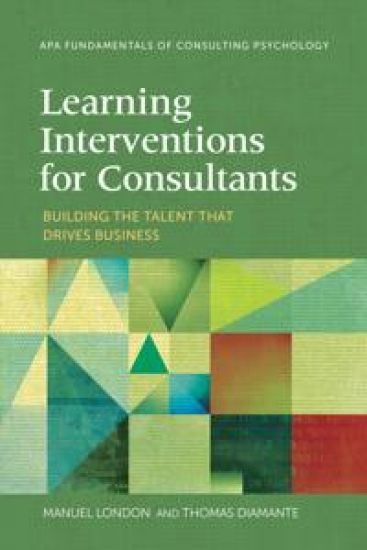
Learning Interventions for Consultants

Learning Interventions for Consultants

Manuel London; Thomas Diamante

American Psychological Association
2018
pokkari
This book outlines a five-step process for designing and implementing learning interventions for individual employees, teams, and entire organizations. These interventions promote continuous learning, innovation, and organizational growth and productivity. Innovation is one of the key drivers of success in modern business, and continuous learning is what drives innovation. Building on the theory and practice of consulting psychology and the science of learning, along with principles of human resources development, this book articulates a five-step process for designing and delivering effective learning interventions for individual employees, teams, and entire organizations. This process includes conducting a needs analysis, developing a contract that sets reasonable goals and expectations for clients, designing learning methods to meet the organization's needs, implementing the program and tailoring it as needed, and evaluating outcomes to ensure ongoing improvement. The book also outlines three distinct types of learning-adaptive, generative, and transformative-that help employees cultivate essential skills and adapt their behaviors to improve job performance and promote organizational change. Guidelines for blending new learning technologies, including games and artificial intelligence, with in-person workshops are also reviewed. Case examples bring these learning methods to life, demonstrating how they are applied in real-world settings.

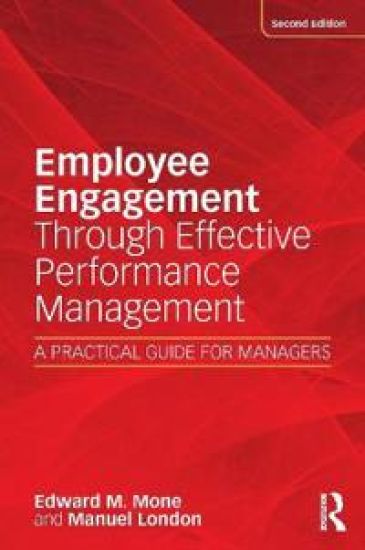
Employee Engagement Through Effective Performance Management
This book is a practical guide for managers to increase and support employee engagement through stronger performance management tools and techniques. In this second edition, Edward Mone and Manuel London incorporate new developments in the field, including discussion of issues about the value of challenging goals, annual formal appraisals, forced ranking, and ways to give constructive feedback. The authors expand the traditional notion of performance management to include building trust, creating conditions of empowerment, managing team learning, and maintaining ongoing straightforward communications about performance, all of which are critical to employee engagement. Case studies offer concrete examples, and checklists and surveys supply managers with ways to assess employee engagement as well as directions for increasing engagement. An up-to-date, straightforward guide, this book is appropriate for graduate students in Employee Engagement, Human Resources, and Management Studies, as well as scholars and practitioners in those fields.
Employee Engagement Through Effective Performance Management
This book is a practical guide for managers to increase and support employee engagement through stronger performance management tools and techniques. In this second edition, Edward Mone and Manuel London incorporate new developments in the field, including discussion of issues about the value of challenging goals, annual formal appraisals, forced ranking, and ways to give constructive feedback. The authors expand the traditional notion of performance management to include building trust, creating conditions of empowerment, managing team learning, and maintaining ongoing straightforward communications about performance, all of which are critical to employee engagement. Case studies offer concrete examples, and checklists and surveys supply managers with ways to assess employee engagement as well as directions for increasing engagement. An up-to-date, straightforward guide, this book is appropriate for graduate students in Employee Engagement, Human Resources, and Management Studies, as well as scholars and practitioners in those fields.
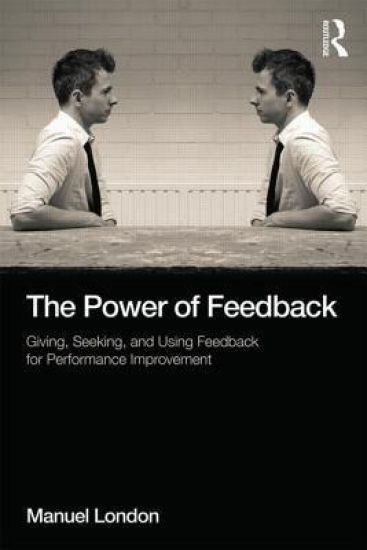
The Power of Feedback

The Power of Feedback

Manuel London

Routledge
2014
nidottu
This follow up to the 2003 edition of Job Feedback by Manuel London is updated to cover new research in the area of organizational management. This edition bridges a gap in research that now covers cultural responses to employer feedback, feedback through electronic communications, and how technology has changed the way teams work in organizations. The Power of Feedback includes examples of feedback from friends, family, colleagues, and volunteers in non-profit organizations. In this new book, both employers and employees will learn to view feedback as a positive tool for improving performance, motivation, and interpersonal relationships. Managers, human resource professionals, and students who will one day oversee teams will benefit from the research and advice found in The Power of Feedback.
The Power of Feedback

The Power of Feedback

Manuel London

Routledge
2014
sidottu
This follow up to the 2003 edition of Job Feedback by Manuel London is updated to cover new research in the area of organizational management. This edition bridges a gap in research that now covers cultural responses to employer feedback, feedback through electronic communications, and how technology has changed the way teams work in organizations. The Power of Feedback includes examples of feedback from friends, family, colleagues, and volunteers in non-profit organizations. In this new book, both employers and employees will learn to view feedback as a positive tool for improving performance, motivation, and interpersonal relationships. Managers, human resource professionals, and students who will one day oversee teams will benefit from the research and advice found in The Power of Feedback.
Social Entrepreneurship

Social Entrepreneurship

Manuel London; Richard G. Morfopoulos

Routledge
2009
sidottu
What motivates someone to become a social entrepreneur? What are the competencies needed to be effective social advocates and agents for change? This book answers these questions in an accessible and practical way, providing comprehensive guidelines, numerous examples, and sources of information and training for anyone who wants to start a community-based social advocacy and change initiative or for employees who want to start a corporate social responsibility initiative. Features include the following: examples of individuals and organizations who have learned from successes and failures in social entrepreneurship self-assessments to help readers evaluate their own talents and proclivity to be social entrepreneurs steps and strategies, competency-building activities, and assessments to evaluate and facilitate initiatives resources available from foundations, government agencies, and other sources for the budding social entrepreneur
Social Entrepreneurship

Social Entrepreneurship

Manuel London; Richard G. Morfopoulos

Routledge
2009
nidottu
What motivates someone to become a social entrepreneur? What are the competencies needed to be effective social advocates and agents for change? This book answers these questions in an accessible and practical way, providing comprehensive guidelines, numerous examples, and sources of information and training for anyone who wants to start a community-based social advocacy and change initiative or for employees who want to start a corporate social responsibility initiative. Features include the following: examples of individuals and organizations who have learned from successes and failures in social entrepreneurship self-assessments to help readers evaluate their own talents and proclivity to be social entrepreneurs steps and strategies, competency-building activities, and assessments to evaluate and facilitate initiatives resources available from foundations, government agencies, and other sources for the budding social entrepreneur
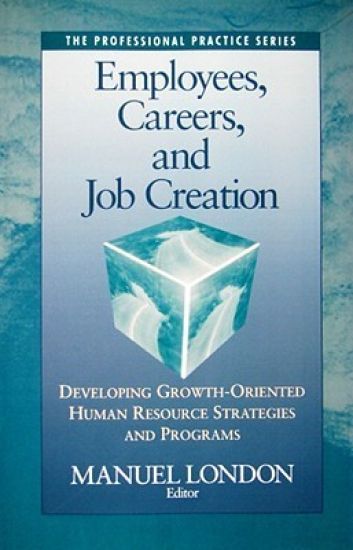
Employees, Careers, and Job Creation

Employees, Careers, and Job Creation

Manuel London

John Wiley Sons Inc
2009
nidottu
This is a new age for both workers and companies. Organizations have attempted to downsize, reengineer, or restructure their way to greatness only to find that such dramatic change efforts fail to produce real long-term economic growth. In the process, these changes have wreaked havoc on the jobs, careers, and lives of employees everywhere. Yet, there are some workers and companies breaking new ground in finding successful alternatives to employee displacement and downsizing--in organizations that have discovered new and creative ways to link employee development and job creation with organizational economic growth. In this new volume of the Professional Practice Series--the first to be published by Jossey-Bass--Manuel London brings together a group of research and practice experts to show how such leading companies as AT&T have responded to demands for change with programs that enhance career opportunities for individuals and stimulate organizational growth. In thirteen original chapters, London and his contributors detail how industrial and organizational psychologists, human resource professionals, and consultants have created innovative human resource development and training programs. These programs go beyond the traditional emphasis on interest surveys, career tracks, and interview skills to train employees in the abilities that actually create new jobs within organizations--skills such as entrepreneurial aptitude, work flexibility, and a value-added orientation. Employees, Careers, and Job Creation shows how to predict the career opportunities that will open up in an organization's future, assess employee skills, develop training goals, and overcome such barriers to success as employee resistance to learning. It also offers examples of how organization and community-based support programs can assist displaced workers in the event layoffs prove inevitable.
First-Time Leaders of Small Groups

First-Time Leaders of Small Groups

Manuel London; Marilyn London

Jossey-Bass Inc.,U.S.
2007
sidottu
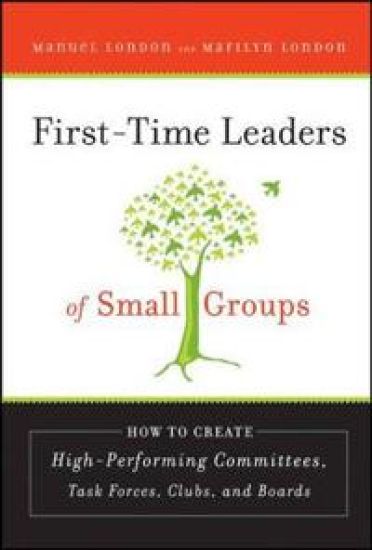
First-Time Leaders of Small Groups offers novice and experienced leaders the information they need to keep their members interested and involved, resolve conflicts and deal with difficult people, and ultimately have their group achieve results . . . quickly. The book includes four steps for preparing to lead (selecting members, setting the groundwork for high performance, planning, and establishing your leadership style) and four steps for taking the lead (starting right, working smart, coaching, and assessing). These steps will help you take the lead with confidence. First-Time Leaders of Small Groups is filled with illustrative examples of a wide range of small groups and provides clear suggestions for action. The book includes: Questions and answers based on research on what works well, and what does notDiagnostics for determining your group’s strengths and weaknessesLeadership challenges—ideas for overcoming common difficultiesSelf-assessments to help build confidence as a group leaderExamples of approaches for different group situationsModels for understanding how groups workActivities for improving group functionsKey research findingsEasy-to-follow suggestions for practice
Continuous Learning in Organizations

Continuous Learning in Organizations

Valerie I. Sessa; Manuel London

Psychology Press
2006
nidottu
There is already considerable literature on learning at the individual level and a growing body of literature on group and organizational learning. But to date, there has been little attempt to bring these literatures together and link learning at all three levels. Continuous Learning in Organizations targets learning at each of the three levels and demonstrates how processes at one level impacts learning at other levels. At the heart of the work is the idea that individuals, groups, and organizations are living systems with internal learning mechanisms that can be activated and supported or stymied and thwarted. Once activated, systems can learn adaptively by reacting to a change in the environment; they can learn by generating new knowledge and conditions; and/or they can transform by creating and applying frame-breaking ideas and bringing about radically new conditions. Individuals, groups, and organizations are nested within each other forming an increasingly complex hierarchy of intertwined systems. From this point of view, the book describes the interactions between the levels and how developmental processes at one level affect learning at other levels. The text appeals to both the scientist and professionals alike in the fields of human resource development, training, management and executive education, coaching, and organization change and development. It is also for executives who establish directions for learning and need to convince others that continuous learning is the key to on-going success of their enterprise.
Continuous Learning in Organizations

Continuous Learning in Organizations

Valerie I. Sessa; Manuel London

Psychology Press
2006
sidottu
There is already considerable literature on learning at the individual level and a growing body of literature on group and organizational learning. But to date, there has been little attempt to bring these literatures together and link learning at all three levels. Continuous Learning in Organizations targets learning at each of the three levels and demonstrates how processes at one level impacts learning at other levels. At the heart of the work is the idea that individuals, groups, and organizations are living systems with internal learning mechanisms that can be activated and supported or stymied and thwarted. Once activated, systems can learn adaptively by reacting to a change in the environment; they can learn by generating new knowledge and conditions; and/or they can transform by creating and applying frame-breaking ideas and bringing about radically new conditions. Individuals, groups, and organizations are nested within each other forming an increasingly complex hierarchy of intertwined systems. From this point of view, the book describes the interactions between the levels and how developmental processes at one level affect learning at other levels. The text appeals to both the scientist and professionals alike in the fields of human resource development, training, management and executive education, coaching, and organization change and development. It is also for executives who establish directions for learning and need to convince others that continuous learning is the key to on-going success of their enterprise.
Job Feedback

Job Feedback

Manuel London

Psychology Press
2003
sidottu
This book demonstrates how managers can be more effective in gathering and processing performance information about subordinates, making ratings on performance appraisals and multisource feedback surveys, and feeding back this information in a way that is nonthreatening and leads to productive changes in behavior. It also shows how employees can gather, accept, and use meaningful performance information from appraisals, surveys, and informal discussions to change their own behavior. In doing so, the volume suggests how human resource practitioners and training professionals can help managers give and use feedback more effectively. Five years have elapsed since the first edition of Job Feedback was published. This revision covers the following updates in the field: *new theory and research on organizational performance management; *new methods for linking strategic planning with individual goal setting and development; *the emergence of globalization and cross-cultural factors affecting performance evaluations and the use of technology to collect performance data; and *new chapters on person perception, multisource feedback, team feedback, and feedback in multicultural organizations.
Job Feedback

Job Feedback

Manuel London

Psychology Press
2003
nidottu
This book demonstrates how managers can be more effective in gathering and processing performance information about subordinates, making ratings on performance appraisals and multisource feedback surveys, and feeding back this information in a way that is nonthreatening and leads to productive changes in behavior. It also shows how employees can gather, accept, and use meaningful performance information from appraisals, surveys, and informal discussions to change their own behavior. In doing so, the volume suggests how human resource practitioners and training professionals can help managers give and use feedback more effectively. Five years have elapsed since the first edition of Job Feedback was published. This revision covers the following updates in the field: *new theory and research on organizational performance management; *new methods for linking strategic planning with individual goal setting and development; *the emergence of globalization and cross-cultural factors affecting performance evaluations and the use of technology to collect performance data; and *new chapters on person perception, multisource feedback, team feedback, and feedback in multicultural organizations.
Leadership Development

Leadership Development

Manuel London

Psychology Press
2001
nidottu

Halvin toimitettuna 67,40 €

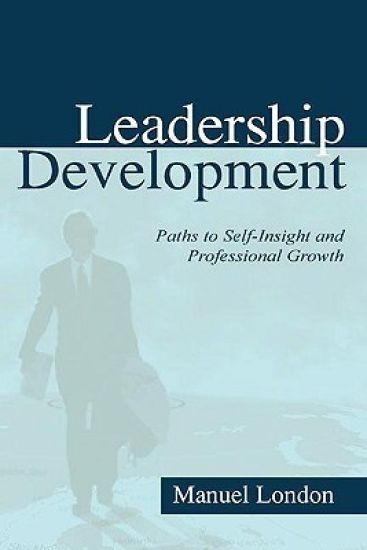
Leadership Development explores how leaders gain and use self-knowledge for continuous improvement and career development and describes how leaders help themselves and the people with whom they work, understand themselves, and become more self-determined, continuous learners, and make the most of resources, such as feedback and coaching. This book explains why leaders need support for self-insight and professional growth in today's business environment. It explores dimensions of effective leadership in light of business, technological, and economic trends. Focusing on the importance of leaders developing accurate self-understanding, the book defines self-insight, outlines the meaning of internal strength and resilience for self-regulation, and considers how leaders attain a meaningful and realistic sense of self-identity. This volume illustrates ways organizations support these psychological processes. Leadership development is viewed as a comprehensive, continuous process that includes evaluating organizational needs and individual competencies, setting goals for career development and performance improvement, offering needed training and growth experiences, providing feedback, and tracking change in behavior and performance over time. It describes how leaders react to feedback and how 360-degree feedback survey methods and executive coaching help leaders attain and apply self-insight to enhance their performance. In addition, this book considers challenges and opportunities for leadership development, including how leaders overcome career barriers and become continuous learners.
Leadership Development

Leadership Development

Manuel London

Psychology Press
2001
sidottu
Leadership Development explores how leaders gain and use self-knowledge for continuous improvement and career development and describes how leaders help themselves and the people with whom they work, understand themselves, and become more self-determined, continuous learners, and make the most of resources, such as feedback and coaching. This book explains why leaders need support for self-insight and professional growth in today's business environment. It explores dimensions of effective leadership in light of business, technological, and economic trends. Focusing on the importance of leaders developing accurate self-understanding, the book defines self-insight, outlines the meaning of internal strength and resilience for self-regulation, and considers how leaders attain a meaningful and realistic sense of self-identity. This volume illustrates ways organizations support these psychological processes. Leadership development is viewed as a comprehensive, continuous process that includes evaluating organizational needs and individual competencies, setting goals for career development and performance improvement, offering needed training and growth experiences, providing feedback, and tracking change in behavior and performance over time. It describes how leaders react to feedback and how 360-degree feedback survey methods and executive coaching help leaders attain and apply self-insight to enhance their performance. In addition, this book considers challenges and opportunities for leadership development, including how leaders overcome career barriers and become continuous learners.
Principled Leadership and Business Diplomacy

Principled Leadership and Business Diplomacy

Manuel London

Praeger Publishers Inc
1999
sidottu
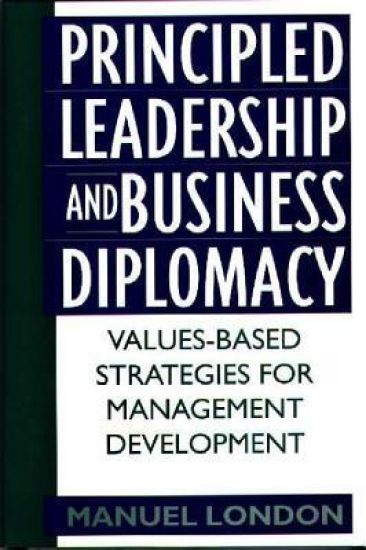
Principled leadership is the art of applying ethical business values, and business diplomacy is the means of doing it. London shows that principled leadership and business diplomacy not only provide direction for management, but they also enhance development of leadership in others. His book offers a solid, well-illustrated, immediately applicable way to design a management and leadership development program, select training managers and executives, and a way to change corporate cultures. Concise and practical, his book is as important for teachers and their college-level students as for HR executives, management and organizational development specialists, and consultants throughout the public and private sectors. London shows how principled leadership and business diplomacy enhance employee and customer loyalty and commitment, essential to the survival of any organization in today's competitive, global economy. But, can this really be achieved? London defines principled leadership as the art of applying ethical business values, and business diplomacy as the means to do it. By using these techniques, executives and managers can implement change and gain commitment to their initiatives from inside and outside their organizations. Well illustrated with case studies and exercises, this book is essential for HR executives, management and organizational development specialists, and consultants throughout the public and private sectors. London describes how principled, diplomatic leaders and managers put personal feelings aside, avoid anger, and by doing so are highly successful in resolving conflicts. He identifies and explains different styles of diplomacy, such as the trial balloon, shuttle diplomacy, coalitions, and co-optation, and shows how principled, diplomatic behaviors result when people really listen to each other—and by doing so, develop their own values as a foundation for decision making, conflict resolution, and negotiation. The result is a clear demonstration of how human resource managers, trainers, and organizational development consultants can create a truly productive work environment in their own organizations, and how principled leadership and business diplomacy will benefit them as well their relationships with others.
Maximizing the Value of 360-degree Feedback

Maximizing the Value of 360-degree Feedback

Walter W. Tornow; Manuel London

Jossey-Bass Inc.,U.S.
1998
sidottu
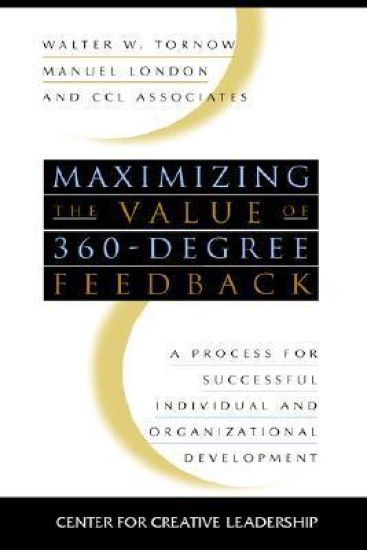
The comprehensive guide to 360-degree feedback from the Center for Creative Leadership In the network economy, growing intellectual capital is the key to increasing market value. In Maximizing, Tornow, London, and their associates demonstrate the power of 360-degree feedback for developing managers, renewing organizations, and building learning cultures. Drawing on years of experience and state-of-the-art research, the authors have crafted a highly useful and practical book which provides us with a thorough understanding of this invaluable organizational tool.--Leo Burke, director, College of Leadership and Transcultural Studies, Motorola University Despite the burgeoning popularity of 360-degree feedback for rating work performance, few people have a detailed understanding of how it can be used to enhance, even maximize, individual and organizational development. This standard-setting manual draws on the twenty-eight-year expertise the Center for Creative Leadership brings to the subject to give HR managers, consultants, and systems designers the big-picture guidance they need to determine if 360-degree feedback is right for their organization and, if so, to implement it. Readers will discover how they can use 360-degree feedback as a tool for achieving a variety of objectives such as communicating performance expectations, setting developmental goals, establishing a learning culture, and tracking the effects of organizational change. Comprehensive guidelines show how 360-degree feedback can be designed to maximize employee involvement, self-determination, and commitment. Includes case examples and a bevy of instructive instruments.
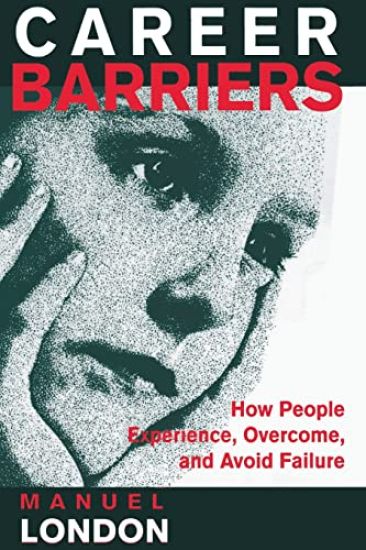
Career Barriers

Career Barriers

Manuel London

Psychology Press
1997
nidottu
This volume's goal is to help readers understand how people react to career barriers and how people develop constructive ways of coping with them. Drawing on original cases and data from interviews with people who faced different types of career barriers, the author describes how people react to, and make sense of, unfortunate events in their lives--and career barriers when they occur. He considers how and why some people cope constructively while others don't, and explores how resilience and support from others help get us through tough times and emerge with a sense of renewal and career growth. He suggests how we can manage career barriers and prepare for--or even prevent--career barriers through foresight, planning, and education. These methods also suggest what managers and organizations should do to help their employees who are or may soon be facing career barriers. People can learn while facing the stress and self-questioning that accompany career barriers, but this is not an easy process. Learning requires considerable self-understanding and environmental support. The organization can play a vital role in limiting people's pain and creating opportunities. However, despite generous severance packages and outplacement services, many organizations have been little help to people who lose their jobs, suffer job stress, face unreasonably demanding bosses, or suffer from physical handicaps or chronic illnesses. Most of the burden falls on individuals and their families. Assistance can and should come from employers, government agencies, educational institutions, and religious organizations. While the book focuses on the perspectives of people who have been or may be affected by career barriers, the material should be of interest to a broad range of readers --in particular, academics who study careers, practitioners in the fields of training and development, and government officials who set public policy that affects displaced workers.
Career Barriers

Career Barriers

Manuel London

Psychology Press
1997
sidottu
This volume's goal is to help readers understand how people react to career barriers and how people develop constructive ways of coping with them. Drawing on original cases and data from interviews with people who faced different types of career barriers, the author describes how people react to, and make sense of, unfortunate events in their lives--and career barriers when they occur. He considers how and why some people cope constructively while others don't, and explores how resilience and support from others help get us through tough times and emerge with a sense of renewal and career growth. He suggests how we can manage career barriers and prepare for--or even prevent--career barriers through foresight, planning, and education. These methods also suggest what managers and organizations should do to help their employees who are or may soon be facing career barriers. People can learn while facing the stress and self-questioning that accompany career barriers, but this is not an easy process. Learning requires considerable self-understanding and environmental support. The organization can play a vital role in limiting people's pain and creating opportunities. However, despite generous severance packages and outplacement services, many organizations have been little help to people who lose their jobs, suffer job stress, face unreasonably demanding bosses, or suffer from physical handicaps or chronic illnesses. Most of the burden falls on individuals and their families. Assistance can and should come from employers, government agencies, educational institutions, and religious organizations. While the book focuses on the perspectives of people who have been or may be affected by career barriers, the material should be of interest to a broad range of readers --in particular, academics who study careers, practitioners in the fields of training and development, and government officials who set public policy that affects displaced workers.