Kirjojen hintavertailu – 12 903 725 kirjaa ja 27 kauppaa

Kirjailija

Mao Tse-Tung

Kirjat ja teokset yhdessä paikassa: 42 kirjaa, julkaisuja vuosilta 1993–2023, suosituimpiin kuuluu On Guerrilla Warfare. Vertaile teosten hintoja ja tarkista saatavuus suomalaisista kirjakaupoista.

Nimi esiintyy myös muodoissa: Mao Tse Tung

42 kirjaa

Kirjojen julkaisuvuodet: 1993–2023.

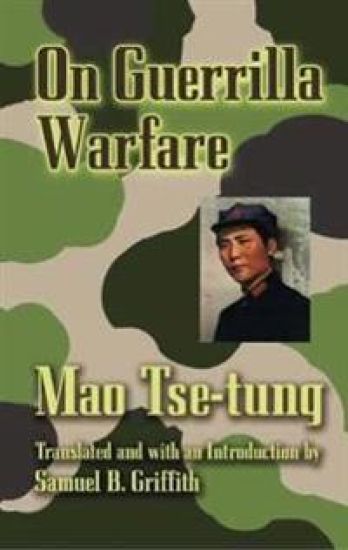
Mao Tse-Tung on Guerrilla Warfare

Mao Tse-Tung on Guerrilla Warfare

Mao Tse-Tung

Literary Licensing, LLC
2011
sidottu
""Mao Tse-Tung On Guerrilla Warfare"" is a book written by the Chinese Communist leader Mao Tse-Tung, which outlines the principles and tactics of guerrilla warfare. The book was first published in 1937 and has since become a classic text on the subject. In the book, Mao discusses the importance of understanding the political and social conditions of a country before engaging in guerrilla warfare. He also emphasizes the need for guerrilla fighters to be highly mobile, adaptable, and able to operate in small units. Mao provides examples from his own experiences in China, where he led successful guerrilla campaigns against the Nationalist government. The book also delves into the importance of propaganda and psychological warfare in guerrilla warfare. Mao argues that winning the hearts and minds of the people is essential in any guerrilla campaign, and he provides strategies for effectively communicating with and mobilizing the masses. Overall, ""Mao Tse-Tung On Guerrilla Warfare"" is a seminal work on the subject of guerrilla warfare and has influenced military strategy around the world. It offers valuable insights into the tactics and principles that have been used successfully by guerrilla fighters throughout history. This scarce antiquarian book is a facsimile reprint of the old original and may contain some imperfections such as library marks and notations. Because we believe this work is culturally important, we have made it available as part of our commitment for protecting, preserving, and promoting the world's literature in affordable, high quality, modern editions, that are true to their original work.
Strategic Problems of China's Revolutionary War

Strategic Problems of China's Revolutionary War

Mao Tse-Tung

Literary Licensing, LLC
2011
sidottu
""Strategic Problems of China's Revolutionary War"" is a book written by Mao Tse-Tung, the founder of the People's Republic of China. The book is a collection of essays and speeches that Mao gave during the Chinese Civil War, which lasted from 1927 to 1949. The essays discuss the strategy and tactics of the Chinese Communist Party during the war, including guerrilla warfare, political mobilization, and the relationship between the Communist Party and the Chinese people. Mao also analyzes the strengths and weaknesses of the Nationalist government and the role of foreign powers in the conflict. The book is considered a seminal work on revolutionary warfare and has been influential in the development of guerrilla warfare tactics around the world. This scarce antiquarian book is a facsimile reprint of the old original and may contain some imperfections such as library marks and notations. Because we believe this work is culturally important, we have made it available as part of our commitment for protecting, preserving, and promoting the world's literature in affordable, high quality, modern editions, that are true to their original work.
The Art of War by Mao Tse-tung - Special Edition

The Art of War by Mao Tse-tung - Special Edition

Mao Tse-Tung

Digital Pulse Publishing
2011
sidottu
As the revolutionary leader who conquered China, Mao Tse-tung was undoubtedly a great strategist. The parallels between Chairman Mao's thoughts on strategy and those of Sun Tzu belie a direct lineage of culture and genius spanning twenty-five centuries. This hardcover special edition of "The Art of War" by Mao Tse-tung contains, for the first time in a single volume, his four most important discourses on warfare: "Problems of Strategy in China's Revolutionary War" "Problems of Strategy in Guerrilla War Against Japan" "On Protracted War" "Problems of War and Strategy" Other special editions in this series dealing with the subject of warfare and strategy include: The Art of War by Sun Tzu - Special Edition The Art of War by Baron de Jomini - Special Edition The Art of War & The Prince by Machiavelli - Special Edition
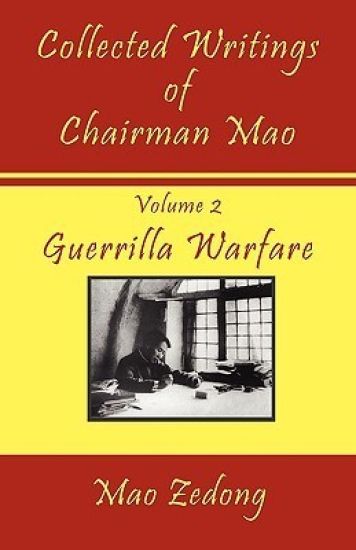
Collected Writings of Chairman Mao: Volume 2 - Guerrilla Warfare

Collected Writings of Chairman Mao: Volume 2 - Guerrilla Warfare

Mao Zedong; Mao Tse-Tung

Digital Pulse Publishing
2009
nidottu
Mao Zedong (also known as Mao Tse-tung) is regarded as one of the most controversial figures in modern world history. Having conquered the country, he ruled the People's Republic of China from its establishment as a Communist state in 1949 until the time of his death in 1976. Brilliant and ruthless, his legacy includes guerrilla warfare tactics, violent cultural revolutions, and enduring Communist propaganda. He was named one of the 100 most influential figures of the 20th century by Time Magazine. Eric Margolis, of the Huffington Post writes of Chairman Mao: "Mao was an accomplished poet, writer and historian, a profound thinker, and a superb military strategist. He crushed the US-backed Nationalist's 4.3-million strong armies in a series of titanic battles, forcing his rival, Chiang Kai-shek, to flee to Taiwan... The Great Helmsman united fractured, war-torn China, restoring its pride and self-confidence after two centuries of humiliation. Mao thwarted both Soviet and U. S. efforts to turn China into a client state, and built up China's military power... Mao's aides dared not tell him millions were starving. Red Emperor Mao was prodigal with his people's lives, and, according to aides who were close to him, was shockingly indifferent to their suffering. Mao horrified even brutal Soviet leaders by saying he was prepared to lose half his people to emerge victorious from a nuclear war... The second volume in this special collection contains three important lectures and essays by Chairman Mao dealing with guerrilla warfare: *Part 1 - On Guerrilla Warfare *Part 2 - Problems of Strategy in Guerrilla War against Japan *Part 3 - On Protracted War Excerpt from "Collected Writings of Chairman Mao: Volume 2 - Guerrilla Warfare" by Mao Zedong. Reprinted by permission. All rights reserved. In September 1812, Napoleon, in the course of swallowing all of Europe, invaded Russia at the head of a great army totaling several hundred thousand infantry, cavalry, and artillery. At that time, Russia was weak and her ill-prepared army was not concentrated. The most important phase of her strategy was the use made of Cossack cavalry and detachments of peasants to carry on guerrilla operations. After giving up Moscow, the Russians formed nine guerrilla divisions of about five hundred men each. These, and vast groups of organized peasants, carried on partisan warfare and continually harassed the French Army. When the French Army was withdrawing, cold and starving, Russian guerrillas blocked the way and, in combination with regular troops, carried out counterattacks on the French rear, pursuing and defeating them. The army of the heroic Napoleon was almost entirely annihilated, and the guerrillas captured many officers, men, cannon, and rifles. Though the victory was the result of various factors and depended largely on the activities of the regular army the function of the partisan groups was extremely important. The corrupt and poorly organized country that was Russia defeated and destroyed an army led by the most famous soldier of Europe and won the war in spite of the fact that her ability to organize guerrilla regimes was not fully developed. At times, guerrilla groups were hindered in their operations and the supply of equipment and arms was insufficient. If we use the Russian saying, it was a case of a battle between "the fist and the axe."

Quotations from Chairman Mao Tse-Tung

Quotations from Chairman Mao Tse-Tung

Mao Tse-Tung

WWW.Bnpublishing.com
2008
sidottu
Comrade Mao Tse-tung is the greatest Marxist-Leninist of our era. He has inherited, defended and developed Marxism-Leninism with genius, creatively and comprehensively, and has brought it to a higher and completely new stage. Mao Tse-tung's thought is Marxism-Leninism of the era in which imperialism is heading for total collapse and socialism is advancing to world-wide victory. It is a powerful ideological weapon for opposing imperialism and for opposing revisionism and dogmatism. Mao Tse-tung's thought is the guiding principle for all the work of the Party, the army and the country. Therefore, the most fundamental task in our Party's political and ideological work is at all times to hold high the great red banner of Mao Tse-tung's thought, to arm the minds of the people throughout the country with it and to persist in using it to command every field of activity. The broad masses of the workers, peasants and soldiers and the broad ranks of the revolutionary cadres and the intellectuals should really master Mao Tse-tung's thought; they should all study Chairman Mao's writings, follow his teachings, act according to his instructions and be his good fighters. In studying the works of Chairman Mao, one should have specific problems in mind, study and apply his works in a creative way, combine study with application, first study what must be urgently applied so as to get quick results, and strive hard to apply what one is studying. In order really to master Mao Tse-tung's thought, it is essential to study many of Chairman Mao's basic concepts over and over again, and it is best to memorize important statements and study and apply them repeatedly. The newspapers should regularly carry quotations from Chairman Mao relevant to current issues for readers to study and apply. The experience of the broad masses in their creative study and application of Chairman Mao's works in the last few years has proved that to study selected quotations from Chairman Mao with specific problems in mind is a good way to learn Mao Tse-tung's thought, a method conducive to quick results. We have compiled Quotations from Chairman Mao Tse-tung in order to help the broad masses learn Mao Tse-tung's thought more effectively. In organizing their study, units should select passages that are relevant to the situation, their tasks, the current thinking of their personnel, and the state of their work. In our great motherland, a new era is emerging in which the workers, peasants and soldiers are grasping Marxism-Leninism, Mao Tse-tung's thought. Once Mao Tse-tung's thought is grasped by the broad masses, it becomes an inexhaustible source of strength and a spiritual atom bomb of infinite power. The large-scale publication of Quotations from Chairman Mao Tse-tung is a vital measure for enabling the broad masses to grasp Mao Tse-tung's thought and for promoting the revolutionization of our people's thinking. It is our hope that all comrades will learn earnestly and diligently, bring about a new nation-wide high tide in the creative study and application of Chairman Mao's works, and, under the great red banner of Mao Tse-tung's thought, strive to build our country into a great socialist state with modern agriculture, modern industry, modern science and culture and modern national defence