Kirjojen hintavertailu – 12 859 818 kirjaa ja 27 kauppaa
Kirjailija
Marcus Aurelius
Kirjat ja teokset yhdessä paikassa: 345 kirjaa, julkaisuja vuosilta 1890–2027, suosituimpiin kuuluu Itselleni. Vertaile teosten hintoja ja tarkista saatavuus suomalaisista kirjakaupoista.
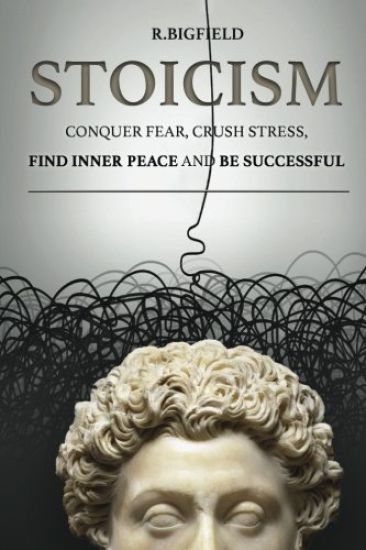
Description Stoicism: Conquer fear, crush stress, find inner peace and be successful is your practical guide to a better and more interesting life. This handy manual will teach you how to deal with any type of stressful situations, how to confront your challenges and succeed. Learn how the ancient teachings of Stoicism can help you to solve your modern-day problems and achieve your goals. If you want to enjoy peace of mind and success then this book is for you. Learn: Stoic teachings from Marcus Aurelius, Seneca, and EpictetusHow to use Stoicism in modern eraPractical strategies to live efficient and positive lifeHow to deal with stressful situationsStoic exercises and meditations to achieve successAnd so much more What's in the book? Stoicism: Conquer fear, crush stress, find inner peace and be successful is built in a specific way in order to involve the reader slowly into the practices of ancient philosophy of Stoicism. The book consists of informative and practical parts that are based on the teachings of the most profound Stoic philosophers such as Seneca, Epictetus and Marcus Aurelius. Now is the time to change your life. So, do not waste your time and grab your copy of the book to learn and practice the Stoic teachings and live a happier life.
Selections from the Thoughts of Marcus Aurelius - For Every Day in the Year is an unchanged, high-quality reprint of the original edition of 1888. Hansebooks is editor of the literature on different topic areas such as research and science, travel and expeditions, cooking and nutrition, medicine, and other genres. As a publisher we focus on the preservation of historical literature. Many works of historical writers and scientists are available today as antiques only. Hansebooks newly publishes these books and contributes to the preservation of literature which has become rare and historical knowledge for the future.
How to think clearly, act purposefully, overcome obstacles, and find peace & happiness along the way. Marcus Aurelius (121-180 CE) was one of the few true philosopher-kings in history. His father died when Marcus was three. At age fifteen, he was adopted by his aunt's husband, the future Emperor Antoninus Pius, putting him in the line of succession. At forty, he became a reluctant emperor of the Roman Empire. Marcus was conflicted because the demands of being emperor--on top of the temptations of wealth and power--seemed incompatible with his true ambition: to be a humble student of philosophy. Over time, though, he worked out a practical philosophy that kept him grounded amidst the stresses and excesses of palace life. That's why his philosophy is so relevant to us today, in the modern world. How did he fare as emperor? During his twenty years of service, Marcus earned the love of the people and the loyalty of the senate. Later historians called him "the last of the five good emperors." In spare moments, Marcus wrote the journal entries collected in The Meditations. They were not intended for publication, but to remind Marcus himself of his principles and priorities. As a result, they are intimate, direct, and extremely useful. This new edition of The Meditations is an interpretive paraphrase in contemporary English, with a foreword, by bestselling author Sam Torode. A companion volume, The Manual: A Philosopher's Guide to Life, is also available from Ancient Renewal.
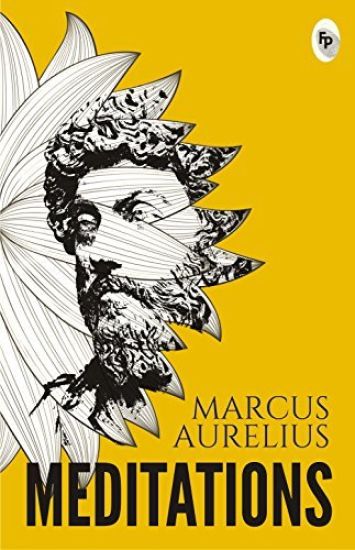
The Meditations are a set of personal reflections by Marcus Aurelius. He writes about the vicissitudes of his own life and explores how to live wisely and virtuously in an unpredictable world. Part of the Macmillan Collector's Library; a series of stunning, clothbound, pocket sized classics with gold foiled edges and ribbon markers. These beautiful books make perfect gifts or a treat for any book lover. This edition is translated by A. S. L. Farquharson and features an introduction by John Sellars. Marcus Aurelius was a follower of the Stoic tradition of philosophy, and one of its finest advocates, both in the clarity of his writing and in the uprightness of his life. The aphorisms show how for him, as perhaps for us all, the answer to life lies in keeping a calm and rational mind, and in refusing to be cast down or alarmed by things over which we have no control.
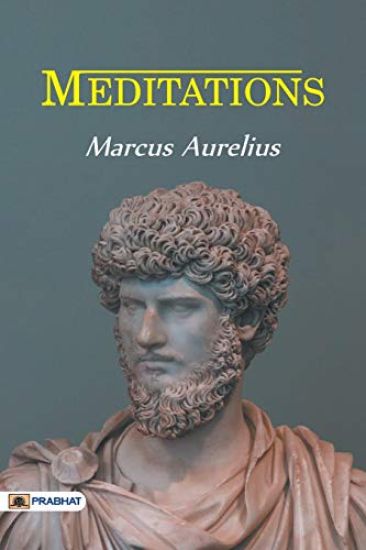
THE BOOKMeditations is a series of personal writings by Marcus Aurelius, Roman Emperor from 161 to 180 AD, recording his private notes to himself and ideas on Stoic philosophy or stoicism. The Meditations is divided into 12 books that chronicle different periods of Marcus' life. Each book is not in chronological order and it was written for no one but himself. The style of writing that permeates the text is one that is simplified, straightforward, and perhaps reflecting Marcus' Stoic perspective on the text. Depending on the English translation, Marcus' style is not viewed as anything regal or belonging to royalty, but rather a man among other men, which allows the reader to relate to his wisdom. THE AUTHORMarcus Aurelius (Latin: Marcus Aurelius Antoninus Augustus; 26 April 121 - 17 March 180) was Roman emperor from 161 to 180 and a Stoic philosopher. He was the last of the rulers known as the Five Good Emperors, and the last emperor of the Pax Romana, an age of relative peace and stability for the Roman Empire. He served as Roman consul in 140, 145, and 161. The son of the praetor Marcus Annius Verus (III) and the wealthy heiress Domitia Lucilla, Marcus was raised by his mother and by his grandfather, Marcus Annius Verus (II), after his father died. His uncle, Antoninus Pius, adopted him shortly before becoming emperor in 138. Now heir to the throne, Marcus studied Greek and Latin under tutors such as Herodes Atticus and Marcus Cornelius Fronto. The reign of Marcus Aurelius was marked by military conflict. In the East, the Roman Empire fought successfully with a revitalized Parthian Empire and the rebel Kingdom of Armenia. Marcus defeated the Marcomanni, Quadi, and Sarmatian Iazyges in the Marcomannic Wars; however, these and other Germanic peoples began to represent a troubling reality for the Empire. He modified the silver purity of the Roman currency, the denarius. The persecution of Christians in the Roman Empire is believed to have increased during his reign. The Antonine Plague broke out in 165 or 166 and devastated the population of the Roman Empire, causing the deaths of five million people. Unlike some of his predecessors, Marcus chose not to adopt an heir. His children included Lucilla (who married Lucius Verus, co-emperor from 161 to 169) and Commodus, whose succession after Marcus has become a subject of debate among both contemporary and modern historians. The Column and Equestrian Statue of Marcus Aurelius still stand in Rome, where they were erected in celebration of his military victories. Meditations, the writings of "the philosopher" - as contemporary biographers called Marcus, are a significant source of the modern understanding of ancient Stoic philosophy. They have been praised by fellow writers, philosophers, monarchs, and politicians centuries after his death. Marcus acquired the reputation of a philosopher king within his lifetime, and the title would remain after his death; both Dio and the biographer call him 'the philosopher'. Christians such as Justin Martyr, Athenagoras, and Melito also gave him the title. The last named went so far as to call him "more philanthropic and philosophic" than Antoninus and Hadrian, and set him against the persecuting emperors Domitian and Nero to make the contrast bolder. "Alone of the emperors," wrote the historian Herodian, "he gave proof of his learning not by mere words or knowledge of philosophical doctrines but by his blameless character and temperate way of life". Iain King concludes that Marcus' legacy is tragic, because the emperor's "Stoic philosophy - which is about self-restraint, duty, and respect for others - was so abjectly abandoned by the imperial line he anointed on his death."
Under belägringen av Aquileia, omgiven av krigiska markomanner och kvader, började den romerske kejsaren Marcus Aurelius skriva ned sina tankar. Resultatet blev denna odödliga samling reflexioner om hur man finner själslig styrka och därmed ett sätt att förhålla sig till världen, både utom och inom en själv. I snart tvåtusen år har Marcus Aurelius Självbetraktelser inspirerat och hjälpt människor i livets alla skeden. Det är en tidlös text om moralen, livet och döden och många anser än idag att verket är ett av de allra främsta inom västerländsk litteratur. Förord av Sven-Eric Liedman
Meric Casaubon's famous 1634 translation of Meditations was the first English version of the Stoic masterwork to be reprinted many times because of its widespread popularity. The Shakespearean language has been called difficult by modern standards but the poetic Elizabethan prose greatly enhances this deeply spiritual work. Aurelius is no less eloquent or articulate than in later versions and the power of his thoughts and ideas are beautifully conveyed.
Meric Casaubon's famous 1634 translation of Meditations was the first English version of the Stoic masterwork to be reprinted many times because of its widespread popularity. The Shakespearean language has been called difficult by modern standards but the poetic Elizabethan prose greatly enhances this deeply spiritual work. Aurelius is no less eloquent or articulate than in later versions and the power of his thoughts and ideas are beautifully conveyed.
Meditations is a series of personal reflections by Marcus Aurelius, Roman Emperor 161-180 CE, written over a series of years in far-flung places as he led the Romans in military campaigns, quashed revolts, and dealt with the other tribulations of governing the Empire. It is best described as a spiritual journal, containing a record of the emperor's philosophical exercises.
Meditations is a series of personal reflections by Marcus Aurelius, Roman Emperor 161-180 CE, written over a series of years in far-flung places as he led the Romans in military campaigns, quashed revolts, and dealt with the other tribulations of governing the Empire. It is best described as a spiritual journal, containing a record of the emperor's philosophical exercises.
The Meditations is divided into 12 books that chronicle different periods of Marcus's life. Each book is not in chronological order and it was written for no one but himself. The style of writing that permeates the text is one that is simplified, straightforward, and perhaps reflecting Marcus's Stoic perspective on the text. Depending on the English translation, Marcus's style is not viewed as anything regal or belonging to royalty, but rather a man among other men which allows the reader to relate to his wisdom. A central theme to Meditations is the importance of analyzing one's judgment of self and others and the development of a cosmic perspective. As he said "You have the power to strip away many superfluous troubles located wholly in your judgment, and to possess a large room for yourself embracing in thought the whole cosmos, to consider everlasting time, to think of the rapid change in the parts of each thing, of how short it is from birth until dissolution, and how the void before birth and that after dissolution are equally infinite". He advocates finding one's place in the universe and sees that everything came from nature, and so everything shall return to it in due time. Another strong theme is of maintaining focus and to be without distraction all the while maintaining strong ethical principles such as "Being a good man". His Stoic ideas often involve avoiding indulgence in sensory affections, a skill which will free a man from the pains and pleasures of the material world. He claims that the only way a man can be harmed by others is to allow his reaction to overpower him. An order or logos permeates existence. Rationality and clear-mindedness allow one to live in harmony with the logos. This allows one to rise above faulty perceptions of "good" and "bad".