Kirjailija
Marcus Aurelius
Kirjat ja teokset yhdessä paikassa: 345 kirjaa, julkaisuja vuosilta 1890–2027, suosituimpiin kuuluu Itselleni. Vertaile teosten hintoja ja tarkista saatavuus suomalaisista kirjakaupoista.
345 kirjaa
Kirjojen julkaisuvuodet: 1890–2027.
"Meditations" is a series of personal writings by Marcus Aurelius, Roman Emperor from second century, recording his private notes to himself and ideas on Stoic philosophy. Marcus Aurelius wrote the Meditations as a source for his own guidance and self-improvement. The Meditations is divided into 12 books that chronicle different periods of Marcus' life. A central theme to Meditations is the importance of analyzing one's judgment of self and others and the development of a cosmic perspective. The style of writing that permeates the text is one that is simplified, straightforward, and perhaps reflecting Marcus' Stoic perspective on the text.
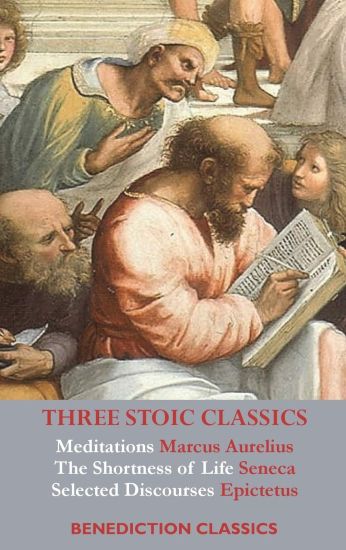
"The happiness of your life depends upon the quality of your thoughts." ― Marcus Aurelius"You have power over your mind - not outside events. Realize this, and you will find strength." ― Marcus Aurelius"So it is: we are not given a short life but we are wasteful of it... Life is long if you know how to use it.― Seneca"We must indulge the mind and from time to time allow it the leisure which is its food and strength." ― Seneca"Don't explain your philosophy. Embody it." ― Epictetus"First say to yourself what you would be; and then do what you have to do." ― EpictetusThree Stoic Classics contains three vital works introducing this life-changing philosophy. The Shortness of Life is a succinct call to the pursuit of philosophy, which leads to wise choices and the full life: "Of all men they alone are at leisure who take time for philosophy; they alone really live." Seneca offers piercing and profound insights into human nature, and a vision of the good life, summarised in his aphorism, "Life is long, if you know how to use it." Seneca elucidates many of the principles of modern productivity manuals, including the wise valuing of time: "People are frugal in guarding their personal property; but as soon as it comes to squandering time they are most wasteful of the one thing in which it is right to be stingy,"intentionality, and rest and recreation: "We must go for walks out of doors, so that the mind can be strengthened and invigorated by a clear sky and plenty of fresh air. At times it will acquire fresh energy from a journey by carriage and a change of scene, or from socializing and drinking freely." Epictetus' Selected Discourses is a longer meditation on the sixty principles important to pursuing the Stoic Life. Beginning with the foundational principle: the difference in how we relate to the things under our control (our acts, thoughts, and desires) and those not under our control (our possessions, position, reputation), Epictetus's discourses cover topics including: How to maintain one's character in all circumstances, Friendship, Contentment, Anxiety, and On Dealing with Tyrants. Meditations is a life-changing book. It contains the private meditations of the most powerful man in the Roman world, the Emperor Marcus Aurelius, as he wrestled with the complexities of his life using the wisdom of Stoic Philosophy. Meditations is written in lucid, accessible language and, interestingly, we see that the problems and perplexities of this philosopher-King are much like ours. Marcus Aurelius was impressively able to live out his philosophical ideals-such as the importance of gratitude, mindfulness, simplicity and life-long learning, of seizing the day, and of remembering the shortness of life-while administering the Roman Empire. Stoic philosophy is, above all, practical. It uses reason and the careful observation of human life to address the problems of daily life. It is also universal-the emperor Marcus Aurelius and the freed slave Epictetus are both leading Stoic philosophers; indeed, Marcus Aurelius carefully studied the works of Epictetus. In recent years, Stoic philosophy has provided vital life lessons to people in all spheres of life. Indeed, modern Stoic thought "hold s] fascinating promise for business and government leaders tackling global problems in a turbulent, post-recession slump," (Forbes). Three Stoic Classics is an indispensable guide to Stoic philosophy.
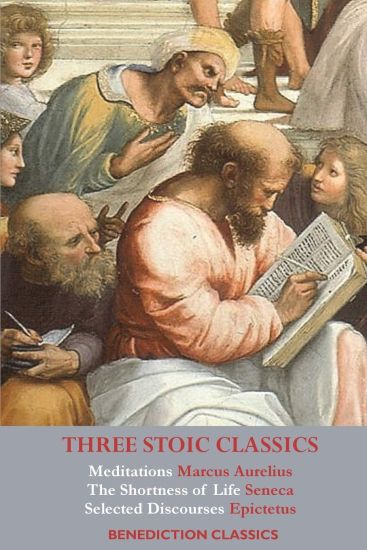
"The happiness of your life depends upon the quality of your thoughts." ― Marcus Aurelius"You have power over your mind - not outside events. Realize this, and you will find strength." ― Marcus Aurelius"So it is: we are not given a short life but we are wasteful of it... Life is long if you know how to use it.― Seneca"We must indulge the mind and from time to time allow it the leisure which is its food and strength." ― Seneca"Don't explain your philosophy. Embody it." ― Epictetus"First say to yourself what you would be; and then do what you have to do." ― EpictetusThree Stoic Classics contains three vital works introducing this life-changing philosophy. The Shortness of Life is a succinct call to the pursuit of philosophy, which leads to wise choices and the full life: "Of all men they alone are at leisure who take time for philosophy; they alone really live." Seneca offers piercing and profound insights into human nature, and a vision of the good life, summarised in his aphorism, "Life is long, if you know how to use it." Seneca elucidates many of the principles of modern productivity manuals, including the wise valuing of time: "People are frugal in guarding their personal property; but as soon as it comes to squandering time they are most wasteful of the one thing in which it is right to be stingy,"intentionality, and rest and recreation: "We must go for walks out of doors, so that the mind can be strengthened and invigorated by a clear sky and plenty of fresh air. At times it will acquire fresh energy from a journey by carriage and a change of scene, or from socializing and drinking freely." Epictetus' Selected Discourses is a longer meditation on the sixty principles important to pursuing the Stoic Life. Beginning with the foundational principle: the difference in how we relate to the things under our control (our acts, thoughts, and desires) and those not under our control (our possessions, position, reputation), Epictetus's discourses cover topics including: How to maintain one's character in all circumstances, Friendship, Contentment, Anxiety, and On Dealing with Tyrants. Meditations is a life-changing book. It contains the private meditations of the most powerful man in the Roman world, the Emperor Marcus Aurelius, as he wrestled with the complexities of his life using the wisdom of Stoic Philosophy. Meditations is written in lucid, accessible language and, interestingly, we see that the problems and perplexities of this philosopher-King are much like ours. Marcus Aurelius was impressively able to live out his philosophical ideals-such as the importance of gratitude, mindfulness, simplicity and life-long learning, of seizing the day, and of remembering the shortness of life-while administering the Roman Empire. Stoic philosophy is, above all, practical. It uses reason and the careful observation of human life to address the problems of daily life. It is also universal-the emperor Marcus Aurelius and the freed slave Epictetus are both leading Stoic philosophers; indeed, Marcus Aurelius carefully studied the works of Epictetus. In recent years, Stoic philosophy has provided vital life lessons to people in all spheres of life. Indeed, modern Stoic thought "hold s] fascinating promise for business and government leaders tackling global problems in a turbulent, post-recession slump," (Forbes). Three Stoic Classics is an indispensable guide to Stoic philosophy.
Meditations (Royal Collector's Edition) (Case Laminate Hardcover with Jacket)
Marcus Aurelius
Royal Classics
2020
sidottu
Halvin toimitettuna 42,40 €
Meditations (Hero Classics)
Marcus Aurelius
Legend Times Ltd
2020
nidottu
Halvin toimitettuna 18,70 €
Part of the Hero Classics series“Everything we hear is an opinion, not a fact. Everything we see is a perspective, not the truth.” A collection of personal writings covering an array of topics. Marcus delves into spiritual reflections and exercises, which he developed as a leader, in his struggled to understand himself and make sense of the universe. The book cover such diverse topics as the question of virtue, human rationality, the nature of the gods and Aurelius's own emotions such as doubt, despair and exaltation. The Hero Classics series:MeditationsThe ProphetA Room of One’s OwnIncidents in the Life of a Slave GirlThe Art of WarThe Life of Charlotte BronteThe RepublicThe PrinceNarrative of the Life of Frederick Douglass, an American Slave

How To Be a Stoic
Epictetus; Marcus Aurelius
Penguin Classics
2020
nidottu
Halvin toimitettuna 14,50 €
'Don't hope that events will turn out the way you want, welcome events in whichever way they happen'How can we cope when life's events seem beyond our control? These words of consolation and inspiration from the three great Stoic philosophers - Epictetus, Seneca and Marcus Aurelius - offer ancient wisdom on how to face life's adversities and live well in the world. One of twenty new books in the bestselling Penguin Great Ideas series. This new selection showcases a diverse list of thinkers who have helped shape our world today, from anarchists to stoics, feminists to prophets, satirists to Zen Buddhists.
HarperCollins is proud to present its incredible range of best-loved, essential classics. Our life is what our thoughts make it The extraordinary writings of Marcus Aurelius (AD 121-180), the only Roman emperor to have also been a stoic philosopher, have for centuries been praised for their wisdom, insight and guidance by leaders and great thinkers alike. Never intended for publication, Meditations are the personal notes born from a man who studied his unique position of power as emperor while trying to uphold inner balance in the chaotic world around him. Boldly challenging many of our biggest questions, Aurelius wrestles with the divided self, considering the complexities of human nature, rationality and moral virtue, affirming its place as one of the most timeless, significant works of philosophy to date.
HarperCollins is proud to present its incredible range of best-loved, essential classics. Our life is what our thoughts make it The extraordinary writings of Marcus Aurelius (AD 121-180), the only Roman emperor to have also been a stoic philosopher, have for centuries been praised for their wisdom, insight and guidance by leaders and great thinkers alike. Never intended for publication, Meditations are the personal notes born from a man who studied his unique position of power as emperor while trying to uphold inner balance in the chaotic world around him. Boldly challenging many of our biggest questions, Aurelius wrestles with the divided self, considering the complexities of human nature, rationality and moral virtue, affirming its place as one of the most timeless, significant works of philosophy to date.
Meditations is a series of personal writings by Marcus Aurelius, Roman Emperor from 161 to 180 AD, recording his private notes to himself and ideas on Stoic philosophy. Marcus Aurelius wrote the 12 books of the Meditations in Koine Greek as a source for his own guidance and self-improvement. It is possible that large portions of the work were written at Sirmium, where he spent much time planning military campaigns from 170 to 180. Some of it was written while he was positioned at Aquincum on campaign in Pannonia, because internal notes tell us that the first book was written when he was campaigning against the Quadi on the river Granova (modern-day Hron) and the second book was written at Carnuntum. It is unlikely that Marcus Aurelius ever intended the writings to be published and the work has no official title, so "Meditations" is one of several titles commonly assigned to the collection. These writings take the form of quotations varying in length from one sentence to long paragraphs.
This book has been considered by academicians and scholars of great significance and value to literature. This forms a part of the knowledge base for future generations. So that the book is never forgotten we have represented this book in a print format as the same form as it was originally first published. Hence any marks or annotations seen are left intentionally to preserve its true nature.
A timely book for today's world, Marcus Aurelius's Meditations explores how to endure hardship, how to cope with change and how to find something positive out of adversity. Part of the Macmillan Collector’s Library; a series of stunning, clothbound, pocket-sized classics with gold foiled edges and ribbon markers. These beautiful books make perfect gifts or a treat for any book lover. This edition is translated by A. S. L. Farquharson and features an introduction by John Sellars. The Meditations are a set of personal reflections by Marcus Aurelius. He writes about the vicissitudes of his own life and explores how to live wisely and virtuously in an unpredictable world. He was a follower of the Stoic tradition of philosophy, and one of its finest advocates, both in the clarity of his writing and in the uprightness of his life. The aphorisms show how for him, as perhaps for us all, the answer to life lies in keeping a calm and rational mind, and in refusing to be cast down or alarmed by things over which we have no control.
The Fourth Book of the Meditations of Marcus Aurelius Antoninus
Marcus Aurelius; Hastings Crossley
Hansebooks
2020
nidottu
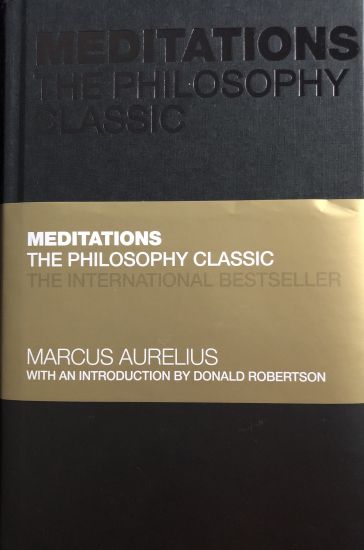
A deluxe special edition of the ancient classic written by the Roman Emperor known as "The Philosopher" Meditations is a series of personal journals written by Marcus Aurelius, Emperor of Rome from 169 to 180 AD. The last of the "Five Good Emperors," he was the most powerful and influential man in the Western world at the time. Marcus was one of the leaders of Stoicism, a philosophy of personal ethics which sought resilience and virtue through personal action and responsibility. Stoicism, viewed as a foundation of modern self-help, has inspired many personal development and psychotherapy approaches through to the present day. Meditations is perhaps the most important source of our modern understanding of Stoic philosophy. Its twelve books chronicle different stages of Marcus Aurelius’ life and ideas. Although he ruled during the Pax Romana, the age of relative peace and stability throughout the empire, his reign was marked by near-constant military conflict and a devastating plague which killed upwards of five million people. Aurelius' writings give modern readers an unprecedented look into the "spiritual exercises" which helped him through his tumultuous life and strengthened his patience, empathy, generosity, self-knowledge and emotional health. The private reflections recorded in the Meditations were never meant to be published, rather they were a source for Marcus' own guidance and self-improvement, and jotted down by campfires or in military tents on the Roman front. The lessons, insights and perspectives contained within this remarkable work are just as relevant today as they were two millennia ago. This volume: Presents the timeless wisdom of Emperor Marcus Aurelius and his Stoic philosophy, with new research on his life and timesContains valuable insights on topics such as resilience, moderation and emotional controlDiscusses how to live "in agreement with nature" and abide by strong ethical principles Part of the bestselling Capstone Classics Series edited by Tom Butler-Bowdon, this attractive, high-quality hardcover volume includes: An original Introduction by Marcus Aurelius authority and Stoicism expert Donald Robertson, author of How To Think Like A Roman Emperor. A modernised, up to date version of the classic George Long translation. Meditations: The Philosophy Classic is a volume which will occupy a prominent place in any library for years to come.
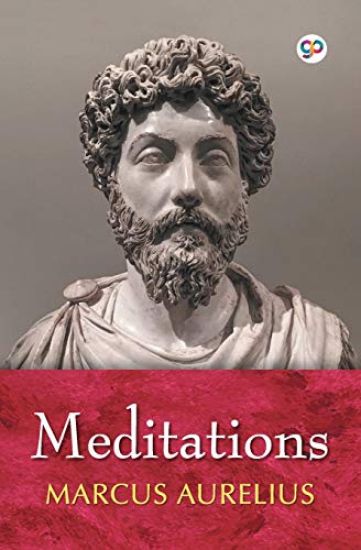
With ancient wisdom that is as relevant in modern times as it was then, 'Meditations' is one of the greatest works of Greek and philosophical literature. Written in Greek by an intellectual Roman emperor without any intention of publication, this book gives an insight into the inner life and philosophy of the last of the 'Five Good Emperors, ' Marcus Aurelius. It cover such diverse topics as the question of virtue, human rationality, the nature of the gods and the values of leadership. These writings take the form of quotations varying in length from one sentence to long paragraphs
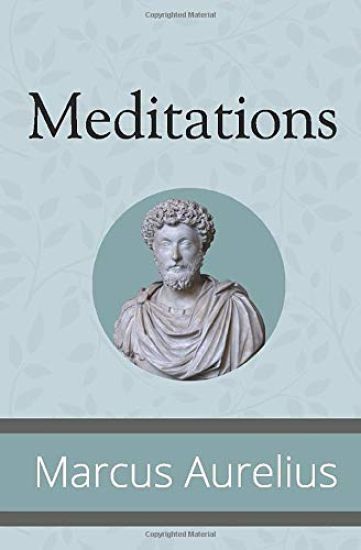
Nothing happens to any man which he is not formed by nature to bear. Throughout his life, the Roman emperor Marcus Aurelius kept notes for self improvement, and Meditations is a collaboration of these notes ranging from a single sentence to long paragraphs. Segmented into twelve chapters, or "meditations," Marcus Aurelius' famous philosophical work chronicles 12 important times in his life and provides a modern understanding of stoic philosophy that was prevalent during the Roman Empire.