Kirjailija
Maria Montessori
Kirjat ja teokset yhdessä paikassa: 157 kirjaa, julkaisuja vuosilta 1917–2026, suosituimpiin kuuluu The Montessori Method (Polis & Praxis Education Series). Vertaile teosten hintoja ja tarkista saatavuus suomalaisista kirjakaupoista.
157 kirjaa
Kirjojen julkaisuvuodet: 1917–2026.
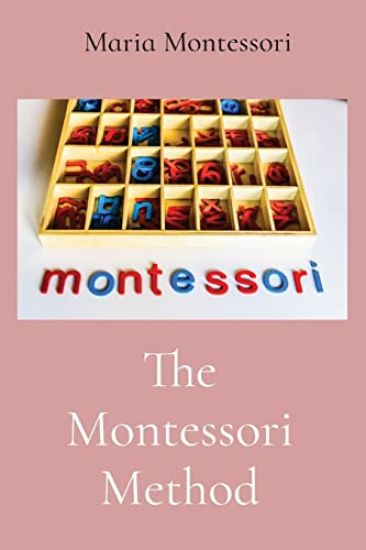
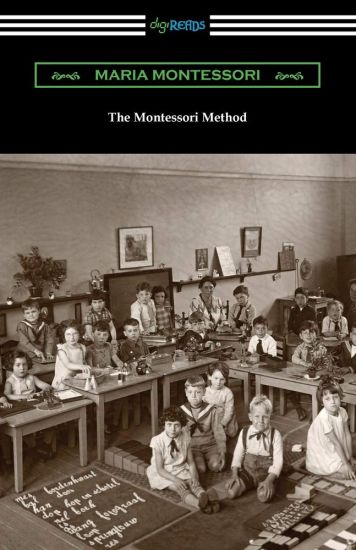
The Montessori Method focuses on each child individually and creates a program of learning best suited to the child's development level, allowing them to realize their full potential.
The Montessori Method (1912) is a work on pedagogy by Maria Montessori. Originally written in her native Italian to describe the work she carried out at the Casa dei Bambini in Rome, the book was translated into English during a period of increasing popularity for Montessori and her educational method in the United States. By 1913, over 100 Montessori schools had been opened in the United States, prompting the educator to travel to the country on a lecture tour in December that year. Today, there are thousands of schools and classrooms around the world dedicated to the use of her method. “All human victories, all human progress, stand upon the inner force. Thus a young student may become a great doctor if he is spurred to his study by an interest which makes medicine his real vocation. But if he works in the hope of an inheritance, or of making a desirable marriage, or if indeed he is inspired by any material advantage, he will never become a true master or a great doctor, and the world will never make one step forward because of his work.” Through years of working with children as a physician and educator, Maria Montessori developed a unique method of scientific pedagogy emphasizing personal growth, individuality, psychology, and hands-on experience. First at her Casa dei Bambini and later at thousands of schools around the world, the Montessori method changed education for countless students and teachers alike, fostering understanding and respect without sacrificing the structures needed for children to grow into successful, confident adults. With a beautifully designed cover and professionally typeset manuscript, this edition of Maria Montessori’s The Montessori Method is a classic of pedagogical literature reimagined for modern readers.
This is the book that Maria Montesorri wrote in response to requests from thousands of American parents and teachers. A short, illustrated guide to the use of the Montessori classroom materials, it shows how to set up a "children's house"-an environment for learning where children can be their own masters, free to learn at their own pace. Frames for lacing and buttoning, geometrical wooden inserts, sound cylinders, sandpapers letters, colored numerical rods: these are familiar features of any Montesorri classroom, whether in the pioneering days or today. Dr. Montesorri explains how to use these materials with preschool children to stimulate their powers of observation, recognition, judgment, and classification. These self-correcting learning tools are the original "teaching machines" for young children. Inherently logical and aesthetically pleasing, they were designed to hone the child's visual, auditory, and tactile perceptions. Dr. Montesorri stresses that each child approaches the apparatus differently. The role of the adult, whether teacher or parent, is to let the child experiment, perceive his own mistakes, and run his own risks in learning.
The Montessori Method (1912) is a work on pedagogy by Maria Montessori. Originally written in her native Italian to describe the work she carried out at the Casa dei Bambini in Rome, the book was translated into English during a period of increasing popularity for Montessori and her educational method in the United States. By 1913, over 100 Montessori schools had been opened in the United States, prompting the educator to travel to the country on a lecture tour in December that year. Today, there are thousands of schools and classrooms around the world dedicated to the use of her method. “All human victories, all human progress, stand upon the inner force. Thus a young student may become a great doctor if he is spurred to his study by an interest which makes medicine his real vocation. But if he works in the hope of an inheritance, or of making a desirable marriage, or if indeed he is inspired by any material advantage, he will never become a true master or a great doctor, and the world will never make one step forward because of his work.” Through years of working with children as a physician and educator, Maria Montessori developed a unique method of scientific pedagogy emphasizing personal growth, individuality, psychology, and hands-on experience. First at her Casa dei Bambini and later at thousands of schools around the world, the Montessori method changed education for countless students and teachers alike, fostering understanding and respect without sacrificing the structures needed for children to grow into successful, confident adults. With a beautifully designed cover and professionally typeset manuscript, this edition of Maria Montessori’s The Montessori Method is a classic of pedagogical literature reimagined for modern readers.
First published in 1912, "The Montessori Method" is the English edition of Maria Montessori's groundbreaking 1909 work on early childhood education. Maria Montessori, born in 1870 in Chiaravalle, Italy to an educated and well-off family, became a famed Italian physician, author, and educator who applied rigorous scientific principles to the study of the schooling of young children. The result was a revolutionary approach that emphasized the importance of self-directed activity for children and that the learning environment must be adapted to the developmental level of the particular child. Montessori placed great importance on the role that physical activities have in helping children master both practical skills and abstract ideas. Montessori's methods were a radical departure from the standard educational practices in both Europe and America in the early twentieth-century and have become widely influential in how modern educators teach young children in an interactive, engaging, and vibrant environment. Over a hundred years later, "The Montessori Method" continues to provide invaluable insight and guidance to both teachers and parents so that they may develop the most effective and supportive learning environment for their students and children. This edition is printed on premium acid-free paper.
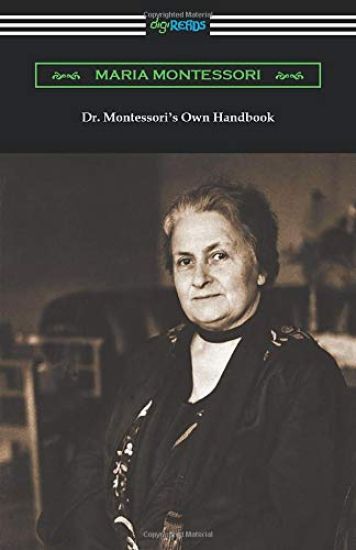
Dr. Montessori's Own Handbook
Maria Montessori
Digireads.com
2021
pokkari
Halvin toimitettuna 15,00 €
First published in 1914, "Dr. Montessori's Own Handbook" by Maria Montessori is the practical and accessible guide book to the author's famous educational approach. Montessori, born in 1870 in Chiaravalle, Italy to an educated and well-off family, became a famed Italian physician, author, and educator who applied rigorous scientific principles to the study of the schooling of young children. The result was a revolutionary approach that emphasized the importance of self-directed activity for children and that the learning environment must be adapted to the developmental level of the particular child. Montessori placed great importance on the role that physical activities have in helping children master both practical skills and abstract ideas. Montessori's methods were a radical departure from the standard educational practices in both Europe and America in the early twentieth-century and have become widely influential in how modern educators teach young children in an interactive, engaging, and vibrant environment. In "Dr. Montessori's Own Handbook," she distills her extensive knowledge and research down to its basics and explains how to apply her methods to the education of grade school children. This detailed and approachable guide is indispensable for all educators and parents practicing the Montessori method. This edition is printed on premium acid-free paper.
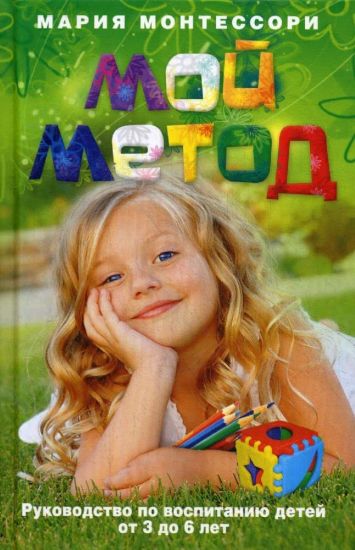
Moj metod. rukovodstvo po vospitaniju detej ot 3 do 6 let
Maria Montessori
Tsentrpoligraf
2020
nidottu
Die Menschheit wird sich zunehmend ihrer weltweiten Einheit bewusst, aber auch der globalen Gefahren z. B. durch rucksichtslose Ausbeutung der Natur. Maria Montessori hat unter der Bezeichnung Kosmische Erziehung ein Konzept entworfen, das solchen Anforderungen an eine Erziehung fur die Eine Welt Rechnung zu tragen versucht. "Im kosmischen Plan der Bildung kann man alle Wissenschaften wie Strahlen miteinander verbinden, die von einem leuchtenden Interessenzentrum ausgehen, das fur Klarheit sorgt und alle Erkenntnisse leichter macht und anstosst." (Maria Montessori)
The Secret of Childhood
Maria Montessori
Martino Fine Books
2019
nidottu
Halvin toimitettuna 27,80 €