
Kirjailija
Marjorie Bowen
Kirjat ja teokset yhdessä paikassa: 201 kirjaa, julkaisuja vuosilta 1906–2026, suosituimpiin kuuluu Julia Roseingrave. Vertaile teosten hintoja ja tarkista saatavuus suomalaisista kirjakaupoista.
201 kirjaa
Kirjojen julkaisuvuodet: 1906–2026.




"I Will Maintain: Part I" by Marjorie Bowen is a historical fiction novel set in the 18th century, blending romantic drama with political intrigue. The story delves into the lives of the aristocracy, exploring themes of love and betrayal amid social conflict and class distinction. As characters navigate the complexities of their personal ambitions and family drama, the novel provides a vivid portrayal of the era's power dynamics and social upheaval. Bowen's narrative captures the tension between romantic desires and political maneuvering, highlighting the impact of societal expectations on personal relationships. Through its richly detailed historical setting, "I Will Maintain" offers an engaging exploration of the struggles faced by individuals in a world of class distinctions and shifting power. The novel's focus on the interplay between personal and political motivations creates a compelling story of intrigue and passion in a tumultuous period.

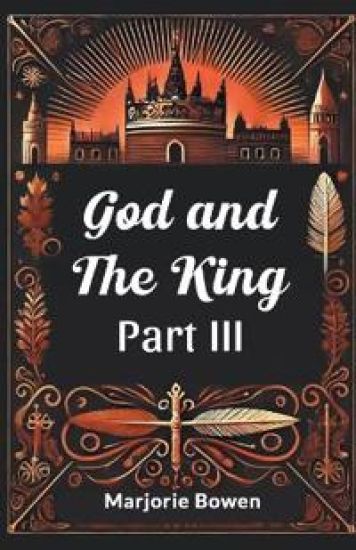
"I Will Maintain: Part III" by Marjorie Bowen concludes the sweeping historical fiction saga set in the 18th century. This final installment brings resolution to the complex romantic drama and political intrigue that have unfolded throughout the series. As the story reaches its climax, the aristocracy faces final confrontations that test their love and loyalty. Bowen intricately weaves themes of family legacy and social conflict, highlighting the enduring power struggles and class divisions that have shaped the characters' lives. The narrative explores personal redemption and the ultimate consequences of past actions, providing a dramatic conclusion to the saga. Through a richly detailed historical romance, "I Will Maintain: Part III" delivers a powerful ending that ties together the threads of romantic entanglements, political maneuvering, and personal growth. Bowen's expert storytelling ensures a satisfying resolution, offering readers a poignant reflection on the characters' journeys and the era's social dynamics.

"I Will Maintain: Part II" by Marjorie Bowen continues the rich historical fiction saga set in the 18th century. This installment delves deeper into the romantic drama and political intrigue of the aristocracy, exploring themes of love and betrayal against a backdrop of family conflict and social upheaval. Bowen's narrative brings to life the complexities of court life, where class struggle and power dynamics shape the characters' fates. The novel intricately portrays the personal ambitions and social dynamics of its characters, highlighting the ongoing tension between personal desires and societal expectations. As the story unfolds, readers are drawn into a world where the stakes of romance and political maneuvering are high, and every action has significant consequences. "I Will Maintain: Part II" masterfully blends historical romance with dramatic storytelling, offering a compelling continuation of the saga with a focus on the enduring challenges faced by its richly developed characters.

In The ''Rake's Progress'' Part II Marjorie Bowen continues the dramatic saga of the young rake introduced in the first volume, delving deeper into his complex journey through 18th-century London. The novel remains set in the richly depicted social milieu of 18th-century London, capturing the era's opulence and moral tensions. The central rake's journey of moral decline continues as he grapples with the consequences of his previous actions. His life of excess and scandal reaches new heights, exacerbating his downfall. The story explores the evolving social dynamics as the rake's behavior increasingly disrupts societal norms. His interactions with other characters reveal the impact of his moral choices on his social standing and relationships. Romantic relationships take on new dimensions, further complicating the protagonist's life. These relationships are marked by drama and emotional conflict, adding depth to the narrative. The rake's character undergoes significant changes, driven by ongoing personal and social conflicts. The novel examines his internal struggles and external consequences as he seeks meaning or redemption. Bowen continues to explore themes of virtue and vice, emphasizing the consequences of the rake's immoral choices. The story presents a critical view of the protagonist's attempts to seek redemption while highlighting the challenges and limitations of his moral journey.

In Part III of Marjorie Bowen's ''The Rake's Progress '', the narrative reaches its climax and resolution. This volume focuses on the theme of redemption, as the protagonist grapples with the consequences of his past actions and seeks to atone for his mistakes. The story delves into romantic entanglements that complicate his journey, highlighting the conflict between his desires and the moral path he must choose. As the protagonist confronts his inner demons and external challenges, the Part emphasizes character development, showcasing significant growth and transformation. The narrative brings various plot points to a close, leading to a resolution that reflects on the moral lessons learned throughout the story. The culmination of the plot ties together the themes of redemption and personal change, offering a satisfying conclusion to the protagonist's journey.

In this Part I of "A Rake's Progress" Marjorie Bowen presents a dramatic narrative set against the backdrop of 18th-century London. The story follows the life of a young rake, a character archetype known for his debauched lifestyle and disregard for societal norms. The novel explores themes of society and scandal as the protagonist's actions and decisions create ripples through the social fabric of his time. The character's descent into vice is depicted with rich historical detail, reflecting the moral and social dynamics of the period. Romance plays a significant role in the narrative, intertwining with the protagonist's journey and influencing his choices. The story is marked by dramatic events and conflicts that drive the plot forward and shape the characters' development. Bowen's writing delves into character development, showcasing the complexities of the rake's personality and the consequences of his lifestyle. The setting of London provides a vivid backdrop, highlighting the contrasts between the city's opulence and the moral corruption depicted in the story. The story contrasts the protagonist's excessive and immoral behavior with the virtues of restraint and integrity. His reckless pursuit of pleasure highlights the consequences of abandoning moral principles.
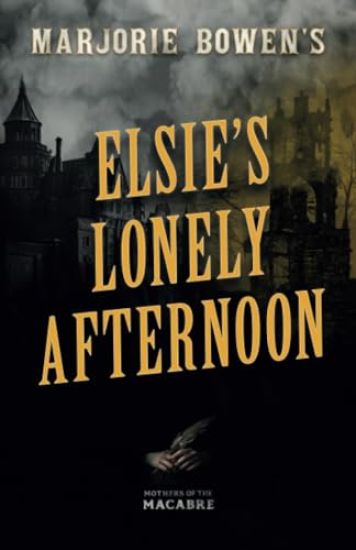
This haunting and unsettling tale delves into the life of little Elsie, a neglected and unwanted orphan, who exists beneath the shadow of her perpetual loneliness. Exploring themes of abandonment, neglect, and the resilience of the human spirit, Elsie's Lonely Afternoon is a gothic horror tale laced with black humour. Elsie is a young orphan living in a grand house in Hampstead under the care of her bed bound grandmother. Forbidden to speak to the servants, the little girl is quite alone in life. This volume is part of the Mothers of the Macabre series, celebrating the gothic horror masterpieces of pioneering women writers who played a pivotal role in shaping and advancing the genre. First published in 1933, Marjorie Bowen masterfully explores the the stark contrast between a child's innate need for love and care and the harsh reality of her isolated and uncaring environment.
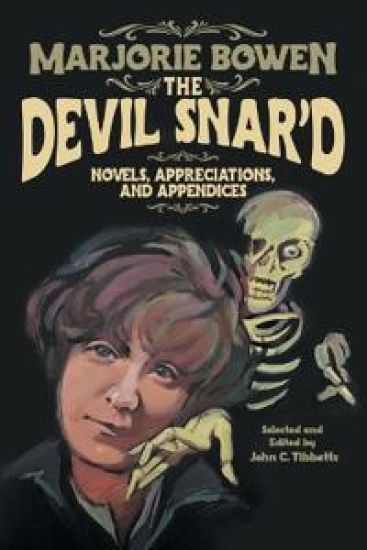
In a vibrant follow-up to his edition of Marjorie Bowen's The Grey Chamber (2021), John C. Tibbetts has assembled a second volume this unjustly forgotten British writer's work. Here we find selections from half-a-dozen of her most vivid and provocative novels, including such vivid historical works as The Viper of Milan (1906) and The Poisoners (1936). Presented in full is The Devil Snar'd (1932), a novel of supernatural horror that, in the words of Virginia Woolf, "comes from the force with which it makes us realize the power that our minds possess for such excursions into the darkness." There follow an expansive series of recollections of Bowen and critical analyses of her work, from such distinguished writers as Graham Greene, Rebecca West, Michael Sadleir (who writes on "Marjorie Bowen's Tales of Terror"), and Jessica Amanda Salmonson. In an appendix to this volume, Tibbetts transcribes the letters between Bowen and the American literary critic Edward Wagenknecht, covering the period 1945-48 and discussing the grim postwar period in England as well as the possibility of Arkham House publishing some of Bowen's work. Tibbetts concludes the volume with an exhaustive bibliography of her work. Along with The Grey Chamber, this volume provides some of the most illuminating documents relating to the life and work of Marjorie Bowen, one of the most distinctive writers of her generation. John C. Tibbetts is a professor at the University of Kansas and the author of The Furies of Marjorie Bowen (2019), the first full-length critical study of her work. He has also written The Gothic Imagination (2011) as well as books on music and film.
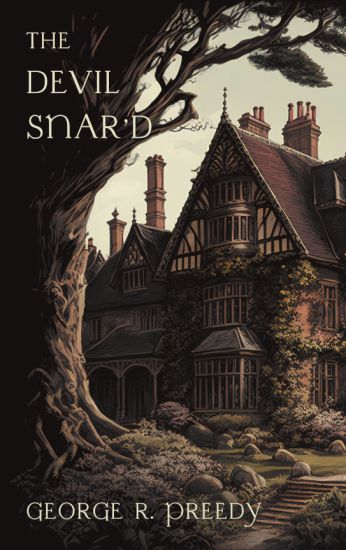
George R. Preedy is one of the pen names of Margaret Gabrielle Vere Campbell, the writer best known as Marjorie Bowen. First published in 1932, 'The Devil Snar'd' is an eerie tale of supernatural influence; it was described by the Daily Herald as a 'ghost story fit to stand beside The Turn of the Screw.' Grace Fielding and her husband Philip have taken a house-Medlar's Farm-at a remote spot in Northumberland to get away from London and repair their broken marriage. Philip is in love with Angela Campion, an actress much younger than himself, but Grace will not give her husband a divorce, and Angela will not have him without the prospect of marriage. Philip, a well-known author, intends to use the dark history of Medlar's Farm-a tale of adultery, jealousy and murder-to write his next book, but Grace, already unwell due to the strain caused by her husband's affair, begins to see parallels between her own story and that of the murdered woman, Susanna Vavasour, who she believes is guiding her actions. As Philip works on his manuscript, his behaviour becomes more and more suspicious, and as Grace's mental state deteriorates, a tale of adultery and marital discord soon becomes one of jealousy, obsession and murderous revenge. 'The Devil Snar'd' has not been reissued since its last publication in 1933. This edition includes an introduction by Gina R. Collia: 'The Many Masks of Margaret Campbell'.

The Master of Stair, has been acknowledged as a major work throughout human history, and we have taken precautions to assure its preservation by republishing this book in a modern manner for both present and future generations. This book has been completely retyped, revised, and reformatted. The text is readable and clear because these books are not created from scanned copies.
"The Governor of England" is an ancient historical romance story book written by Marjorie Bowen. It weaves combines romance, intrigue, and political suspense to produce a gripping story. Bowen brilliantly demonstrates the electricity struggles and conflicts of the Elizabethan technology in this narrative, that's specializing in the main character's journey via which he navigates the unsafe seas of court docket politics. The piece explores problems consisting of ambition, dedication, betrayal, and the intricacies of human relationships. Bowen's outstanding determination to detail brings Elizabethan England to existence, correctly depicting the splendor of the royal court, the intrigue of political maneuvering, and the boundaries encountered via those in positions of authority. At its basis, "The Governor of England" is a fascinating historic drama that takes visitors into the tumultuous international of Renaissance England. Bowen introduces readers to a bygone period, where targets and preference war of words in opposition to an environment of wealth and affect. In preferred "The Governor of England" is a riveting examine to be able to appeal to ancient fiction lovers and moreover any person interested in Elizabethan England's superb beyond.
In "Black Magic," Marjorie Bowen weaves a tale steeped in the occult and psychological tension, exploring themes of desire, power, and the supernatural. Set against the backdrop of early twentieth-century Europe, the narrative unfurls through striking prose that effortlessly blends gothic horror with nuanced character development. Bowen's exploration of sorcery and its ramifications on the human psyche aligns with the period's preoccupation with the macabre, making this work a significant contribution to the genre of supernatural fiction, evocative of contemporaries like M. R. James and Algernon Blackwood. Marjorie Bowen, a prolific writer, thrived in the early 1900s, known for her versatility across genres, including historical fiction and biographies. Her extensive reading in philosophy, history, and the occult undoubtedly shaped her perceptions of the metaphysical, infusing her narratives with rich psychological insight. Bowen's interest in the darker aspects of human nature and society informs "Black Magic," reflecting her own tumultuous times and the cultural fascination with witchcraft and the esoteric. Readers drawn to gothic literature, psychological intrigue, and the exploration of the supernatural will find "Black Magic" a compelling addition to their library. Bowen's masterful storytelling invites contemplation on the frailty of morality and the allure of taboo, making this book not only a thrilling read but also a profound examination of the darker corners of human existence.
The book "" The Governor of England "" has been considered important throughout the human history, and so that this work is never forgotten we have made efforts in its preservation by republishing this book in a modern format for present and future generations. This whole book has been reformatted, retyped and designed. These books are not made of scanned copies and hence the text is clear and readable.

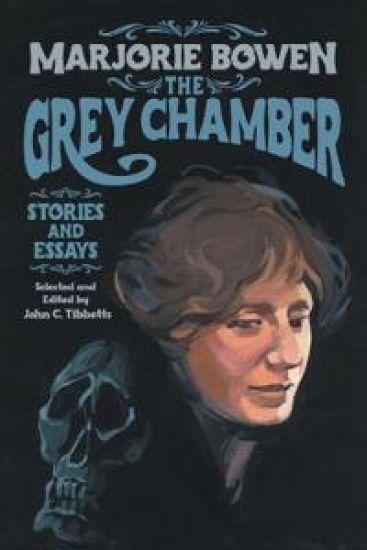
British writer Marjorie Bowen (the pseudonym of Margaret Gabrielle Vere Long, 1885-1952) was a prolific author of short stories, novels, essays, and other works, many of them reflecting her turbulent life as she lived through two world wars and the death of her first-born child and first husband. She retains a stellar reputation as an author of powerful weird stories, including such classics as "The Avenging of Ann Leete" and "The Crown Derby Plate," both included in this volume. But editor John C. Tibbetts, author of a pioneering recent study of Bowen's work, has combed through her entire corpus of fiction to present a wide-ranging selection of stories and essays in this volume. We find less celebrated horror tales such as "The Scoured Silk" and "Florence Flannery"; stories on the changing roles of women in Bowen's era; and even a time-travel narrative involving the composer G. F. Handel. These and other stories make clear why August Derleth long desired to publish a book of her supernatural tales with Arkham House. Among Bowen's essays, Tibbetts has selected those that reflect her interest in the Elizabethan magician John Dee, the artist William Hogarth, and other subjects. Also included is a previously unpublished essay on her own work, "Through the Eyes of an Author." All in all, this volume exhibits Bowen's remarkable breadth and range; but her recurring interest in the weird permeates every one of these pieces. John C. Tibbetts is a professor at the University of Kansas and the author of The Furies of Marjorie Bowen (2019), the first full-length critical study of her work. He has also written The Gothic Imagination (2011) as well as books on music and film.