Kirjojen hintavertailu – 12 903 725 kirjaa ja 27 kauppaa
Kirjailija
Marjorie Bowen
Kirjat ja teokset yhdessä paikassa: 201 kirjaa, julkaisuja vuosilta 1906–2026, suosituimpiin kuuluu Julia Roseingrave. Vertaile teosten hintoja ja tarkista saatavuus suomalaisista kirjakaupoista.
Kings-at-Arms, a classic since it was first published. Has been considered important throughout the human history, and so that this work is never forgotten we have made efforts in its preservation by republishing this book in a modern format for present and future generations. This whole book has been reformatted, retyped and designed. These books are not made of scanned copies and hence the text is clear and readable.
Marjorie Bowen (1885-1952) was a prolific author of some 150 books and counted Arthur Conan Doyle, Mark Twain, and Graham Greene among her many admirers. Her most enduring work is her tales of the ghostly and supernatural, her favorites of which she collected in 1949 under the title The Bishop of Hell and Other Stories. Included in this volume are some of her most famous stories, including 'The Crown Derby Plate', a classic in which a woman gets more than she bargained for when she purchases a set of old plates at an estate sale, 'Kecksies', an unsettling tale in which it is unclear exactly who is dead and who is not, and the title story, 'The Bishop of Hell', which tells of a defrocked clergyman who promises to reveal the secrets of the afterlife from beyond the dead. This collection of twelve stories ranks among the finest volumes of British ghost stories of all time and is presented here with a new introduction by Melanie R. Anderson.
The Viper of Milan, originally published in 1906, was Marjorie Bowen's first novel and a favourite book of the author Graham Greene, who said that it taught him that human nature is "not black and white but black and grey". The novel is set in Lombardy in the middle of the 14th century and follows a battle for power between Gian Galeazzo Maria Visconti, Duke of Milan, and Mastino della Scala, Duke of Verona. As the story opens, in 1360, Visconti is busy expanding his territories and forging alliances; he has forced della Scala out of Verona and taken his wife, Isotta d'Este of Ferrara, as a hostage. It seems that nobody can stop Visconti in his relentless conquest of northern Italy - nobody apart from della Scala, who vows to regain his lost lands and release Isotta from captivity. Meanwhile, Visconti's sister Valentine has problems of her own: her brother has arranged a marriage for her with the Duke of Orleans, while the man she really loves has been imprisoned in a deserted villa outside the city and is slowly starving to death. Another young lady, Graziosa, who lives with her artist father by the western gate of Milan, is also in love - but is her lover really as he seems?
This William of Orange is a less famous predecessor, distinguished by his sobriquet 'The Silent', oldest brother of five from the House of Nassau, the first generation to defy Spain and the Inquisition. Bowen expertly paints a picture of a Protestant people in revolt against Catholic oppressors - pasquils pasted on church doors, rhetoric players staging satirical theatre in the streets, the Stadtholders resisting the Inquisition and appealing to the regent not to enforce the edicts of the Council of Trent. Phillip holds back the Duke of Alva and his unmatchable army in reserve, until he eventually loses patience and decrees that 'the ancient religion was to be re-established by sword and fire and faggot, by fine, by banishment, by ruin; if need be, by the extermination of a whole people.'
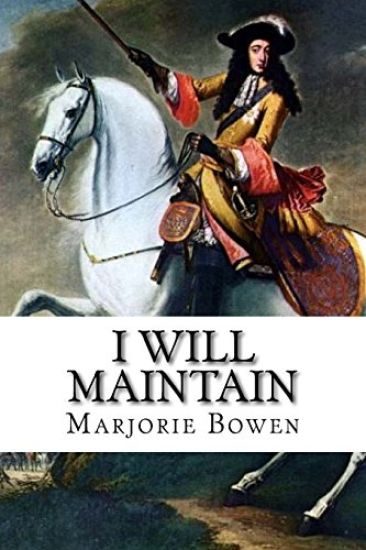
William of Orange became king of England, defeated the French and restored the protestant faith. But as a young man he was both pupil and prisoner of John de Witt, the leader of the Dutch Republic. Although they spent much of their lives as enemies, the two men could never bring themselves to hate each other. Both were proud leaders, but the rise of one would always mean the fall of the other. And unlike de Witt, the prince had the support of the people. William is an enigma. To the French he is a potential ally, a cousin of Louis XIV. To the people he is hope and a chance for change. And for de Witt, William of Orange is the most dangerous man alive. With the people against him, and the French storming the borders, de Witt soon becomes a desperate man. The prince, meanwhile, must make his choice - side with the French, end the war and become a king, or side with the people and continue a desperate war full of nothing but uncertainty... In I Will Maintain, Marjorie Bowen brings the tale of William of Orange to life in a new and exciting way, exposing the infamous rivalry that dominated 17th century England.
England's Glorious Revolution of 1688 was a time of confusion and upheaval in virtually every domain, including religion, politics, and even the social class system. Fans of historical fiction will appreciate Marjorie Bowen's tightly plotted dramatization of the era, which focuses on the period following William and Mary's ascendance to the throne.
Excerpt from Chapter I: "I, too, have been made aware (in what extraordinary fashion, more subtle than words, is scandal communicated ) of various rumours. Remember that I have not seen Rose since I was last in town, six months ago, and then only amid the distractions of a gay season. Laughter passed between us, little else. You will recall the charming laughter of Rose. My prayer is that its gaiety may never be quenched, as-ah -I fear it may be. I must repeat-(here give me credit for a pause of earnest thought)-that I know nothing. "If youth, beauty, race, talents, a fine name, the most winning manners, the sweetest temper, the lightest spirits are to be ruined by the common lures of the world, if ordinary vices are to tarnish a character so bright . . ."
The Austrian guns had ceased with the early sunset, and the desolate city of Prague was silent, encompassed by the enemy and the hard, continuous cold of a Bohemian December: in the hall of Vladislav in the Hradcany, that ancient palace of ancient kings that rose above the town, several French officers wrapped in heavy cloaks were walking up and down, as they had done night after night since the dragging siege began. In the vast spaces of the huge pillarless hall with the high arched Gothic roof, bare walls and floor, imperfectly lit by a few low-placed lamps, their figures looked slight to insignificance, and the sound of their lowered voices was a mere murmur in the great frozen stillness. At one end of the hall rose a tall carved wooden throne and rows of benches divided from the main hall by a light railing; these, which had once been the seats of the King and nobility of Bohemia, were now decayed and broken, and behind the empty chair of state was thrust a Bourbon flag tied with the blue and white colours that the French carried in compliment to the Elector of Bavaria, whom they, for many intricate reasons, -some wise, and some foolish, and none just, were seeking to place on the Austrian throne as Charles II. These officers, who were the unquestioning instruments of this policy of France, ceased talking presently and gathered round the degraded throne before which burnt a handful of charcoal over an iron tripod. The only near light was a heavy lamp suspended before the window; a stench of rank oil and powder filled even the cold air, which rasped the throat and the nostrils and had no freshness in it but only a great lifeless chill
This collection of literature attempts to compile many of the classic works that have stood the test of time and offer them at a reduced, affordable price, in an attractive volume so that everyone can enjoy them.
This is a reproduction of a book published before 1923. This book may have occasional imperfections such as missing or blurred pages, poor pictures, errant marks, etc. that were either part of the original artifact, or were introduced by the scanning process. We believe this work is culturally important, and despite the imperfections, have elected to bring it back into print as part of our continuing commitment to the preservation of printed works worldwide. We appreciate your understanding of the imperfections in the preservation process, and hope you enjoy this valuable book.
A historical novel in which the whole story of Cromwell's dealings with Parliament and the King is played out. It is written with dignity and conviction, and with the author's characteristic power of grasping the essential details needed to supply colour and atmosphere for the reader of the standard histories.
William of Orange became king of England, defeated the French and restored the protestant faith. But as a young man he was both pupil and prisoner of John de Witt, the leader of the Dutch Republic. Although they spent much of their lives as enemies, the two men could never bring themselves to hate each other. Both were proud leaders, but the rise of one would always mean the fall of the other. And unlike de Witt, the prince had the support of the people. William is an enigma. To the French he is a potential ally, a cousin of Louis XIV. To the people he is hope and a chance for change. And for de Witt, William of Orange is the most dangerous man alive. With the people against him, and the French storming the borders, de Witt soon becomes a desperate man. The prince, meanwhile, must make his choice - side with the French, end the war and become a king, or side with the people and continue a desperate war full of nothing but uncertainty... In I Will Maintain, Marjorie Bowen brings the tale of William of Orange to life in a new and exciting way, exposing the infamous rivalry that dominated 17th century England.
England's Glorious Revolution of 1688 was a time of confusion and upheaval in virtually every domain, including religion, politics, and even the social class system. Fans of historical fiction will appreciate Marjorie Bowen's tightly plotted dramatization of the era, which focuses on the period following William and Mary's ascendance to the throne.
This work has been selected by scholars as being culturally important, and is part of the knowledge base of civilization as we know it. This work was reproduced from the original artifact, and remains as true to the original work as possible. Therefore, you will see the original copyright references, library stamps (as most of these works have been housed in our most important libraries around the world), and other notations in the work. This work is in the public domain in the United States of America, and possibly other nations. Within the United States, you may freely copy and distribute this work, as no entity (individual or corporate) has a copyright on the body of the work. As a reproduction of a historical artifact, this work may contain missing or blurred pages, poor pictures, errant marks, etc. Scholars believe, and we concur, that this work is important enough to be preserved, reproduced, and made generally available to the public. We appreciate your support of the preservation process, and thank you for being an important part of keeping this knowledge alive and relevant.
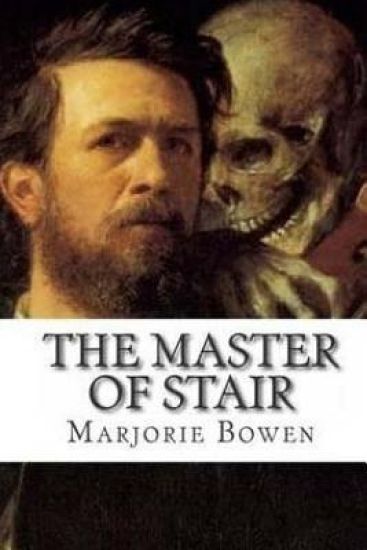
At 3 p.m. on the 13th February, a huge army of soldiers swept into the remote Highland Valley of Glencoe, a stronghold of the MacDonald clan. The Master of the Stair sent them there. Cruel and ambitious, he did not shrink from mass murder to satisfy his lust for power. Jock Campbell led them. At last his chance had come to rid Scotland of his old enemies and reign supreme in the Highlands. Delia tried to stop them. A beautiful Jacobite spy, she risked her life to warn the MacDonalds and save the man she loved. Fighting against time and the evil madness or her opponents, Delia plotted secretly to avert the threatened tragedy.