Kirjailija
Mark Stille
Kirjat ja teokset yhdessä paikassa: 70 kirjaa, julkaisuja vuosilta 2005–2027, suosituimpiin kuuluu US Navy Pacific Fleet 1942-43. Vertaile teosten hintoja ja tarkista saatavuus suomalaisista kirjakaupoista.
70 kirjaa
Kirjojen julkaisuvuodet: 2005–2027.
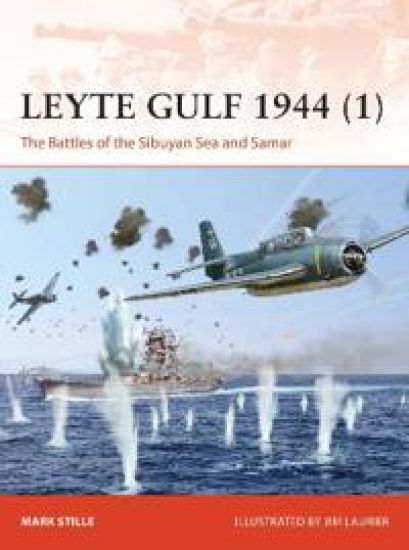
The first in a two-part study of the October 23-26 Battle of Leyte Gulf, which resulted in a decisive defeat for the Japanese. In October 1944, the US prepared to invade the Philippines to cut Japan off from its resource areas in Southeast Asia. The Japanese correctly predicted this, and prepared a complex operation to use the remaining strength of its navy to defend its possessions. In the Battle of Leyte Gulf, the Imperial Japanese Navy's First Diversion Strike Force took part in two major actions during the course of the battle: the intense air attacks from US Navy carriers on October 24 (the Battle of the Sibuyan Sea, which accounted for superbattleship Musashi), and the compelling action off Samar the following day. This book examines in detail why, following the Samar action, the Imperial Japanese Navy commander of the First Diversion Strike Force (Takeo Kurita) chose to ignore orders and break off the attack into Leyte Gulf—one of the two most controversial decisions of the entire battle. It also covers the Japanese planning for Leyte Gulf, and the strengths and weaknesses of the Imperial Japanese Navy in this phase of the war alongside the US Navy’s planning and command arrangements.
The United States Navy in World War II
Mark Stille
Osprey Publishing
2021
sidottu
Halvin toimitettuna 41,30 €
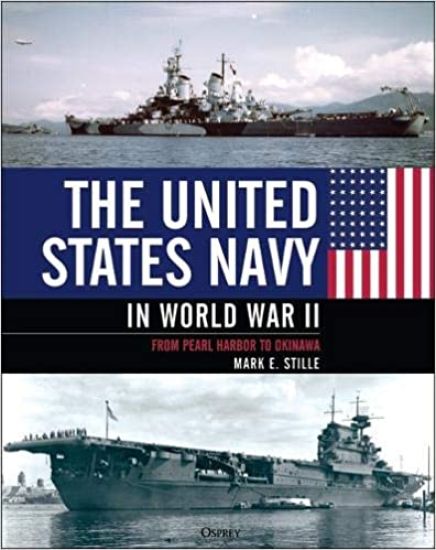
A comprehensive overview of the strategy, operations and vessels of the United States Navy from 1941 to 1945. Although slowly building its navy while neutral during the early years of World War II, the US was struck a serious blow when its battleships, the lynchpin of US naval doctrine, were the target of the dramatic attack at Pearl Harbor. In the Pacific Theatre, the US was thereafter locked into a head to head struggle with the impressive Imperial Japanese Navy, fighting a series of major battles in the Coral Sea, at Midway, the Philippine Sea, Leyte Gulf and Okinawa in the struggle for supremacy over Japan. Having avoided the decisive defeat sought by the IJN, the US increased industrial production and by the end of the war, the US Navy was larger than any other in the world. Meanwhile in the west, the US Navy operated on a second front, supporting landings in North Africa, Sicily, and Italy, and in 1944 played a significant part in the D-Day landings, the largest and most complex amphibious operation of all time. Written by an acknowledged expert and incorporating extensive illustrations including photographs, maps and colour artwork, this book offers a detailed look at the strategy, operations and vessels of the US Navy in World War II.
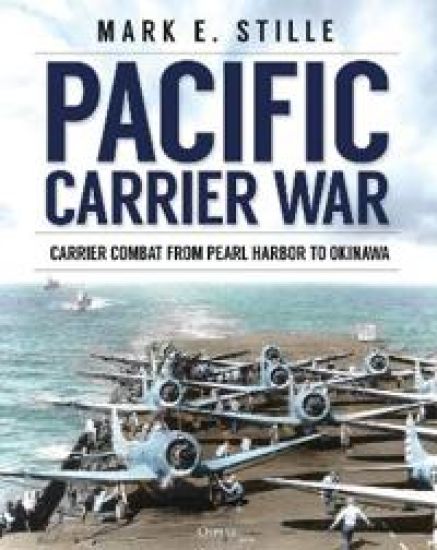
A detailed and comprehensive study of the carrier formations of the Pacific War, including their origins, development and key battles from the Coral Sea, through Midway and Guadalcanal to the battle of the Philippine Sea. The defining feature of the Pacific Theatre of World War II was the clash of carriers that ultimately decided the fate of nations. The names of these battles have become legendary as some of the most epic encounters in the history of naval warfare. Pre-war assumptions about the impact and effectiveness of carriers were comprehensively tested in early war battles such as Coral Sea, while US victories at Midway and in the waters around Guadalcanal established the supremacy of its carriers. The US Navy’s ability to adapt and evolve to the changing conditions of war maintained and furthered their advantage, culminating in their comprehensive victory at the battle of the Philippine Sea, history’s largest carrier battle, which destroyed almost the entire Japanese carrier force. Examining the ships, aircraft and doctrines of both the Japanese and US navies and how they changed during the war, Mark E. Stille shows how the domination of American carriers paved the way towards the Allied victory in the Pacific.
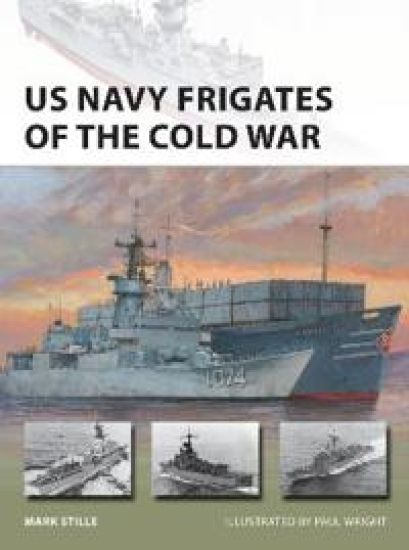
Though they were never the most glamorous of warships, found US Navy frigates were frequently found on the frontlines of the Cold War at sea. These warships were the descendants of World War II's destroyer escorts, designed primarily to escort convoys. They specialized in anti-submarine warfare, but were intended to be numerous, tough, versatile, and well-armed enough to show US naval power around the world, performing roles that varied from intercepting drug-smugglers to defending aircraft carriers. When the Cold War turned hot, frigates were often there. It was a US Navy frigate, Harold E. Holt, that conducted the US Navy's first hostile boarding action since 1826 during the SS Mayaguez incident. Frigates were at the forefront of operations in the Persian Gulf during the Tanker War, with the frigate USS Stark suffering a notorious Exocet attack by Iraqi warplanes, and proving the Oliver Hazard Perry-class's legendary toughness. This book explains how the technology and design of frigates changed during the Cold War, how the classes were modified to keep up to date, and explores the many varied missions they performed during the Cold War and since.
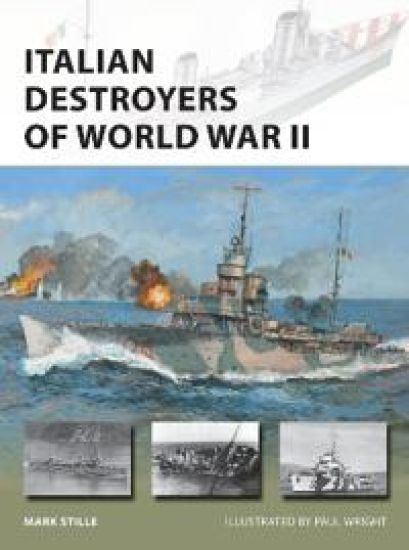
A new illustrated history and analysis of Italy's World War II destroyers, a formidable foe for Allied forces attempting to attack the sea lanes between Italy and North Africa. The Italian Royal Navy (Regia Marine or RM) began the Second World War with one of the largest fleets in the world. Included in it was a total of 59 fleet destroyers, with others added during the war. These were a diverse collection of ships dating back to the First World War with large destroyers built to counter ships of similar size introduced in the French Navy (the RM's historical enemy), and medium-sized ships which constituted the bulk of the destroyer force. RM destroyers were built for high speed, not endurance since they were only expected to operate inside the Mediterranean. They were also well-armed, but lacked radar. During the war, RM destroyers fought well. With the exception of a small force based in Abyssinia which fought a series of battles in the Red Sea against the British, RM destroyers were active in the Mediterranean. The primary mission of the RM during the war was to keep the supply lines to North Africa open. The Italians were largely successful in this effort, and destroyers were key. RM destroyers were present at every fleet action with the British Mediterranean Fleet. The intensity of these actions is reflected by the fact that the RM lost 51 destroyers during the war.
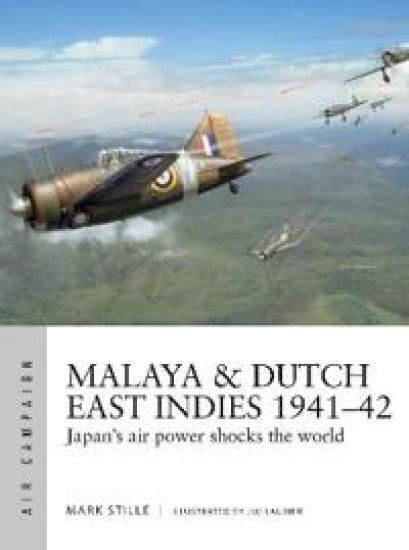
This illustrated study explains how Japan's all-conquering air forces spearheaded the invasions of Malaya and the Dutch East Indies and stunned the defending British, Dutch, and American forces. Japan’s attack on Pearl Harbor in 1941 was quickly followed by a rapid invasion of Malaya, a plan based entirely on the decisive use of its airpower. While the British was inadequately prepared, they likewise relied on the RAF to defend their colony. The campaign was a short match between Japanese airpower at its peak and an outgunned colonial air force, and its results were stunning. The subsequent Dutch East Indies campaign was even more dependent on airpower, with Japan having to seize a string of island airfields to support their leapfrog advance. Facing the Japanese was a mixed bag of Allied air units, including the Dutch East Indies Air Squadron and the US Far East Air Force. The RAF fell back to airfields on Sumatra in the last stages of the Malaya campaign, and was involved in the last stages of the campaign to defend the Dutch colony. For the first time, this study explores these campaigns from an airpower perspective, explaining how and why the Japanese were so devastatingly effective.
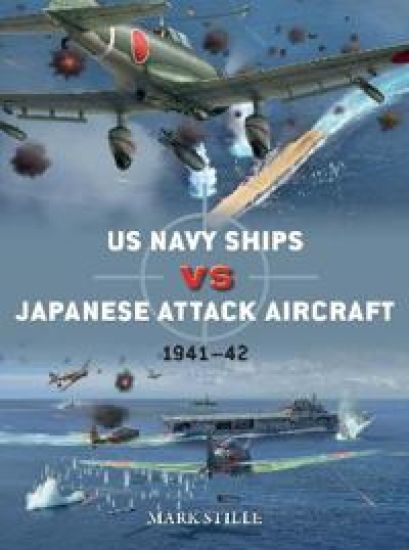
US Navy Ships vs Japanese Attack Aircraft
Mark Stille
Osprey Publishing
2020
nidottu
Halvin toimitettuna 19,80 €
The striking power of the Imperial Japanese Navy’s carrier-based attack aircraft was established at Pearl Harbor, and the IJN’s carrier-based torpedo and dive-bombers showed their prowess again at the Battle of Coral Sea when they sank the US Navy carrier USS Lexington and damaged the carrier USS Yorktown. Even at the disastrous Battle of Midway, the relatively small number of IJNAF attack- and torpedo-bombers that were launched against the US fleet proved that they remained a potent force by heavily damaging Yorktown again, which allowed an IJN submarine to sink the carrier. At Guadalcanal, IJNAF carrier-based aircraft sank the carrier USS Hornet and badly damaged USS Enterprise twice. However, throughout 1942, US Navy ship defences brought down an increasing number of attacking IJNAF aircraft. The final major battle of the year, the Battle of Santa Cruz, exacted crippling losses on the IJN, setting the stage for the eclipse of the IJNAF’s highly trained and effective aviation attack forces. Packed with illustrations and contemporary photographs, this engrossing volume details the design, tactics, and operational records of both the US Navy ships and the IJNAF aircraft which attacked them over the year following Pearl Harbor.
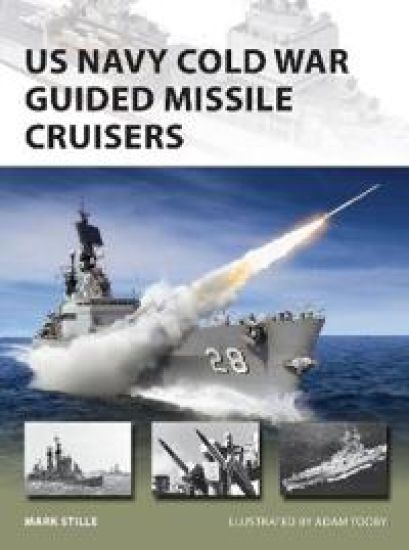
Faced with an increasingly formidable anti-ship cruise missile threat from the Soviet Union in the early days of the Cold War, and with the recent memory of the kamikaze threat from World War II, the USN placed a great priority on developing air defence cruise missiles and getting them to sea to protect the fleet. The first of these missiles were sizable, necessitating large ships to carry them and their sensors, which resulted in the conversion of a mix of heavy and light cruisers. These ships, tasked with protecting carrier groups and acting as flagships, entered service from 1955 and served until 1980. The cruisers served in the front lines of the Cold War and many saw combat service, engaging in surface actions from Vietnam to the Persian Gulf. Complementing the conventionally-powered missile cruisers was a much smaller number of expensive nuclear-powered cruisers, including the Long Beach, the USN’s largest-ever missile cruiser. Until replaced by the Ticonderoga and Burke classes of Aegis ships, the USN’s 38 missile cruisers were the most capable and important surface combatants in the fleet and served all over the globe during the Cold War. Using specially commissioned artwork and meticulous research, this illustrated title explores the story of these cruisers in unparalleled detail, revealing the history behind their development and employment.
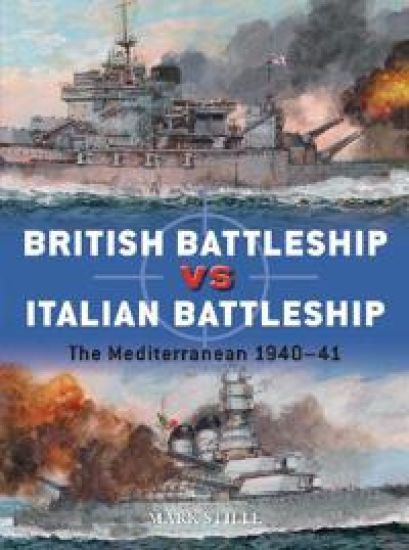
During World War II’s battle for control of the Mediterranean, both the British and Italian navies planned to bring their battle fleets into play. At the centre of both of these fleets was a core of battleships which both sides expected to play a decisive role in the conflict. On 9 July 1940, the two navies met in the central Mediterranean, as two Italian battleships faced off against three of their British counterparts. Christened the Battle of Calabria, the action allowed the ships to play to their strengths, engaging in a long-range gunnery duel, the very thing they had been designed for. Though both sides shot well, the only hit was scored by Warspite on the Italian battleship Giulio Cesare. The Italians were forced to withdraw, and the action ended up being indecisive, but it was the largest fleet action fought in the Mediterranean during the war. As well as this battle, there were other occasions during the war when both British and Italian battleships were present and influential, but during which they never engaged each other directly – the Battle of Spartivento on 27 November 1940, and the Battle of Cape Matapan on 28–29 March 1941. Packed with full-colour artwork, carefully selected archive photographs and expert analysis, this title explores in detail the role played by British and Italian battleships in these encounters, and their influence in the Mediterranean theatre of World War II.
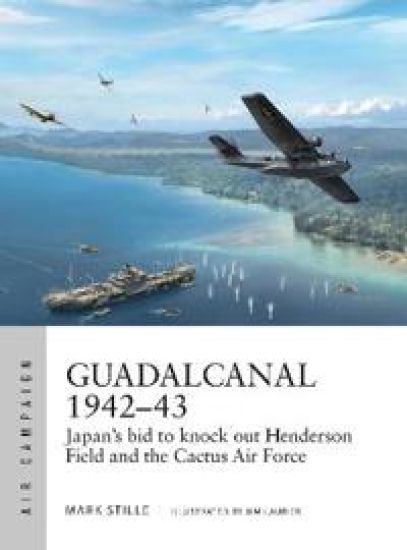
The story of Japan's long-range air campaign to destroy the ‘Cactus Air Force’ on Guadalcanal, why Henderson Field was so vital to both sides, and how the Allies defeated the previously all-conquering Japanese. The campaign for Guadalcanal, which stretched from August 1942 until February 1943, centered on Henderson Field. The airfield was captured by the US on 8 August and placed into operation by 20 August. As long as the airfield was kept operational and stocked with sufficient striking power, the Japanese could not run convoys with heavy equipment and large amounts of supplies to the island. Instead, they were forced to rely on night runs by destroyers which could not carry enough men or supplies to shift the balance decisively against the American garrison on the island. The American air contingent on the island, named the ‘Cactus Air Force’, comprised Marine, Navy and Army Air Force units. It had the challenging mission of defending the airfield against constant Japanese attacks, and more importantly, of striking major Japanese attempts to reinforce the island. The mission of neutralizing Henderson Field fell primarily to the Imperial Navy’s Air Force flying out of airfields in the Rabaul area. The units charged with this mission were among the most accomplished in the entire Imperial Navy with a high proportion of very experienced pilots and a superb air superiority fighter (the famous ‘Zero’). However, the distance from Rabaul to Guadalcanal handicapped Japanese operations and their primary bomber was terribly vulnerable to interception. This book traces the air campaign from both sides and explores the factors behind the American victory and the Japanese defeat. The text is supported by full-colour illustrations and contemporary photography.
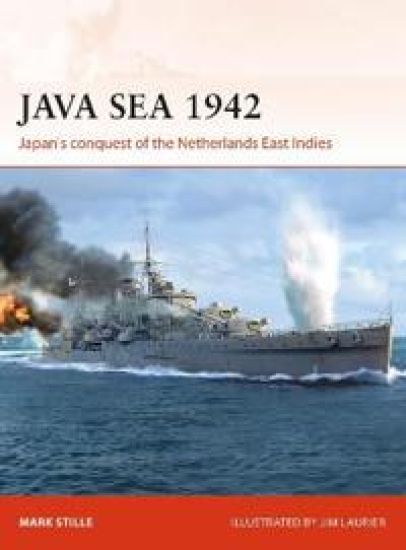
A highly illustrated study of the battle of the Java Sea, a key Japanese victory in their advance throughout Southeast Asia. The battle of the Java Sea, fought in February 1942, was the first major surface engagement of the Pacific War and one of the few naval battles of the entire war fought to a decisive victory. It was the culminating point of the Japanese drive to occupy the Netherlands East Indies (NEI) and, to defend the territory, the Allies assembled a striking force comprised of Dutch, American, British and even an Australian ship, all under the command of a resolute Dutch admiral. On 27 February 1942, the Allied striking force set course to intercept the Japanese invasion force in the Java Sea. In one of the few such times during the whole of World War II a protracted surface engagement was fought unmolested by airpower. For over seven hours, the Allied force attempted to attack the Japanese invasion force, finally breaking off in the early evening. Some three hours later, the Allied force, now reduced to just four remaining cruisers and two destroyers, attempted another attack on the invasion convoy during which Japanese torpedoes scored heavily, sinking two Dutch cruisers and bringing the battle to a conclusion. Over the next two days, as the Allies attempted to flee, five more ships were sunk. From that point on, Allied naval power was eliminated from Southeast Asia. In this illustrated title, Mark Stille tells the full story of the battle of the Java Sea, explaining how and why the Japanese achieved such a resounding victory, and delving into the tremendous impact of the battle on the course of the Pacific War.
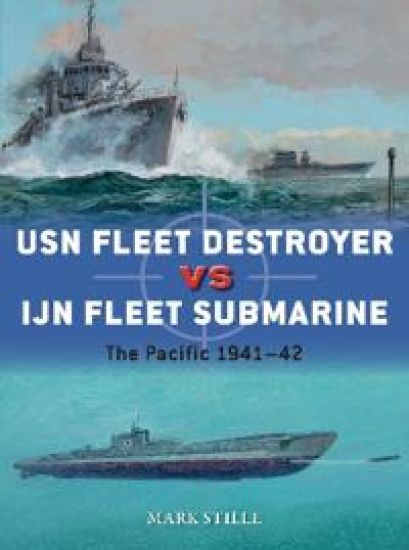
Leading up to the Pacific War, Japanese naval strategists believed that a decisive fleet engagement would be fought against the United States Navy. Outnumbered by the USN, the Imperial Japanese Navy planned to use its large, ocean-going submarines to chip away at its opponent before the grand battle. In order to accomplish this, the IJN’s submarine force was tasked to perform extended reconnaissance of the USN’s battle fleet, even in port, and then shadow and attack it. For their part, the USN was fully aware of the potential threat posed by Japanese submarines, and destroyer crews were trained and equipped with modern anti-submarine weapons and tactics to screen the battle fleet. Challenging the assumption that Japanese submarines were ineffective during the Pacific War, this fully illustrated study examines their encounters with the US Navy, and the successes and failures of American destroyers in protecting their capital ships.
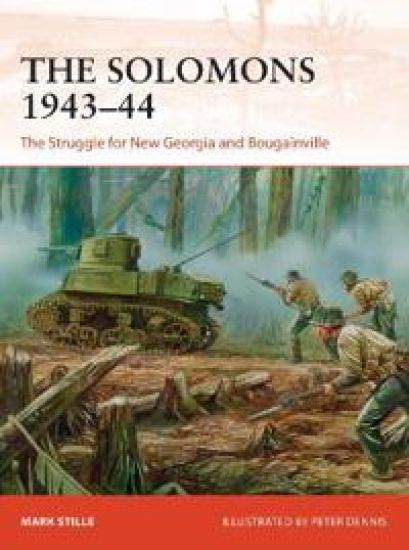
A highly illustrated study of the Solomons campaign in 1943–44 from Guadalcanal, as the US forces advanced through the island chain, to the vital Japanese base at Rabaul. Victory at Guadalcanal for the Allies in February 1943 left them a vital foothold in the Solomon Islands chain, and was the first step in an attempt to isolate and capture the key Japanese base of Rabaul on New Britain. In order to do this they had to advance up the island chain in a combined air, naval, and ground campaign. On the other hand, the Japanese were determined to shore up their defences on the Solomons, which was a vital part of their southern front, and would bitterly contest every inch of the Allied advance. The scene was set for one of the bloodiest campaigns of the Pacific War. Featuring specially commissioned maps and artwork, this is the compelling story of the struggle for the Solomons, a key part of the Allied advance towards Japan which saw tens of thousands of casualties and so many ships lost that part of the ocean became known as 'Ironbottom Sound'.
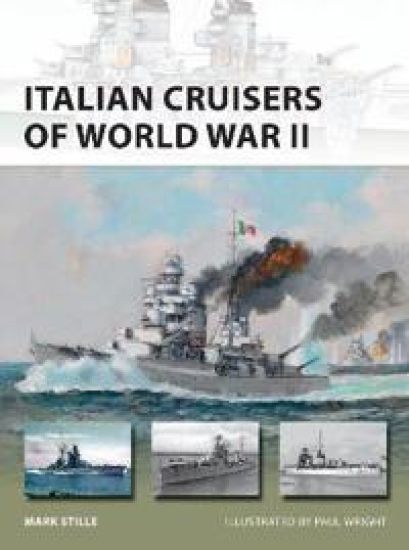
The Italian Royal Navy (Regia Marina) operated one of largest cruiser forces of World War II. As a signatory to the 1922 Washington Naval Treaty, the Regia Marina immediately attempted to reinforce its treaty-limited battleship force by building seven large 10,000-ton heavy cruisers. Italian light cruisers also possessed an interesting design history and were involved in every major fleet engagement in the Mediterranean, as well as several smaller encounters with units of the British Royal Navy. Fully illustrated with specially commissioned artwork, this fascinating volume examines the history of the Regia Marina’s cruisers during World War II where they came up against the might of the British Royal Navy.
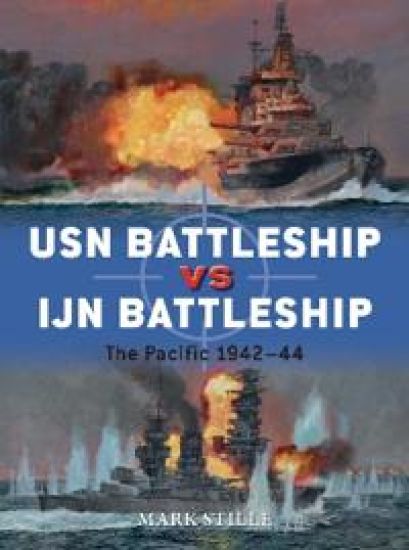
In the build-up to World War II both the United States and Japan believed their battleships would play a central role in battle, but after the Pacific War began in December 1941, the role of the battleship proved to be much more limited than either side expected. There would be only two battleship vs battleship actions in the Pacific in World War II, both of which are assessed in this engaging study. At Guadalcanal in 1942, Kirishima faced two modern US battleships, USS Washington and USS South Dakota. In the Surigao Strait in 1944, two World War I-era Japanese battleships, Yamashiro and Fuso, faced six American battleships supported by four heavy cruisers in history’s last-ever clash between battleships. Employing full-colour artwork, carefully selected archive photographs, and expert analysis, former US Navy Commander Mark E. Stille examines the two head-to-head clashes between the battleships deployed by the United States and Japan in the struggle for control of the Pacific during World War II.
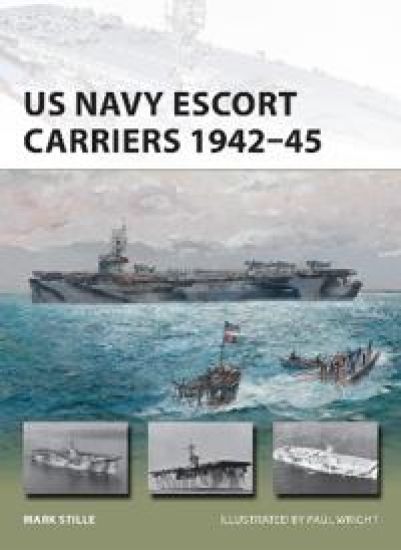
While not as famous as their larger and faster sister ships such as the Essex- and Yorktown-class carriers, escort carriers made an enormous contribution towards Allied victory both in the Pacific and Atlantic theatres. Rather than relying on size or speed, it was their sheer numbers that made them so effective. Indeed, the Casablanca-class escort carrier was the most-produced aircraft carrier in history. In partnership with the Royal Navy, they provided the backbone of Allied anti-submarine efforts in the Atlantic, finally and irrevocably turning the tide of the war against the U-boats in 1943. In the Pacific, they provided the air cover for the series of landings which led to the doorstep of Japan by 1945. These robust ships faced submarine, air, and even surface threats from the Japanese, but proved able to contend with everything thrown their way. Fully illustrated with contemporary photographs and unique specially commissioned artwork, this book shines a new light on these unjustly overlooked workhorses of the US Navy – ships that helped usher in the Allied victory over the Axis powers in the Atlantic and Pacific.
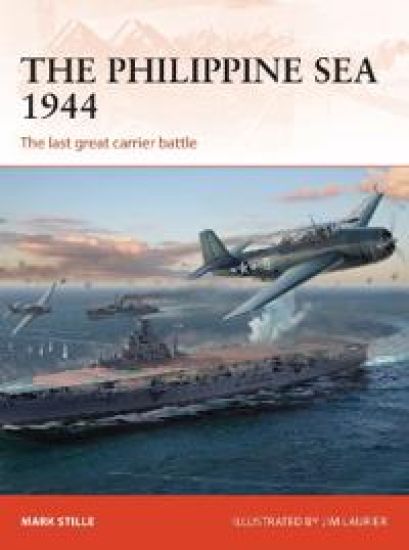
Ideal for enthusiasts of WWII naval aviation, this illustrated volume covers the unequal clash between the United States and Imperial Japanese navies that destroyed the IJN’s ability to conduct further carrier operations. After suffering devastating losses in the huge naval battles at Midway and the Soloman Islands, the Imperial Japanese navy attempted to counter-attack against the US forces threatening the Home Islands. Involving the US Fifth Fleet and the Japanese Mobile Fleet, the battle of the Philippine Sea took place during the United States' amphibious invasion of the Mariana Islands during the Pacific War. The two fleets clashed on 19-20 June 1944 and the Japanese carrier fighters were shot down in devastating numbers by US aircraft in what became known as the “Great Marianas Turkey Shoot”, before US counterattacks and submarine strikes forced the withdrawal of the Japanese fleet. Fully illustrated with stunning specially commissioned artwork, Mark Stille tells the enthralling story of the last, and largest, carrier battle of the Pacific War, the one that saw the end of the Imperial Japanese Navy as a formed fighting force.
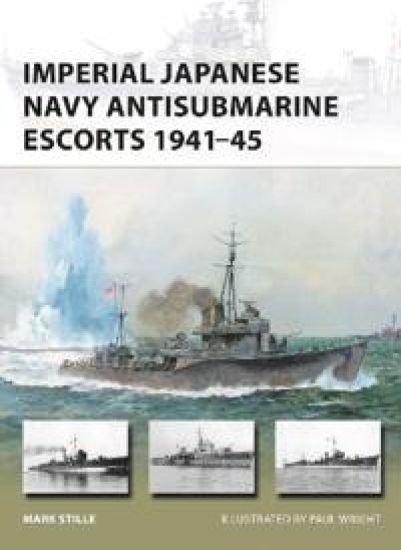
In 1941, the Imperial Japanese Navy (IJN) went to war with a marginal anti-submarine warfare (ASW) capability. This was a lamentable state of affairs for a nation dependent upon imports to sustain its war economy. There were only a few purpose-built ASW escorts available at the start of the war and these were augmented by a handful of second-class destroyers and a dozen torpedo boats. Once the magnitude of the threat to Japan’s shipping became fully apparent in 1943, the IJN made plans for mass production of ASW escorts. These arrived in 1944, but could not stop the massacre of Japanese shipping by increasingly bold and effective American submarines. This volume will detail the history, weapons and tactics of the IJN’s ASW escorts. These include the Momi class of second-rate destroyers, the Tomodzuru and Ootori classes of torpedo boars, and the several types of ASW escorts built from 1937 up to the end of the war.
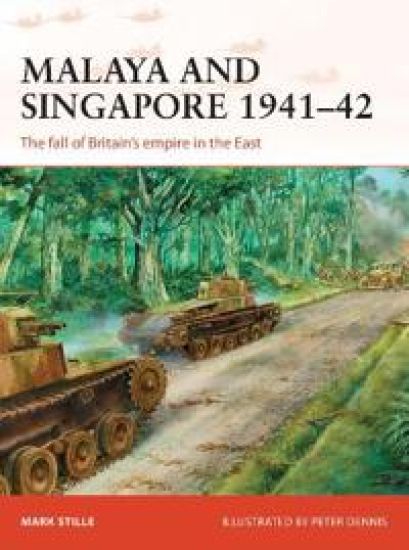
The complete story of the Imperial Japanese Army's stunning victory over the British forces during World War IIFor the British Empire it was a military disaster, but for Imperial Japan the conquest of Malaya was one of the pivotal campaigns of World War II. Giving birth to the myth of the Imperial Japanese Army's invincibility, the victory left both Burma and India open to invasion. Although heavily outnumbered, the Japanese Army fought fiercely to overcome the inept and shambolic defence offered by the British and Commonwealth forces. Detailed analysis of the conflict, combined with a heavy focus on the significance of the aerial campaign, help tell the fascinating story of the Japanese victory, from the initial landings in Thailand and Malaya through to the destruction of the Royal Navy's Force Z and the final fall of Singapore itself.
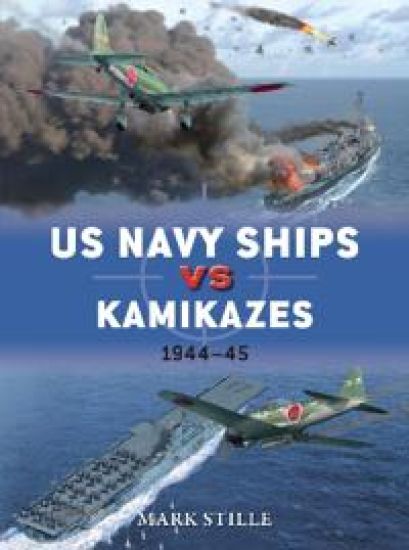
The ineffectiveness of conventional air attacks on US Navy surface ships, particularly heavily defended targets like carrier task groups, forced the Japanese to re-evaluate their tactics in late 1944. The solution they arrived at was simple – crash their aircraft into American ships. This notion of self-sacrifice fit well within the Japanese warrior psyche and proved terrifying to the American sailors subjected to it. These tactics brought immediate results, and proved effective until the end of the war. This book examines this terrifying new way of waging war, revealing how the US Navy was forced to adapt its tactics and deploy new weapons to counter the threat posed by kamikaze attacks, as well as assessing whether the damage caused to American naval strength by the loss of so many pilots and aircraft actually had a material impact.