Kirjojen hintavertailu – 12 859 819 kirjaa ja 27 kauppaa

Kirjailija

Mark Stille

Kirjat ja teokset yhdessä paikassa: 70 kirjaa, julkaisuja vuosilta 2005–2027, suosituimpiin kuuluu US Navy Pacific Fleet 1942-43. Vertaile teosten hintoja ja tarkista saatavuus suomalaisista kirjakaupoista.

70 kirjaa

Kirjojen julkaisuvuodet: 2005–2027.

US Navy Light Cruisers 1941–45

US Navy Light Cruisers 1941–45

Mark Stille

Osprey Publishing
2016
nidottu
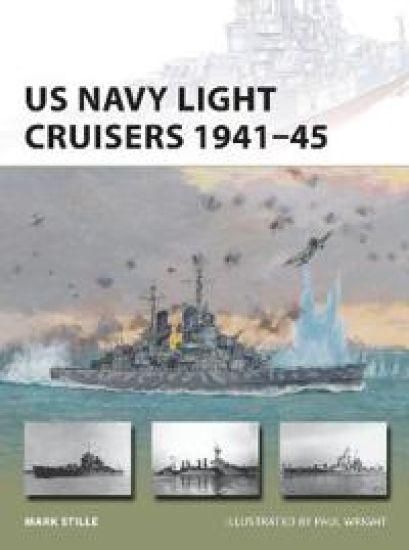
During World War II, the United States built 72 light cruisers of various classes. In response to the severe air threat that surface ships faced, new cruisers were designed with increasingly heavy antiaircraft weaponry as well as the traditional 6in guns. With the speed and range to keep up with aircraft carriers, and their considerable antiaircraft capability, they were a mainstay of the carrier escorts. This book examines every US light cruiser produced, including those of the Fargo and Worcester classes, which were actually complete after World War II had ended, tracing their design, development and evolution throughout the war and beyond.
The Imperial Japanese Navy of the Russo-Japanese War

The Imperial Japanese Navy of the Russo-Japanese War

Mark Stille

Osprey Publishing
2016
nidottu

Halvin toimitettuna 22,50 €

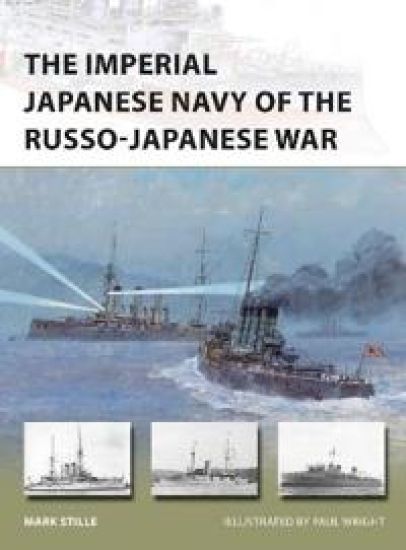
When the Imperial Japanese Navy destroyed Russia's battle fleet during the Russo-Japanese War, it marked the emergence of Japan as one of the world's major naval powers. Japan's navy had been built up over just two decades, with the IJN acquiring a fleet of modern foreign-built warships. Coupled with the IJN's leadership and high levels of training, this proved enough to destroy the fleet of one of the world's historic naval powers. This book explains in concise detail the IJN's fleet of 1904?1905, from its battleships and armored cruisers to the torpedo boats that launched 'the first great torpedo attack in history,' and outlines the history of the naval campaign against the Russian fleet.
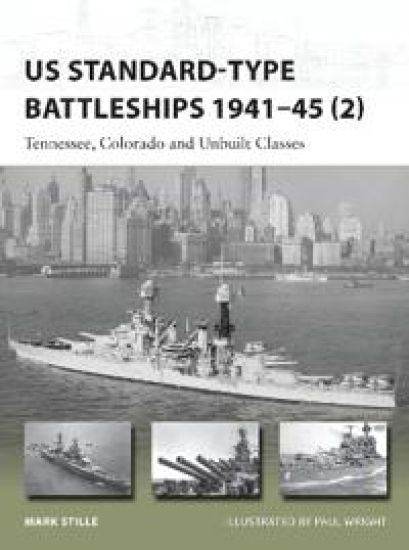
US Standard-type Battleships 1941–45 (2)

US Standard-type Battleships 1941–45 (2)

Mark Stille

Osprey Publishing
2015
nidottu
This book completes an authoritative two-part study on the Standard-type US battleships of World War II – ships that were designed to fight a different type of war than the one that unfolded. It gives precise technical details of the design history and features of the Tennessee, Colorado and the unfinished South Dakota and Lexington classes, whilst providing an operational history of the former two. Written by a leading expert on the US Navy in World War II and augmented by contemporary photographs and specially commissioned illustrations, this is the other half of the story of the US Standard-type battleships – from the terrible damage they sustained at Pearl Harbor to their support of the war-winning landings of the US Marine Corps and US Army.
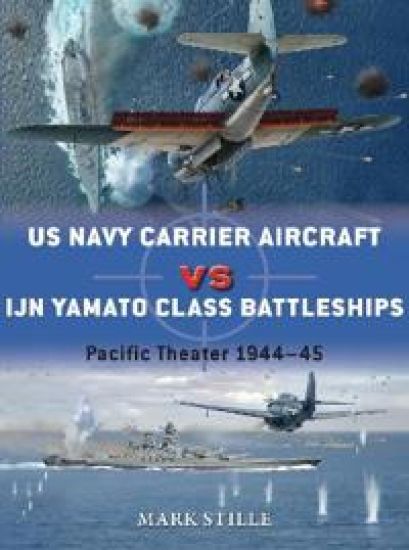
US Navy Carrier Aircraft vs IJN Yamato Class Battleships
As the Pacific War approached a crescendo, the clashes between swarming US Navy carrier aircraft, and the gigantic Imperial Japanese Navy (IJN) Yamato-class battleships became symbolic of the fortunes of the two nations. They also served as a metaphor for the profound changes in naval technology and doctrine that the war had brought about. The two opposing forces were the most powerful of their kind - the Japanese Yamato and Musashi were the biggest most heavily armored and armed battleships ever built, while US carrier aviation had evolved into a well-oiled, war-winning machine. With detailed analysis of the technical features of the opposing war machines and a gripping account of the fighting itself, this vividly illustrated work presents views from the cockpits of US Navy Divebombers, and down the sights of IJN anti-aircraft guns, during two of the most dramatic naval engagements ever fought.
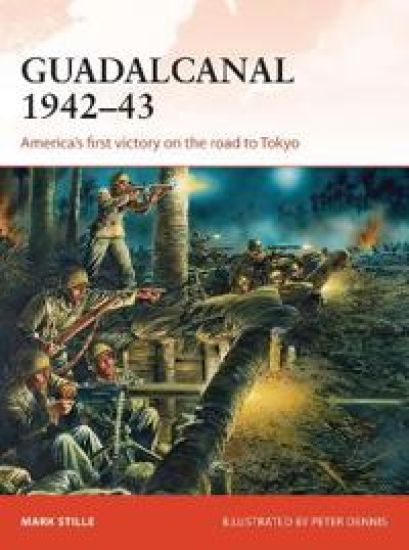
Guadalcanal 1942–43

Guadalcanal 1942–43

Mark Stille

Osprey Publishing
2015
nidottu
Using black and white contemporary photographs, illuminative maps and stunning battle scene illustrations, this comprehensive, detailed account completes the story of the Guadalcanal campaign - possibly the most important of the whole Pacific War. The Guadalcanal campaign began with an amphibious assault in August 1942 – the US’s first attempt to take the fight to the Japanese. It escalated into a desperate attritional battle on land, air, and sea, and by the time the Japanese had evacuated the last of their forces from the island in 1943, it was clear that the tide of the war had turned. The inexorable Japanese advance and the myth of Japanese invincibility shattered. In this study of the campaign, Pacific War expert Mark Stille draws on both US and Japanese sources to give a balanced and comprehensive account of a crucial, brutal conflict. Analyzing the three Japanese attempts to retake the island in the face of ferocious American resistance, this book shows how the battle was won and lost, and how it affected the outcome of the Pacific War as a whole.
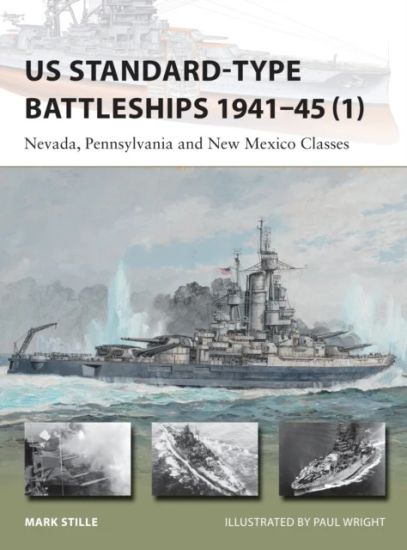
US Standard-type Battleships 1941–45 (1)

US Standard-type Battleships 1941–45 (1)

Mark Stille

Osprey Publishing
2015
nidottu
Written by US Navy expert Mark Stille, this book offers a unique insight into the Standard-type classes of US battleships. It provides a detailed investigation into the histories of each of the warships in the Standard-type battleship classes, the first three of which, the Nevada, Pennsylvania and New Mexico, formed the US Navy's main force in the inter-war period. The Standard-types reflected a new design philosophy: by designing each class to meet common standards of maneuvrability and handling, vessels of different classes could operate as a single tactical unit without being limited by the performance of the slowest and least maneuvrable ship. At the time of their construction, these ships incorporated the latest design features such as triple gun turrets. Although they were rendered increasingly obsolete by evolving naval doctrines and the ascendance of the fast battleship, they served with distinction throughout World War II. This study combines analysis of design features and an absorbing narrative of operational histories to offer a comprehensive picture of the Standard-type battleships, from the brutal destruction of the USS Arizona to the triumphant occupation of Japan.
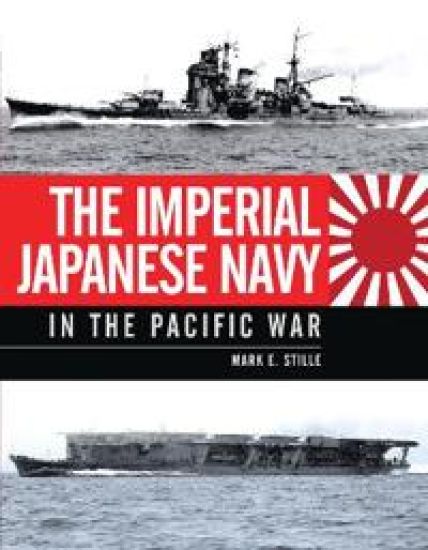
The Imperial Japanese Navy in the Pacific War

The Imperial Japanese Navy in the Pacific War

Mark Stille

Osprey Publishing
2014
sidottu

Halvin toimitettuna 32,50 €

A highly illustrated examination of the key ships, tactics and operations of the Imperial Japanese Navy in the War in the Pacific in World War II. The Imperial Japanese Navy (IJN) was the third most powerful navy in the world at the start of World War II, and came to dominate the Pacific in the early months of the war. This was a remarkable turnaround for a navy that only began to modernize in 1868, although defeats inflicted on the Russians and Chinese in successive wars at the turn of the century gave a sense of the threat the IJN was to pose. Bringing together for the first time material previously published in Osprey series books, and with the addition of new writing making use of the most recent research, this book details the Japanese ships which fought in the Pacific and examines the principles on which they were designed, how they were armed, when and where they were deployed and how effective they were in battle. The Imperial Japanese Navy in the Pacific War provides a history of the IJN's deployment and engagements, analysis of the evolution of strategy and tactics, and finally addresses the question of whether it truly was a modern navy, fully prepared for the rigors of combat in the Pacific. Illustrated throughout with photographs and detailed colour artworks, this is a valuable reference source for Pacific War enthusiasts and historians alike.
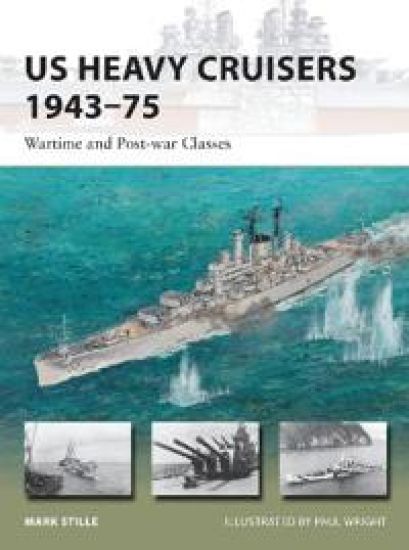
US Heavy Cruisers 1943–75

US Heavy Cruisers 1943–75

Mark Stille

Osprey Publishing
2014
nidottu
This title follows on from a companion book covering the US heavy cruisers that were built prior to the war, together forming the definitive guide to the US’s heavy cruiser classes. Versatile warships, the heavy cruisers of the Baltimore class, and their successors in the Oregon City and Des Moines classes, commonly acted as carrier escorts throughout World War II, but also performed bombardment duties in support of amphibious landings. Post-World War II, the heavy cruisers continued to see service, chiefly in Korea and Vietnam. Even after the heyday of the heavy cruiser had passed, the ships continued to serve – several were converted into the earliest examples of guided missile cruisers, and created an enduring legacy in the US Navy. From an established expert on the US and Pacific naval history, this is an invaluable resource richly illustrated with artwork and photographs.
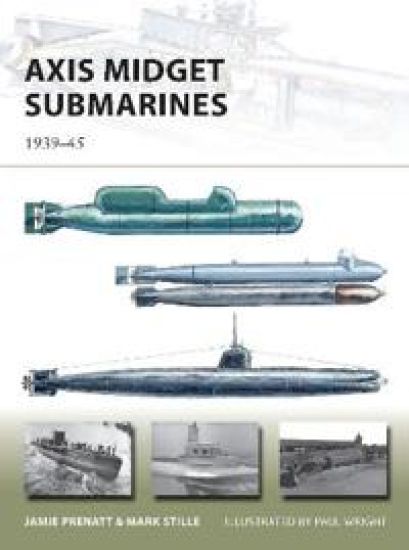
Axis Midget Submarines

Axis Midget Submarines

Jamie Prenatt; Mark Stille

Osprey Publishing
2014
nidottu
During World War II, Germany, Japan, and Italy built approximately 2,000 small, inherently stealthy, naval craft to perform special operations and conventional naval missions. Much more numerous and more technically advanced than their Allied counterparts, they saw service worldwide, operating in the Pacific, Mediterranean, Black Sea, Indian Ocean, North Sea, and the English channel. Manned by courageous crews, these vessels made daring attacks on Allied ships in heavily protected anchorages using torpedoes and mines. Most notable were attacks against Gibraltar – launched from an Italian cargo vessel interred in nearby neutral Spain that had been converted into a clandestine support base and equipped with an underwater hatch – and Pearl Harbor. They were used against shipping in coastal waters and, near the end of the war, in desperate attempts to offset their opponents’ overwhelming naval superiority during the US advance across the Pacific and the Allied amphibious landings in France and Italy. This volume will detail the history, weapons, and operations of German, Japanese, and Italian midget submarines.
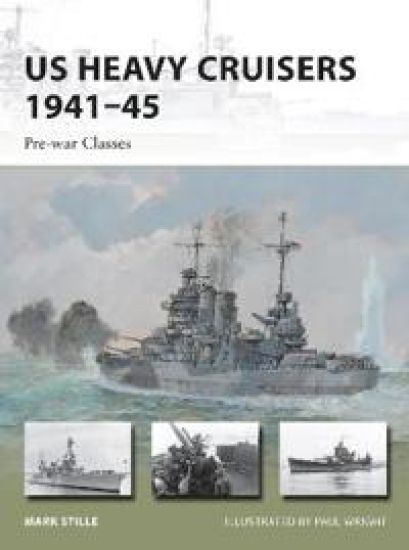
US Heavy Cruisers 1941–45

US Heavy Cruisers 1941–45

Mark Stille

Osprey Publishing
2014
nidottu
Designed and produced under the regulations of the Washington Naval Treaty, the heavy cruisers of the Pensacola, Northampton, Portland, New Orleans and Wichita classes were exercises in compromise. While they possessed very heavy armament – the Pensacolas, for example, carrying a main battery of ten 8” guns – this came at the cost of protection – armor was the same thickness as a gun cruiser, and incapable of protecting the vessels from enemy 8” fire. As the classes evolved, these flaws began to be corrected, with the main battery being reduced, and increased protection being added to the vital areas of the ship. Despite these drawbacks, the pre-war heavy cruiser classes served with distinction throughout World War II.
British Battlecruiser vs German Battlecruiser
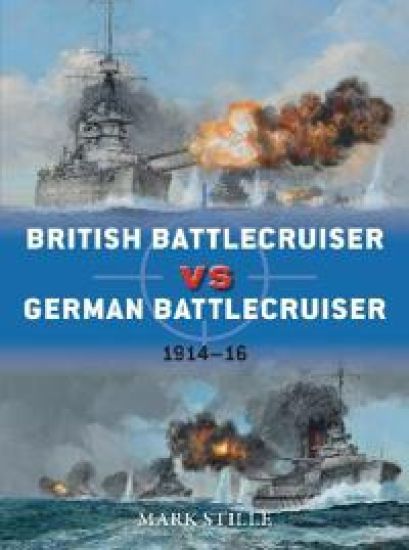
The rival battlecruisers first clashed in January 1915 at Dogger Bank in the North Sea and although the battle was a British tactical victory with neither side losing any of its battlecruisers, the differences in the designs of the British and German ships were already apparent. The two sides responded very differently to this first clash; while the Germans improved their ammunition-handling procedures to lessen the risk of disabling explosions, the British drew the opposite lesson and stockpiled ammunition in an effort to improve their rate of fire, rendering their battlecruisers more vulnerable. These differences were highlighted more starkly during the battle of Jutland in May 1916. Of the nine British battlecruisers committed, three were destroyed, all by their German counterparts. Five German battlecruisers were present, and of these, only one was sunk and the remainder damaged. Fully illustrated with specially commissioned artwork, this is the gripping story of the clash between the rival battlecruisers of the Royal Navy and the Kaiserliche Marine at the height of World War I.
Imperial Japanese Navy Destroyers 1919–45 (2)
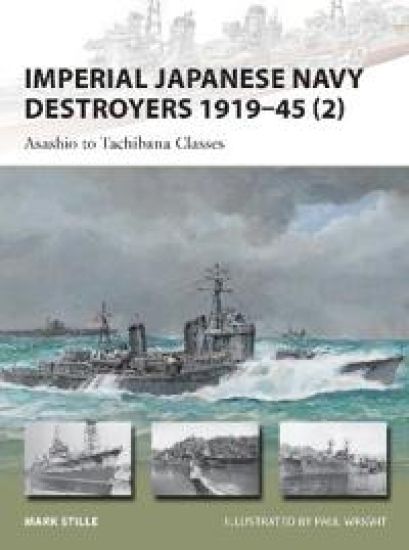
During the Pacific War the most successful component of the Imperial Japanese Fleet was its destroyer force. These ships were larger and, in most cases, better-equipped than their Allied counterparts. Armed with a powerful, long-ranged torpedo, these ships proved formidable opponents. Initially, they were instrumental in an unbroken string of Japanese victories, but it was not until the Guadalcanal campaign that these ships fully demonstrated their power. In a series of daring night actions, they devastated Allied task forces with their deadly torpedoes. This volume details the history, weapons and tactics of the Japanese destroyers built just before and throughout the war, including the famous Kagero and Yugumo classes, the experimental destroyer Shimakaze that boasted a top speed of almost 40 knots and 15 torpedo tubes, and the Matsu class that represented the Japanese equivalent to an Allied destroyer escort. These ships were designed to be built quickly and cheaply, but proved to be very tough in combat.
The naval battles for Guadalcanal 1942

The naval battles for Guadalcanal 1942

Mark Stille

Osprey Publishing
2013
nidottu
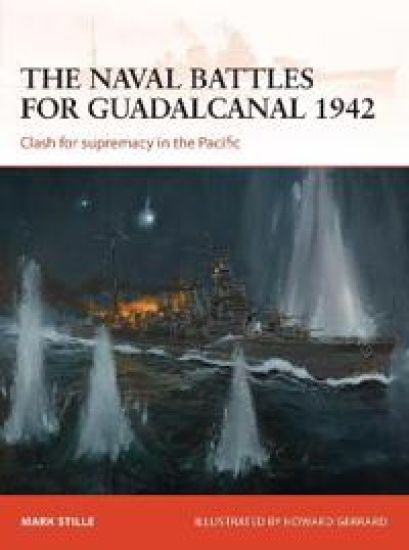
A highly illustrated account of the series of naval battles around the embattled island of Guadalcanal in late 1942. The battle for Guadalcanal that lasted from August 1942 to February 1943 was the first major American counteroffensive against the Japanese in the Pacific. The battle of Savo Island on the night of 9 August 1942, saw the Japanese inflict a severe defeat on the Allied force, driving them away from Guadalcanal and leaving the just-landed marines in a perilously exposed position. This was the start of a series of night battles that culminated in the First and Second battles of Guadalcanal, fought on the nights of 13 and 15 November. One further major naval action followed, the battle of Tassafaronga on 30 November 1942, when the US Navy once again suffered a severe defeat, but this time it was too late to alter the course of the battle as the Japanese evacuated Guadalcanal in early February 1943. In this compact, engaging volume, Mark Stille examines the contrasting fortunes experienced by both sides over the intense course of naval battles around the island throughout the second half of 1942 that did so much to turn the tide in the Pacific.
Imperial Japanese Navy Destroyers 1919–45 (1)
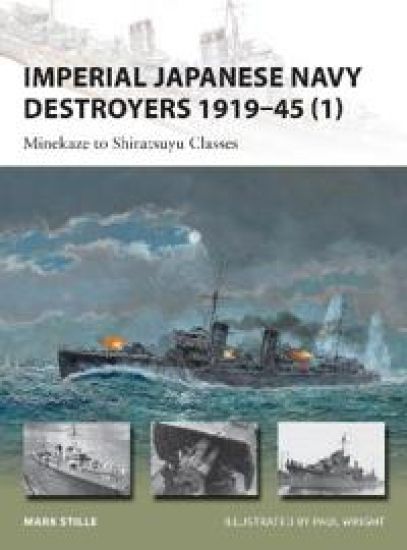
A detailed, illustrated look at the earliest seven classes of destroyer fielded by the Imperial Japanese Navy of World War II. Several classes of Japanese destroyer were built before the war. This includes the famous Fubuki class (called “Special Type” by the Japanese, which were, when completed in the late 1920's, the most powerful class of destroyers in the world). This design forced all other major navies to follow suite and provided the basic design for the next many classes of Imperial Navy destroyers. This book also examines the three classes built before the Special Type which were based on a German World War I design, as well as two classes built afterward. Pacific War expert Mark Stille evaluates the success of these designs - from the first battles of the Pacific War up until the death sortie of the superbattleship Yamato - and compares them to similar Allied destroyer designs.
USN Destroyer vs IJN Destroyer

USN Destroyer vs IJN Destroyer

Mark Stille

Osprey Publishing
2012
nidottu
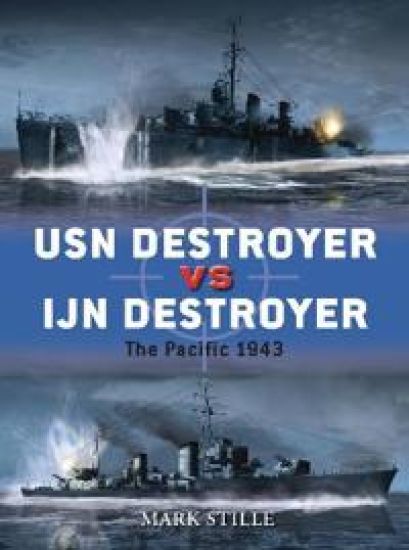
This book covers the fierce night naval battles fought between the US Navy and the Imperial Japanese Navy during late 1943 as the Allies advanced slowly up the Solomons Islands toward the major Japanese naval base at Rabaul. During this period, several vicious actions were fought featuring the most modern destroyers of both navies. Throughout most of 1942, the Imperial Navy had held a marked edge and a key ingredient of these successes was their destroyer force, which combined superior training and tactics with the most capable torpedo in the world. Even into 1943 mixed Allied light cruiser/destroyer forces were roughly handled by Japanese destroyers. After these battles, the Americans decided to stop chasing Japanese destroyers with cruisers so the remainder of the battles in 1943 (with one exception) were classic destroyer duels. This book explores the Americans' technical edge provided to them by radar, and now added new, more aggressive tactics. The final result was the defeat of the Imperial Navy's finely trained destroyer force and the demonstration that the Japanese were unable to stop the Allies' advance.
Santa Cruz 1942

Santa Cruz 1942

Mark Stille

Osprey Publishing
2012
nidottu
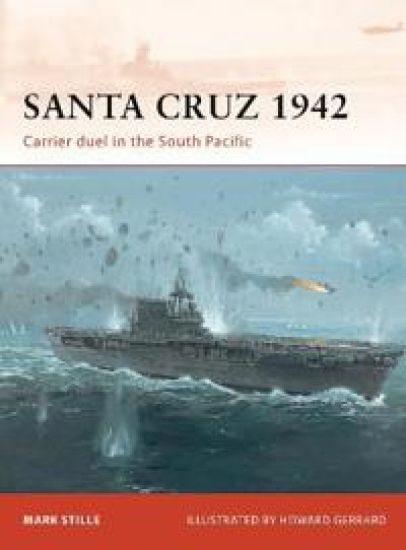
A highly illustrated account of the fourth major carrier battle of the war in the Pacific. Despite myth, the Japanese carrier force was not destroyed at Midway but survived to still prove a threat in the Pacific Theater. Nowhere was this clearer than in the battle of Santa Cruz of October 1942. The stalemate on the ground in the Guadalcanal campaign led to the major naval forces of both belligerents becoming inexorably more and more involved in the fighting, each seeking to win the major victory that would open the way for a breakthrough on land as well. The Japanese were able to gain a tactical victory at Santa Cruz and came very close to scoring a strategic victory, but they paid a very high price in aircraft and aircrew that prevented them from following up their victory. In terms of their invaluable aircrew, the battle was much more costly than even Midway and had a serious impact on the ability of the Japanese to carry out carrier warfare in a meaningful manner. Illustrated richly throughout, this volume examines the encounter at Santa Cruz and its significance.
Imperial Japanese Navy Light Cruisers 1941–45
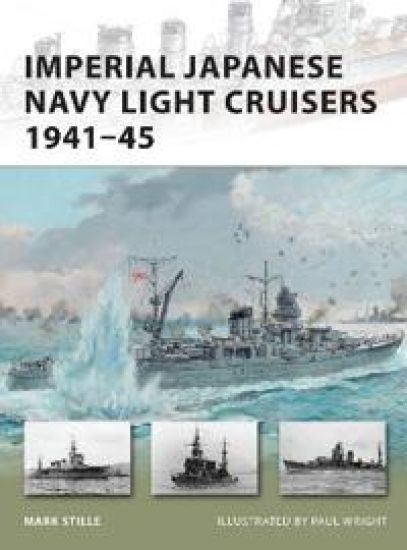
The Imperial Japanese Navy went to war with 17 light cruisers and another three cruiser-sized training ships. Of these, most were 5,500-ton ships designed to act as destroyer squadron flagships. This made them much different in capabilities and mission from their American counterparts. During the war, the Japanese built another five light cruisers, all but one of which maintained the design premise of being able to serve as destroyer squadron flagships. During the war, Japanese light cruisers were active throughout the Pacific performing many missions in addition to their flagship duties. Mark Stille continues Osprey's coverage of the IJN of WWII with this concise and complete study of all 25 ships, from their design and development to their ultimate fates. Detailed Osprey artwork and rare period photographs from the Fukui collection held in Kure, Japan illustrate this discussion.
Tora! Tora! Tora!

Tora! Tora! Tora!

Mark Stille

Osprey Publishing
2011
nidottu
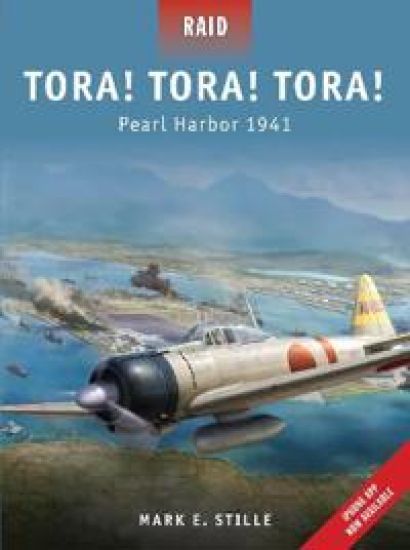
In the early hours of December 7, 1941, the Japanese First Air Fleet launched a massive air-strike against the American Pacific Fleet based at Pearl Harbor in Hawaii. Supported by a group of midget submarines, the attack gutted the American battleship fleet but, owing to a lack of intelligence, the American aircraft carriers they hoped to destroy were not present. In this new study of the raid, Mark Stille reexamines the political context of the attack and the intelligence operations of both sides, and gives a detailed analysis of all the major events during the battle. Backed with numerous photographs, diagrams, maps, and artwork, this book is a complete study of the Japanese attack that awoke 'the sleeping giant'.
Italian Battleships of World War II

Italian Battleships of World War II

Mark Stille

Osprey Publishing
2011
nidottu
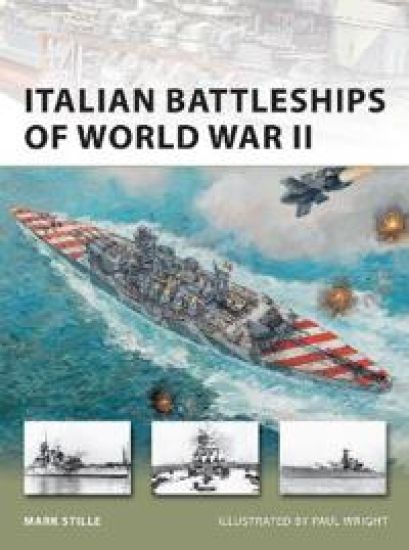
Italy's navy, the Regia Marina was the fourth-largest naval force in the world at the outbreak of World War II, and yet is often overlooked and largely discounted as ineffective. In general the fleet was made up of obsolete vessels, lacked radar functionality, and had a reputation for indiscipline and poorly trained crews. The complex and bureaucratic command system imposed on the fleet further hampered its effectiveness. In this book, Mark Stille details why the Italian battleships were able to maintain a solid reputation, examining their impressive designs and the courage and determination of the fleet at Calabria, Sirte, Cape Spartiveto and Cape Matapan, all illustrated with stunning photographs from the Italian Navy's own archives.
Imperial Japanese Navy Heavy Cruisers 1941–45
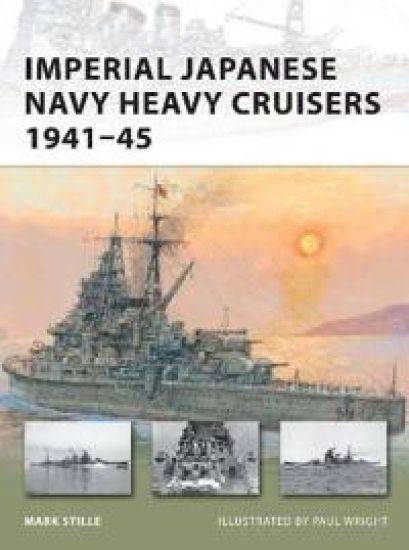
Designed with little more than a passing nod to the international naval treaties of the inter-war period, the Imperial Japanese Navy's heavy cruisers were fast and heavily armed. Like the other vessels of the Japanese Navy, the heavy cruisers were technologically superior to and far more innovative than their Allied rivals, whom they met in many of the major Pacific Theatre battles, including Midway and Leyte Gulf. Mark Stille continues his study of the IJN of WWII with this fascinating topic, addressing the design and development of all 18 ships in the six heavy cruiser classes, from pre-war construction and mid-war alterations, to their operational histories and eventual fates.