
Kirjailija
Mark Twain
Kirjat ja teokset yhdessä paikassa: 3 873 kirjaa, julkaisuja vuosilta 1867–2027, suosituimpiin kuuluu Christmas Classics. Vertaile teosten hintoja ja tarkista saatavuus suomalaisista kirjakaupoista.
3 873 kirjaa
Kirjojen julkaisuvuodet: 1867–2027.
The Adventures of Huckleberry Finn
Mark Twain
Createspace Independent Publishing Platform
2016
nidottu
IN this book a number of dialects are used, to wit: the Missouri negro dialect; the extremest form of the backwoods Southwestern dialect; the ordinary
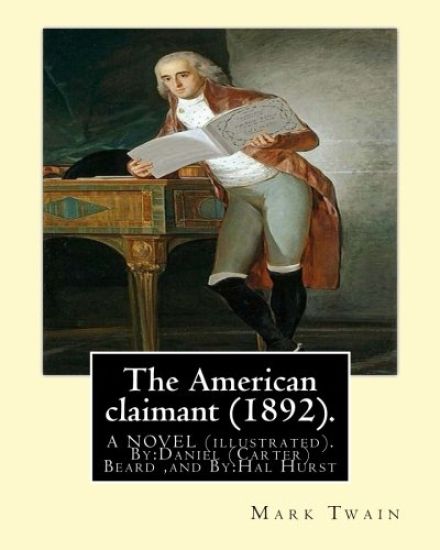
The American claimant (1892). By: Mark Twain. A NOVEL (illustrated): By: Daniel (Carter) Beard (June 21, 1850 - June 11, 1941) was an American illustr
Hal Hurst; Daniel Beard; Mark Twain
Createspace Independent Publishing Platform
2016
nidottu
The American Claimant is an 1892 novel by American humorist and writer Mark Twain. Twain wrote the novel with the help of phonographic dictation, the first author (according to Twain himself) to do so. This was also (according to Twain) an attempt to write a book without mention of the weather, the first of its kind in fictitious literature. Indeed, all the weather is contained in an appendix, at the back of the book, which the reader is encouraged to turn to from time to time. *Plot* The American Claimant is a comedy of mistaken identities and multiple role switches. Its cast of characters include an American enamored of British hereditary aristocracy and a British earl entranced by American democracy.... Samuel Langhorne Clemens (November 30, 1835 - April 21, 1910), better known by his pen name Mark Twain, was an American writer, entrepreneur, publisher and lecturer. Among his novels are The Adventures of Tom Sawyer (1876) and its sequel, Adventures of Huckleberry Finn (1885), the latter often called "The Great American Novel". Twain was raised in Hannibal, Missouri, which later provided the setting for Tom Sawyer and Huckleberry Finn. After an apprenticeship with a printer, Twain worked as a typesetter and contributed articles to the newspaper of his older brother, Orion Clemens. He later became a riverboat pilot on the Mississippi River before heading west to join Orion in Nevada. He referred humorously to his lack of success at mining, turning to journalism for the Virginia City Territorial Enterprise. In 1865, his humorous story "The Celebrated Jumping Frog of Calaveras County" was published, based on a story he heard at Angels Hotel in Angels Camp, California, where he had spent some time as a miner. The short story brought international attention, and was even translated into classic Greek. His wit and satire, in prose and in speech, earned praise from critics and peers, and he was a friend to presidents, artists, industrialists, and European royalty. Though Twain earned a great deal of money from his writings and lectures, he invested in ventures that lost a great deal of money, notably the Paige Compositor, a mechanical typesetter, which failed because of its complexity and imprecision. In the wake of these financial setbacks, he filed for protection from his creditors via bankruptcy, and with the help of Henry Huttleston Rogers eventually overcame his financial troubles. Twain chose to pay all his pre-bankruptcy creditors in full, though he had no legal responsibility to do so.... Hal Hurst(1865-1938) was an English painter, etcher, miniaturist, illustrator and founding member of the Royal Miniature Society.... Daniel Carter "Uncle Dan" Beard (June 21, 1850 - June 11, 1941) was an American illustrator, author, youth leader, and social reformer who founded the Sons of Daniel Boone in 1905, which Beard later merged with the Boy Scouts of America (BSA)
Personal recollections of Joan of Arc: Volume 1
Mark Twain
Createspace Independent Publishing Platform
2016
nidottu
Introduction The novel begins with a "Translator's Preface," a translator note on the "Peculiarity of Joan of Arc's History," and a foreword by Sieur Louis de Conte. The "Translator's Preface" offers a condensed overview of Joan of Arc's life, with heavy praise ("the character of Joan of Arc ... occupies the loftiest possible to human attainment"). The "Peculiarity" note explains that Joan of Arc's life is preserved in court documents and that the particulars are provided by Louis de Conte, who, the Translator assures us, is reliable. The Foreword is Sieur de Conte's writing from 1492 (Joan of Arc died in 1431) about his intimate relation to Joan of Arc: "I was with her from the beginning until the end" Book One: In Domr my Book One begins with the birth of de Conte on January 6, 1410, in Neufch teau, France and his parents' subsequent move to Paris. He relates his early childhood as chaotic with the city tormented by mobs, criminals, and other instabilities. In 1415, following the death of his family by a Burgundian raiding party, de Conte is sent to a small, rural, rudimentary village named "Domremy" to live with the parish priest. Here, he meets young Joan d'Arc, an illiterate peasant. de Conte tells multiple incidents where Joan is shown to be the wisest, bravest, most virtuous child in Domr my, such as her arguments to the priest on the fairies and her treatment of the wandering soldier and the criminal madman. In Chapter VI and VII, de Conte recounts his seeing Joan converse with a divine entity and her explanation that she has been chosen by God to "win back France, and set the crown upon the head of His servant that is Dauphin and shall be King." The governor and the people in the Domremy mock her when she openly announces this mission; her parents even keep her under watch. Nonetheless, Joan remains adamant.
The Man that corrupted Hadleyburg
Mark Twain
Createspace Independent Publishing Platform
2016
nidottu
Chapter I Hadleyburg enjoys the reputation of being an "incorruptible" town known for its responsible, honest people that are trained to avoid temptation. However, at some point the people of Hadleyburg manage to offend a passing stranger, and he vows to get his revenge by corrupting the town. The stranger's plan centers around a sack of gold (worth around $40,000) he drops off in Hadleyburg at the house of Mr. and Mrs. Richards, to be given to a man in the town who purportedly gave him some life-changing advice (and 20 dollars in a time of need) long ago. To identify the man, a letter with the sack suggests that anyone who claims to know what the advice was should write the remark down and submit it to Reverend Burgess, who will open the sack at a public meeting and find the actual remark inside. News of the mysterious sack of gold spreads throughout the town and even gains attention across the country. Chapter II The residents beam with pride as stories of the sack and Hadleyburg's honesty spread throughout the nation, but the mood soon changes. Initially reluctant to give into the temptation of the gold, soon even the most upstanding citizens are trying to guess the remark. Mr. and Mrs. Richards, one of the town's 19 model couples, receive a letter from a stranger revealing the remark: "You are far from being a bad man: go, and reform". Mrs. Richards is ecstatic that they will be able to claim the gold. Unbeknownst to one another, all 19 couples have received exactly the same letter. They submit their claims to Burgess and begin to recklessly purchase things on credit in anticipation of their future wealth. Chapter III The town hall meeting to decide the rightful owner of the sack arrives, and it is packed with residents, outsiders, and reporters. Burgess reads the first two claims, and a dispute quickly arises between two members of the town, "Shadbelly" Billson and Lawyer Wilson. Both of their letters contain nearly the same remark. To settle which is right, Burgess cuts open the sack and finds the note that reveals the full remark: "You are far from being a bad man-go, and reform-or, mark my words-some day, for your sins you will die and go to hell or Hadleyburg-try and make it the former". Neither man's claim includes the second half of remark. The next claim reads the same, and the town hall bursts into laughter at the obvious dishonesty behind the identical, incorrect claims. Burgess continues to read the rest of the claims, all with the same remark, and one by one the prominent couples of the town are publicly shamed. Mr. and Mrs. Richards await their name with anguish, but surprisingly it is never read. With all the claims presented, another note in the sack is opened. It reveals the stranger's plot and his desire for revenge. He says that it was foolish for the citizens of Hadleyburg to always avoid temptation, because it is easy to corrupt those who have never had their resolve tested. It is discovered the sack contains not gold but lead pieces. A townsperson proposes to auction the lead off and give the money to the Richardses, the only prominent couple in town that did not have their name read off. Mr. and Mrs. Richards are in despair, unsure whether to come clean and stop the auction or to accept the money. The stranger who set up the whole scheme in the first place is revealed to have been in the town hall the whole time. He contrives to reward the Richardses for their supposed honesty by buying the sack at auction for its price in gold. Chapter IV The following day the stranger delivers checks totaling $40,000 to the Richardses. They fret about whether they should burn them. A message arrives from Burgess, explaining that he intentionally kept the Richardses' claim from being read as a way to return an old favor done to him by Mr. Richards. Mr. and Mrs. Richards become distraught over their situation. They grow paranoid and start to think Burgess has revealed their dishonesty to other people in the town

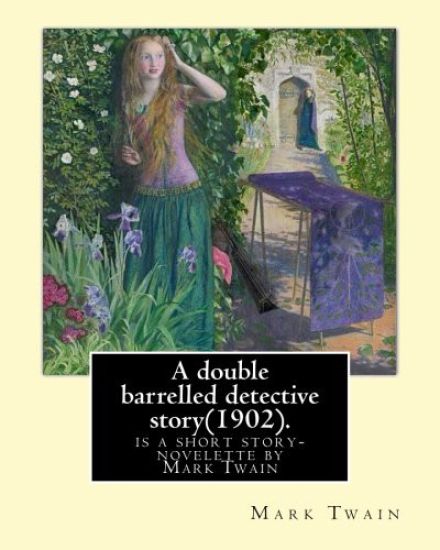
A double barrelled detective story(1902). By: Mark Twain, and illustrated By: Lucius Hitchcock(1868 - 1942): is a short story/novelette by Mark Twain
Lucius Hitchcock; Mark Twain
Createspace Independent Publishing Platform
2016
nidottu
A Double Barreled Detective Story is a short story/novelette by Mark Twain (Samuel Clemens), in which Sherlock Holmes finds himself in the American west. The story contains two arcs of revenges. In the primary arc, a woman was abused, humiliated and abandoned by her fianc Jacob Fuller, while she bore his child. The child was born and named Archy Stillman and when he got older, the mother discovered that the child possessed an incredible ability of smell, like a bloodhound. The mother instructed her child, now sixteen, to seek out his biological father, destroy that man's peace and reputation, hence extract satisfaction for her. Five years later in a second arc, at a mining camp in California, Fetlock Jones, a nephew of Sherlock Holmes, killed his master Flint Buckner, a silver-miner, by blowing up his cabin. Since this occurs when Holmes happened to be visiting, Holmes applied his skills to bear upon the case and derived a logically worked conclusion that was proved to be abysmally wrong by Archy Stillman using his sense of smell. This could be seen as yet another piece where Twain tried to prove that life does not quite follow logic. This is a satire by Twain on the mystery novel genre. In the second arc, Sherlock Holmes was depicted in employing "scientific methods" to a ridiculous degree, yet arriving at a completely wrong assessment. On the other hand, the crime was solved with a supernatural ability that no normal human possesses. Yet even that could fail to reveal the whole truth as the final twist of the story indicated. Furthermore, Sam Clemens/Mark Twain poked through the "4th wall" and appeared as himself in the middle of the story, supposedly while the story was being serialized, and responded to letters sent in by readers to the newspaper editor. During the exchange, Twain made fun of/self-advertised on some of his other famous short stories., Lucius Hitchcock was an American visual artist who was born in 1868. Several works by the artist have been sold at auction, including 'A decisive moment' sold at Christie's New York 'Christie's Interiors' in 2012. The artist died in 1942.... Samuel Langhorne Clemens (November 30, 1835 - April 21, 1910), better known by his pen name Mark Twain, was an American writer, entrepreneur, publisher and lecturer. Among his novels are The Adventures of Tom Sawyer (1876) and its sequel, Adventures of Huckleberry Finn (1885), the latter often called "The Great American Novel". Twain was raised in Hannibal, Missouri, which later provided the setting for Tom Sawyer and Huckleberry Finn. After an apprenticeship with a printer, Twain worked as a typesetter and contributed articles to the newspaper of his older brother, Orion Clemens. He later became a riverboat pilot on the Mississippi River before heading west to join Orion in Nevada. He referred humorously to his lack of success at mining, turning to journalism for the Virginia City Territorial Enterprise. In 1865, his humorous story "The Celebrated Jumping Frog of Calaveras County" was published, based on a story he heard at Angels Hotel in Angels Camp, California, where he had spent some time as a miner. The short story brought international attention, and was even translated into classic Greek. His wit and satire, in prose and in speech, earned praise from critics and peers, and he was a friend to presidents, artists, industrialists, and European royalty. Though Twain earned a great deal of money from his writings and lectures, he invested in ventures that lost a great deal of money, notably the Paige Compositor, a mechanical typesetter, which failed because of its complexity and imprecision. In the wake of these financial setbacks, he filed for protection from his creditors via bankruptcy, and with the help of Henry Huttleston Rogers eventually overcame his financial troubles. Twain chose to pay all his pre-bankruptcy creditors in full, though he had no legal responsibility to do so....

A Connecticut Yankee in King Arthur's court( 1889). By: Mark Twain: A NOVEL (illustrated), Original Classics
Mark Twain
Createspace Independent Publishing Platform
2016
nidottu
A Connecticut Yankee in King Arthur's Court is an 1889 novel by American humorist and writer Mark Twain. The book was originally titled A Yankee in King Arthur's Court. Some early editions are titled A Yankee at the Court of King Arthur. In the book, a Yankee engineer from Connecticut is accidentally transported back in time to the court of King Arthur, where he fools the inhabitants of that time into thinking that he is a magician, and soon uses his knowledge of modern technology to become a "magician" in earnest, stunning the English of the Early Middle Ages with such feats as demolitions, fireworks, and the shoring up of a holy well. He attempts to modernize the past, but in the end he is unable to prevent the death of Arthur and an interdict against him by the Catholic Church of the time, which grows fearful of his power. Twain wrote the book as a burlesque of Romantic notions of chivalry after being inspired by a dream in which he was a knight himself, severely inconvenienced by the weight and cumbersome nature of his armor. The novel is a comedy that sees 6th-Century England and its medieval culture through Hank Morgan's view; he is a 19th-century resident of Hartford, Connecticut, who, after a blow to the head, awakens to find himself inexplicably transported back in time to early medieval England where he meets King Arthur himself. The fictional Mr. Morgan, who had an image of that time that had been colored over the years by romantic myths, takes on the task of analyzing the problems and sharing his knowledge from 1300 years in the future to modernize, Americanize, and improve the lives of the people. In addition, many passages are quoted directly from Sir Thomas Malory's Le Morte d'Arthur, a medieval Arthurian collection of legends and one of the earlier sources. The narrator who finds the Yankee in the "modern times" of Twain's nineteenth century is reading the book in the museum in which they both meet; later, characters in the story retell parts of it in Malory's original language. A chapter on medieval hermits also draws from the work of William Edward Hartpole Lecky.. Samuel Langhorne Clemens (November 30, 1835 - April 21, 1910), better known by his pen name Mark Twain, was an American writer, entrepreneur, publisher and lecturer. Among his novels are The Adventures of Tom Sawyer (1876) and its sequel, Adventures of Huckleberry Finn (1885), the latter often called "The Great American Novel". Twain was raised in Hannibal, Missouri, which later provided the setting for Tom Sawyer and Huckleberry Finn. After an apprenticeship with a printer, Twain worked as a typesetter and contributed articles to the newspaper of his older brother, Orion Clemens. He later became a riverboat pilot on the Mississippi River before heading west to join Orion in Nevada. He referred humorously to his lack of success at mining, turning to journalism for the Virginia City Territorial Enterprise. In 1865, his humorous story "The Celebrated Jumping Frog of Calaveras County" was published, based on a story he heard at Angels Hotel in Angels Camp, California, where he had spent some time as a miner. The short story brought international attention, and was even translated into classic Greek. His wit and satire, in prose and in speech, earned praise from critics and peers, and he was a friend to presidents, artists, industrialists, and European royalty. Though Twain earned a great deal of money from his writings and lectures, he invested in ventures that lost a great deal of money, notably the Paige Compositor, a mechanical typesetter, which failed because of its complexity and imprecision. In the wake of these financial setbacks, he filed for protection from his creditors via bankruptcy, and with the help of Henry Huttleston Rogers eventually overcame his financial troubles. Twain chose to pay all his pre-bankruptcy creditors in full, though he had no legal responsibility to do so....
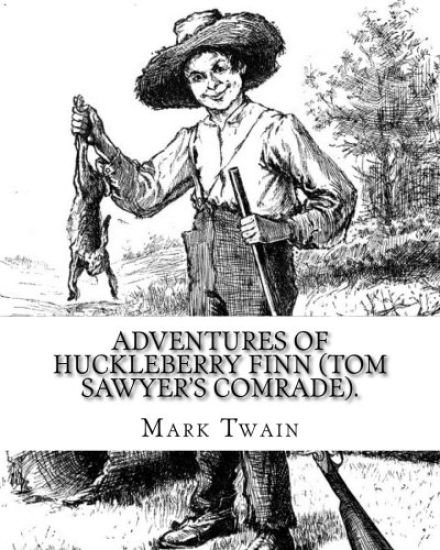
Adventures of Huckleberry Finn (Tom Sawyer's comrade). By: Mark Twain: A NOVEL (World's classic's) ILLUSTRATED By: E.W. Kemble (January 18, 1861 - Sep
E. W. Kemble; Mark Twain
Createspace Independent Publishing Platform
2016
nidottu
Adventures of Huckleberry Finn (or, in more recent editions, The Adventures of Huckleberry Finn) is a novel by Mark Twain, first published in the United Kingdom in December 1884 and in the United States in February 1885. Commonly named among the Great American Novels, the work is among the first in major American literature to be written throughout in vernacular English, characterized by local color regionalism. It is told in the first person by Huckleberry "Huck" Finn, a friend of Tom Sawyer and narrator of two other Twain novels (Tom Sawyer Abroad and Tom Sawyer, Detective). It is a direct sequel to The Adventures of Tom Sawyer. The book is noted for its colorful description of people and places along the Mississippi River. Set in a Southern antebellum society that had ceased to exist about 20 years before the work was published, Adventures of Huckleberry Finn is an often scathing satire on entrenched attitudes, particularly racism. Perennially popular with readers, Adventures of Huckleberry Finn has also been the continued object of study by literary critics since its publication. It was criticized upon release because of its coarse language and became even more controversial in the 20th century because of its perceived use of racial stereotypes and because of its frequent use of the racial slur "nigger", despite strong arguments that the protagonist and the tenor of the book are anti-racist.... Samuel Langhorne Clemens (November 30, 1835 - April 21, 1910), better known by his pen name Mark Twain, was an American writer, entrepreneur, publisher and lecturer. Among his novels are The Adventures of Tom Sawyer (1876) and its sequel, Adventures of Huckleberry Finn (1885), the latter often called "The Great American Novel". Twain was raised in Hannibal, Missouri, which later provided the setting for Tom Sawyer and Huckleberry Finn. After an apprenticeship with a printer, Twain worked as a typesetter and contributed articles to the newspaper of his older brother, Orion Clemens. He later became a riverboat pilot on the Mississippi River before heading west to join Orion in Nevada. He referred humorously to his lack of success at mining, turning to journalism for the Virginia City Territorial Enterprise. In 1865, his humorous story "The Celebrated Jumping Frog of Calaveras County" was published, based on a story he heard at Angels Hotel in Angels Camp, California, where he had spent some time as a miner. The short story brought international attention, and was even translated into classic Greek. His wit and satire, in prose and in speech, earned praise from critics and peers, and he was a friend to presidents, artists, industrialists, and European royalty... Edward Windsor Kemble (January 18, 1861 - September 19, 1933) was an American illustrator. He is known best for illustrating the first edition of Adventures of Huckleberry Finn and for his cartoons of African Americans.
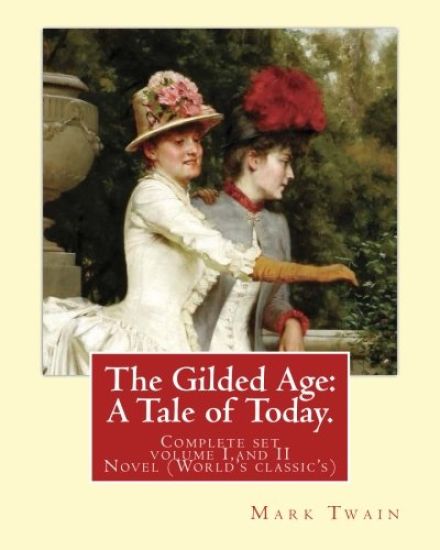
The Gilded Age: A Tale of Today. By: Mark Twain and By: Charles Dudley Warner: (COMPLETE SET VOLUME I, AND II) Novel (World's classic'
Charles Dudley Warner; Mark Twain
Createspace Independent Publishing Platform
2016
nidottu

The Gilded Age: A Tale of Today. By: Mark Twain and By: Charles Dudley Warner: (VOLUME II) Novel (World's classic's)
Charles Dudley Warner; Mark Twain
Createspace Independent Publishing Platform
2016
nidottu
The Gilded Age: A Tale of Today is a novel by Mark Twain and Charles Dudley Warner first published in 1873. It satirizes greed and political corruption in post-Civil War America in the era now referred to as the Gilded Age. Although not one of Twain's best-known works, it has appeared in more than one hundred editions since its original publication. Twain and Warner originally had planned to issue the novel with illustrations by Thomas Nast. The book is remarkable for two reasons--it is the only novel Twain wrote with a collaborator, and its title very quickly became synonymous with graft, materialism, and corruption in public life. The term gilded age, commonly given to the era, comes from the title of this book. Twain and Warner got the name from Shakespeare's King John (1595): "To gild refined gold, to paint the lily... is wasteful and ridiculous excess." citation needed] Gilding gold, which would be to put gold on top of gold, is excessive and wasteful, characteristics of the age Twain and Warner wrote about in their novel. Another interpretation of the title, of course, is the contrast between an ideal "Golden Age," and a less worthy "Gilded Age," as gilding is only a thin layer of gold over baser metal, so the title now takes on a pejorative meaning as to the novel's time, events and people. The novel concerns the efforts of a poor rural Tennessee family to become affluent by selling the 75,000 acres (300 km2) of unimproved land acquired by their patriarch, Silas "Si" Hawkins, in a timely manner. After several adventures in Tennessee, the family fails to sell the land and Si Hawkins dies. The rest of the Hawkins story line focuses on their beautiful adopted daughter, Laura. In the early 1870s, she travels to Washington, D. C. to become a lobbyist. With a Senator's help, she enters Society and attempts to persuade Congressmen to require the federal government to purchase the land..... Charles Dudley Warner (September 12, 1829 - October 20, 1900) was an American essayist, novelist, and friend of Mark Twain, with whom he co-authored the novel The Gilded Age: A Tale of Today... Samuel Langhorne Clemens (November 30, 1835 - April 21, 1910), better known by his pen name Mark Twain, was an American writer, entrepreneur, publisher and lecturer.
Un Yanqui en la Corte del Rey Arturo (Spanish Edition)
Mark Twain
Createspace Independent Publishing Platform
2016
nidottu

Concerning the Jews. By: Mark Twain ( INCUDE: Taming the Bicycle. By: Mark Twain (is a short essay )
Mark Twain
Createspace Independent Publishing Platform
2016
nidottu
Concerning the Jews" is a short essay by Mark Twain. Twain had lived in Austria during 1896, and opined that the Habsburg empire used scapegoats to maintain unity in their immensely diverse empire, namely Jews. In 1898 he published the article "Stirring times in Austria". Twain's account generated several letters, and one poignant response in particular from an American Jewish lawyer who asked Twain: "Tell me, therefore, from your vantage-point of cold view, what in your mind is the cause. Taming the Bicycle is a short essay by Mark Twain. Samuel Langhorne Clemens (November 30, 1835 - April 21, 1910), better known by his pen name Mark Twain, was an American author and humorist.

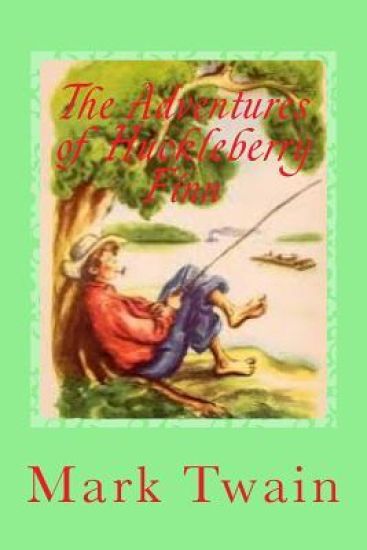
The Adventures of Huckleberry Finn
Mark Twain
Createspace Independent Publishing Platform
2016
nidottu
The Adventures of Huckleberry Finn is a novel by Mark Twain, first published in the United Kingdom in December 1884 and in the United States in February 1885. From the beginning of the novel, Twain makes it clear that Huck is a boy who comes from the lowest levels of white society. His father is a drunk and a ruffian who disappears for months on end. Huck himself is dirty and frequently homeless. Although the Widow Douglas attempts to