Kirjojen hintavertailu – 12 859 827 kirjaa ja 27 kauppaa
Kirjailija
Mark Twain
Kirjat ja teokset yhdessä paikassa: 3 873 kirjaa, julkaisuja vuosilta 1867–2027, suosituimpiin kuuluu Christmas Classics. Vertaile teosten hintoja ja tarkista saatavuus suomalaisista kirjakaupoista.
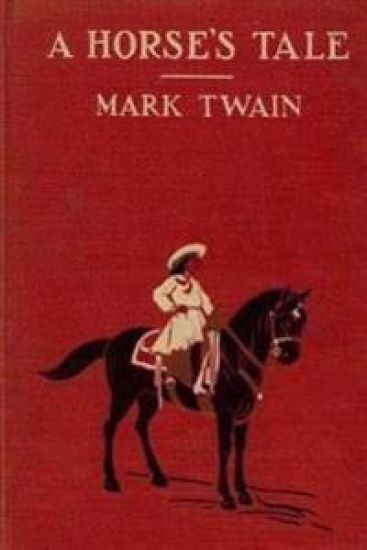
Acknowledgements Although I have had several opportunities to see a bull-fight, I have never seen one; but I needed a bull-fight in this book, and a trustworthy one will be found in it. I got it out of John Hay's Castilian Days, reducing and condensing it to fit the requirements of this small story. Mr. Hay and I were friends from early times, and if he were still with us he would not rebuke me for the liberty I have taken. The knowledge of military minutiae exhibited in this book will be found to be correct, but it is not mine; I took it from Army Regulations, ed. 1904; Hardy's Tactics-Cavalry, revised ed., 1861; and Jomini's Handbook of Military Etiquette, West Point ed., 1905. It would not be honest in me to encourage by silence the inference that I composed the Horse's private bugle-call, for I did not. I lifted it, as Aristotle says. It is the opening strain in The Pizzicato in Sylvia, by Delibes. When that master was composing it he did not know it was a bugle-call, it was I that found it out. Along through the book I have distributed a few anachronisms and unborn historical incidents and such things, so as to help the tale over the difficult places. This idea is not original with me; I got it out of Herodotus. Herodotus says, "Very few things happen at the right time, and the rest do not happen at all: the conscientious historian will correct these defects." The cats in the chair do not belong to me, but to another. These are all the exceptions. What is left of the book is mine. MARK TWAIN. Lone Tree Hill, Dublin, New Hampshire, October, 1905.
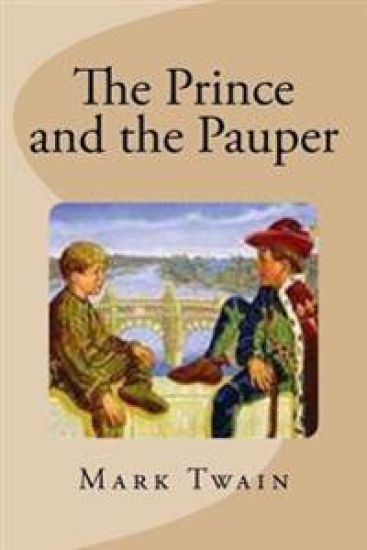
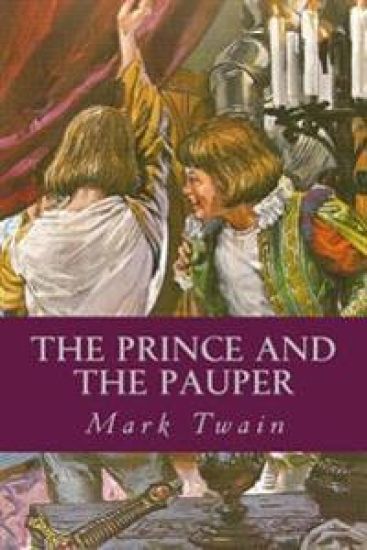
In London, about the middle of the sixteenth century, the young Edward, Prince of Wales and son of Henry VIII, aged about twelve years, would like to escape the etiquette of the Court and have fun outside with Children of his age. At the same time, Tom Canty, poor kid of the streets, dreams of escaping his condition. Fate brings together the two children who, taking advantage of a striking resemblance, exchange their respective "roles", not without risks, for the Count of Hertford conspires against the throne: he attempts to have the Prince murdered In favor of his escapade, and to take Tom, now Edward, under his control. The intervention of a mercenary, Miles Hendon, makes it possible to defeat this conspiracy.
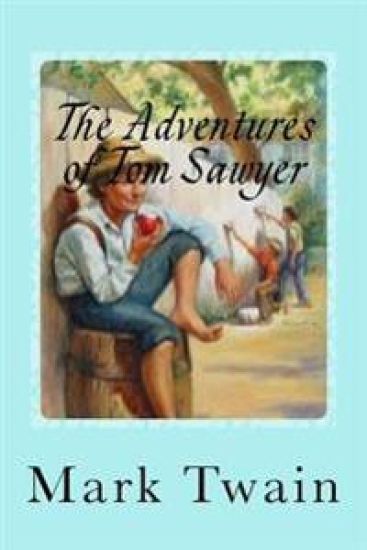
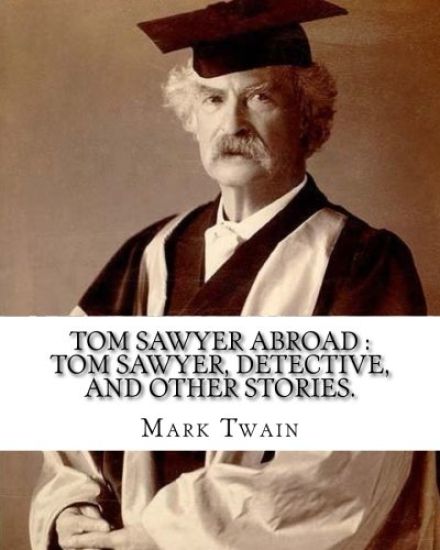
This antiquarian volume comprises a collection of stories written by Mark Twain, including "Tom Sawyer Abroad"; "Tom Sawyer, Detective"; "The Stolen White Elephant," and many more. This marvellous collection of Twain s masterful literature would make for a worthy addition to any bookshelf, and is highly recommended for those who have read and enjoyed other works by this author. The stories of this collection include: Tom Sawyer Abroad, Tom Sawyer, Detective, The Stolen White Elephant, Some Rambling Notes of an Idle Excursion, The Pacts Concerning the Recent Carnival of Crime in Connecticut, About Magnanimous-Incident Literature, Pinch, Brothers, Punch, The Great Revolution in Pitcairn, and more. Samuel Langhorne Clemens (November 30, 1835 - April 21, 1910), better known by his pen name Mark Twain, was an American writer, entrepreneur, publisher and lecturer. Among his novels are The Adventures of Tom Sawyer (1876) and its sequel, Adventures of Huckleberry Finn (1885), the latter often called "The Great American Novel". Twain was raised in Hannibal, Missouri, which later provided the setting for Tom Sawyer and Huckleberry Finn. After an apprenticeship with a printer, Twain worked as a typesetter and contributed articles to the newspaper of his older brother, Orion Clemens. He later became a riverboat pilot on the Mississippi River before heading west to join Orion in Nevada. He referred humorously to his lack of success at mining, turning to journalism for the Virginia City Territorial Enterprise. In 1865, his humorous story "The Celebrated Jumping Frog of Calaveras County" was published, based on a story he heard at Angels Hotel in Angels Camp, California, where he had spent some time as a miner. The short story brought international attention, and was even translated into classic Greek. His wit and satire, in prose and in speech, earned praise from critics and peers, and he was a friend to presidents, artists, industrialists, and European royalty. Though Twain earned a great deal of money from his writings and lectures, he invested in ventures that lost a great deal of money, notably the Paige Compositor, a mechanical typesetter, which failed because of its complexity and imprecision. In the wake of these financial setbacks, he filed for protection from his creditors via bankruptcy, and with the help of Henry Huttleston Rogers eventually overcame his financial troubles. Twain chose to pay all his pre-bankruptcy creditors in full, though he had no legal responsibility to do so. Twain was born shortly after a visit by Halley's Comet, and he predicted that he would "go out with it", too. He died the day after the comet returned. He was lauded as the "greatest American humorist of his age", and William Faulkner called Twain "the father of American literature". Tom Sawyer, Detective is an 1896 novel by Mark Twain. It is a sequel to The Adventures of Tom Sawyer (1876) and Adventures of Huckleberry Finn (1884), and a prequel to Tom Sawyer Abroad (1894). Tom Sawyer attempts to solve a mysterious murder in this burlesque of the immensely popular detective novels of the time. Like Adventures of Huckleberry Finn, the story is told using the first-person narrative voice of Huck Finn. Tom Sawyer Abroad is a novel by Mark Twain published in 1894. It features Tom Sawyer and Huckleberry Finn in a parody of adventure stories like those of Jules Verne....ect..
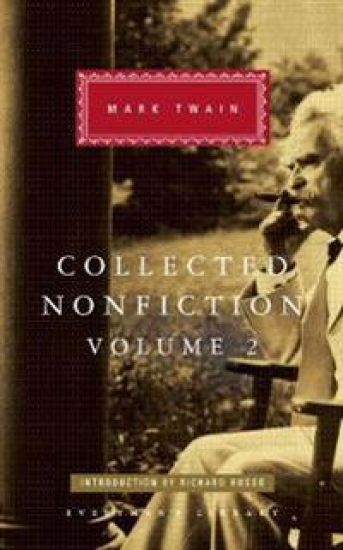
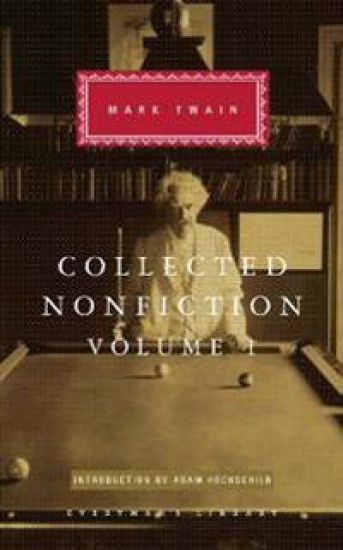
Twain's playful exuberance and remarkable storytelling gifts are on full display as he regales readers with his real-life adventures, some of them so outrageous they cannot be true - or can they? As Richard Russo says in his fascinating introduction, Twain was an 'inspired, indeed, unparalleled, bullshitter' who himself cheerfully relates how as a cub reporter out West he had elevated a routine Indian attack on a wagon full of immigrants to a battle that 'to this day has no parallel in history' - once he knew he could get away with it. There is drama as well as comedy in his account of life on the Mississippi, and great sadness too when his younger brother Henry is killed in a steamboat explosion - all the more poignant for the restraint with which he describes it. In The Innocents Abroad Twain the gleeful iconoclast is a passenger on a cruise ship to Europe and the Holy Land, poking fun at European snobbery and pretension and refusing to be overawed by all that History - but fully prepared to aim his satirical barbs at his fellow-tourists and indeed, squarely at himself. He also proves to be a deeply compassionate writer, as fierce in his condemnation of injustice as he is skilful in mining the humour of human folly. He brought to literature a new, distinctly American voice - and he harboured as rich and fertile a blend of contradictions as the dynamic nation he came to embody and define.
Politics, religion, culture, travel, science and technology, family life: nothing escaped the eye and pen of Samuel Langhorne Clemens, better known as Mark Twain, nineteenth-century America's most famous writer and a legend in his own lifetime. Though chiefly known today for his classic novels of childhood, Tom Sawyer and Huckleberry Finn, and for his short stories, he produced even more nonfiction of an impressive quality. Twain lived a life as exciting as his fiction, and in his Autobiography we find him running wild, like the heroes of his novels, in the countryside around his childhood home in Missouri and navigating the treacherous waters of the Mississippi River as a trained steamboat pilot, while his letters show him travelling thousands of miles over the United States on hectic lecture tours (he was a great showman, raconteur and performer of his own works), hobnobbing with princes and presidents and being lionized in the capitals of Europe. His trademark wit, candour, sarcasm and irrepressible humour shine through on every page of this selection, but here too, beyond the entertainer, we discover in his speeches and essays the social and moral issues - slavery, imperialism - which concerned him, and meet the private man behind that towering public figure, whose long marriage never lost its romance, but who bore the sorrow of losing two of his three daughters while still in their twenties. A sometimes moving, sometimes hilarious and always riveting read.
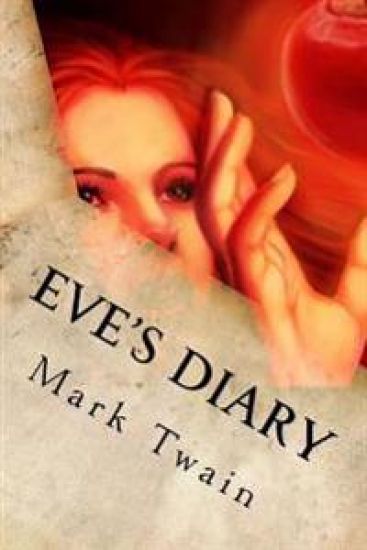
It is written in the style of a diary kept by the first woman in the biblical creation story, Eve, and is claimed to be "translated from the original MS." The "plot" of this story is the first-person account of Eve from her creation up to her burial by, her mate Adam, including meeting and getting to know Adam, and exploring the world around her, Eden. The story then jumps 40 years into the future after the Fall and expulsion from Eden. It is one of a series of books Twain wrote concerning the story of Adam and Eve, including Extracts from Adam's Diary, 'That Day In Eden, ' 'Eve Speaks, ' 'Adam's Soliloquy, ' and the 'Autobiography of Eve.' Eve's Diary has a lighter tone than the others in the series, as Eve has a strong appreciation for beauty and love. The book may have been written as a posthumous love-letter to Mark Twain's wife Olivia Langdon Clemens, or Livy, who died in June 1904, just before the story was written. Mark Twain is quoted as saying, "Eve's Diary is finished - I've been waiting for her to speak, but she doesn't say anything more." The story ends with Adam's speaking at Eve's grave, "Wherever she was, there was Eden.