Kirjojen hintavertailu – 12 903 725 kirjaa ja 27 kauppaa

Kirjailija

Martin Heidegger

Kirjat ja teokset yhdessä paikassa: 209 kirjaa, julkaisuja vuosilta 1956–2027, suosituimpiin kuuluu Martin Heidegger, Ontologie. Hermeneutik Der Faktizitat. Vertaile teosten hintoja ja tarkista saatavuus suomalaisista kirjakaupoista.

209 kirjaa

Kirjojen julkaisuvuodet: 1956–2027.

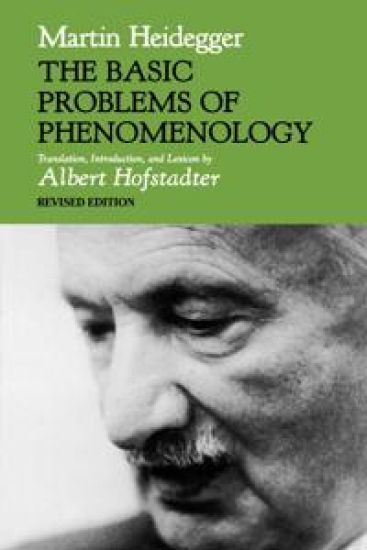
The Basic Problems of Phenomenology, Revised Edition

The Basic Problems of Phenomenology, Revised Edition

Martin Heidegger

Indiana University Press
1988
pokkari

Halvin toimitettuna 31,00 €

A lecture course that Martin Heidegger gave in 1927, The Basic Problems of Phenomenology continues and extends explorations begun in Being and Time. In this text, Heidegger provides the general outline of his thinking about the fundamental problems of philosophy, which he treats by means of phenomenology, and which he defines and explains as the basic problem of ontology.
Schelling's Treatise on the Essence of Human Freedom

Schelling's Treatise on the Essence of Human Freedom

Martin Heidegger

Ohio University Press
1985
pokkari
Heidegger's lectures delivered at the University of Freiburg in 1936 on Schelling's Treatise On Human Freedom came at a crucial turning point in Heidegger's development. He had just begun his study to work out the term "Ereignis." Heidegger's interpretation of Schelling's work reveals a dimension of his thinking which has never been previously published in English. While Schelling's philosophy is less known than that of the other major German Idealists, Fichte and Hegel, he is one of the thinker with whom Heidegger has the most affinity, making this study fruitful for an understanding of both philosophers. Heidegger's interpretation of On Human Freedom is the most straightforward of the studies to have appeared in English on the Treatise, and is the only work that is devoted to Schelling in Heidegger's corpus. The basic problems at stake in Schelling's Treatise lie at the very heart of the idealist tradition: the question of the compatibility of the system and individual freedom, the questions of pantheism and the justification of evil. Schelling was the first thinker in the rationalist-idealist tradition to grapple seriously with the problem of evil. These are the great questions of the philosophical tradition. They lead Schelling and, with him, Heidegger, to possibilities that come very close to the boundaries of the idealist tradition. For example, Schelling's concept of the "groundless"—what reason can no longer ground and explain—points back to Jacob Boehme and indirectly forward to the direction of Heidegger's own inquiry into "Being." Heidegger's reading of Schelling, especially of the topics of evil and freedom, clearly shows Schelling's influence on Heidegger's views.

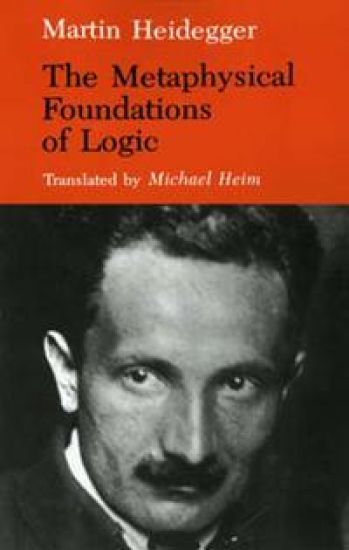
The Metaphysical Foundations of Logic

The Metaphysical Foundations of Logic

Martin Heidegger

Indiana University Press
1984
pokkari

Halvin toimitettuna 32,50 €

Offering a full-scale study of the theory of reality hidden beneath modern logic, The Metaphysical Foundations of Logic, a lecture course given in 1928, illuminates the transitional phase in Heidegger's thought from the existential analysis of Being and Time to the overcoming of metaphysics in his later philosophy. In a searching exposition of the metaphysical problems underpinning Leibniz's theory of logical judgment, Heidegger establishes that a given theory of logic is rooted in a certain conception of Being. He explores the significance of Western logic as a system-building technical tool and as a cultural phenomenon that is centuries old.
Being and Time

Being and Time

Martin Heidegger

Blackwell Publishers
1978
pokkari

Halvin toimitettuna 39,60 €

A knowledge of Heidegger's Sein und Zeit is essential for anyone who wishes to understand a great deal of recent continental work in theology as well as philosophy. Yet until this translation first appeared in 1962, this fundamental work of one of the most influential European thinkers of the century remained inaccessible to English readers.
What Is Called Thinking

What Is Called Thinking

Martin Heidegger

HarperPerennial
1963
pokkari

Halvin toimitettuna 21,30 €

"For an acquaintance with the thought of Heidegger, What Is Called Thinking? is as important as Being and Time. It is the only systematic presentation of the thinker's late philosophy and . . . it is perhaps the most exciting of his books."--Hannah Arendt
Essays in Metaphysics

Essays in Metaphysics

Martin Heidegger

Philosophical Library
1960
sidottu
Martin Heidegger was a philosopher most known for his contributions to German phenomenological and existential thought. Heidegger was born in rural Messkirch in 1889 to Catholic parents. While studying philosophy and mathematics at Albert-Ludwig University in Freiburg, Heidegger became the assistant for philosopher Edmund Husserl. Influenced by Husserl, Kierkegaard, and Nietzsche, Heidegger wrote extensively on the quality of Being, including his opus Being and Time. He served as professor of philosophy at Albert-Ludwig University and taught there during the war. In 1933, Heidegger joined the National Socialist German Worker's (or Nazi) Party and expressed his support for Hitler in several articles and speeches. After the war, his support for the Nazi party came under attack, and he was tried as a sympathizer. He was able to return to Albert-Ludwig University, however, and taught there until he retired. Heidegger continued to lecture and write until his death 1973.