Kirjojen hintavertailu – 12 859 819 kirjaa ja 27 kauppaa

Kirjailija

Martin Luther

Kirjat ja teokset yhdessä paikassa: 962 kirjaa, julkaisuja vuosilta 1856–2026, suosituimpiin kuuluu Isä Meidän Selitys. Vertaile teosten hintoja ja tarkista saatavuus suomalaisista kirjakaupoista.

962 kirjaa

Kirjojen julkaisuvuodet: 1856–2026.

Concerning Christian Liberty

Concerning Christian Liberty

Martin Luther

Alicia Editions
2020
sidottu
"A Christian man is the most free lord of all, and subject to none" Concerning Christian Liberty sometimes also called "A Treatise on Christian Liberty" or "A On the Freedom of a Christian" was the third of Martin Luther's major reforming treatises of 1520. In the treatise, Luther, seminal figure in the Protestant Reformation, develops the concept of Justification by faith. He wrote the Ninety-five Theses against the contemporary practice of the Roman Catholic Church with respect to indulgences. The Theses were quickly reprinted, translated, and distributed throughout Germany and Europe. His theology challenged the authority and office of the Pope. His refusal to renounce all of his writings resulted in his excommunication. The indulgence controversy set off by the Theses was the beginning of the Reformation. Concerning Christian Liberty is followed by The Ninety-five Theses and four letters of Martin Luther addressed to: the Archbishop Albrecht of Mainz, John Staupitz, Professor of Sacred Theology and Pope Leon X." Hence a right faith in Christ is an incomparable treasure, carrying with it universal salvation and preserving from all evil, as it is said,"He that believeth and is baptized shall be saved; but he that believeth not shall be damned"(Mark XVI. 16). Isaiah, looking to this treasure, predicted, "The consumption decreed shall overflow with righteousness. For the Lord God of hosts shall make a consumption, even determined (verbum abbreviatum et consummans), in the midst of the land" (Isa. X. 22, 23). As if he said, "Faith, which is the brief and complete fulfilling of the law, will fill those who believe with such righteousness that they will need nothing else for justification." Thus, too, Paul says, "For with the heart man believeth unto righteousness" (Rom. X. 10).""45. Christians are to be taught that he who sees a man in need, and passes him by, and gives his money] for pardons, purchases not the indulgences of the pope, but the indignation of God."
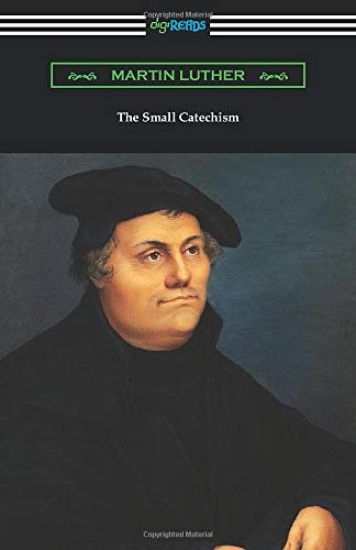
The Small Catechism

The Small Catechism

Martin Luther

Digireads.com
2020
pokkari
First published in 1529, Martin Luther's "The Small Catechism" was written for the education of children in religious doctrine. It reviews The Ten Commandments, The Lord's Prayer, the Sacraments of Baptism, the Alter and the Eucharist, along with other important religious and biblical tenets in a clear, concise and easy to understand format. It has long been considered as one of Martin's most important writings and is seen as an authoritative text on the beliefs of the Lutheran Church. "The Small Catechism" was required reading for confirmation into the church for centuries. Luther distilled the Church's teachings down to their most essential elements so that pastors and parents alike can pass the Lutheran doctrine and tradition down to the next generation. Remarkable for its wealth of information in a condensed and accessible form, Luther's masterpiece of religious instruction has continued to provide guidance and answers to both the young and old. "The Small Catechism" remains an important and essential addition to any collection of religious literature, as well as a useful and practical daily prayer book for families and churches. This edition is printed on premium acid-free paper.
D. Martin Luthers Werke

D. Martin Luthers Werke

Martin Luther

Hansebooks
2020
pokkari
D. Martin Luthers Werke - Kritische Gesamtausgabe ist ein unver nderter, hochwertiger Nachdruck der Originalausgabe aus dem Jahr 1883. Hansebooks ist Herausgeber von Literatur zu unterschiedlichen Themengebieten wie Forschung und Wissenschaft, Reisen und Expeditionen, Kochen und Ern hrung, Medizin und weiteren Genres. Der Schwerpunkt des Verlages liegt auf dem Erhalt historischer Literatur. Viele Werke historischer Schriftsteller und Wissenschaftler sind heute nur noch als Antiquit ten erh ltlich. Hansebooks verlegt diese B cher neu und tr gt damit zum Erhalt selten gewordener Literatur und historischem Wissen auch f r die Zukunft bei.
Hvordan man skal forholde sig ved epidemier

Hvordan man skal forholde sig ved epidemier

Martin Luther

Books on Demand
2020
pokkari
Den 2. august 1527 ramte pesten Wittenberg. Imidlertid blev Luther i byen sammen med Bugenhagen for at tjene de syge og bange mennesker. I et bent brev skriver Luther, hvordan man skal forholde sig ved s danne epidemier. Ogs her g lder det store bud om n stek rlighed, der omfatter alle. P trods af fare fra sygdom og d d er vi bundet af ansvaret for hinanden. Hvis ens nabo har brug for hj lp er vi forpligtet til at blive og hj lpe, medmindre der er nogen anden, der kan indtage ens plads i pleje af de syge. Ellers skal man s vidt muligt undg smittefaren og ikke uds tte sig selv for smitte. Luther advarer mod overmodighed, der foragter almindelige forholdsregler mod smitte, og s ledes frister Gud, som har skabt medicin og givet os forstand til at pleje vores helbred. Desuden bringer denne hensynsl shed andre i fare, som man kommer i kontakt med.
Selections From The Table Talk Of Martin Luther
Selections From The Table Talk Of Martin Luther: Translated By Captain Henry Bell; Edited By Henry Morley This book is a result of an effort made by us towards making a contribution to the preservation and repair of original classic literature. In an attempt to preserve, improve and recreate the original content, we have worked towards: 1. Type-setting & Reformatting: The complete work has been re-designed via professional layout, formatting and type-setting tools to re-create the same edition with rich typography, graphics, high quality images, and table elements, giving our readers the feel of holding a 'fresh and newly' reprinted and/or revised edition, as opposed to other scanned & printed (Optical Character Recognition - OCR) reproductions. 2. Correction of imperfections: As the work was re-created from the scratch, therefore, it was vetted to rectify certain conventional norms with regard to typographical mistakes, hyphenations, punctuations, blurred images, missing content/pages, and/or other related subject matters, upon our consideration. Every attempt was made to rectify the imperfections related to omitted constructs in the original edition via other references. However, a few of such imperfections which could not be rectified due to intentional\unintentional omission of content in the original edition, were inherited and preserved from the original work to maintain the authenticity and construct, relevant to the work. We believe that this work holds historical, cultural and/or intellectual importance in the literary works community, therefore despite the oddities, we accounted the work for print as a part of our continuing effort towards preservation of literary work and our contribution towards the development of the society as a whole, driven by our beliefs. We are grateful to our readers for putting their faith in us and accepting our imperfections with regard to preservation of the historical content. HAPPY READING
The Bondage of the Will

The Bondage of the Will

Martin Luther

Canon Classics
2020
pokkari
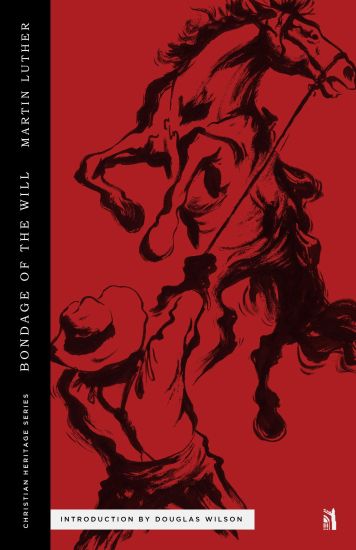
"This may be the only classic theological work you ever read which makes you laugh out loud multiple times." Douglas Wilson, IntroductionIn this new offering from the Christian Heritage Series, Luther replies to the arguments of Erasmus of Rotterdam. Erasmus was the most distinguished scholar of Luther's day, but that only made Luther all the more eager to defend the truth. Erasmus argued that all the commands in Scripture clearly showed that man had the ability to obey God through his own power. In this work, Luther replies that such an argument emptied the Gospel of its power, and that instead man's will is bound captive to sin, and that only through the Gospel are we freed from its power. While this rambunctious and punchy book is entertaining, Luther never loses sight of the heart of the matter: man's inability to earn his salvation and his absolute need for grace and forgiveness." A man cannot be thoroughly humbled until he comes to know that his salvation is utterly beyond his own powers, counsel, endeavors, will, and works, and absolutely depending on the will, counsel, pleasure, and work of another, that is, of God only." Luther in The Bondage of the Will
The Passion of Christ

The Passion of Christ

Martin Luther

Gideon House Books
2020
nidottu
What do we make of the sufferings of Christ? How can we grow in our faith by studying that last agonizing moments of Christ's life? Come along with Luther on this journey from Gesthemane to the empty tomb. Be enlightened and inspired in your own faith and be challenged to share this Good News with others. From Luther's introduction: If we know this; if we understand our sinful condition, which would have plunged us without escape into eternal damnation, had not Christ become our Savior, we will duly appreciate the importance and value of the suffering of our Lord, and will be comforted thereby when fear of God's wrath, on account of our sins, would overcome us. Such a consideration of the passion of Christ will not only move our eyes to tears and our hearts to pity, as is the tendency of the popish sermons on this subject, but will prompt us to feel, deep down in our soul, sorrow at the terrible results of sin, for which no creature, but only the Son of God could make atonement by His sufferings and death; and likewise it will cause us great joy, because we will realize that this sacrifice was made for us, that God will now no longer reject nor condemn us, as we have merited by our sins, but that He is now reconciled to us through the precious and vicarious death of His Son, who gave Himself as a victim in our behalf, so that our sins are now forgiven and we are made heirs of eternal life.
Exhortation to the Clergy to Preach Against Exploitive Interest (Usury)
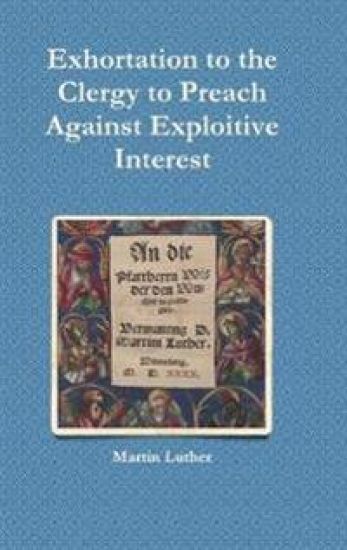
Martin Luther is known for inspiring the German Protestant Reformation in 1517 and giving birth to Protestantism. Beyond mere theology, Luther also frequently wrote about the economic conditions in which he lived, often criticizing the conditions the budding medieval money economy created for his less-fortunate contemporaries. This Exhortation of 1540 confirms Luther's keen understanding of the interplay between economic choice and its necessities far exceeding the limited grasp of the economy many will admit for a "mere monk". In reaction to an inactive government, Luther urges clergy to confront exploitive lenders (the usurers). Should these "devils in human shape" refuse to repent, Luther urges pastors to practically excommunicate unrepentant usurers. Luther's pastoral view on economy strikes us moderns as utterly naive, but arguably this is precisely what's missing from our contemporary discourse of a more just economy. For discounts and more visit us at www. LutherBibleStudies.com!
The Bondage of the Will

The Bondage of the Will

Martin Luther

Digireads.com
2019
pokkari

Halvin toimitettuna 20,90 €

Written in 1525 in response to the writings of Erasmus, "The Bondage of the Will" conveys Luther's beliefs on the issue of free will during the Protestant Reformation. Because of the fall of man, he debates with Erasmus on whether or not human beings are free to decide on good or evil. He asserts in this well written and uniquely styled work that we are incapacitated by sin, and human beings must rely on the complete sovereignty of God to redeem us and bring about our salvation. Because man is dictated by Satan, he must be saved entirely by God, and this liberation should lead to the service of God. Considered a masterpiece of Reformation literature, Luther's writing is a combination of deep theological thought with a gentle humor and a refreshing directness. Because of its primary position in Reformation doctrine, "The Bondage of the Will" is a vital link in understanding the ideas of Luther and his place in the Christian tradition. This edition is printed on premium acid-free paper.
The Ninety-Five Theses, On Christian Liberty, and Address to the Christian Nobility
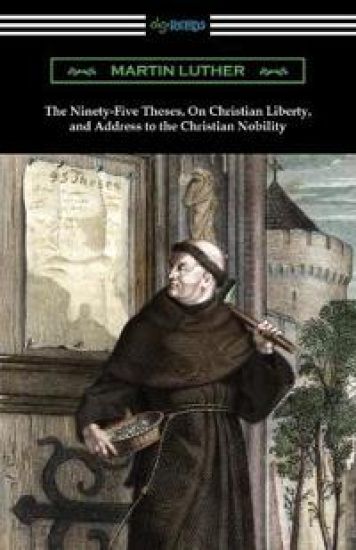
Collected together in this volume are the three of Martin Luther's most important works: "The Ninety-Five Theses", "On Christian Liberty", and "Address to the Christian Nobility". Martin Luther, the founder of the Protestant movement and one of the most important figures in all of religious history puts forth his objections to the Catholic Church in these classic religious texts. "The Ninety-Five Theses on the Power and Efficacy of Indulgences" is Martin Luther's list of concerns on corruption in the Roman Catholic Church. This 1517 document has since been widely acknowledged as the catalyst for the Protestant Reformation. "On Christian Liberty" is Luther's third major treatise in which he details his doctrines on justification by faith and the priesthood of all believers, and eventually expands on the concept of freedom through grace and its meaning for mankind. Finally in this collection we find the "Address to the Christian Nobility" which predates "On Christian Liberty" and further discusses the religious beliefs of Martin Luther. This collection of foundational works of the Protestant movement is essential reading for religious scholars and lay people alike. This edition is printed on premium acid-free paper.