Kirjojen hintavertailu – 12 903 735 kirjaa ja 27 kauppaa

Kirjailija

Martin Thomas

Kirjat ja teokset yhdessä paikassa: 47 kirjaa, julkaisuja vuosilta 1997–2026, suosituimpiin kuuluu The UFO, E.T, and ALIEN TRILOGY. Vertaile teosten hintoja ja tarkista saatavuus suomalaisista kirjakaupoista.

47 kirjaa

Kirjojen julkaisuvuodet: 1997–2026.

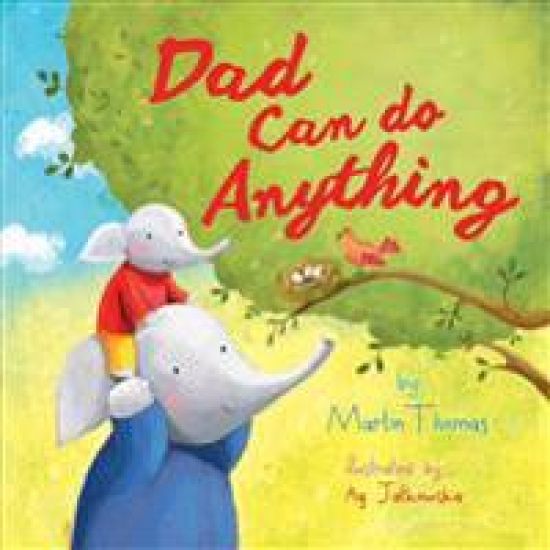
Dad Can Do Anything

Dad Can Do Anything

Martin Thomas

Sky Pony
2018
sidottu
Perfect for the youngest boys and girls to celebrate dad, whether it's Father's Day or not. Called "adorable," "sweet," and "cute by parents reviewing the book, here is a colorful illustrated story that both parents and children will love reading again and again It's not easy being small. Especially not for Little Elephant who isn't tall enough to reach things, like the hook to hang a coat, a shelf to get toys, or the pedals of a bike. Kitchen counters, the shower, and a light switch are all too high. But with dad close by anything is possible and nothing is out of reach.
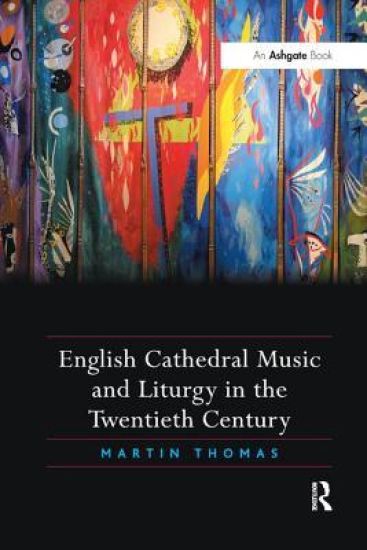
English Cathedral Music and Liturgy in the Twentieth Century
This book examines the stylistic development of English cathedral music during a period of liturgical upheaval, looking at the attitudes of cathedral clergy, liturgists, composers, leading church music figures and organisations to music and liturgy. Arguments that were advanced for retaining an archaic style in cathedral music are considered, including the linking of musical style with liturgical language, the recommending of a subservient role for music in the liturgy, and the development of a language of fittingness to describe church music. The roles of the RSCM and other influential bodies are explored. Martin Thomas draws on many sources: the libraries and archives of English cathedrals; contemporary press coverage and the records of church music bodies; publishing practices; secondary literature; and the music itself. Concluding that an arresting of development in English cathedral music has prevented appropriate influences from secular music being felt, Thomas contrasts this with how cathedrals have often successfully and dynamically engaged with the world of the visual arts, particularly in painting and sculpture. Presenting implications for all denominations and for patronage of the arts by churches, and the place of musical aesthetics in the planning of liturgy, this book offers an important resource for music, theology, liturgy students and ministry teams worldwide.
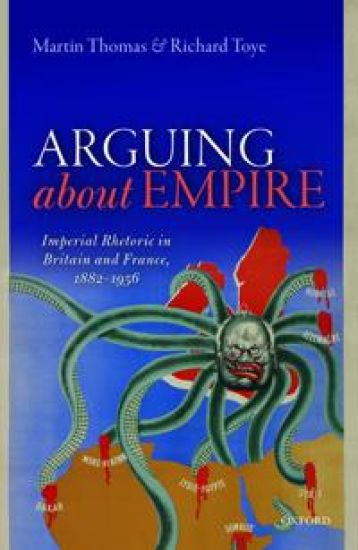
Arguing about Empire

Arguing about Empire

Martin Thomas; Richard Toye

Oxford University Press
2017
sidottu
Arguing about Empire analyses the most divisive arguments about empire between Europe's two leading colonial powers from the age of high imperialism to the post-war era of decolonization. Focusing on the domestic contexts underlying imperial rhetoric, Arguing about Empire adopts a case-study approach, treating key imperial debates as historical episodes to be investigated in depth. The episodes in question have been selected both for their chronological range, their variety, and, above all, their vitriol. Some were straightforward disputes; others involved cooperation in tense circumstances. These include the Tunisian and Egyptian crises of 1881-2, which saw France and Britain establish new North African protectorates, ostensibly in co-operation, but actually in competition; the Fashoda Crisis of 1898, when Britain and France came to the brink of war in the aftermath of the British re-conquest of Sudan; the Moroccan crises of 1905 and 1911, early tests of the Entente Cordiale, when Britain lent support to France in the face of German threats; the 1922 Chanak crisis, when that imperial Entente broke down in the face of a threatened attack on Franco-British forces by Kemalist Turkey; World War Two, which can be seen in part as an undeclared colonial war between the former allies, complicated by the division of the French Empire between De Gaulle's Free French forces and those who remained loyal to the Vichy Regime; and finally the 1956 Suez intervention, when, far from defusing another imperial crisis, Britain colluded with France and Israel to invade Egypt -- the culmination of the imperial interference that began some eighty years earlier.
Theoretical Modeling of Vibrational Spectra in the Liquid Phase

Theoretical Modeling of Vibrational Spectra in the Liquid Phase

Martin Thomas

Springer International Publishing AG
2017
sidottu
This thesis provides a comprehensive description of methods used to compute the vibrational spectra of liquid systems by molecular dynamics simulations. The author systematically introduces theoretical basics and discusses the implications of approximating the atomic nuclei as classical particles. The strengths of the methodology are demonstrated through several different examples. Of particular interest are ionic liquids, since their properties are governed by strong and diverse intermolecular interactions in the liquid state. As a novel contribution to the field, the author presents an alternative route toward infrared and Raman intensities on the basis of a Voronoi tessellation of the electron density. This technique is superior to existing approaches regarding the computational resources needed. Moreover, this book presents an innovative approach to obtaining the magnetic moments and vibrational circular dichroism spectra of liquids, and demonstrates its excellent agreement withexperimental reference data.
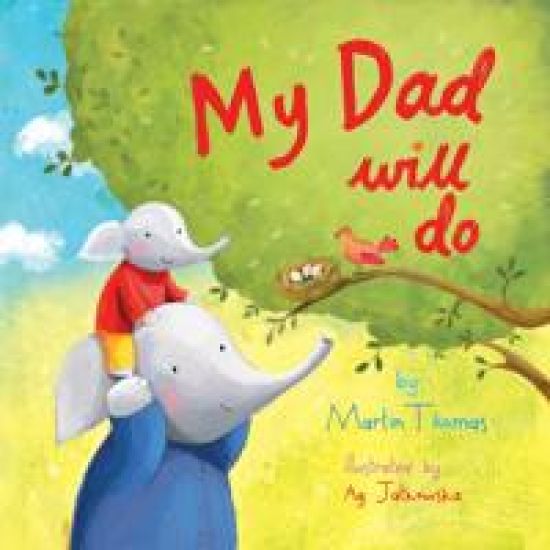
My Dad Will Do

My Dad Will Do

Martin Thomas

Wacky Bee Books
2016
Nidottu
Age range 2 to 6It's not easy being small. Especially not being able to reach things. Like the hook to hang a coat, a shelf to get the toys, or the pedals of a bike. Kitchen sides, the shower, and a light switch are all too high. But the love of a father is an amazing thing. With dad close by anything is possible. With dad close by nothing is out of reach.
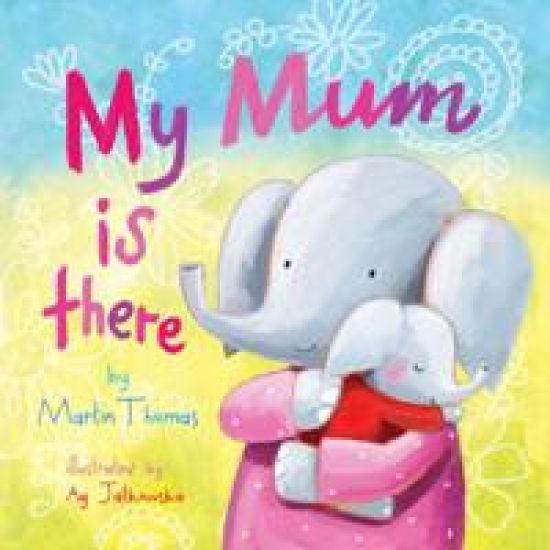
My Mum is There

My Mum is There

Martin Thomas

Wacky Bee Books
2016
nidottu
Age range 2 to 6 It's not easy being small. Nothing is simple. Not speaking, sleeping or walking. Not counting, reading or swimming. Not even hopping or skipping or jumping! But the love of a mother is an amazing thing. With mum close by there's no need to be scared. With mum close by anything is possible.
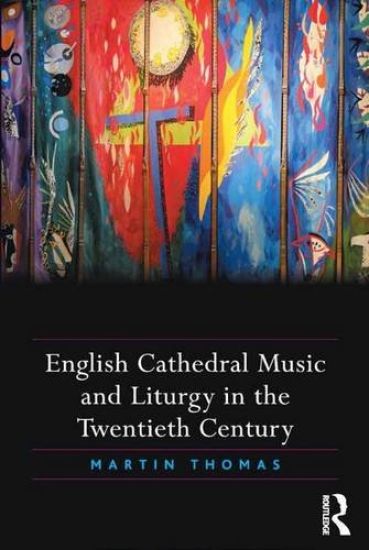
English Cathedral Music and Liturgy in the Twentieth Century
This book examines the stylistic development of English cathedral music during a period of liturgical upheaval, looking at the attitudes of cathedral clergy, liturgists, composers, leading church music figures and organisations to music and liturgy. Arguments that were advanced for retaining an archaic style in cathedral music are considered, including the linking of musical style with liturgical language, the recommending of a subservient role for music in the liturgy, and the development of a language of fittingness to describe church music. The roles of the RSCM and other influential bodies are explored. Martin Thomas draws on many sources: the libraries and archives of English cathedrals; contemporary press coverage and the records of church music bodies; publishing practices; secondary literature; and the music itself. Concluding that an arresting of development in English cathedral music has prevented appropriate influences from secular music being felt, Thomas contrasts this with how cathedrals have often successfully and dynamically engaged with the world of the visual arts, particularly in painting and sculpture. Presenting implications for all denominations and for patronage of the arts by churches, and the place of musical aesthetics in the planning of liturgy, this book offers an important resource for music, theology, liturgy students and ministry teams worldwide.
Violence and Colonial Order

Violence and Colonial Order

Martin Thomas

Cambridge University Press
2015
pokkari
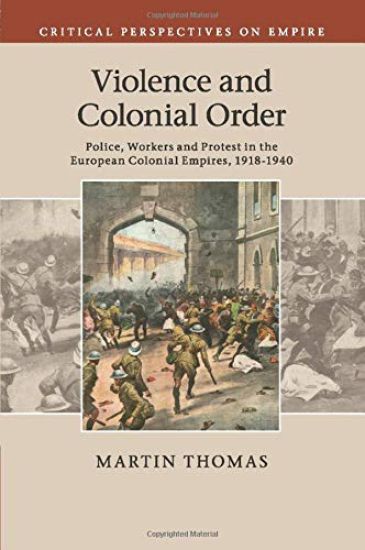
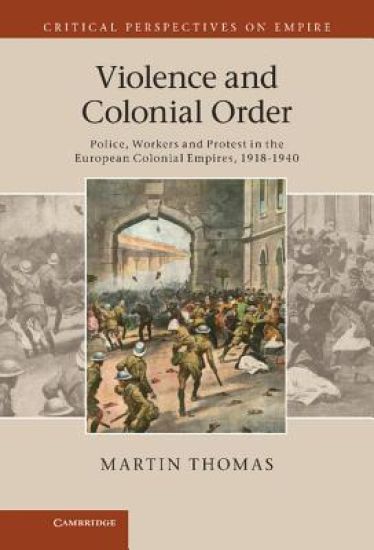
This is a pioneering, multi-empire account of the relationship between the politics of imperial repression and the economic structures of European colonies between the two World Wars. Ranging across colonial Africa, Southeast Asia and the Caribbean, Martin Thomas explores the structure of local police forces, their involvement in colonial labour control and the containment of uprisings and dissent. His work sheds new light on broader trends in the direction and intent of colonial state repression. It shows that the management of colonial economies, particularly in crisis conditions, took precedence over individual imperial powers' particular methods of rule in determining the forms and functions of colonial police actions. The politics of colonial labour thus became central to police work, with the depression years marking a watershed not only in local economic conditions but also in the breakdown of the European colonial order more generally.
Crises of Empire

Crises of Empire

Martin Thomas; Bob Moore; Larry Butler

Bloomsbury Academic
2015
sidottu
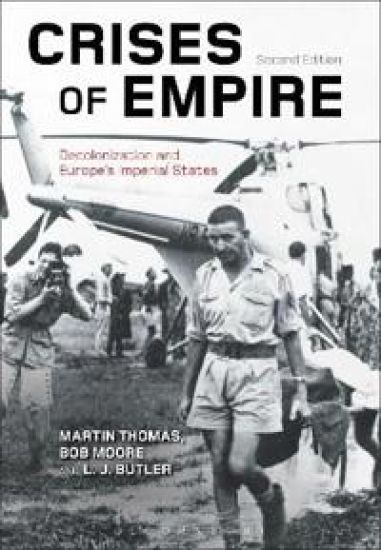
Crisesof Empire offers a comprehensive and uniquelycomparative analysis of the history of decolonization in the British, Frenchand Dutch empires. By comparing the processesof decolonization across three of the major modern empires, from the aftermathof the First World War to the late 20th century, the authors are able toanalyse decolonization as a long-term process. They explore significant changes to the international system, shiftingpopular attitudes to colonialism and the economics of empire. This new edition incorporates the latestdevelopments in the historiography, as well as:- Increased coverage of theBelgian and Portuguese empires- New introductions to each ofthe there main parts, offering some background and context to British, Frenchand Dutch decolonization- More coverage of culturalaspects of decolonization, exploring empire 'from below'- A new glossary, explaining keyterms This new edition of Crises of Empire is essential reading for all students of imperialhistory and decolonization. In particular,it will be welcomed by those who are interested in taking a comparative,putting the history of decolonization in a pan-European framework.
Crises of Empire

Crises of Empire

Martin Thomas; Bob Moore; Larry Butler

Bloomsbury Academic
2015
nidottu
Crises of Empire offers a comprehensive and uniquely comparative analysis of the history of decolonization in the British, French and Dutch empires. By comparing the processes of decolonization across three of the major modern empires, from the aftermath of the First World War to the late 20th century, the authors are able to analyse decolonization as a long-term process. They explore significant changes to the international system, shifting popular attitudes to colonialism and the economics of empire. This new edition incorporates the latest developments in the historiography, as well as:- Increased coverage of the Belgian and Portuguese empires- New introductions to each of the three main parts, offering some background and context to British, French and Dutch decolonization- More coverage of cultural aspects of decolonization, exploring empire 'from below'This new edition of Crises of Empire is essential reading for all students of imperial history and decolonization. In particular, it will be welcomed by those who are interested in taking a comparative approach, putting the history of decolonization into a pan-European framework.
Fight or Flight

Fight or Flight

Martin Thomas

Oxford University Press
2014
sidottu
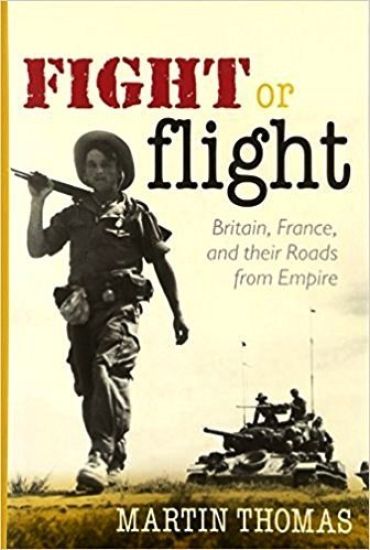
Although shattered by war, in 1945 Britain and France still controlled the world's two largest colonial empires, with imperial territories stretched over four continents. And they appeared determined to keep them: the roll-call of British and French politicians, soldiers, settlers and writers who promised in word and print at this time to defend their colonial possessions at all costs is a long one. Yet, within twenty years both empires had almost completely disappeared. The collapse was cataclysmic. Peaceable 'transfers of power' were eclipsed by episodes of territorial partition and mass violence whose bitter aftermath still lingers. Hundreds of millions across four continents were caught up in the biggest reconfiguration of the international system ever seen. In the meantime, even the most dogged imperialists, who had once stiffly defended imperial rule, ultimately bent to the wind of change. By the early 1950s Winston Churchill had retreated from his wartime pledge to keep Britain's Empire intact. And General de Gaulle, who quit the French presidency in 1946 complaining that France's new post-war democracy would never hang on to the country's imperial prizes, narrowly escaped assassination a generation later - after negotiating the humiliating French withdrawal from Algeria. Fight or Flight is the first ever comparative account of this dramatic collapse, explaining the end of the British and French colonial empires as an intertwined, even co-dependent process. Decolonization gathered momentum, not as an empire-specific affair, but as a global one, in which the wider march of twentieth-century history played a vital part: industrial concentration and global depression, World War and Cold War, Communism and other anti-colonial ideologies, mass consumerism and the allure of American popular culture. Above all, as Martin Thomas shows, the internationalization of colonial affairs made it impossible to contain colonial problems locally, spelling the end for Europe's two largest colonial empires in less than two decades from the end of the Second World War.

Violence and Colonial Order

Violence and Colonial Order

Martin Thomas

Cambridge University Press
2012
sidottu
This is a pioneering, multi-empire account of the relationship between the politics of imperial repression and the economic structures of European colonies between the two World Wars. Ranging across colonial Africa, Southeast Asia and the Caribbean, Martin Thomas explores the structure of local police forces, their involvement in colonial labour control and the containment of uprisings and dissent. His work sheds new light on broader trends in the direction and intent of colonial state repression. It shows that the management of colonial economies, particularly in crisis conditions, took precedence over individual imperial powers' particular methods of rule in determining the forms and functions of colonial police actions. The politics of colonial labour thus became central to police work, with the depression years marking a watershed not only in local economic conditions but also in the breakdown of the European colonial order more generally.