Kirjojen hintavertailu – 12 859 819 kirjaa ja 27 kauppaa
Kirjailija
Mary Roberts Rinehart
Kirjat ja teokset yhdessä paikassa: 480 kirjaa, julkaisuja vuosilta 2001–2026, suosituimpiin kuuluu K. Vertaile teosten hintoja ja tarkista saatavuus suomalaisista kirjakaupoista.
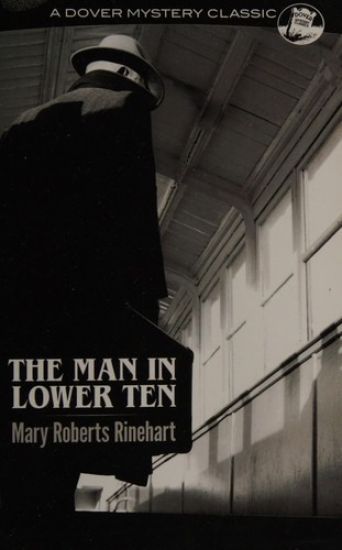
Washington, D. C.-based attorney Lawrence Blakely has been asked by his partner to deliver some important documents to a client in Pittsburgh. In the course of his return trip, the occupant of the train berth opposite his ― the lower ten, which Blakely was supposed to have taken -- is savagely murdered. Was Blakely the intended victim, and did the crime have something to do with his briefcase full of vital evidence? When the murder weapon turns up underneath his pillow, Blakely becomes the prime suspect and is forced to stay one step ahead of the police in an increasingly deadly mystery. Written by Mary Roberts Rinehart, "the American Agatha Christie," this was the first detective novel to crack national bestseller lists. According to The New York Times, " Rinehart's] literary distinction lies in the combination of love, humor, and murder that she wove into her tales ... She helped the mystery story grow up." The Man in Lower Ten was Rinehart's debut novel, and it remains a thrilling tale of homicide, mayhem, and romance.
Prince Ferdinand William Otto was bored. His royal robes, consisting of a pair of blue serge trousers, a short Eton jacket, and a stiff, rolling collar of white linen, irked him. He had been brought to the Opera House under a misapprehension. His aunt, the Archduchess Annunciata, had strongly advocated "The Flying Dutchman," and his English governess, Miss Braithwaite, had read him some inspiring literature about it. So here he was, and the Flying Dutchman was not ghostly at all, nor did it fly. It was, from the royal box, only too plainly a ship which had length and height, without thickness.
Mary Roberts Rinehart (1876 - 1958) was an American writer, often called the American Agatha Christie, although her first mystery novel was published 14 years before Christie's. She is considered the source of the phrase "The butler did it", although she did not actually use the phrase. She is considered to have invented the "Had-I-But-Known" school of mystery writing. She also created a costumed supercriminal called "the Bat", who was cited by Bob Kane as one of the inspirations for his "Batman." In this book: Locked Doors The Circular Staircase The Breaking Point The Case of Jennie Brice
It is doubtful if Aggie and I would have known anything about Tish's plan had Aggie not seen the advertisement in the newspaper. She came to my house at once in violent excitement and with her bonnet over her ear, and gave me the newspaper clipping to read. It said: "Wanted: A small donkey. Must be gentle, female, and if possible answer to the name of Modestine. Address X 27, Morning News." "Well," I said when I had read it, "did you insert the advertisement or do you propose to answer it?" Aggie was preparing to take a drink of water, but, the water being cold and the weather warm, she was dabbing a little on her wrists first to avoid colic. She looked up at me in surprise. "Do you mean to say, Lizzie," she demanded, "that you don't recognize that advertisement?" "Modestine?" I reflected. "I've heard the name before somewhere. Didn't Tish have a cook once named Modestine?" But it seemed that that was not it. Aggie sat down opposite me and took off her bonnet. Although it was only the first of May, the weather, as I have said, was very warm. "To think," she said heavily, "that all the time while I was reading it aloud to her when she was laid up with neuralgia she was scheming and planning and never saying a word to me Not that I would have gone; but I could have sent her mail to her, and at least have notified the authorities if she had disappeared." "Reading what aloud to her-her mail?" I asked sharply. "'Travels with a Donkey, '" Aggie replied. "Stevenson's 'Travels with a Donkey.' It isn't safe to read anything aloud to Tish any more. The older she gets the worse she is. She thinks that what any one else has done she can go and do. If she should read a book on poultry-farming she would think she could teach a young hen to lay an egg." As Aggie spoke a number of things came back to me. I recalled that the Sunday before, in church, Tish had appeared absorbed and even more devout than usual, and had taken down the headings of the sermon on her missionary envelope; but that, on my leaning over to see if she had them correctly, she had whisked the paper away before I had had more than time to see the first heading. It had said "Rubber Heels." Aggie was pacing the floor nervously, holding the empty glass. "She's going on a walking tour with a donkey, that's what, Lizzie," she said, pausing before me. "I could see it sticking out all over her while I read that book. And if we go to her now and tax her with it she'll admit it. But if she says she is doing it to get thin don't you believe it." That was all Aggie would say.