

Kirjailija
Mary Shelley
Kirjat ja teokset yhdessä paikassa: 740 kirjaa, julkaisuja vuosilta 1818–2026, suosituimpiin kuuluu Frankenstein. Vertaile teosten hintoja ja tarkista saatavuus suomalaisista kirjakaupoista.
740 kirjaa
Kirjojen julkaisuvuodet: 1818–2026.

I sorg over sin mors død begraver den unge videnskabsmand Victor Frankenstein sig i et vanvittigt eksperiment og stykker et væsen sammen af kropsdele fra lig. Ved hjælp af lyn i natten gnistrer han liv i skabningen, men da den åbner sine døde øjne, flygter han i rædsel. Det forladte væsen vandrer rundt i verden i en desperat søgen efter venskab og forståelse. Overalt møder det afsky og frygt, og verdens afvisninger og dets egen ensomhed ender med at gøre dets indre lige så ondt og ækelt som dets ydre. "Frankenstein" er ikke bare en gruopvækkende gyser. Det er også historien om et væsen, der fødes med potentiale for det gode, men som en uforstående verden forvandler til et hævngerrigt monster, og om et skæbnesvangert bånd mellem skaber og skabning, som ingen af dem formår at bryde. Historien er evigt aktuel, særligt i disse år, hvor robotter og kunstig intelligens i stadig højere grad indtager (og overtager) vores hverdag. Den engelske forfatter Mary Wollstonecraft Shelley (1797-1851) er bedst kendt for sin roman "Frankenstein" og sit ægteskab med den store romantiske digter Percy Bysshe Shelley, som hun stak af med som 16-årig og levede sammen med frem til hans tragiske død i 1822. Mary Shelley var kun 20 år, da Frankenstein udkom anonymt, og mange antog, at det var hendes mand, der var den egentlige forfatter. Mary Shelley fortsatte med at skrive gennem hele sit liv, men levede hovedsageligt af at udgive sin mands efterladte værker. Oprindeligt oversat af Jannick Storm i 1977. Oversættelsen er til denne udgave let redigeret af forlaget.

The Norton Library edition of Frankenstein features the complete text of the first (1818) edition and Mary Shelley’s preface to the third (1831) edition. An introduction by Michael Bérubé situates the work in its historical and literary contexts, and, drawing on his pioneering work in disability studies, highlights key themes that will encourage readers to approach this popular classic with fresh eyes. The Norton Library is a growing collection of high-quality texts and translations—influential works of literature and philosophy—introduced and edited by leading scholars. Norton Library editions prepare readers for their first encounter with the works that they’ll re-read over a lifetime. • Inviting introductions highlight the work’s significance and influence, providing the historical and literary context students need to dive in with confidence. • Endnotes and an easy-to-read design deliver an uninterrupted reading experience, encouraging students to read the text first and refer to endnotes for more information as needed. • An affordable price (most $10 or less) encourages students to buy the book and to come to class with the assigned edition. About the Editor: Michael Bérubé is Edwin Erle Sparks Professor of Literature at Penn State University and a former president of the Modern Language Association. He is the author of ten books, including What’s Liberal About the Liberal Arts Classroom? Politics and “Bias” in Higher Education and Life As We Know It: A Father, a Family, and an Exceptional Child.

"When falsehood can look so like the truth, who can assure themselves of certain happiness?" Frankenstein tells the story of Victor Frankenstein, a young scientist who creates a sapient creature in an unorthodox scientific experiment. Written as a warning against the "over-reaching" of modern man and the Industrial Revolution, the novel has given rise to many questions which can be linked to today's culture with a message that the extent to which man collects knowledge can ultimately backfire and fail to produce any good outcomes.

Nykyaika alkoi kesäkuussa 1816. Tuolloin vasta kahdeksantoistavuotias Mary Shelley näki painajaisunen, jossa hämärään kammioonsa telkeytynyt tiedemies herättää elottoman ruumiin henkiin ja heti sen tehtyään kavahtaakin tämän sameaa, vetistä katsetta. Unesta kehkeytyikauhuromaani Frankenstein, or the Modern Prometheus, jonka kulttuurillisesta merkityksestä vakuuttuakseen ei tarvitse katsoa otsikkoa pidemmälle. Kun pohdimme ilmiöitä, jotka vievät tieteen eettisille rajoilleen, kuten geenimuuntelua, keinoelämän luomista ja tekoälyn kehitystä, muistamme automaattisesti nimen, josta on tullut synonyyminen luomuksensa jasen kohtalon kanssa. Havahdumme ajatukseen, että meistä tulee Frankensteineja ja keksinnöistämme Frankensteinin hirviöitä, jotka kääntyvät tarkoitusperiämme vastaan ja lopulta tuhoavat meidät. Frankenstein on todellinen moderni myytti: jokainen edistysaskeleemme tapahtuu saman horisontin sisällä, jonka Mary Shelley romaanillaan avasi. Aika on kypsä romaanin uudelle suomennokselle, jossa myytin takana oleva kertomus herää uudelleen henkiin kaikessa rikkaudessaan, yllättävyydessään ja kauhistuttavuudessaan. Frankenstein: Moderni Prometheus on enemmän kuin tarina tiedemiehestä, joka luo hirviönja kokee kohtalonsa sen käsissä. Yhtä lailla se on tarina hirviöstä itsestään, tuntevasta ja ajattelevasta olennosta, joka ruumiillisen poikkeavuutensa tähden tulee suljetuksi ulos ihmisten yhteisöstä ja tästä katkeroituneena ryhtyy väkivaltaisen koston tielle. Mutta ennen kaikkea se on tarina tunteista, joilla oikeutamme tehdyt ja tekemättömät tekomme: pelosta ja vihasta, ylpeydestä ja piittaamattomuudesta, kaipuusta ja kaunasta. Vertaansa vailla olevalla tarkkanäköisyydellä ja kuvittelukyvyllä Mary Shelley piirtää muotokuvan ylpeästä, raunioitumiseen asti itseriittoisesta nykyihmisestä, jonka kohtalonusko ja sokea luottamus omiin kykyihinsä eivät ole vanhentuneet päivääkään sitten kesäkuun 1816.

FRANKENSTEIN; OR, THE MODERN PROMETHEUS. by Mary Wollstonecraft (Godwin) Shelley
Mary Shelley
Gopublish
2021
pokkari
Mary Wollstonecraft Shelley (Godwin) (30 August 1797 - 1 February 1851) was an English novelist who wrote the Gothic novel Frankenstein; or, The Modern Prometheus (1818), which is considered an early example of science fiction. She also edited and promoted the works of her husband, the Romantic poet and philosopher Percy Bysshe Shelley. Her father was the political philosopher William Godwin and her mother was the philosopher and feminist activist Mary Wollstonecraft. Shelley's mother died less than a month after giving birth to her. She was raised by her father, who provided her with a rich if informal education, encouraging her to adhere to his own anarchist political theories. When she was four, her father married a neighbor, Mary Jane Clairmont, with whom Shelley came to have a troubled relationship. In 1814, Shelley began a romance with one of her father's political followers, Percy Bysshe Shelley, who was already married. Together with her stepsister, Claire Clairmont, she and Percy left for France and travelled through Europe. Upon their return to England, Shelley was pregnant with Percy's child. Over the next two years, she and Percy faced ostracism, constant debt and the death of their prematurely born daughter. They married in late 1816, after the suicide of Percy Shelley's first wife, Harriet. In 1816, the couple and her stepsister famously spent a summer with Lord Byron and John William Polidori near Geneva, Switzerland, where Shelley conceived the idea for her novel Frankenstein. The Shelleys left Britain in 1818 for Italy, where their second and third children died before Shelley gave birth to her last and only surviving child, Percy Florence Shelley. In 1822, her husband drowned when his sailing boat sank during a storm near Viareggio. A year later, Shelley returned to England and from then on devoted herself to the upbringing of her son and a career as a professional author. The last decade of her life was dogged by illness, most likely caused by the brain tumor which killed her at age 53. Until the 1970s, Shelley was known mainly for her efforts to publish her husband's works and for her novel Frankenstein, which remains widely read and has inspired many theatrical and film adaptations. Recent scholarship has yielded a more comprehensive view of Shelley's achievements. Scholars have shown increasing interest in her literary output, particularly in her novels, which include the historical novels Valperga (1823) and Perkin Warbeck (1830), the apocalyptic novel The Last Man (1826) and her final two novels, Lodore (1835) and Falkner (1837). Studies of her lesser-known works, such as the travel book Rambles in Germany and Italy (1844) and the biographical articles for Dionysius Lardner's Cabinet Cyclopaedia (1829-1846), support the growing view that Shelley remained a political radical throughout her life. Shelley's works often argue that cooperation and sympathy, particularly as practiced by women in the family, were the ways to reform civil society. This view was a direct challenge to the individualistic Romantic ethos promoted by Percy Shelley and the Enlightenment political theories articulated by her father, William Godwin.
FRANKENSTEIN; OR, THE MODERN PROMETHEUS. by Mary Wollstonecraft (Godwin) Shelley
Mary Shelley
Gopublish
2021
sidottu
Mary Wollstonecraft Shelley (Godwin) (30 August 1797 - 1 February 1851) was an English novelist who wrote the Gothic novel Frankenstein; or, The Modern Prometheus (1818), which is considered an early example of science fiction. She also edited and promoted the works of her husband, the Romantic poet and philosopher Percy Bysshe Shelley. Her father was the political philosopher William Godwin and her mother was the philosopher and feminist activist Mary Wollstonecraft. Shelley's mother died less than a month after giving birth to her. She was raised by her father, who provided her with a rich if informal education, encouraging her to adhere to his own anarchist political theories. When she was four, her father married a neighbor, Mary Jane Clairmont, with whom Shelley came to have a troubled relationship. In 1814, Shelley began a romance with one of her father's political followers, Percy Bysshe Shelley, who was already married. Together with her stepsister, Claire Clairmont, she and Percy left for France and travelled through Europe. Upon their return to England, Shelley was pregnant with Percy's child. Over the next two years, she and Percy faced ostracism, constant debt and the death of their prematurely born daughter. They married in late 1816, after the suicide of Percy Shelley's first wife, Harriet. In 1816, the couple and her stepsister famously spent a summer with Lord Byron and John William Polidori near Geneva, Switzerland, where Shelley conceived the idea for her novel Frankenstein. The Shelleys left Britain in 1818 for Italy, where their second and third children died before Shelley gave birth to her last and only surviving child, Percy Florence Shelley. In 1822, her husband drowned when his sailing boat sank during a storm near Viareggio. A year later, Shelley returned to England and from then on devoted herself to the upbringing of her son and a career as a professional author. The last decade of her life was dogged by illness, most likely caused by the brain tumor which killed her at age 53. Until the 1970s, Shelley was known mainly for her efforts to publish her husband's works and for her novel Frankenstein, which remains widely read and has inspired many theatrical and film adaptations. Recent scholarship has yielded a more comprehensive view of Shelley's achievements. Scholars have shown increasing interest in her literary output, particularly in her novels, which include the historical novels Valperga (1823) and Perkin Warbeck (1830), the apocalyptic novel The Last Man (1826) and her final two novels, Lodore (1835) and Falkner (1837). Studies of her lesser-known works, such as the travel book Rambles in Germany and Italy (1844) and the biographical articles for Dionysius Lardner's Cabinet Cyclopaedia (1829-1846), support the growing view that Shelley remained a political radical throughout her life. Shelley's works often argue that cooperation and sympathy, particularly as practiced by women in the family, were the ways to reform civil society. This view was a direct challenge to the individualistic Romantic ethos promoted by Percy Shelley and the Enlightenment political theories articulated by her father, William Godwin.
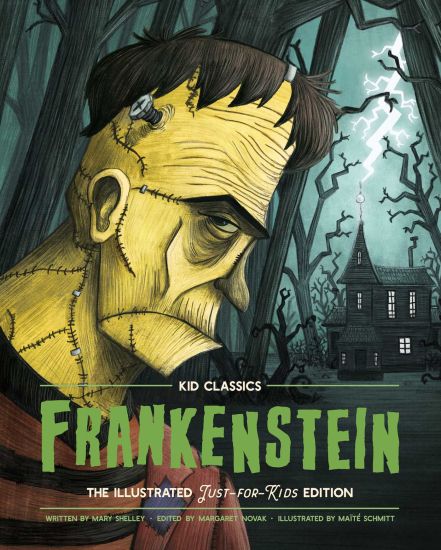
Share the spine-chilling tale of Frankenstein with young readers in this fun, illustrated chapter book! Perfectly spooky, beginner readers will explore the balance between technology and humanity in this adaptation of Mary Shelley’s classic novel. With just the right amount of scary for spooky little readers, children can delight in the fascinating horror story of Victor Frankenstein. On a stormy summer evening two centuries ago, Mary Shelley wrote the classic tale about a scientist and his monstrous creation. After Victor Frankenstein discovers the secret to life and uses it to build an eight-foot-tall monster, he realizes he's made a creature that he can't take care of - or control! Frankenstein and the monster chase each other across Europe, along the way learning lessons about ambition and heartbreak, the effects of technology on our lives, judging others based on looks, and the healing powers of nature. This just-for-kids retelling of Mary Shelley's classic Frankenstein:Is an abridged, child-friendly version of Mary Shelley's novelFeatures beautiful illustrated hardcover with illustrations in each chapterIs perfect for homeschooling, school reading challenges, and beginning readers

The Last Man (1826) is a dystopian novel by Mary Shelley. Dedicated to the recently deceased Percy Bysshe Shelley and Lord Byron, The Last Man was controversial upon publication and was immediately suppressed by British authorities. Resurrected by dedicated critics and readers, the novel is now recognized as a pioneering work of science fiction and as the first work of dystopian literature to be published in English. The ambitious and semi-autobiographical work is set toward the end of the 21st century and follows a group of radical friends whose experiences during a period of political upheaval test the limits of their love and push them to the brink of survival. After the abdication of the British monarchy, the former prince Adrian befriends Lionel, a fiercely independent and philosophical advocate of republicanism. When Lionel returns from two years abroad in Vienna, where he was conducting political business, he finds that Adrian has disappeared following a conflict with Lord Raymond, who falls in love with the Greek princess Evadne while scheming to be named England’s new king. They eventually resolve their enmity, however, and Raymond travels to Greece with Adrian to fight in a quickly expanding conflict with the Ottomans. As the war rages on, a plague breaks out and spreads without warning across Europe and overseas to the Americas. As the continent is ravaged by conflict and disease, Lionel and his group of friends struggle to keep one another alive in a world growing more hostile and less habitable by the day. With a beautifully designed cover and professionally typeset manuscript, this edition of Mary Shelley’s The Last Man is a classic of English literature reimagined for modern readers.
Mathilda (1959) is a posthumous novella by English writer and Romantic Mary Shelley. Written as a means of self-distraction following the deaths of her young children in Italy, Mathilda is a work haunted by tragic loss. Unpublished for over a century, its posthumous appearance helped cement Shelley’s reputation as a leading Romantic, an artist unafraid of confronting such themes and taboos as incest and suicide in her work. Mathilda, named after its narrator, traces a young woman’s troubled life from birth to her premature deathbed. Following her mother’s death during childbirth and her father’s subsequent abandonment, Mathilda is raised by her aunt in rural Loch Lomond, Scotland. A gifted reader and promising intellectual, she rises from her difficult circumstances to lead a relatively happy childhood. When, at the age of 16, her father reenters her life, the two reconnect and eventually move together to London. As she begins to receive suitors however, her father’s strange jealousy and irrational behavior conceal a terrible secret. When he reveals his incestuous desires to Mathilda, she rejects him, resulting in his suicide and leaving her unmarried, orphaned, and financially unstable. Living in self-imposed exile, she befriends the similarly melancholy Woodville, a young widower and poet who does his best to care for her despite her crushing bouts of depression and frequent suicidal thoughts. Mathilda is an emotionally complex and ultimately difficult novella recognized for its controversial themes and for its parallels to Shelley’s own tragic life. With a beautifully designed cover and professionally typeset manuscript, this edition of Mary Shelley’s Mathilda is a classic of English literature reimagined for modern readers.

Tales and Stories (1891) is a collection of short fiction by Mary Shelley. Despite her reputation as one of the foremost English novelists of the nineteenth century, Shelley also wrote numerous stories for magazines and other publications, earning a reputation as a gifted storyteller in all forms of fiction. In “The Sisters of Albano,” a traveler resting on the banks of an Italian lake strikes up a conversation with a beautiful Countess. Inspired by the history and landscape of the region, the Countess tells the tragic story of a local family. During the French occupation of Italy under Napoleon’s rule, Anina and Maria live vastly different lives. Maria, the older sister, is a nun at the convent of Santa Chiara in Rome, while Anina, the younger, is in love with a mysterious outlaw named Domenico. When the French arrive in Albano, Anina goes searching for Domenico, who has gone into hiding with other members of the local resistance. After the young girl is arrested and sentenced to die for violating an officer’s orders, Maria, dressed in her religious habit, appeals to the French on her sister’s behalf. In “Ferdinando Eboli,” a Neapolitan Count bids farewell to his young fiancée before going off to fight for his king. When he returns, he finds that an impostor has taken over his estate—and married the unsuspecting Adalinda. With a beautifully designed cover and professionally typeset manuscript, this edition of Mary Shelley’s Tales and Stories is a classic of English literature reimagined for modern readers.

More than 200 years after it was first published, Mary Shelley's Frankenstein has stood the test of time as a gothic masterpiece--a classic work of horror that blurs the line between man and monster. "If I cannot inspire love, I will cause fear." For centuries, the story of Victor Frankenstein and the monster he created has held readers spellbound. On the surface, it is a novel of tense and steadily mounting dread. On a more profound level, it illuminates the triumph and tragedy of the human condition in its portrayal of a scientist who oversteps the bounds of conscience, and of a creature tortured by the solitude of a world in which he does not belong. A novel of almost hallucinatory intensity, Mary Shelley's Frankenstein represents one of the most striking flowerings of the Romantic imagination. With an Introduction by Douglas Clegg And an Afterword by Harold Bloom
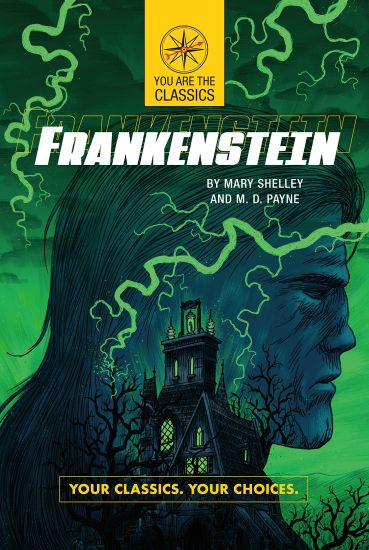
Beloved Monster Juice author, M. D. Payne, explores the madness inside and provides alternative endings to Mary Shelley’s classic tale in our series of choice-driven books that expand on the narratives of literary classics. New options allow readers to explore additional characters and settings. Some lead to new endings, while others send readers back into the original storyline. Fans of literary classics will delight in seeing their favourite stories given new life, and reluctant readers will discover the classics through the engaging format of an interactive story.
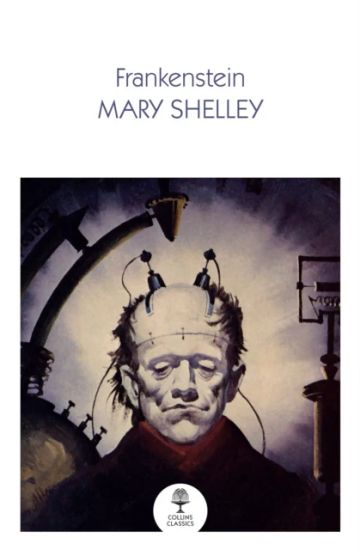
One of the BBC's '100 Novels That Shaped Our World' HarperCollins is proud to present its new range of best-loved, essential classics. ‘The rain pattered dismally against the panes, and my candle was nearly burnt out, when, by the glimmer of the half-extinguished light, I saw the dull yellow eye of the creature open…’ Victor Frankenstein’s monster is stitched together from the limbs of the dead, taken from ‘the dissecting room and the slaughter-house’. The result is a grotesque being who, rejected by his maker and starved of human companionship, sets out on a journey to seek his revenge. In the most famous gothic horror story ever told, Shelley confronts the limitations of science, the nature of human cruelty and the pathway to forgiveness. Written when Mary Shelley was only eighteen years old and published two years later, this chilling tale of a young scientist’s desire to create life – and the consequences of that creation – still resonates today.
Proserpine and Midas
Mary Shelley; Percy Bysshe Shelley
Graphic Arts Books
2021
pokkari
Halvin toimitettuna 14,20 €
Proserpine and Midas (1820) is a collection of plays by Mary Shelley and Percy Bysshe Shelley. Combining Mary’s blank verse and Percy’s lyric poems, the Shelleys offer two groundbreaking retellings of classical myth. Together, the plays illuminate the working relationship of a husband and wife who helped define Romanticism, highlighting their individual talents in the process. While Proserpine was published in 1832 in The Winter’s Wreath, a London periodical, Mary Shelley was unable to find a publisher for Midas, which remained unprinted until the twentieth century. Ceres, the goddess of agriculture, leaves her daughter Proserpine in the care of two trusted nymphs. While the women are out picking flowers, Proserpine is kidnapped by Pluto, the dreaded lord of the underworld. Distraught, Ceres laments the loss of her beloved girl and appeals to Jove for assistance. Proserpine is a retelling of an ancient myth which remains mostly faithful to its source while emphasizing the feminist qualities of its tragic content. In Midas, the wild god Pan is defeated in a musical competition by Apollo, god of the sun. Determined to claim victory, he arranges a new contest with King Midas as judge. Although his power on earth is unmatched by any human, Midas soon learns that to play at divinity one risks reaping the greatest of sorrows. Proserpine and Midas is a masterful take on two of ancient Greece’s central myths. Using their talents for narrative and song, the Shelleys adapt these well-known stories for the nineteenth century and beyond, showcasing their sociopolitical significance in a world defined by the democratic ideals of the Greeks. With a beautifully designed cover and professionally typeset manuscript, this edition of Mary Shelley and Percy Bysshe Shelley’s Proserpine and Midas is a classic of English literature reimagined for modern readers.

History of a Six Weeks’ Tour (1817) is a travelogue by Mary Shelley and Percy Bysshe Shelley. Composed of journal entries, letters, and a poem, History of a Six Weeks’ Tour was published anonymously with a preface by Percy. Detailing their stay in Switzerland during the legendary “year without a summer,” the travelogue was Mary’s first published work and remains an invaluable text for the study of English Romanticism. When Percy Bysshe Shelley met Mary Godwin, he had initially planned to acquaint himself with her father, a famous philosopher. Soon, however, the pair fell in love and eloped with Claire Clairmont, Mary’s stepsister. They journeyed through France, Switzerland, Germany, and the Netherlands before returning home with little money and without the support of their families. In 1816, following the death of their first child, Percy and Mary travelled with Claire to Geneva, Switzerland, where the infamous Lord Byron had rented a villa along the shores of Lake Geneva. Due to a volcanic eruption in Indonesia, temperatures in Europe and throughout the world plummeted, creating the conditions for the “year without a summer.” Forced to remain indoors for much of their stay, the group soon grew tired of telling one another folk tales and ghost stories to pass the time. On a whim, Byron suggested they all write their own works of fiction, igniting the spark for some of the defining texts of the Romantic era. Having never published her own writing before, Mary unwittingly began mapping out her masterpiece. Frankenstein: or, The Modern Prometheus appeared in print two years later, changing the course of English literature forever. With a beautifully designed cover and professionally typeset manuscript, this edition of Mary Shelley and Percy Bysshe Shelley’s History of a Six Weeks’ Tour is a classic of English literature reimagined for modern readers.
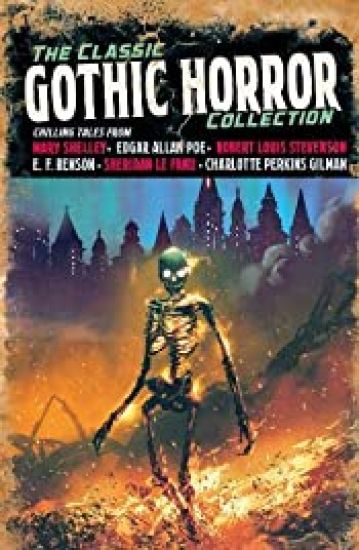
The Classic Gothic Horror Collection
Edgar Allan Poe; Edward Frederic Benson; Joseph Sheridan Le Fanu; Elizabeth Gaskell; Nathaniel Hawthorne; Mary Shelley; Charlotte Perkins Gilman
Arcturus Publishing Ltd
2021
sidottu
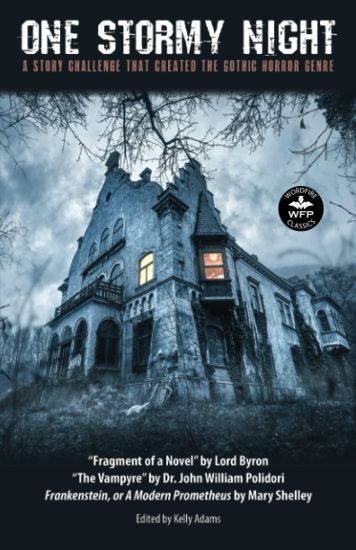
One Stormy Night
Mary Shelley; George Gordon Byron; John William Polidori
Wordfire Press
2021
pokkari

One Stormy Night
Mary Shelley; George Gordon Byron; John William Polidori
Wordfire Press
2021
sidottu