Kirjojen hintavertailu – 12 903 725 kirjaa ja 27 kauppaa
Kirjailija
Matthew Levering
Kirjat ja teokset yhdessä paikassa: 59 kirjaa, julkaisuja vuosilta 2002–2026, suosituimpiin kuuluu In Your Light We See Light. Vertaile teosten hintoja ja tarkista saatavuus suomalaisista kirjakaupoista.
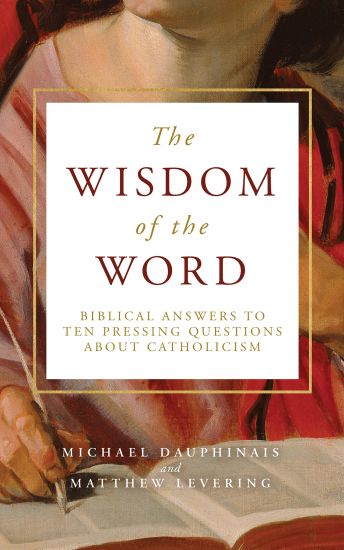
Why believe God exists, or believe Jesus is God? Why listen to the Catholic Church? Why is the Church so strict about sex? Questions like these have propelled a crisis of disaffiliation and disbelief among Catholics in recent decades. Half of millennial Catholics have turned their backs on the Church, and at many churches, only a minority of parishioners believe in all of its teachings about faith and morality. Building on the call of the Second Vatican Council for a greater appreciation of Scripture, The Wisdom of the Word invites Catholics who are thinking about leaving the Church, or who are confused about elements of Catholic faith and practice, to pause and give the Bible a chance to illuminate their way. From the infighting among the Catholic faithful to the sins of Catholic leaders, and from Christ's sacrifice on the cross to the Church's emphasis on caring for the poor, theologians Michael Dauphinais and Matthew Levering explore common challenges to the faith in light of the timeless insights of the Word. "The prayerful reading of God's Word," Pope Francis reminds us, "which is 'sweeter than honey' yet a 'two-edged sword, ' enables us to pause and listen to the voice of the Master. It becomes a lamp for our steps and a light for our path." Do you, or does someone you know, think that certain elements of the Catholic faith just don't make sense? If so, the ancient wisdom of God's Word--sweeter than honey and sharper than a sword--awaits.
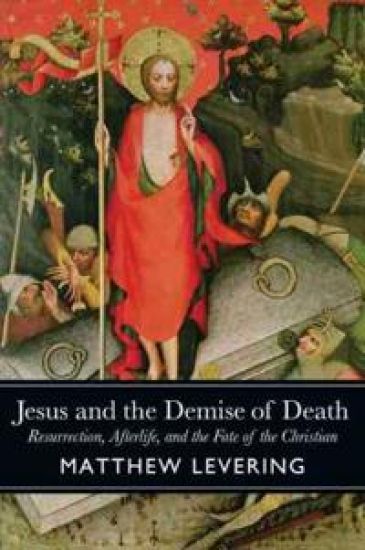
What happens after death to Jesus and to those who follow him? Jesus and the Demise of Death offers a constructive theology that seeks to answer that very question, carefully considering both Jesus' descent into hell and eventual resurrection as integral parts of a robust vision of the Christian bodily resurrection. Taking on the claims of N. T. Wright and Richard B. Hays, Matthew Levering draws strongly upon the work of Thomas Aquinas to propose a radical reconstruction of Christian eschatological theology--one that takes seriously the profound ways in which Christianity and its beatific vision have been enriched by Platonic thought and emphasizes the role of the Church community in the passage from life to death. In so doing, Levering underscores the hope in eternal life for Jesus' followers and gives readers firm and fruitful soil upon which to base conversations about the Christian's future.
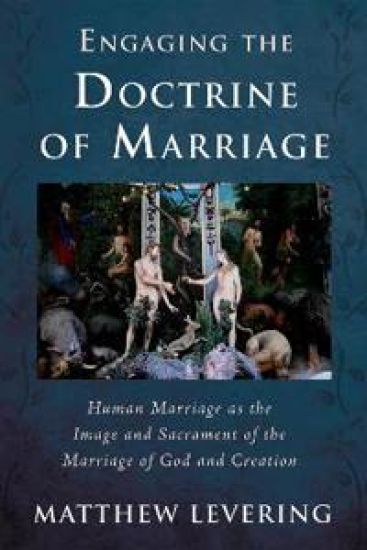
This book is the next volume in Levering's Engaging Doctrine series. The prior volume of the series examined the doctrine of creation. The present volume examines the purpose of creation: the marriage of God and humans. God created the cosmos for the purpose of the marriage of God and his people--and through his people, the marriage of God and the entire creation. Given that the central meaning or "prime analogate" of marriage is the marriage of God and humankind, the study of human marriage needs to be shaped by this eschatological goal and foregrounded as a dogmatic theme. After a first chapter defending and explaining the biblical witness to the marriage of God and his people, the book explores various themes: marriage as an image of God, original sin as the fall of the primordial marriage, the cross of Jesus Christ and marital self-sacrificial love, the procreative and unitive ends of marriage, marriage as a sacrament, and marriage's importance for social justice and for the upbuilding of the kingdom of God. Along the way, the book provides an introduction to the key biblical, patristic, medieval, modern, and contemporary thinkers and controversies regarding the doctrine of marriage.
This book is the next volume in Levering's Engaging Doctrine series. The prior volume of the series examined the doctrine of creation. The present volume examines the purpose of creation: the marriage of God and humans. God created the cosmos for the purpose of the marriage of God and his people--and through his people, the marriage of God and the entire creation. Given that the central meaning or "prime analogate" of marriage is the marriage of God and humankind, the study of human marriage needs to be shaped by this eschatological goal and foregrounded as a dogmatic theme. After a first chapter defending and explaining the biblical witness to the marriage of God and his people, the book explores various themes: marriage as an image of God, original sin as the fall of the primordial marriage, the cross of Jesus Christ and marital self-sacrificial love, the procreative and unitive ends of marriage, marriage as a sacrament, and marriage's importance for social justice and for the upbuilding of the kingdom of God. Along the way, the book provides an introduction to the key biblical, patristic, medieval, modern, and contemporary thinkers and controversies regarding the doctrine of marriage.
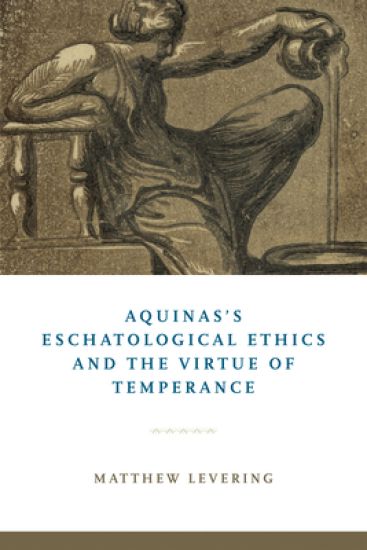
Matthew Levering offers a biblical and Thomistic portrait of the cardinal virtue of temperance and its allied virtues, in dialogue with an ecumenical range of theologians and scholars. In Aquinas's Eschatological Ethics and the Virtue of Temperance, Levering argues that Catholic ethics make sense only in light of the biblical worldview that Jesus has inaugurated the kingdom of God by pouring out his spirit. Jesus has made it possible for us to know and obey God's law for human flourishing as individuals and communities. He has reoriented our lives toward the goal of beatific communion with him in charity, which affects the exercise of the moral virtues that pertain to human flourishing. Without the context of the inaugurated kingdom, Catholic ethics as traditionally conceived will seem like an effort to find a middle ground between legalistic rigorism and relativistic laxism, which is especially the case with the virtue of temperance, the focus of Levering's book. After an opening chapter on the eschatological/biblical character of Catholic ethics, the ensuing chapters engage Aquinas's theology of temperance in the Summa theologiae, which identifies and examines a number of virtues associated with temperance. Levering demonstrates that the theology of temperance is profoundly biblical, and that Aquinas's theology of temperance relies for its intelligibility upon Christ's inauguration of the kingdom of God as the graced fulfillment of our created nature. The book develops new vistas for scholars and students interested in moral theology.
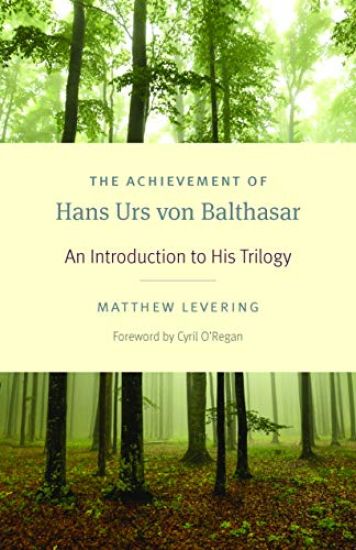
In The Achievement of Hans Urs von Balthasar, Matthew Levering has written a book for theologically educated readers who mistrust von Balthasar or who mistrust von Balthasar’s critics. The book shows that von Balthasar’s critics can and should benefit both from the rich and wide-ranging conversations that mark his trilogy and from the critical and constructive engagement with German philosophical modernity offered by the trilogy. In addition, Levering hopes to show that those who mistrust von Balthasar’s critics need to be more Balthasarian in their response to criticisms of the Swiss theologian. In this introductory volume, the focus is on the first volume of each part of the trilogy. This approach exhibits the main lines of von Balthasar’s trilogy in a way that allows for an introductory volume of manageable size. This approach also avoids the more controversial volumes of the trilogy. Reading von Balthasar with the goal of engaging his more controversial views is certainly justifiable, but in an introductory book, the danger is that some readers could miss the forest due to their opposition to some of the trees. The Achievement of Hans Urs von Balthasar contributes to the healing of the internecine conflicts that, since the 1930s or earlier, have pitted Ressourcement theologians and Thomistic theologians against each other with grave consequences for the health of Catholic theology. Despite sharing a strong belief in the faithful mediation of divine revelation through Scripture and the Church, many Catholic theologians today find themselves at loggerheads with each other. Easily forgotten by the Ressourcement and Thomistic combatants is their shared commitment to the theo-aesthetic beauty, theo-dramatic goodness, and theo-logical truth of Christ’s revelation of Trinitarian self-surrendering love as our source and supernatural goal, and their shared rejection of philosophical modernity’s immanentism, historicism, and power-centered voluntarism. The present book seeks to highlight these shared commitments, while leaving room for disagreement about von Balthasar’s specific positions and approaches.
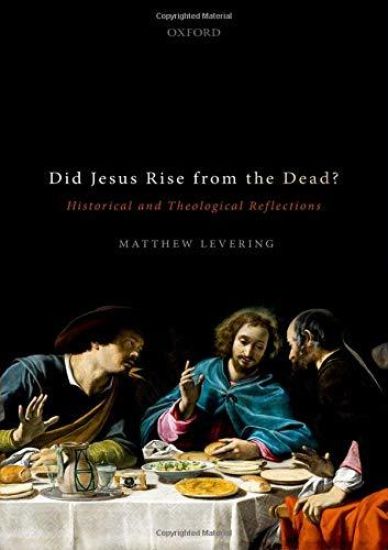
The Resurrection of Jesus is at the very root of Christian faith; without belief in Jesus Christianity dies. In this thought-provoking work, Matthew Levering defends the credibility of the claim that Jesus rose from the dead. Drawing on the work of N. T. Wright, Levering shows that the historical evidence vindicates this assumption, and reveals that the Gospels were backed by eyewitnesses who were living and telling their stories even during the time of the writing of the Gospels. The author also emphasises the importance of evaluating the Old Testament to validate Jesus' Resurrection. By highlighting the desire--both in the ancient world and now--to make the Resurrection more comprehensible by spiritualizing it, Levering argues that the fact that the disciples themselves did not do this provides a further clue to reliability. Finally, the author addresses the question of why Jesus does not continue to show himself in his glorified flesh after his resurrection, which is often seen as a strong case for scepticism. However, he shows that Jesus' entire mission is predicated upon helping us to avoid cleaving to the present world over God. He is leading us to where he is--the kingdom of God, the beginning of the new creation at the Father's right hand. By developing these arguments for the historical reality of Jesus' Resurrection, this ground-breaking study expertly draws together historical and theological reasons for believing that Jesus' Resurrection happened.
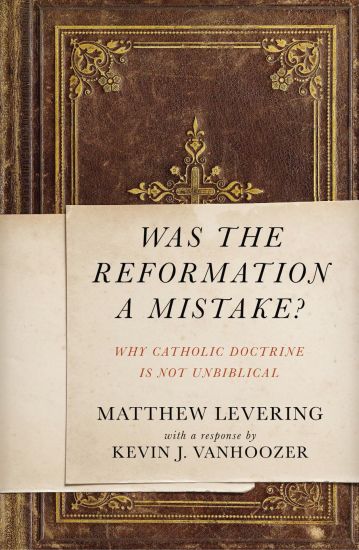
Was the Reformation a mistake? In its actual historical context, it hardly seems fair to call the Reformation a "mistake." In 1517, the Church was in need of a spiritual and theological reform. The issues raised by Renaissance humanism - and by the profound corruption of the Church's leaders, the Avignon papacy, and the Great Schism in the fourteenth and fifteenth centuries - lingered unresolved. What were key theological problems that led to the Reformation? Theologian Matthew Levering helps readers see these questions from a Catholic perspective. Surveying nine key themes - Scripture, Mary, the Eucharist, the Seven Sacraments, monasticism, justification and merit, purgatory, saints, and papacy - he examines the positions of Martin Luther and makes a case that the Catholic position is biblically defensible once one allows for the variety of biblically warranted modes of interpreting Scripture. At the same time, Levering makes clear that he cannot "prove" the Catholic case. The book concludes with a spirited response by "mere Protestant" theologian Kevin J. Vanhoozer.
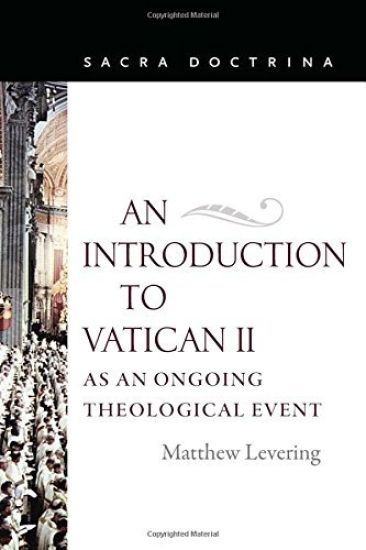
Contemporary scholars often refer to “the event of Vatican II,” but what kind of an event was it? In this first book of the new CUA Press series Sacra Doctrina, Matthew Levering leads his readers to see the Council as a “theological event”—a period of confirming and continuing God’s self-revelation in Christ into a new historical era for the Church. This is an introduction to Vatican II with a detailed summary of each of its four central documents—the dogmatic constitutions—followed by explanations of how to interpret them. In contrast to other introductions, which pay little attention to the theological soil in which the documents of Vatican II germinated, Levering offers a reading of each conciliar Constitution in light of a key theological author from the era: René Latourelle, SJ for Dei Verbum (persons and propositions); Louis Bouyer, CO for Sacrosanctum Concilium (active participation); Yves Congar, OP for Lumen Gentium (true and false reform); and Henri de Lubac, SJ for Gaudium et Spes (nature and grace). This theological event is “ongoing,” Levering demonstrates, by tracing in each chapter the theological debates that have stretched from the close of the council till the present, and the difficulties the Church continues to encounter in encouraging an ever deeper participation in Jesus Christ on the part of all believers. In this light, the book’s final chapter compares the historicist (Massimo Faggioli) and Christological (Robert Imbelli) interpretations of Vatican II, arguing that historicism can undermine the Council’s fundamental desire for a reform and renewal rooted in Christ. The conclusion addresses the concerns about secularization and loss of faith raised after the Council by Henri de Lubac, Joseph Ratzinger, and Yves Congar, arguing that contemporary Vatican II scholarship needs to take these concerns more seriously.
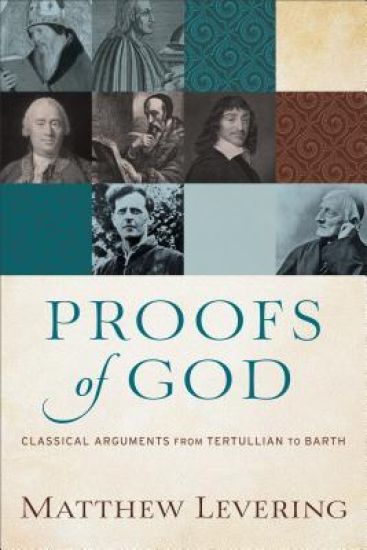
Leading theologian Matthew Levering presents a thoroughgoing critical survey of the proofs of God's existence for readers interested in traditional Christian responses to the problem of atheism. Beginning with Tertullian and ending with Karl Barth, Levering covers twenty-one theologians and philosophers from the early church to the modern period, examining how they answered the critics of their day. He also shows the relevance of the classical arguments to contemporary debates and challenges to Christianity. In addition to students, this book will appeal to readers of apologetics.
This book is an examination of natural law doctrine, rooted in the classical writings of our respective three traditions: Jewish, Christian, and Islamic. Each of the authors provides an extensive essay reflecting on natural law doctrine in his tradition. Each of the authors also provides a thoughtful response to the essays of the other two authors. Readers will gain a sense for how natural law (or cognate terms) resonated with classical thinkers such as Maimonides, Origen, Augustine, al-Ghazali and numerous others. Readers will also be instructed in how the authors think that these sources can be mined for constructive reflection on natural law today. A key theme in each essay is how the particularity of the respective religious tradition is squared with the evident universality of natural law claims. The authors also explore how natural law doctrine functions in particular traditions for reflection upon the religious other.
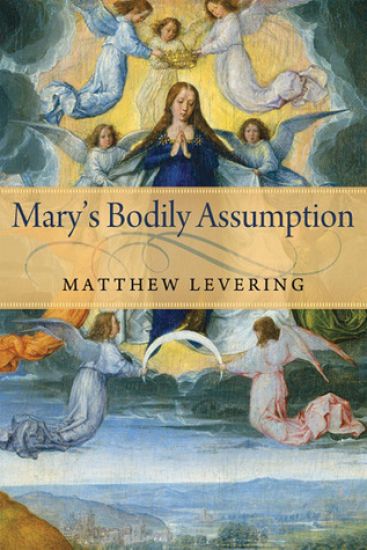
In Mary's Bodily Assumption, Matthew Levering presents a contemporary explanation and defense of the Catholic doctrine of Mary's bodily Assumption. He asks: How does the Church justify a doctrine that does not have explicit biblical or first-century historical evidence to support it? With the goal of exploring this question more deeply, he divides his discussion into two sections, one historical and the other systematic. Levering's historical section aims to retrieve the rich Mariological doctrine of the mid-twentieth century. He introduces the development of Mariology in Catholic Magisterial documents, focusing on Pope Pius XII's encyclical Munificentissimus Deus of 1950, in which the bodily Assumption of Mary was dogmatically defined, and two later Magisterial documents, Vatican II's Lumen Gentium and Pope John Paul II's Redemptoris Mater. Levering addresses the work of the neo-scholastic theologians Joseph Duhr, Aloïs Janssens, and Réginald Garrigou-Lagrange before turning to the great theologians of the nouvelle théologie—Karl Rahner, Hans Urs von Balthasar, Louis Bouyer, Joseph Ratzinger—and their emphasis on biblical typology. Using John Henry Newman as a guide, Levering organizes his systematic section by the three pillars of the doctrine on which Mary's Assumption rests: biblical typology, the Church as authoritative interpreter of divine revelation under the guidance of the Holy Spirit, and the fittingness of Mary's Assumption in relation to the other mysteries of faith. Levering's ecumenical contribution is a significant engagement with Protestant biblical scholars and theologians; it is also a reclamation of Mariology as a central topic in Catholic theology.
This book is an examination of natural law doctrine, rooted in the classical writings of our respective three traditions: Jewish, Christian, and Islamic. Each of the authors provides an extensive essay reflecting on natural law doctrine in his tradition. Each of the authors also provides a thoughtful response to the essays of the other two authors. Readers will gain a sense for how natural law (or cognate terms) resonated with classical thinkers such as Maimonides, Origen, Augustine, al-Ghazali and numerous others. Readers will also be instructed in how the authors think that these sources can be mined for constructive reflection on natural law today. A key theme in each essay is how the particularity of the respective religious tradition is squared with the evident universality of natural law claims. The authors also explore how natural law doctrine functions in particular traditions for reflection upon the religious other.
Aquinas’s commentaries on St. Paul are well known and have received significant attention in the past few years. It is widely known, too, that Aquinas quotes Paul often in the Summa Theologiae. This aspect of the Summa, however, has not been studied in detail. This book seeks to fill that lacuna in scholarship. The book’s brief introduction treats Aquinas as a biblically erudite theologian, and offers some basic statistical data regarding his use of Paul in the Summa Theologiae. The book’s nine chapters track in detail Aquinas’s use of Pauline quotations in his theological argumentation. The first six chapters examine Paul in particular “treatises:” the triune God, grace, charity, the virtue of religion, the Passion of Christ, and baptism. The last three chapters investigate Pauline texts as they are used throughout the Summa: Romans 1:20, 1 Corinthians 13, and Philippians 2:5–11. Chapters 1–3 are organised by the order of the treatise; chapters 4–6 are organised by order of the Pauline letters. This multifaceted procedure provides a rich, detailed picture of Aquinas’s use of Paul in the Summa. The guiding question is whether, and if so how, we can describe Aquinas’s theology as Pauline or as deeply influenced by Paul. Aquinas does not seek to understand Paul’s theology in its Second Temple context, and Aquinas often uses Pauline texts in a way that takes them out of context or that uses them in response to a theological problem unknown to Paul. Levering argues that Aquinas’s theology is indeed deeply Pauline, offering ample evidence that Aquinas captures the central Pauline themes and gives them a central place in his own theology.
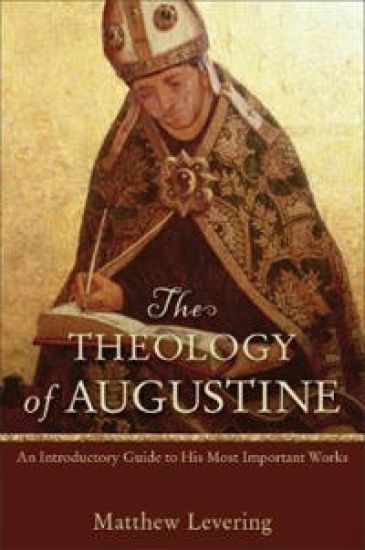
Most theology students realize Augustine is tremendously influential on the Christian tradition as a whole, but they generally lack real knowledge of his writings. This volume introduces Augustine's theology through seven of his most important works. Matthew Levering begins with a discussion of Augustine's life and times and then provides a full survey of the argument of each work with bibliographical references for those who wish to go further. Written in clear, accessible language, this book offers an essential introduction to major works of Augustine that all students of theology--and their professors!--need to know.
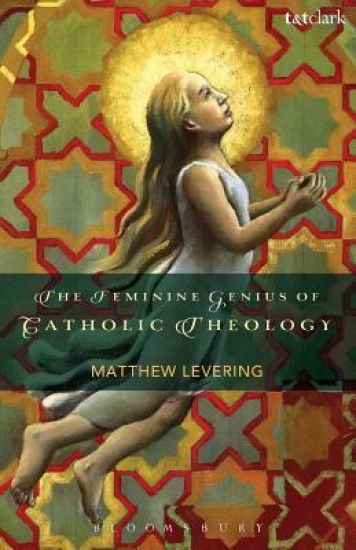
This book introduces Catholic doctrine through the crucible of the women mystics' reception of the gospel. The work of the great women theologians of the Church's second millennium has too often been neglected (or relegated to the category of 'mysticism') in textbooks on Catholic doctrine. This is a shame, because their work shows the interior conjunction of liturgical experience (broadly understood), scriptural exegesis, philosophical reflection, and doctrinal/creedal formulation. Drawing on their work, this book presents the tenets of Catholic faith in a clear and accessible manner, useful for introductory courses as well as for students and scholars interested in the contributions of women to Catholic theology. Women theologians in this book include Catherine of Siena, Theresa of Avila, Therese of Lisieux, Simone Weil and others.
This book introduces Catholic doctrine through the crucible of the women mystics' reception of the gospel. The work of the great women theologians of the Church's second millennium has too often been neglected (or relegated to the category of 'mysticism') in textbooks on Catholic doctrine. This is a shame, because their work shows the interior conjunction of liturgical experience (broadly understood), scriptural exegesis, philosophical reflection, and doctrinal/creedal formulation. Drawing on their work, this book presents the tenets of Catholic faith in a clear and accessible manner, useful for introductory courses as well as for students and scholars interested in the contributions of women to Catholic theology. Women theologians in this book include Catherine of Siena, Theresa of Avila, Therese of Lisieux, Simone Weil and others.