Kirjojen hintavertailu – 12 903 725 kirjaa ja 27 kauppaa

Kirjailija

Matthew Levering

Kirjat ja teokset yhdessä paikassa: 59 kirjaa, julkaisuja vuosilta 2002–2026, suosituimpiin kuuluu In Your Light We See Light. Vertaile teosten hintoja ja tarkista saatavuus suomalaisista kirjakaupoista.

59 kirjaa

Kirjojen julkaisuvuodet: 2002–2026.

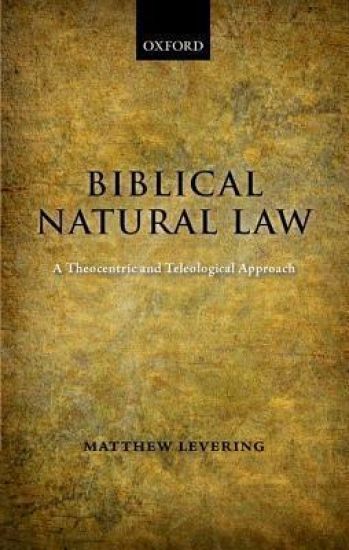
Biblical Natural Law

Biblical Natural Law

Matthew Levering

Oxford University Press
2012
nidottu
Natural law theory is controversial today because it presumes that there is a stable 'human nature' that is subject to a 'law.' How do we know that 'human nature' is stable and not ever-evolving? How can we expect 'law' not to constrict human freedom and potential? Furthermore if there is a 'law,' there must be a lawgiver. Matthew Levering argues that natural law theory makes sense only within a broader worldview, and that the Bible sketches both such a persuasive worldview and an account of natural law that offers an exciting portrait of the moral life. To establish the relevance of biblical readings to the wider philosophical debate on natural law, this study offers an overview of modern natural law theories from Cicero to Nietzsche, which reverse the biblical portrait by placing human beings at the center of the moral universe. Whereas the biblical portrait of natural law is other-directed, ordered to self-giving love, the modern accounts turn inward upon the self. Drawing on the thought of St. Thomas Aquinas, Levering employs theological and philosophical investigation to achieve a contemporary doctrine of natural law that accords with the biblical witness to a loving Creator who draws human beings to share in the divine life. This book provides both an introduction to natural law theory and a compelling challenge to re-think current biblical scholarship on the topic.
Jesus and the Demise of Death

Jesus and the Demise of Death

Matthew Levering

Baylor University Press
2012
nidottu
What happens after death to Jesus and to those who follow him? Jesus and the Demise of Death offers a constructive theology that seeks to answer that very question, carefully considering both Jesus' descent into hell and eventual resurrection as integral parts of a robust vision of the Christian bodily resurrection. Taking on the claims of N. T. Wright and Richard B. Hays, Matthew Levering draws strongly upon the work of Thomas Aquinas to propose a radical reconstruction of Christian eschatological theology--one that takes seriously the profound ways in which Christianity and its beatific vision have been enriched by Platonic thought and emphasizes the role of the Church community in the passage from life to death. In so doing, Levering underscores the hope in eternal life for Jesus' followers and gives readers firm and fruitful soil upon which to base conversations about the Christian's future.
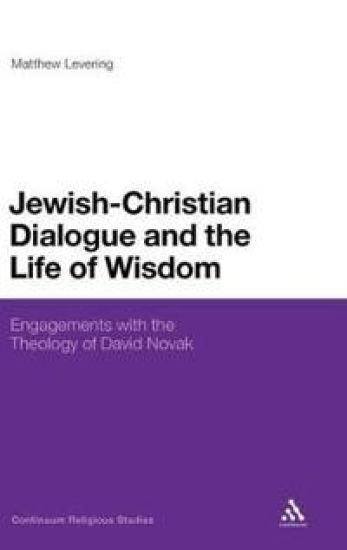
Jewish-Christian Dialogue and the Life of Wisdom

Jewish-Christian Dialogue and the Life of Wisdom

Matthew Levering

Continuum Publishing Corporation
2011
nidottu
This book inquires as to whether theological dialogue between Christians and Jews is possible, not only in itself but also as regards the emergence of communities of Messianic Judaism. In light of David Novak's insights, Matthew Levering proposes that Christian theological responses to supersessionism need to preserve both the Church's development of doctrine and Rabbinic Judaism's ability to define its own boundaries. The book undertakes constructive philosophical theology in dialogue with Novak. Exploring the interrelated doctrines of divine providence/theonomy, the image of God, and natural law, Levering places Novak's work in conversation especially with Thomas Aquinas, whose approach fosters a rich dialogue with Novak's broadly Maimonidean perspective. It focuses upon the relationship of human beings to the Creator, with attention to the philosophical entailments of Jewish and Christian covenantal commitments, aiming to spell out what true freedom involves. It concludes by asking whether Christians and Jews would do better to bracket our covenantal commitments in pursuing such wisdom. Drawing upon Novak's work, the author argues that in the face of suffering and death, God's covenantal election makes possible hope, lacking which the quest for wisdom runs aground.
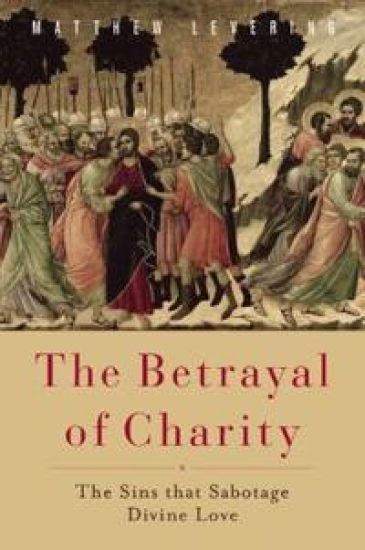
The Betrayal of Charity

The Betrayal of Charity

Matthew Levering

Baylor University Press
2011
nidottu
Love was at one time a powerfully unifying force among Christians. In his letters, Paul consistently evokes charity as the avenue to both human and divine communion. If the magnitude of charity was of the upmost importance to early Christians, so were those sins that aimed to distract Christians from acting based on love. Taking seriously the efforts of Paul, and later Thomas Aquinas, to expose and root out the sins against charity, Matthew Levering reclaims the centrality of love for moral, and in fact all, theology. As Levering argues, the practice of charity leads to inner joy and peace as well as outward mercy, good will, and unity with God and neighbor. The sins against charity - hatred, sloth, envy, discord and contention, schism, war and strife, and sedition and scandal - threaten love's concrete effects by rebelling against dependence on God and undermining interdependence on others. The Betrayal of Charity seriously considers the consequences of each of the sins against love, compelling individuals and communities to recognize their own loss of charity. In doing so, Levering fosters a spirit of restoration and reminds readers that love - not the sins against it - will have the last word.
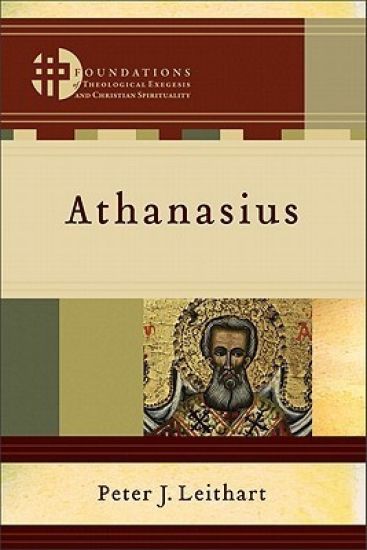
Athanasius

Athanasius

Peter J. Leithart; Hans Boersma; Matthew Levering

Baker Academic, Div of Baker Publishing Group
2011
nidottu
This volume by a respected theologian offers fresh consideration of the work of famous fourth-century church father Athanasius, giving specific attention to his use of Scripture, his deployment of metaphysical categories, and the intersection between the two. Peter Leithart not only introduces Athanasius and his biblical theology but also puts Athanasius into dialogue with contemporary theologians. This volume launches the series Foundations of Theological Exegesis and Christian Spirituality. Edited by Hans Boersma and Matthew Levering, the series critically recovers patristic exegesis and interpretation for contemporary theology and spirituality. Each volume covers a specific church father and illuminates the exegesis that undergirds the Nicene tradition. The series contributes to the growing area of theological interpretation and will appeal to both evangelical and Catholic readers.
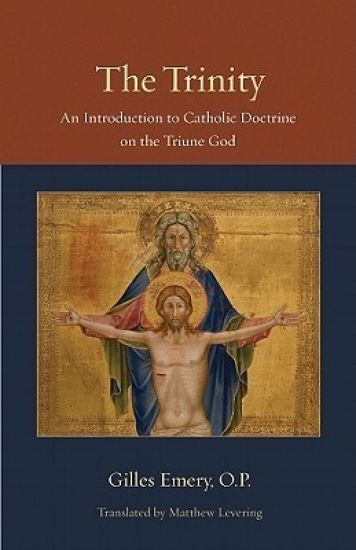
The Trinity

The Trinity

Gilles Emery; Matthew Levering

The Catholic University of America Press
2011
nidottu

Halvin toimitettuna 32,50 €

Representing the highest quality of scholarship, Gilles Emery offers a much-anticipated introduction to Catholic doctrine on the Trinity. His extensive research combined with lucid prose provides readers a resource to better understand the foundations of Trinitarian reflection. The book is addressed to all who wish to benefit from an initiation to Trinitarian doctrine. The path proposed by this introductory work comprises six steps. First the book indicates some liturgical and biblical ways for entering into Trinitarian faith. It then presents the revelation of the Father, Son, and Holy Spirit in the New Testament, by inviting the reader to reflect upon the signification of the word "God." Next it explores the confessions of Trinitarian faith, from the New Testament itself to the Creed of Constantinople, on which it offers a commentary. By emphasizing the Christian culture inherited from the fourth-century Fathers of the Church, the book presents the fundamental principles of Trinitarian doctrine, which find their summit in the Christian notion of "person." On these foundations, the heart of the book is a synthetic exposition of the persons of the Father, the Son, and the Holy Spirit in their divine being and mutual relations, and in their action for us. Finally, the last step takes up again the study of the creative and saving action of the Trinity: the book concludes with a doctrinal exposition of the "missions" of the Son and Holy Spirit, that is, the salvific sending of the Son and Holy Spirit that leads humankind to the contemplation of the Father.
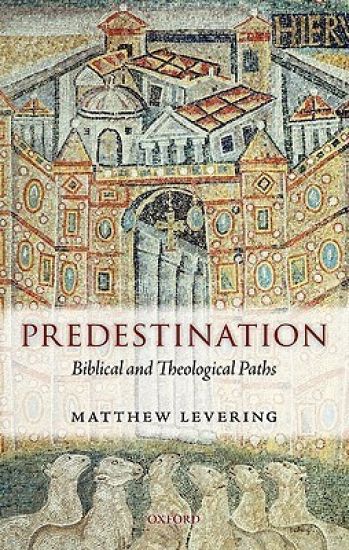
Predestination

Predestination

Matthew Levering

Oxford University Press
2011
sidottu
Predestination has been the subject of perennial controversy among Christians, although in recent years theologians have shied away from it as a divisive and unedifying topic. In this book Matthew Levering argues that Christian theological reflection needs to continue to return to the topic of predestination, for two reasons: Firstly, predestinarian doctrine is taught in the New Testament. Reflecting the importance of the topic in many strands of Second Temple Judaism, the New Testament authors teach predestination in a manner that explains why Christian theologians continually recur to this topic. Secondly, the doctrine of predestination provides a way for Christian theologians to reflect upon two fundamental affirmations of biblical revelation. The first is God's love, without any deficiency or crimp, for each and every rational creature; the second is that God from eternity brings about the purpose for which he created us, and that he permits some rational creatures freely and permanently to rebel against his love. When theologians reflect on these two key biblical affirmations, they generally try to unite them in a logical synthesis. Instead, Levering argues, it is necessary to allow for the truth of each side of the mystery, without trying to blend the two affirmations into one. Levering pairs his discussion of Scripture with ecumenically oriented discussion of the doctrine of predestination in through the ages through the figures of Origen, Augustine, Boethius, John of Damascus, Eriugena, Aquinas, Ockham, Catherine of Siena, Calvin, Molina, Francis de Sales, Leibniz, Bulgakov, Barth, Maritain, and Balthasar. He concludes with a constructive chapter regarding the future of the doctrine.
Jewish-Christian Dialogue and the Life of Wisdom

Jewish-Christian Dialogue and the Life of Wisdom

Matthew Levering

CONTINUUM PUBLISHING CORPORATION
2010
sidottu
This book inquires as to whether theological dialogue between Christians and Jews is possible, not only in itself but also as regards the emergence of communities of Messianic Judaism. In light of David Novak's insights, Matthew Levering proposes that Christian theological responses to supersessionism need to preserve both the Church's development of doctrine and Rabbinic Judaism's ability to define its own boundaries. The book undertakes constructive philosophical theology in dialogue with Novak. Exploring the interrelated doctrines of divine providence/theonomy, the image of God, and natural law, Levering places Novak's work in conversation especially with Thomas Aquinas, whose approach fosters a rich dialogue with Novak's broadly Maimonidean perspective. It focuses upon the relationship of human beings to the Creator, with attention to the philosophical entailments of Jewish and Christian covenantal commitments, aiming to spell out what true freedom involves. It concludes by asking whether Christians and Jews would do better to bracket our covenantal commitments in pursuing such wisdom. Drawing upon Novak's work, the author argues that in the face of suffering and death, God's covenantal election makes possible hope, lacking which the quest for wisdom runs aground.
Biblical Natural Law

Biblical Natural Law

Matthew Levering

Oxford University Press
2008
sidottu
Natural law theory is controversial today because it presumes that there is a stable 'human nature' that is subject to a 'law.' How do we know that 'human nature' is stable and not ever-evolving? How can we expect 'law' not to constrict human freedom and potential? Furthermore if there is a 'law,' there must be a lawgiver. Matthew Levering argues that natural law theory makes sense only within a broader worldview, and that the Bible sketches both such a persuasive worldview and an account of natural law that offers an exciting portrait of the moral life. To establish the relevance of biblical readings to the wider philosophical debate on natural law, this study offers an overview of modern natural law theories from Cicero to Nietzsche, which reverse the biblical portrait by placing human beings at the center of the moral universe. Whereas the biblical portrait of natural law is other-directed, ordered to self-giving love, the modern accounts turn inward upon the self. Drawing on the thought of St. Thomas Aquinas, Levering employs theological and philosophical investigation to achieve a contemporary doctrine of natural law that accords with the biblical witness to a loving Creator who draws human beings to share in the divine life. This book provides both an introduction to natural law theory and a compelling challenge to re-think current biblical scholarship on the topic.
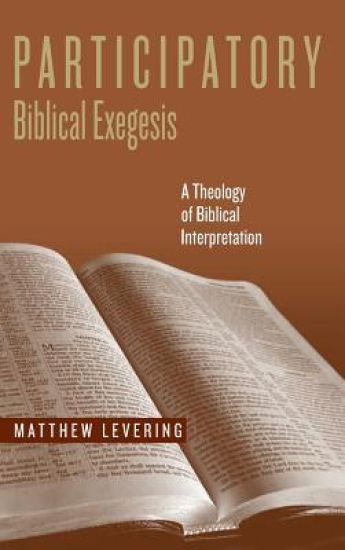
Participatory Biblical Exegesis

Participatory Biblical Exegesis

Matthew Levering

University of Notre Dame Press
2008
sidottu
The interpretation of Scripture has depended largely on the view of history held by theologians and exegetes. In Participatory Biblical Exegesis, Matthew Levering examines the changing views of history that distinguish patristic and medieval biblical exegesis from modern historical-critical exegesis. Levering argues for a delicate interpretive balance, in which history is understood both as a process that participates in God's creative and redemptive presence and as a set of linear moments. He identifies a split between theological and historical interpretations of scripture beginning in the high Middle Ages, considerably earlier than the emergence of historical-critical methods in the seventeenth and eighteenth centuries. Instead, he offers a vision of Scripture that is rooted in the exegetical practice of St. Thomas Aquinas and his sources but embraces historical-critical research as well. Participatory Biblical Exegesis provides an original theological basis for critical exegesis. It integrates the work of contemporary exegetes, philosophers, theologians, and historians to provide a compelling vision of biblical interpretation.
Participatory Biblical Exegesis

Participatory Biblical Exegesis

Matthew Levering

University of Notre Dame Press
2008
nidottu

Halvin toimitettuna 33,40 €

The interpretation of Scripture has depended largely on the view of history held by theologians and exegetes. In Participatory Biblical Exegesis, Matthew Levering examines the changing views of history that distinguish patristic and medieval biblical exegesis from modern historical-critical exegesis. Levering argues for a delicate interpretive balance, in which history is understood both as a process that participates in God's creative and redemptive presence and as a set of linear moments. He identifies a split between theological and historical interpretations of scripture beginning in the high Middle Ages, considerably earlier than the emergence of historical-critical methods in the seventeenth and eighteenth centuries. Instead, he offers a vision of Scripture that is rooted in the exegetical practice of St. Thomas Aquinas and his sources but embraces historical-critical research as well. Participatory Biblical Exegesis provides an original theological basis for critical exegesis. It integrates the work of contemporary exegetes, philosophers, theologians, and historians to provide a compelling vision of biblical interpretation.
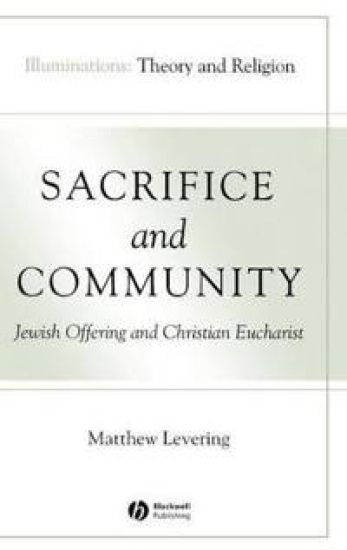
Sacrifice and Community

Sacrifice and Community

Matthew Levering

Wiley-Blackwell (an imprint of John Wiley Sons Ltd)
2005
sidottu
This book explores the character of the Eucharist as communion in and through sacrifice. It will stimulate discussion because of its controversial critique of the dominant paradigm for Eucharistic theology, its reclamation of St Thomas Aquinas’s theology of the Eucharist, and its response to Pope John Paul II’s Ecclesia de Eucharistia. Argues that the Eucharist cannot be separated from sacrifice, and rediscovers the biblical connections between sacrifice and communion. Timed to coincide with the Year of the Eucharist, proclaimed by Pope John Paul II. Reclaims the riches of St Thomas Aquinas’s theology of the Eucharist, which had recently been reduced to a metaphysical defence of transubstantiation.
Sacrifice and Community

Sacrifice and Community

Matthew Levering

Wiley-Blackwell (an imprint of John Wiley Sons Ltd)
2005
nidottu
This book explores the character of the Eucharist as communion in and through sacrifice. It will stimulate discussion because of its controversial critique of the dominant paradigm for Eucharistic theology, its reclamation of St Thomas Aquinas’s theology of the Eucharist, and its response to Pope John Paul II’s Ecclesia de Eucharistia. Argues that the Eucharist cannot be separated from sacrifice, and rediscovers the biblical connections between sacrifice and communion. Timed to coincide with the Year of the Eucharist, proclaimed by Pope John Paul II. Reclaims the riches of St Thomas Aquinas’s theology of the Eucharist, which had recently been reduced to a metaphysical defence of transubstantiation.
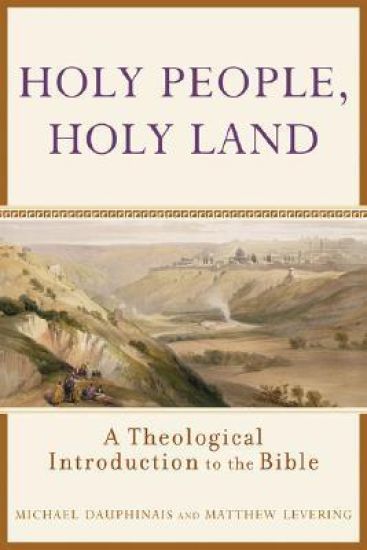
Holy People, Holy Land – A Theological Introduction to the Bible

Holy People, Holy Land – A Theological Introduction to the Bible

Michael Dauphinais; Matthew Levering

Brazos Press, Div of Baker Publishing Group
2005
nidottu
The Bible doesn't come with a secret decoder ring, which means that it is left to church theologians to make sense of the Bible's many intricate and overlapping themes. Over the centuries, the church has identified several themes--such as love and covenant--that have helped the faithful to better understand a sometimes bewildering book. In Holy People, Holy Land, authors Dauphinais and Levering make the case that holiness--which they define as communion with God through love of neighbor--is the central theme of Scripture. Holy People, Holy Land will give any reader the tools to better understand Scripture by showing how a holy God desires to recreate his children in his image so that they too can be holy.
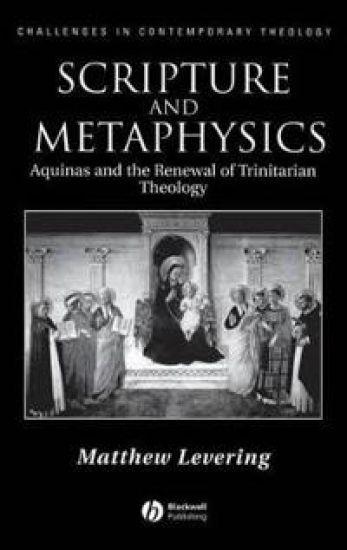
Scripture and Metaphysics

Scripture and Metaphysics

Matthew Levering

Wiley-Blackwell (an imprint of John Wiley Sons Ltd)
2004
sidottu
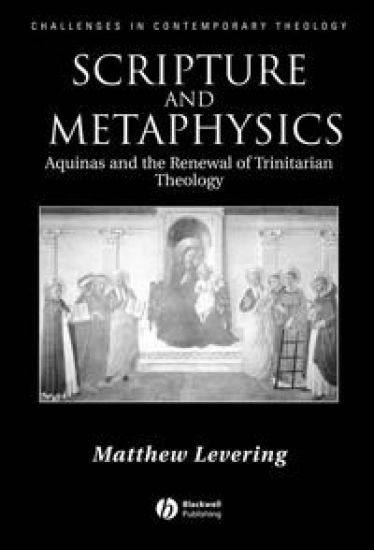
This book makes a major contribution to contemporary theological and philosophical debates, bridging scriptural and metaphysical approaches to the triune God. Bridges the gap between scriptural and metaphysical approaches to biblical narratives. Retrieves Aquinas’s understanding of theology as contemplative wisdom. Structured around Aquinas’s treatise on the triune God in his ‘Summa Theologiae’. Argues that intellectual contemplation is part of a broader spiritual journey towards a better understanding of God. Contributes to the current resurgence of Thomistic theology in both Protestant and Catholic circles.
Scripture and Metaphysics

Scripture and Metaphysics

Matthew Levering

Wiley-Blackwell (an imprint of John Wiley Sons Ltd)
2004
nidottu
This book makes a major contribution to contemporary theological and philosophical debates, bridging scriptural and metaphysical approaches to the triune God. Bridges the gap between scriptural and metaphysical approaches to biblical narratives. Retrieves Aquinas’s understanding of theology as contemplative wisdom. Structured around Aquinas’s treatise on the triune God in his ‘Summa Theologiae’. Argues that intellectual contemplation is part of a broader spiritual journey towards a better understanding of God. Contributes to the current resurgence of Thomistic theology in both Protestant and Catholic circles.
Knowing the Love of Christ

Knowing the Love of Christ

Michael Dauphinais; Matthew Levering

University of Notre Dame Press
2002
nidottu
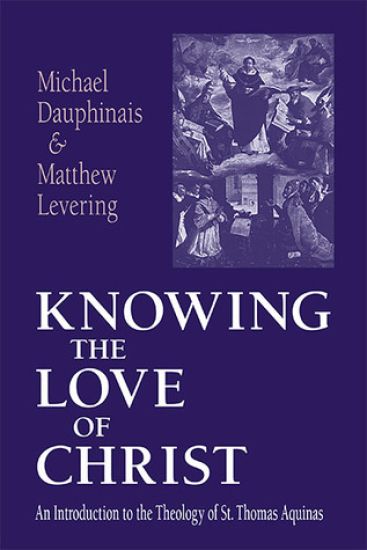
Knowing the Love of Christ provides a thorough introduction to the theology of St. Thomas Aquinas in accessible language. As a complement to the many short introductions to St. Thomas's philosophy, this book fills a gap in the literature on Thomas—a comprehensive introduction to his thought written by theologians. With enthusiasm and insight, Michael Dauphinais and Matthew Levering make available the vast theology of Thomas Aquinas. Focusing upon the Summa Theologiae, Dauphinais and Levering illumine the profoundly biblical foundations of Thomas's powerful vision of reality. Drawing upon their own experience, the authors guide readers into grappling with the fresh and penetrating insights of St. Thomas. Students at all stages of theological education will find this book an enriching introduction to the mysteries of the Christian faith.
Christ's Fulfillment of Torah and Temple

Christ's Fulfillment of Torah and Temple

Matthew Levering

University of Notre Dame Press
2002
sidottu
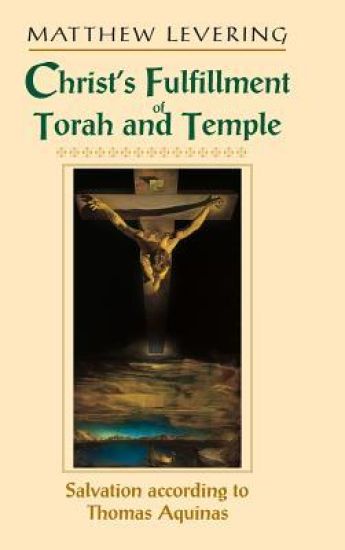
Christ's Fulfillment of Torah and Temple is a concise introduction to the Christian theology of salvation in light of the contributions of Thomas Aquinas. In this cogent study, Matthew Levering identifies six important aspects of soteriology, each of which corresponds to an individual chapter in the book. Levering focuses on human history understood in light of the divine law and covenants, Jesus the Incarnate Son of God and Messiah of Israel, Jesus' cross, transformation in the image of God, the Mystical Body of Christ into which all human beings are called, and eternal life. Taking the doctrines of faith as his starting point, Levering's objective is to answer the questions of both Christians and non-Christians who desire to learn how and for what end Jesus "saves" humankind. Levering's work also speaks directly to contemporary systematic theologians. In contrast to widespread assumptions that Aquinas's theology of salvation is overly abstract or juridical, Levering demonstrates that Aquinas's theology of salvation flows from his reading of Scripture and deserves a central place in contemporary discussions. Thomas Aquinas's theology of salvation employs and develops the concepts of satisfaction and merit in light of his theology of the Old Testament. For Aquinas, Christ fulfills Israel's Torah and Temple, law and liturgy. These two aspects of Israel's religion provide the central categories for understanding salvation. The Torah expresses God's Wisdom, incarnated in Jesus Christ. Christ's passion, then, fulfills and transforms the moral, juridical, and ceremonial precepts of the Torah, which correspond to the three "offices" of ancient Israel—prophet, king, and priest. The New Law in Christ Jesus is also the fulfillment of the Temple, Israel's worship. Christ offers the Father the perfect worship, participated in by all members of his Mystical Body through faith, charity, and the sacraments. Old Law and New Law are fulfilled in the perfect knowing and loving (perfect law and liturgy) of eternal life, the Heavenly Jerusalem. As a Thomistic contribution to contemporary theology, this fruitful study develops a theology of salvation in accord with contemporary canonical readings of Scripture and with the teachings of the Second Vatican Council on the fulfillment and permanence of God's covenants.
Christ's Fulfillment of Torah and Temple

Christ's Fulfillment of Torah and Temple

Matthew Levering

University of Notre Dame Press
2002
nidottu
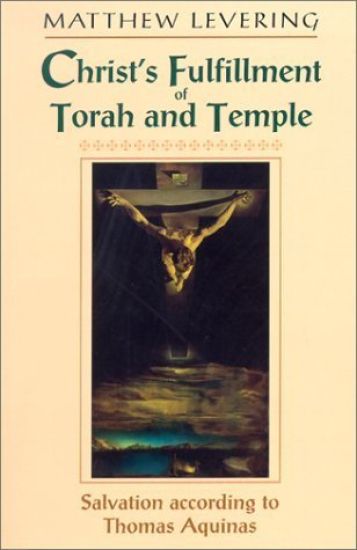
Christ's Fulfillment of Torah and Temple is a concise introduction to the Christian theology of salvation in light of the contributions of Thomas Aquinas. In this cogent study, Matthew Levering identifies six important aspects of soteriology, each of which corresponds to an individual chapter in the book. Levering focuses on human history understood in light of the divine law and covenants, Jesus the Incarnate Son of God and Messiah of Israel, Jesus' cross, transformation in the image of God, the Mystical Body of Christ into which all human beings are called, and eternal life. Taking the doctrines of faith as his starting point, Levering's objective is to answer the questions of both Christians and non-Christians who desire to learn how and for what end Jesus "saves" humankind. Levering's work also speaks directly to contemporary systematic theologians. In contrast to widespread assumptions that Aquinas's theology of salvation is overly abstract or juridical, Levering demonstrates that Aquinas's theology of salvation flows from his reading of Scripture and deserves a central place in contemporary discussions. Thomas Aquinas's theology of salvation employs and develops the concepts of satisfaction and merit in light of his theology of the Old Testament. For Aquinas, Christ fulfills Israel's Torah and Temple, law and liturgy. These two aspects of Israel's religion provide the central categories for understanding salvation. The Torah expresses God's Wisdom, incarnated in Jesus Christ. Christ's passion, then, fulfills and transforms the moral, juridical, and ceremonial precepts of the Torah, which correspond to the three "offices" of ancient Israel—prophet, king, and priest. The New Law in Christ Jesus is also the fulfillment of the Temple, Israel's worship. Christ offers the Father the perfect worship, participated in by all members of his Mystical Body through faith, charity, and the sacraments. Old Law and New Law are fulfilled in the perfect knowing and loving (perfect law and liturgy) of eternal life, the Heavenly Jerusalem. As a Thomistic contribution to contemporary theology, this fruitful study develops a theology of salvation in accord with contemporary canonical readings of Scripture and with the teachings of the Second Vatican Council on the fulfillment and permanence of God's covenants.