Kirjojen hintavertailu – 12 903 725 kirjaa ja 27 kauppaa

Kirjailija

Maurice Blanchot

Kirjat ja teokset yhdessä paikassa: 54 kirjaa, julkaisuja vuosilta 1987–2026, suosituimpiin kuuluu Vicious Circles. Vertaile teosten hintoja ja tarkista saatavuus suomalaisista kirjakaupoista.

54 kirjaa

Kirjojen julkaisuvuodet: 1987–2026.

Die uneingestehbare Gemeinschaft

Die uneingestehbare Gemeinschaft

Maurice Blanchot

Matthes Seitz Verlag
2015
nidottu
Die "Gemeinschaft" wird in modernen Gesellschaften entweder nostalgisch beschworen oder als endgültiger Verlust beklagt. Was aber ist unter "Gemeinschaft" zu verstehen? Blanchot geht dieser Frage nach und errichtet die Idee einer Gemeinschaft äußersten Anspruchs, die immer schon zum Scheitern verurteilt war.
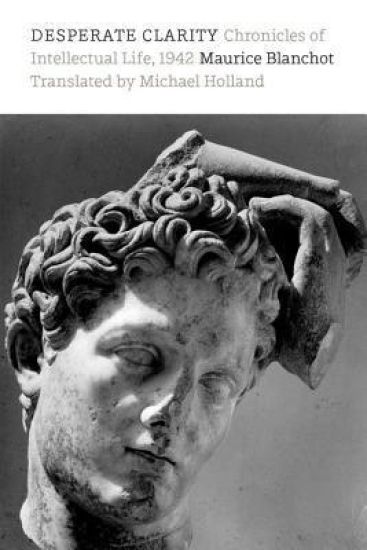
Desperate Clarity

Desperate Clarity

Maurice Blanchot

Fordham University Press
2013
sidottu
These articles gradually outline a practical project that both looks back to the radical artistic doctrines of the late nineteenth and early twentieth centuries and anticipates the most original developments in the postwar era, among writers such as Robbe-Grillet, Butor, Sarraute, and Duras, not to mention Blanchot himself. In addition Blanchot is receptive in his weekly column to the extraordinarily wide range of original writing and thinking that was produced during the dark years of occupation, in areas such as psychology, anthropology, ancient history, linguistics, and philosophy. A highly original doctrine of writing can be seen to develop in which, thanks to the desperate clarity with which Blanchot's mind accepts and advances into what he sees as absolute and irrevocable disaster, thought is carefully and systematically deflected away from any sort of nihilism, thanks to a new relationship between reason, with its unitary subject, and the otherness to which imagination offers access.
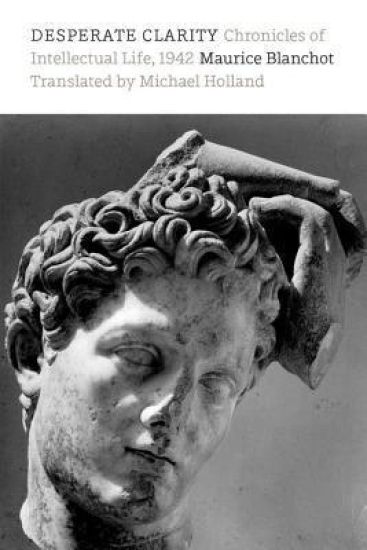
Desperate Clarity

Desperate Clarity

Maurice Blanchot

Fordham University Press
2013
pokkari
These articles gradually outline a practical project that both looks back to the radical artistic doctrines of the late nineteenth and early twentieth centuries and anticipates the most original developments in the postwar era, among writers such as Robbe-Grillet, Butor, Sarraute, and Duras, not to mention Blanchot himself. In addition Blanchot is receptive in his weekly column to the extraordinarily wide range of original writing and thinking that was produced during the dark years of occupation, in areas such as psychology, anthropology, ancient history, linguistics, and philosophy. A highly original doctrine of writing can be seen to develop in which, thanks to the desperate clarity with which Blanchot's mind accepts and advances into what he sees as absolute and irrevocable disaster, thought is carefully and systematically deflected away from any sort of nihilism, thanks to a new relationship between reason, with its unitary subject, and the otherness to which imagination offers access.
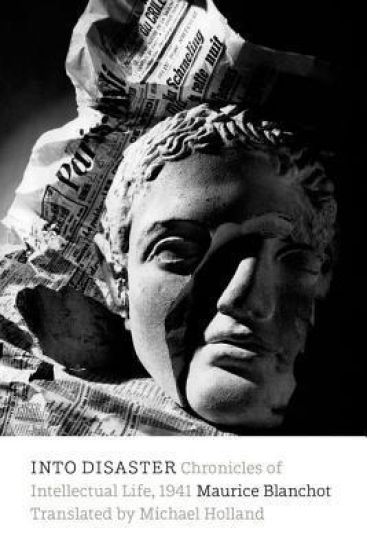
Into Disaster

Into Disaster

Maurice Blanchot

Fordham University Press
2013
sidottu
The German occupation of France put an end to Maurice Blanchot's career as a political journalist. In April 1941, he began to publish a weekly column of literary criticism in the Journal des Débats, which became the source for his first critical work, Faux pas (1943). As well as providing a unique perspective on cultural life during the occupation, these pieces offer crucial insights into the mind and art of a writer who was to become one of the most influential figures on the French literary scene in the second half of the twentieth century. In addition to laying the basis for the career of one France's most original writers and thinkers, these articles offer a reminder that Blanchot's political awareness remains undimmed, through clear if sometimes coded acts of criticism or defiance of the prevailing order.
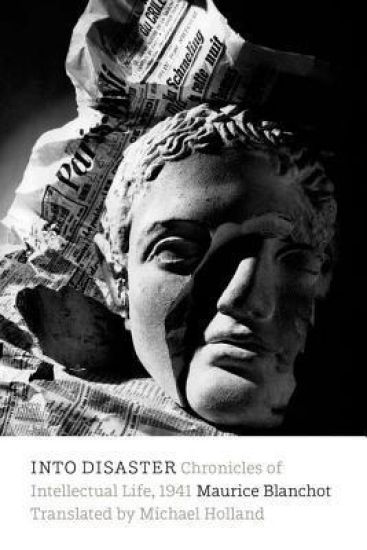
Into Disaster

Into Disaster

Maurice Blanchot

Fordham University Press
2013
pokkari
The German occupation of France put an end to Maurice Blanchot's career as a political journalist. In April 1941, he began to publish a weekly column of literary criticism in the Journal des Débats, which became the source for his first critical work, Faux pas (1943). As well as providing a unique perspective on cultural life during the occupation, these pieces offer crucial insights into the mind and art of a writer who was to become one of the most influential figures on the French literary scene in the second half of the twentieth century. In addition to laying the basis for the career of one France's most original writers and thinkers, these articles offer a reminder that Blanchot's political awareness remains undimmed, through clear if sometimes coded acts of criticism or defiance of the prevailing order.
Political Writings, 1953-1993

Political Writings, 1953-1993

Maurice Blanchot; Kevin Hart

Fordham University Press
2010
pokkari

Halvin toimitettuna 46,70 €

Maurice Blanchot is a towering yet enigmatic figure in twentieth-century French thought. A lifelong friend of Levinas, he had a major influence on Foucault, Derrida, Nancy, and many others. Both his fiction and his criticism played a determining role in how postwar French philosophy was written, especially in its intense concern with the question of writing as such. Never an academic, he published most of his critical work in periodicals and led a highly private life. Yet his writing included an often underestimated public and political dimension. This posthumously published volume collects his political writings from 1953 to 1993, from the French-Algerian War and the mass movements of May 1968 to postwar debates about the Shoah and beyond. A large number of the essays, letters, and fragments it contains were written anonymously and signed collectively, often in response to current events. The extensive editorial work done for the original French edition makes a major contribution to our understanding of Blanchot's work. The political stances Blanchot adopts are always complicated by the possibility that political thought remains forever to be discovered. He reminds us throughout his writings both how facile and how hard it is to refuse established forms of authority. The topics he addresses range from the right to insubordination in the French-Algerian War to the construction of the Berlin Wall and repression in Eastern Europe; from the mass movements of 1968 to personal responses to revelations about Heidegger, Levinas, and Robert Antelme, among others. When read together, these pieces form a testament to what political writing could be: not merely writing about the political or politicizing the written word, but unalterably transforming the singular authority of the writer and his signature. Cet ouvrage, publiÉ dans le cadre d'un programme d'aide À la publication bÉnÉficie du soutien financier du ministÈre des Affaires ÉtrangÈs et du Service culturel de l'ambassade de France aux Etats-Unis, ainsi que de l'appui de FACE (French American Cultural Exchange). This work, published as part of a program providing publication assistance, received financial support from the Cultural Services of the French Embassy in the United States and FACE (French American Cultural Exchange).
Political Writings, 1953-1993

Political Writings, 1953-1993

Maurice Blanchot; Kevin Hart

Fordham University Press
2010
sidottu
Maurice Blanchot is a towering yet enigmatic figure in twentieth-century French thought. A lifelong friend of Levinas, he had a major influence on Foucault, Derrida, Nancy, and many others. Both his fiction and his criticism played a determining role in how postwar French philosophy was written, especially in its intense concern with the question of writing as such. Never an academic, he published most of his critical work in periodicals and led a highly private life. Yet his writing included an often underestimated public and political dimension. This posthumously published volume collects his political writings from 1953 to 1993, from the French-Algerian War and the mass movements of May 1968 to postwar debates about the Shoah and beyond. A large number of the essays, letters, and fragments it contains were written anonymously and signed collectively, often in response to current events. The extensive editorial work done for the original French edition makes a major contribution to our understanding of Blanchot's work. The political stances Blanchot adopts are always complicated by the possibility that political thought remains forever to be discovered. He reminds us throughout his writings both how facile and how hard it is to refuse established forms of authority. The topics he addresses range from the right to insubordination in the French-Algerian War to the construction of the Berlin Wall and repression in Eastern Europe; from the mass movements of 1968 to personal responses to revelations about Heidegger, Levinas, and Robert Antelme, among others. When read together, these pieces form a testament to what political writing could be: not merely writing about the political or politicizing the written word, but unalterably transforming the singular authority of the writer and his signature. Cet ouvrage, publiÉ dans le cadre d'un programme d'aide À la publication bÉnÉficie du soutien financier du ministÈre des Affaires ÉtrangÈs et du Service culturel de l'ambassade de France aux Etats-Unis, ainsi que de l'appui de FACE (French American Cultural Exchange). This work, published as part of a program providing publication assistance, received financial support from the Cultural Services of the French Embassy in the United States and FACE (French American Cultural Exchange).
Katastrofens skrift

Katastrofens skrift

Maurice Blanchot

Bokförlaget Daidalos
2008
nidottu
Maurice Blanchots (1907-2003) filosofiska verk är förhållandevis okända i Sverige, trots att ett flertal kända franska filosofer har tagit djupa intryck av honom. I hans egen generation gäller det Levinas och Bataille och i den poststrukturalistiska generationen Derrida, Foucault, Lyotard, Deleuze m.fl. Själv har han förblivit i bakgrunden, men hans språkliga experiment har varit en resonansbotten för hela den postmoderna litteraturen. Katastrofens skrift, som utkom 1980, baseras på tidigare utgivna fragmentsamlingar och blev Blanchots sista större bok, ett slags testamente, som förenar meditationer över Förintelsen med meditationer över livets grundvillkor, över skrivandet, döden och döendet. Katastrofens skrift rör sig labyrintiskt och kryptiskt i vindlingar som försvinner och återkommer. Metoden är fragmentarisk. Teman dyker upp och försvinner utan att anledningen sägs. De insikter som ska uttryckas kräver fragmentets och antydningens form snarare än systematiska redogörelser. Blanchot står här i en lång tradition av öppning mot det dunkla, svårutsagda, mystiska - från Herakleitos till romantikerna och vidare till Nietzsche. Katastrofen och dess variantbegrepp - döendet, det fragmentariska, utsidan, det neutrala, det passiva - hänvisar både till en erosion inom jaget utan jag och till ett mötets och ansvarets förstärkande av det avstånd som skiljer jaget från den Andre. Katastrofen är det allt skingrande. »Katastof» (désastre) i titeln är hämtat från Mallarmés diktrad om Edgar Allan Poes, och poesins, gravsten (»Calme bloc ici-bas chu d'un désastre obscur»), medan écriture är en omöversättning av Heideggers Dichtung. Dichtung handlar om konstnärens möjlighet att göra sig till ett medium för Varat. Écriture är Blanchots ord för en i grunden paradoxal process genom vilken den skrivande själv går under och »blir ingen». Katastrofen förbinder Blanchot med Förintelsen som leder honom både in mot den judiska traditionen och utöver den, till reflektioner över Förintelsen som en »historiens absoluta händelse». Maurice Blanchot började efter studier i filosofi och tyska i Strassbourg att arbeta som journalist i början av 30-talet. Han skrev för den högerradikala pressen. Nationalsocialismen blev emellertid för honom en vändpunkt. Till följd av lyckliga omständigheter undgick han exekution av tyska soldater 1944. Efter andra världskriget etablerade sig Blanchot som en inflytelserik kritiker och politiskt understödde han Algeriets frigörelsekamp. Hans första roman, Thomas l'obscur, utkom 1941 - även om sådana traditionella genrekriterier inte passar denna eller hans senare litterära texter.
Pratmakeren

Pratmakeren

Louis-René Des Forêts; Maurice Blanchot

Bokvennen
2007
sidottu
Gradvis blir leseren klar over at pratmakeren ikke eksisterer, tomsnakket har ikke noe innhold. Fraværende fra teksten, som forfatteren er det, står leseren fram som en pratmaker, selvbedrager og forbruker av det tomme ord. Ubemerket ved utgivelsen fikk "Pratmakeren" stor betydning for absurdistene og de sentrale forfatterne av nyromanen. Etterordet består av Maurice Blanchots essay "Det fåfengte ordet".
Dødsdommen

Dødsdommen

Maurice Blanchot

Bokvennen
2007
nidottu
Handlingen i romanen er lagt til tiden rundt utbruddet av annen verdenskrig, med en generell krisestemning som bakgrunn. Den mannlige hovedpersonen forteller om sitt forhold til to forskjellige kvinner, den dødssyke J. og den fjerne, utilnærmelige N. Romanens tema er døden.
A Voice from Elsewhere

A Voice from Elsewhere

Maurice Blanchot

State University of New York Press
2007
pokkari
Reflections on the enigma and secret of "literature." A Voice from Elsewhere represents one of Maurice Blanchot's most important reflections on the enigma and secret of "literature." The essays here bear down on the necessity and impossibility of witnessing what literature transmits, and-like Beckett and Kafka-on what one might call the "default" of language, the tenuous border that binds writing and silence to each other. In addition to considerations of René Char, Paul Celan, and Michel Foucault, Blanchot offers a sustained encounter with the poems of Louis-René des Forêts and, throughout, a unique and important concentration on music-on the lyre and the lyric, meter and measure-which poetry in particular brings before us.
UNAVOWABLE COMMUNITY

UNAVOWABLE COMMUNITY

Maurice Blanchot

Barrytown Ltd ,U.S.
2006
nidottu
The Unavowable Community is an inquiry into the nature and possibility of community, asking whether there can be a community of individuals that is truly “communal.” The problem, for Blanchot, is that the very terms of an ideal community make an “avowal” of membership in it a violation of the terms themselves. This meditation ranges from the problematic effects of a defect in language to actual historical experiments in community. The latter involves the life and work of George Bataille whose concerns (e.g. “the negative community”) occupy the foreground of Blanchot’s discussion. Taking as his point of departure an essay by French philosopher Jean-Luc Nancy, Blanchot appears once again as one of the most attentive readers of what is truly challenging in French thought. His deep interest in the fiction of Marguerite Duras extends this inquiry to include “The Community of Lovers,” emerging from certain themes in Duras’ recit, The Malady of Death. As Blanchot’s first direct treatment of a subject that has long figured in or behind his work, this small but highly concentrated book stands as an important addition to his own contribution to literary, philosophical, social, and political thought, figuring as it does at the center of the emerging concern for a redefinition of politics and community. Readers of Blanchot know not to expect answers to the great questions that move his thought – rather, to live with the questions at the new level to which they have been raised in his discourse.
Lautréamont and Sade

Lautréamont and Sade

Maurice Blanchot

Stanford University Press
2004
pokkari
In Lautréamont and Sade, originally published in 1949, Maurice Blanchot forcefully distinguishes his critical project from the major intellectual currents of his day, surrealism and existentialism. Today, Lautréamont and Sade, these unique figures in the histories of literature and thought, are as crucially relevant to theorists of language, reason, and cruelty as they were in post-war Paris. "Sade's Reason," in part a review of Pierre Klossowski's Sade, My Neighbor, was first published in Les Temps modernes. Blanchot offers Sade's reason, a corrosive rational unreasoning, apathetic before the cruelty of the passions, as a response to Sartre's Hegelian politics of commitment. "The Experience of Lautréamont," Blanchot's longest sustained essay, pursues the dark logic of Maldoror through the circular gravitation of its themes, the grinding of its images, its repetitive and transformative use of language, and the obsessive metamorphosis of its motifs. Blanchot's Lautréamont emerges through this search for experience in the relentless unfolding of language. This treatment of the experience of Lautréamont unmistakably alludes to Georges Bataille's "inner experience." Republishing the work in 1963, Blanchot prefaced it with an essay distinguishing his critical practice from that of Heidegger.
The Book to Come

The Book to Come

Maurice Blanchot

Stanford University Press
2002
sidottu
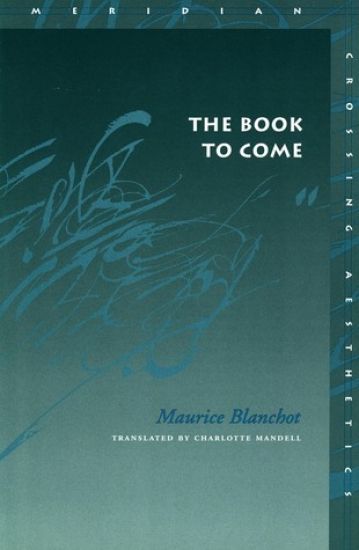
During the last half of the twentieth century in France, Maurice Blanchot was a key figure in exploring the relation between literature and philosophy. He developed early on a distinctive, limpid form of essay writing, and his essays, in form and substance, left their unmistakable imprint on the work of the most distinguished French theorists. The writings of Barthes, Foucault, and Derrida, for example, are hardly imaginable without Blanchot. The Book to Come gathers together essays originally published in La Nouvelle Revue Française; almost all of them appear in English for the first time. Not a random collection of essays, this book is organized into four sections: "the secret of literature"; literature as exigence and as meaning; literature and the novel; and the future of writing and of the book. The authors discussed constitute a veritable repertoire: Rousseau, Proust, Artaud, Brach, Musil, James, Beckett, Bataille, Mallarmé, Joubert, and Claudel, among others.
The Book to Come

The Book to Come

Maurice Blanchot

Stanford University Press
2002
pokkari

Halvin toimitettuna 33,40 €

During the last half of the twentieth century in France, Maurice Blanchot was a key figure in exploring the relation between literature and philosophy. He developed early on a distinctive, limpid form of essay writing, and his essays, in form and substance, left their unmistakable imprint on the work of the most distinguished French theorists. The writings of Barthes, Foucault, and Derrida, for example, are hardly imaginable without Blanchot. The Book to Come gathers together essays originally published in La Nouvelle Revue Française; almost all of them appear in English for the first time. Not a random collection of essays, this book is organized into four sections: "the secret of literature"; literature as exigence and as meaning; literature and the novel; and the future of writing and of the book. The authors discussed constitute a veritable repertoire: Rousseau, Proust, Artaud, Brach, Musil, James, Beckett, Bataille, Mallarmé, Joubert, and Claudel, among others.
Aminadab

Aminadab

Maurice Blanchot

University of Nebraska Press
2002
pokkari
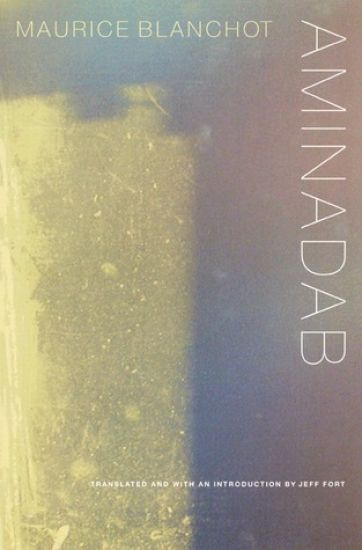
The world of Aminadab, Maurice Blanchot's second novel, is dark, bizarre, and fantastic. Reminiscent of Kafka's enclosed and allegorical spaces, Aminadab is both a reconstruction and a deconstruction of power, authority, and hierarchy. The novel opens when Thomas, upon seeing a woman gesture to him from a window of a large boarding house, enters the building and slowly becomes embroiled in its inscrutable workings. Although Thomas is constantly reassured that he can leave the building, he seems to be separated forever from the world he has left behind. The story consists of Thomas's frustrated attempts to clarify his status as a resident in the building and his misguided interactions with the cast of sickly, depraved, or in some way deformed characters he meets, none of them ever quite what they seem to be. Aminadab, the man who according to legend guards the entrance to the building's underground spaces, is only one of the mysteries reified by the rumors circulating among the residents. Written in a prose that is classical and at times lyrical, Blanchot's novel functions as an allegory referring, above all, to the wandering and striving movement of writing itself.
Faux Pas

Faux Pas

Maurice Blanchot

Stanford University Press
2002
sidottu
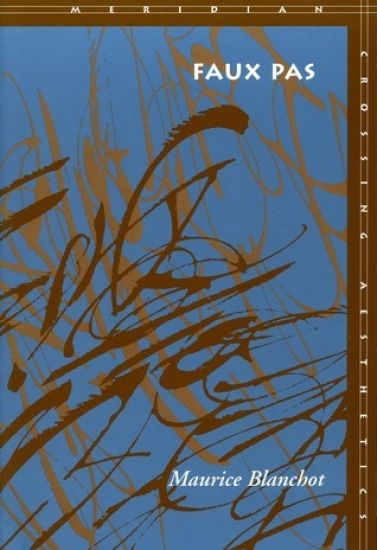
Published in France in 1943, Faux Pas is the first collection of Maurice Blanchot's essays on literature and language, consisting of fifty-four short pieces that were originally issued as reviews in literary journals, and one long introductory meditation that defines the trajectory of the whole volume. These essays—like those collected in the other five books of criticism published over several decades—have established Blanchot as the most lucid and powerful French critic of the second half of the twentieth century. Sober reconstructions of the main tenets of both classical and modern, both literary and theoretical texts, they have attained the status of model readings for authors as diverse as da Vinci and Kierkegaard, Melville and Proust, Molière, Goethe, and Mallarmé. However, the book is not a miscellaneous collection of exquisite essays. The first section of the volume, "From Anguish to Language," indicates the relative unity of its trajectory and its special moment in the development of Blanchot's thought. "Anguish" was a prominent notion for the existentialist philosophies of the period of his first work, and in this book Blanchot reflects on the necessary transition from the paradoxes of anguish to a focus on the paradoxes of language. He does so without ever betraying the affective tensions that attach themselves to linguistic utterances, but he also insists that the pathos of anxiety is, in the last resort, comical. Whoever writes "I am lonely" can judge himself to be quite comical, as he evokes his solitude by addressing a reader and using means that make it impossible to be alone. This comedy of language is retraced in Blanchot's intensely luminous essays on poetry and narration, on silence and symbolism, the novel and morals, the stranger, the enigma, time, and the very possibility of literature in the works of Blake, Balzac, Rimbaud, and Gide, Bergson and Brice Parain, Rilke and Bataille, Sartre, Camus, Queneau, and so many others.

Death Sentence

Death Sentence

Maurice Blanchot

Barrytown Ltd ,U.S.
1998
nidottu
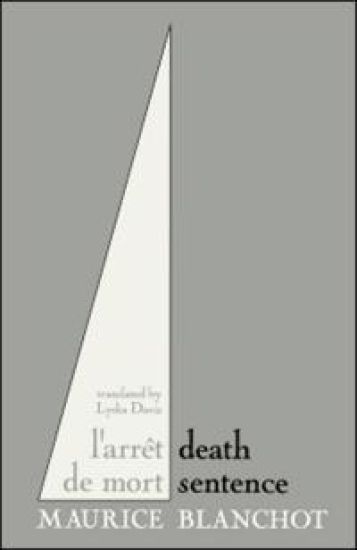
This long awaited reprint of a book about which John Hollander wrote: "A masterful version of one of the most remarkable novels in any language since World War II," is the story of the narrator's relations with two women, one terminally ill, the other found motionless by him in a darkened room after a bomb explosion has separated them. "Through more than 40 years, the French writer Maurice Blanchot has produced an astonishing body of fiction and criticism," writes Gilbert Sorrentino in the New York Review of Books," and John Updike in The New Yorker: "Blanchot's prose gives an impression, like Henry James, of carrying meanings so fragile they might crumble in transit."
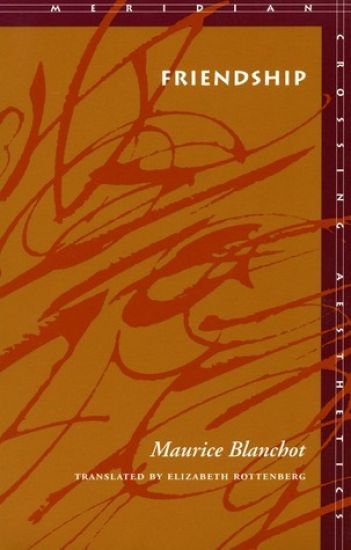
Friendship

Friendship

Maurice Blanchot

Stanford University Press
1997
sidottu
For the past half century, Maurice Blanchot has been an extraordinarily influential figure on the French literary and cultural scene. He is arguably the key figure after Sartre in exploring the relation between literature and philosophy. This collection of 29 critical essays and reviews on art, politics, literature, and philosophy documents the wide range of Blanchot's interests, from the enigmatic paintings in the Lascaux caves to the atomic era. Essays are devoted to works of fiction (Louis-René des Forêts, Pierre Klossowski, Roger Laporte, Marguerite Duras), to autobiographies or testimonies (Michel Leiris, Robert Antelme, André Gorz, Franz Kafka), or to authors who are more than ever contemporary (Jean Paulhan, Albert Camus). Several essays focus on questions of Judaism, as expressed in the works of Edmond Jabès, Emmanuel Levinas, and Martin Buber. Among the other topics covered are André Malraux's "imaginary museum," the Pléiade Encyclopedia project of Raymond Queneau, paperback publishing, the work of Claude Lévi-Strauss, Benjamin's "Task of the Translator," Marx and communism, writings on the Holocaust, and the difference between art and writing. The book concludes with an eloquent invocation to friendship on the occasion of the death of Georges Bataille.