
Kirjailija
Michael Bright
Kirjat ja teokset yhdessä paikassa: 48 kirjaa, julkaisuja vuosilta 1995–2027, suosituimpiin kuuluu Early Life on Earth. Vertaile teosten hintoja ja tarkista saatavuus suomalaisista kirjakaupoista.
48 kirjaa
Kirjojen julkaisuvuodet: 1995–2027.
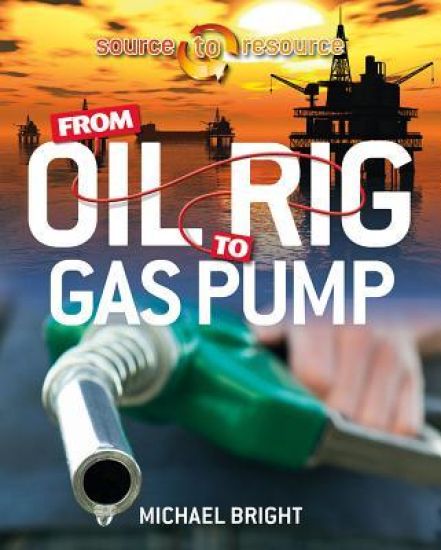
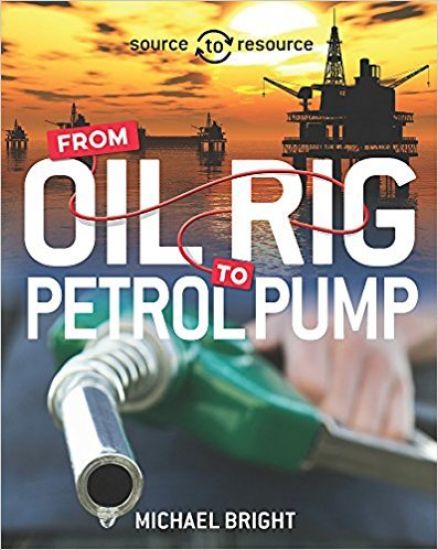
The vast majority of today's transport depends on fuel that comes from oil. Hundreds of thousands of items we use every day - from trainers to medicines - come from or use products that come from oil. But where does oil come from - and what happens when this ancient resource runs out? Oil is one of the most important resources to man today. It was discovered many thousands of years ago and has become central to the transport and petrochemical industries. Find out about the origins of oil - from its first discovery to its first use in industry. Learn how it is found, mined and processed into many different products that are used all over the world today - including petrol that we fill our cars with each day. Finally, consider the disasters that have resulted from the drilling, transportation and use of oil, as well as its future: what will happen when the oil finally runs out? We look at the advantages and disadvantages of oil, and the possible industry alternatives. Source to Resource is an incredibly valuable series in today's fast-paced world where natural resources are in such constant demand. Many people don't stop to think about where these resources come from and the journey they take from the raw material or element to the useful product that reaches us at home, school or work. Source to Resource provides that information as well as the chance to stop and think about our use of resources and the implications of the use of these for future generations. Other titles in the Source To Resource series include:From Field to PlateFrom Raindrop to Tap From Sunshine to Light Bulb
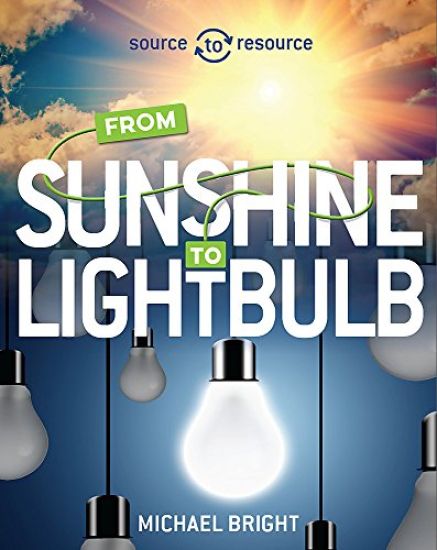
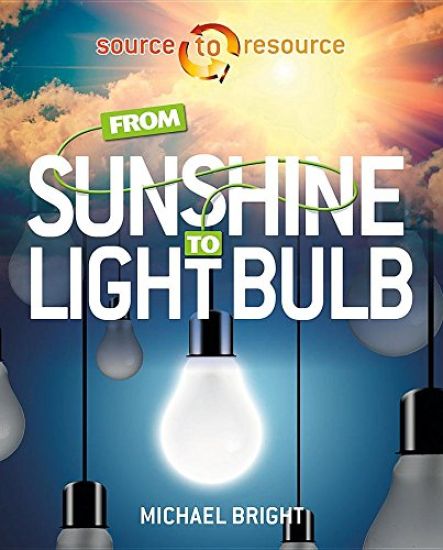
What happens when you switch a lightswitch? Or the power button on the TV? Electricity flows to the device and it switches on. Most of us use electrical gadgets all day, every day, without thinking about it. But where does electricity come from? Solar power is one of the most exciting forms of renewable energy today. From the powerful solar rays to the bright light bulbs being switched on all over the world, we follow the journey from the source to the resource. We look at other sources of energy, how the national grid works to move electricity across land and sea, and how it is fed into our homes. Home electricity is not the only use for solar power, so we look at solar farms, solar furnaces, solar towers and even solar transport. Finally we consider the future for solar energy and the advantages and disadvantages of this amazing resource. Other titles in the Source to Resource series include:From Field to PlateFrom Oil Rig to Petrol PumpFrom Raindrop to Tap
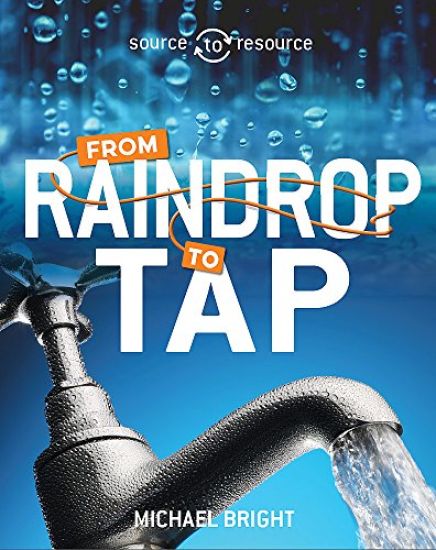
What happens when you turn on a tap? Or the washing machine, shower or garden hose? Water flows! Most of us use water all day, every day, without thinking about it. But how does it get to our homes? Water is one of the most amazing resources that we use in abundance and have come to rely on heavily. It is used in all sorts of household chores, leisure activities and in work and industry. From the pitter-patter of raindrops to the whoosh of water from the shower, we follow the journey from the source to the resource. We begin by looking at what water is and where it comes from, and the all-important water cycle. We then look at how water is stored and treated ready to be pumped around the country and into our homes. Finally we consider the environmental impact of our water use and what we can do to use less water in our daily lives. We also look at how people live in places that do not have a reliable water supply and methods that can be used to clean water that is in short supply. Other titles in the Source to Resource series include:From Field to PlateFrom Oil Rig to Petrol PumpFrom Sunshine to Light Bulb
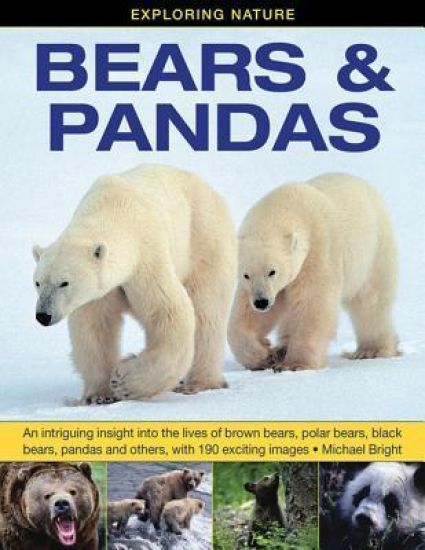
Exploring Nature: Bears & Pandas
Michael Bright
Armadillo Books
2015
sidottu
Halvin toimitettuna 15,90 €
This book offers an in intriguing insight into the lives of brown bears, polar bears, black bears, pandas and others, with 190 exciting images. You can explore the amazing world of bears - how they survive and where they live, from the Arctic tundra and mountain slopes to scrub desert and tropical forest. It is packed with more than 190 stunning pictures from renowned wildlife photographers and artists. Detailed cross-sections and diagrams reveal the complex inner workings of a bear's powerful body. Myth boxes explore the many popular stories about these creatures, including Baloo in The Jungle Book, Goldilocks and the three bears, and Winnie the Pooh. It contains all the bear facts - a book to delight and inform 8- to 12-year-olds, at home or at school. From the fearsome grizzly of North America to the giant panda in the remotest regions of China, bears have long captured the human imagination. You can discover how they live, examine the differences between the species, and learn how they cope with their diverse habitats. Special focus sections allow you to observe detailed aspects of bear and panda life, such as the giant bears of Kodiak Island and how polar bear migration regularly brings a town in Canada to a standstill. Meanwhile, 'Did You Know?' features provide quirky facts that will amaze and amuse.
The Frog with Self-Cleaning Feet: . . . and Other Extraordinary Tales from the Animal World
Michael Bright
Skyhorse Publishing
2013
sidottu
Did you know that an ostrich egg can make an omelet for ten people? How about that crocodiles have the world's most powerful bite, yet their mouths can be held shut by a man's bare hands? Or that box jellyfish are the most venomous creature in the world, and they're almost impossible to see? Wild animals do the most extraordinary, and sometimes frightening, things. Some are exceptionally bright, using tools and even treating themselves with medicinal plants. Others are devious, using chemical warfare and theft to get what they want. Then there are slackers, like the sloth, which only moves up to 125 feet a day, and the overachievers like the Arctic tern, which migrates over forty-four thousand miles every year Discover: The squid with eyes as big as dinner plates The termite assassin bug The largest rodent you hope to never find in your cupboard And the frog with self-cleaning feet If you've ever wanted to know why a zebra has stripes, or which animal is the most dangerous, has the loudest voice, boasts the longest tongue, or is the most mysterious, The Frog with Self-Cleaning Feet is here to reveal the curiosities of nature. Packed full of entertaining surprises and unusual information, you may not believe your tiny, human-sized eyes.
Browning's Fra Lippo Lippi says that we may pass things a hundred times and never see them. One thing that Browning's readers have passed without seeing, or at least without remarking upon, is the circular conclusion in so many of his poems. Some sixty poems (almost a third of them) have such conclusions. These sixty span his entire career and include both well-known and neglected poems. The circular conclusion is so called because it returns to the introduction — circles back round to it — by repeating something from the introduction. Although in principle this rhetorical device is quite simple, in practice Browning works many and complex variations on it. Also, by incorporating this repeated words or phrases within the body of the poems, he uses them to make structural divisions. And above all, by selecting for repetition key words or phrases, he indicates central themes in the poems. An analysis of repetition in the poems allows us to see more clearly their circularity, the divisions of the circles, and their themes. It also brings to light thematic dynamism of the poems, some of them concluding with a restatement of the theme set forth in the repetition to trend at a point beyond the original idea, some reversing in their conclusions the statement made in the introduction, and some restating at the end the introductory statement after two reversals. Finally, by focusing on the introductions and conclusions of the poems, we clarify the dramatic situations, which are ordinarily established in these two places, and come to see their relationships with the monologues they encircle. All this we see, not with the optics of modern literary theory, but simply by looking at Browning's work with the same careful attention Fra Lippo Lippi pays to God's creation.