
Kirjailija
Michael Lewis
Kirjat ja teokset yhdessä paikassa: 149 kirjaa, julkaisuja vuosilta 1983–2026, suosituimpiin kuuluu The big short : den sanna historien bakom århundradets finanskris. Vertaile teosten hintoja ja tarkista saatavuus suomalaisista kirjakaupoista.
149 kirjaa
Kirjojen julkaisuvuodet: 1983–2026.
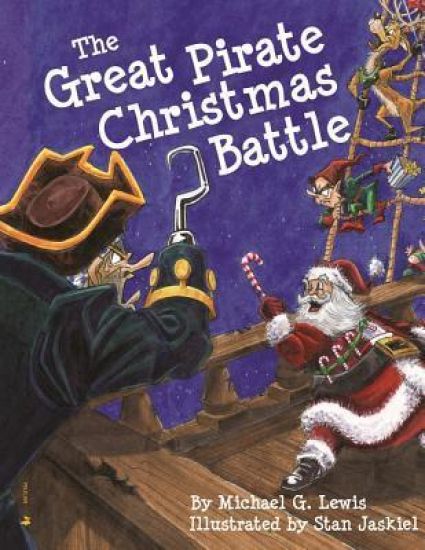
"Yo ho-ho-ho! Michael Lewis's sea-faring Santa tale is surely the best buried treasure you'll ever uncover! The Great Pirate Christmas Battle is so funny you'll shiver your timbers with laughter and clap your hands! Unless you have a hook for a hand. Then you probably shouldn't do that."-Butch Hartman, voice actor for Family Guy, writer for Dexter's Laboratory and The Powerpuff Girls, and creator of The Fairly OddParentsTake to the high seas with this mordantly witty tale of tinsel and terror. Cap'n McNasty and his rapscallions gleefully plunder children's presents-until Santa Claus and his feisty elves swoop in to put an end to their naughty ways!
Flash Boys is about a small group of Wall Street guys who figure out that the U. S. stock market has been rigged for the benefit of insiders and that, post financial crisis, the markets have become not more free but less, and more controlled by the big Wall Street banks. Working at different firms, they come to this realization separately; but after they discover one another, the flash boys band together and set out to reform the financial markets. This they do by creating an exchange in which high-frequency trading source of the most intractable problems will have no advantage whatsoever. The characters in Flash Boys are fabulous, each completely different from what you think of when you think Wall Street guy. Several have walked away from jobs in the financial sector that paid them millions of dollars a year. From their new vantage point they investigate the big banks, the world s stock exchanges, and high-frequency trading firms as they have never been investigated, and expose the many strange new ways that Wall Street generates profits. The light that Lewis shines into the darkest corners of the financial world may not be good for your blood pressure, because if you have any contact with the market, even a retirement account, this story is happening to you. But in the end, Flash Boys is an uplifting read. Here are people who have somehow preserved a moral sense in an environment where you don t get paid for that; they have perceived an institutionalized injustice and are willing to go to war to fix it."
The Rise of Consciousness and the Development of Emotional Life
Michael Lewis
Guilford Press
2014
sidottu
Synthesizing decades of influential research and theory, Michael Lewis demonstrates the centrality of consciousness for emotional development. At first, infants' competencies constitute innate reactions to particular physical events in the child's world. These "action patterns" are not learned, but are readily influenced by temperament and social interactions. With the rise of consciousness, these early competencies become reflected feelings, giving rise to the self-conscious emotions of empathy, envy, and embarrassment, and, later, shame, guilt, and pride. Focusing on typically developing children, Lewis also explores problems of atypical emotional development. Winner/m-/William James Book Award, Society for General Psychology (APA Division 1)
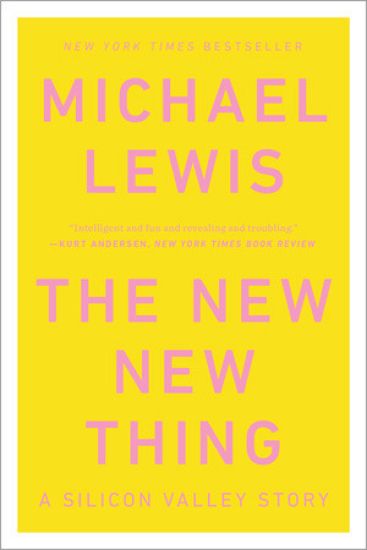
In the weird glow of the dying millennium, Michael Lewis set out on a safari through Silicon Valley to find the world's most important technology entrepreneur. He found this in Jim Clark, a man whose achievements include the founding of three separate billion-dollar companies. Lewis also found much more, and the result--the best-selling book The New New Thing--is an ingeniously conceived history of the Internet revolution.

Heidegger Beyond Deconstruction argues that Heidegger's question of being cannot be separated from the question of nature and culture, and that the history of being describes the growing predominance of culture and technology over nature, resulting in today's environmental crisis. It proposes that we turn to Heidegger's thought in order fully to understand this crisis. In doing so it is necessary to retrieve those elements of his thought which are most maligned by Derridean deconstruction: the pastoral, the homely, the local. In a world coming to terms with the destructive nature of 'globalisation' and the networks of distribution and travel which lacerate the globe, we are witnessing a gradual return to the 'locally produced', the 'organic', the 'micro-generation' of energy unplugged from the national and international grid: in other words, a return to the 'near'. The necessities and problems inherent in this return, which the 'environmental movement' must address, are already to be found in Heidegger's thought. Lewis confronts this thought with that of Lacan, Levinas, Žižek, and Marx in order to reinvent the element to which deconstruction usually confines it and bring it into a position from which to confront the most pressing ethical and political questions of today.

Despite Heidegger's identifying his own thought with 'ethics' in the most original sense, his understanding of ethics has been criticised both for its supposed ignorance of the role of the other human being and for its relation to politics. This book contends that, in fact, it is Heidegger's own notion of 'being-with' -his rethinking of intersubjectivity- which demonstrates precisely what is wrong with his early work and demands that the place of ethics be rethought. Heidegger and the Place of Ethics shows how this rethinking occurs in Heidegger's own laterwork. In particular, the crossing out of the earlier work in the turn to the later allows us to think 'being-with' as essential to a Heideggerian ethics and to rethink the relationship between ethics and politics which previously issued in Heidegger's engagement with Nazism. This rethinking of ethics and politics in light of the originality of 'being-with' brings us before a hitherto unnoticed proximity between Heidegger's later work and the Lacanian political thought of Slavoj Žižek among others; it thereby opens up the possibility of a politically progressive Heideggerianism, and many unexpected encounters with thinkers generally considered to be separated from Heidegger by an abyss.

One Small Town, One Crazy Coach
Mike Roos; Don Buse; Chris May; Jerry Reynolds; Kirk Curnutt; Mike Blake; Joe Dean; Michael Lewis; Jack Butcher
Indiana University Press
2013
pokkari
In the summer of 1962, the peripatetic and irrepressible Pete Gill was hired on a whim to coach basketball at tiny Ireland High School. There he would accomplish, against enormous odds, one of the great small-town feats in Indiana basketball history. With no starters taller than 5'10", few wins were predicted for the Spuds. Yet, after inflicting brutal preseason conditioning, employing a variety of unconventional motivational tactics, and overcoming fierce opposition, Gill molded the Spuds into a winning team that brought home the town's first and only sectional and regional titles. Relying on narrative strategies of creative nonfiction rather than strict historical rendering, Mike Roos brings to life a colorful and varied cast of characters and provides a compelling account of their struggles, wide-ranging emotions, and triumphs throughout the season.

How are we to understand the complex forces that shape human be havior? A variety of diverse perspectives, drawing on studies of human behavioral ontogeny, as well as humanity's evolutionary heritage, seem to provide the best likelihood of success. It is in an attempt to synthesize such potentially disparate approaches to human development into an integrated whole that we undertake this series on the genesis of behav ior. In many respects, the incredible burgeoning of research in child development over the last decade or two seems like a thousand lines of inquiry spreading outward in an incoherent starburst of effort. The need exists to provide, on an ongoing basis, an arena of discourse within which the threads of continuity between those diverse lines of research on human development can be woven into a fabric of meaning and understanding. Scientists, scholars, and those who attempt to translate their efforts into the practical realities of the care and guidance of infants and children are the audience that we seek to reach. Each requires the opportunity to see-to the degree that our knowledge in given areas permits-various aspects of development in a coherent, integrated fash ion. It is hoped that this series-which will bring together research on infant biology, developing infant capacities, animal models, the impact of social, cultural, and familial forces on development, and the distorted products of such forces under certain circumstances-will serve these important social and scientific needs.

Since the first edition of this volume was published in 1976, interest in the problem of intelligence in general and infant intelligence in particu lar has continued to grow. The response to the first edition was hearten ing: many readers found it a source of information for the diverse areas of study in infant intelligence. Because of the success of that volume, we have decided to issue a second edition. This edition is in many ways both similar to and different from the first. Its similarity lies in the fact that many of the themes and many of the contributors remain the same. Its difference can be found in the updating of old chapters and the addition of several new ones. Taken together, the chapters present a rounded picture of the cen tral issues in infant intelligence. Because the aim was to present a picture of the issues, no attempt, other than the selection of authors and themes, can be made to integrate these chapters into a single coherent whole. In large part, this reflects the diversity of study found in the area of early intellectual behavior. Rather than having a comprehensive theo ry of infant intelligence, the field abounds with a series of critical ques tions. To unite these chapters into some coherence, it will be necessary to articulate what these issues might be. Five major themes run through out the field of infant intelligence and thus through this volume.

How are we to understand the complex forces that shape human behavior? A variety of diverse perspectives, drawing upon studies of human behavioral ontogeny, as well as humanity's evolutionary heri tage, seem to provide the best likelihood of success. It is in the attempt to synthesize such potentially disparate approaches to human devel opment into an integrated whole that we undertake this series on the Genesis of Behavior. In many respects, the incredible burgeoning of research in child development over the last decade or two seems like a thousand lines of inquiry spreading outward in an incoherent starburst of effort. The need exists to provide, on an ongoing basis, an arena of discourse within which the threads of continuity between those diverse lines of research on human development can be woven into a fabric of meaning and understanding. Scientists, scholars, and those who attempt to translate their efforts into the practical realities of the care and guidance of infants and children are the audience that we seek to reach. Each requires the opportunity to see-to the degree that our knowledge in given areas permits-various aspects of development in a coherent, integrated fashion. It is hoped that this series, which will bring together research on infant biology, developing infant capacities, animal models, the impact of social, cultural, and familial forces on development, and the distorted products of such forces under certain circumstances, will serve these important social and scientific needs.

Social Cognition and the Acquisition of Self
Michael Lewis
Springer-Verlag New York Inc.
2012
nidottu
It is always enlightening to inquire about the origins of a research en deavor or a particular theoretical approach. Beginning with the observa tion of the mental life of the infant in 1962, Michael Lewis has contrib uted to the change in the view of the infant as an insensate mass of confusion to a complex and intellectual being. Anyone fortunate enough to have participated in the infancy research of the 1960s knows how exciting it was to have discovered in this small creature such a full and complex organism. More central to the origins of this work was the perception of the infant as an interactive, not a reactive, organism, and as one who influenced its social environment and constructed its cogni tive life, not one who just passively received information. Other areas of psychology had already begun to conceptualize the organism as active and interactive, even while developmental psychologists still clung to either simple learning paradigms, social reinforcement theories, or reflex ive theories. Even though Piaget had proposed an elaborate interactive theory, it was not until the late 1960s that his beliefs were fully im plemented into developmental theory and practice. A concurrent trend was the increase of concern with mother-infant interactions (Ainsworth, 1969; Bowlby, 1969; Goldberg & Lewis, 1969; Lewis & Goldberg, 1969) which provided the impetus for the study of social and emotional as well as cognitive development.
The purpose of this research was to explore whether electronic brainstorming and problem solving software are feasible for and add value to Air Force organizations, specifically Air Command and Staff College (ACSC). The authors literature review verified traditional nominal group brainstorming (group members working separately to generate ideas) is superior to traditional face-toface group brainstorming. Further, previous research also showed electronic brainstorming was as effective as, and in some cases superior to, traditional nominal group brainstorming. The author reviewed the capabilities of several electronic problem solving/brainstorming software tools. He tested the capabilities of one such tool, CM/1 (Corporate Memory/1), because ACSC currently owns 15 CM/1 site licenses. CM/1 allows group members the capability to use an issue-based decision making process in cyberspace. The author demonstrated the feasibility and value-added use of CM/1 at ACSC through successful software installation on the ACSC computer network, use by a student group brainstorming research ideas, and use by a faculty group attempting to solve an ACSC organizational problem over their local area network. Aerospace applicability was demonstrated throughout the project. The author concluded with recommendations for using CM/1 at ACSC and other organizations, and suggested areas for related future research. This work has been selected by scholars as being culturally important, and is part of the knowledge base of civilization as we know it. This work was reproduced from the original artifact, and remains as true to the original work as possible. Therefore, you will see the original copyright references, library stamps (as most of these works have been housed in our most important libraries around the world), and other notations in the work. This work is in the public domain in the United States of America, and possibly other nations. Within the United States, you may freely copy and distribute this work, as no entity (individual or corporate) has a copyright on the body of the work. As a reproduction of a historical artifact, this work may contain missing or blurred pages, poor pictures, errant marks, etc. Scholars believe, and we concur, that this work is important enough to be preserved, reproduced, and made generally available to the public. We appreciate your support of the preservation process, and thank you for being an important part of keeping this knowledge alive and relevant.

Are You Alive Today? A Guide To Your Waking Hours
Michael Lewis
Createspace Independent Publishing Platform
2012
nidottu


Anesthesia Unplugged, Second Edition
Christopher Gallagher; Steven Ginsberg; Michael Lewis; Christine Park; Deborah Schwengel
McGraw-Hill Medical
2012
nidottu
An engaging and effective way to learn all the essential anesthesia proceduresMore than any other text, Anesthesia Unplugged, 2e disarmingly demystifies anesthesiology. Featuring an easy-to-navigate atlas-style design, this skill-sharpening book delivers step-by-step instruction on the entire spectrum of perioperative, ambulatory, regional, and general procedures. Essential for anesthesiology residents, student registered nurse anesthetists, medical students with an interest in anesthesiology, and Intensive Care Unit personnel, Anesthesia Unplugged, 2e features:Authoritative, complete coverage of all relevant anesthesia procedures, from the IV and laryngoscopy, to the combined spinal-epidural and transesophageal echocardiographyAn efficient organization featuring one procedure per chapterCritical information broken down into manageable chunks and templates – ideal for busy residents and clinicians600 high-quality photographs and illustrations that put key anesthesia procedures into proper clinical perspective Amusing insights you won’t get anywhere else with chapters that include:The Mask of Zorro: Mask Ventilation;Whiz-Bang Intubation Gizmos;PICC Lines – Just Really, Really Long IVs;Goodnight, Sleep Tight: Setup and Mask Induction for Pediatric Patients;The Lung’s Not Down, You Idiot! – Lung Isolation;Thoracic Epidurals—What’s the Big Deal?;Stand By Me: The Femoral Arterial Line
'A highly enjoyable exercise in financial disaster tourism... politically incorrect, often very funny, and shot through with genuine insight' Robert Harris, The TimesIn this hilarious, fascinating, timely must-read, Michael Lewis reveals the true natures of the countries caught up in - and exacerbating - our boomerang economies, showing how the financial meltdown hit us all in the face. Right now, Europe is in serious financial chaos. In Greece, infrastructure costs mean it would be cheaper to transport all Greek rail passengers by taxi, and hairdressing is classified as arduous for tax avoidance purposes. In Iceland, Range Rovers frequently explode as owners collect the insurance to pay for them. Ireland saw the entire country put up for sale - to itself, while the Germans expected the whole world to behave like them. But the whole world didn't.'Chock-full of extraordinary characters, amusing anecdotes and shocking insights' Observer'A tour de force... All those questions you've half-asked yourself: nowhere else will you find them answered with such incisive wit or terrifying clarity' Mail on Sunday