Kirjojen hintavertailu – 12 903 725 kirjaa ja 27 kauppaa

Kirjailija

Michael Lewis

Kirjat ja teokset yhdessä paikassa: 149 kirjaa, julkaisuja vuosilta 1983–2026, suosituimpiin kuuluu The big short : den sanna historien bakom århundradets finanskris. Vertaile teosten hintoja ja tarkista saatavuus suomalaisista kirjakaupoista.

149 kirjaa

Kirjojen julkaisuvuodet: 1983–2026.

Panic!

Panic!

Michael Lewis

Penguin Books Ltd
2008
isokokoinen pokkari

Halvin toimitettuna 18,70 €

From Black Monday to the Asian financial crisis, from the internet bubble to mortgage meltdown, our lives are ruled by crazy cycles of euphoria and hysteria that manage to grip the world but are all-too-soon forgotten. In this unique collection of articles Michael Lewis - ex-trader and bestselling chronicler of greed and frenzy in the markets - casts a sceptical eye back over the most panicked-about panics of recent decades. He tells a story of boom and bust, deranged greed, outsized egos and over-inflated salaries, where the only thing that can ever be predicted is our constant inability to predict anything. Using contemporary accounts from commentators such as Joseph Stiglitz, Jeffrey Sachs and Paul Krugman, plus many of his own best writings, Lewis conveys the mood before each catastrophe, what it was like in the heat of the moment, how, afterwards, we tried to explain away the chaos - and then failed to learn from it before the whole process started all over again.

Derrida and Lacan

Derrida and Lacan

Michael Lewis

Edinburgh University Press
2008
sidottu
Derrida and Lacan: Another Writing argues that Jacques Derrida's philosophical understanding of language should be supplemented by Jacques Lacan's psychoanalytic approach to the symbolic order. Lacan adopts a non-philosophical, genetic or developmental approach to the question of language and in doing so isolates a dimension that Derrida cannot properly envisage: the imaginary. Michael Lewis argues that the real must be understood not just in relation to the symbolic but also in relation to the imaginary. The existence of an alternative approach to the real that is other than language allows us to identify the idiosyncrasies of Derrida's purely transcendental approach, an approach that addresses language in terms of its conditions of possibility. Lacan shows us that an attention to the genesis of the symbolic order of language and culture should lead us to understand this real other in a different way. This book relates transcendental thought to the insights of non-philosophical thought, and, more specifically, it proposes a way in which philosophy might relate to the insights of the human and natural sciences. By critically juxtaposing Derrida and Lacan, Derrida and Lacan: Another Writing attempts to systematise Slavoj ae'iae'ek's presentation of a Lacanian alternative to Derridean deconstruction. This work should be of interest to all readers in continental thought and transcendental philosophy, deconstruction, psychoanalysis, and literary studies.
Heidegger Beyond Deconstruction

Heidegger Beyond Deconstruction

Michael Lewis

Continuum International Publishing Group Ltd.
2007
sidottu
"Heidegger Beyond Deconstruction" argues that Heidegger's question of being cannot be separated from the question of nature and culture, and that the history of being describes the growing predominance of culture and technology over nature, resulting in today's environmental crisis. It proposes that we turn to Heidegger's thought in order fully to understand this crisis. In doing so it is necessary to retrieve those elements of his thought which are most maligned by Derridean deconstruction: the pastoral, the homely, the local. In a world coming to terms with the destructive nature of 'globalisation' and the networks of distribution and travel which lacerate the globe, we are witnessing a gradual return to the 'locally produced', the 'organic', the 'micro-generation' of energy unplugged from the national and international grid: in other words, a return to the 'near'. The necessities and problems inherent in this return, which the 'environmental movement' must address, are already to be found in Heidegger's thought. Lewis confronts this thought with that of Lacan, Levinas, Zizek, and Marx in order to reinvent the element to which deconstruction usually confines it and bring it into a position from which to confront the most pressing ethical and political questions of today.
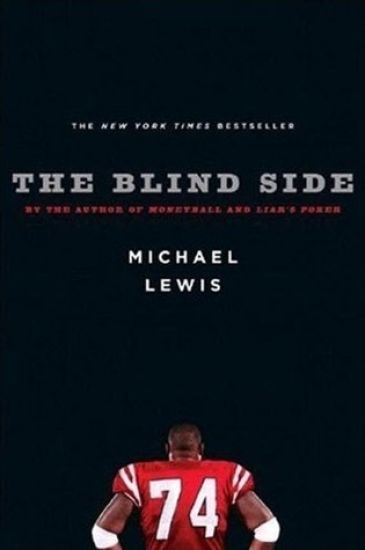
The Blind Side

The Blind Side

Michael Lewis

WW Norton Co
2007
nidottu

Halvin toimitettuna 19,90 €

When we first meet him, Michael Oher is one of thirteen children by a mother addicted to crack; he does not know his real name, his father, his birthday, or how to read or write. He takes up football, and school, after a rich, white, Evangelical family plucks him from the streets. Then two great forces alter Oher: the family’s love and the evolution of professional football itself into a game where the quarterback must be protected at any cost. Our protagonist becomes the priceless package of size, speed, and agility necessary to guard the quarterback’s greatest vulnerability, his blind side.
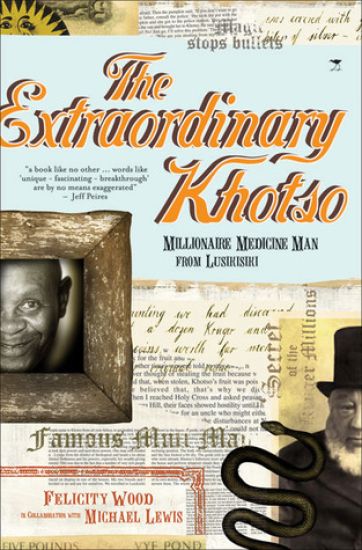
The extraordinary Khotso

The extraordinary Khotso

Felicity Wood; Michael Lewis

Jacana Media
2007
nidottu
Khotso Sethuntsa, the near-legendary medicine man, was believed to be a worker of powerful and dangerous magic. Khotso was renowned and feared throughout South Africa and beyond, even after his death in 1972. He created a fabulous eccentric kingdom around himself. He has been surrounded by mystery: the origins of his fortune and the extent of his powers shrouded in secrecy. This title takes us into the world of one of southern Africa's best-known herbalists. Khotso was famed, especially, as a seller of ibangalala, a herbal remedy for sexual potency, and ukuthwala, a terrifying procedure for acquiring long-term wealth. Also, he claimed to be in spiritual contact with Paul Kruger, hinting that his fortune derived from the long-lost Kruger millions. Meanwhile, leading Afrikaner Nationalists politicians, including H. F. Verwoed and J. G. Strijdom, sought Khotso out - for his medicines for political power, it has been said. Some believed that Khotso had entered into an occult pact with the mamlambo, the seductive mermaid woman who grants wealth at a terrible price. It is rumoured that the tragic twists and turns in his life sprung from this. Yet, as one of his many wives said, he was, too, "a lively, joking medicine man who loved money, sex and laughter." This title unravels many of the mysteries surrounding Khotso Sethuntsa. It explores his unique empire and tracks his extraordinary career.
American Wilderness

American Wilderness

Michael Lewis

Oxford University Press Inc
2007
nidottu
This collected volume of original essays proposes to address the state of scholarship on the political, cultural, and intellectual history of Americans responses to wilderness from first contact to the present. While not bringing a synthetic narrative to wilderness, the volume will gather competing interpretations of wilderness in historical context.
The Blind Side

The Blind Side

Michael Lewis

WW Norton Co
2006
sidottu
The best-selling author of Moneyball follows one young man from his impoverished childhood with a crack-addicted mother, through his discovery of the sport of football, to his rise to become one of the most successful, highly paid players in the NFL. 250,000 first printing. First serial, New York Times Magazine.
Heidegger and the Place of Ethics

Heidegger and the Place of Ethics

Michael Lewis

Continuum International Publishing Group Ltd.
2005
sidottu
Despite Heidegger's identifying his own thought with 'ethics' in the most original sense, his understanding of ethics has been criticised both for its supposed ignorance of the role of the other human being and for its relation to politics. This book contends that, in fact, it is Heidegger's own notion of 'being-with' -his rethinking of intersubjectivity- which demonstrates precisely what is wrong with his early work and demands that the place of ethics be rethought. Heidegger and the Place of Ethics shows how this rethinking occurs in Heidegger's own laterwork. In particular, the crossing out of the earlier work in the turn to the later allows us to think 'being-with' as essential to a Heideggerian ethics and to rethink the relationship between ethics and politics which previously issued in Heidegger's engagement with Nazism. This rethinking of ethics and politics in light of the originality of 'being-with' brings us before a hitherto unnoticed proximity between Heidegger's later work and the Lacanian political thought of Slavoj Zizek among others; it thereby opens up the possibility of a politically progressive Heideggerianism, and many unexpected encounters with thinkers generally considered to be separated from Heidegger by an abyss.
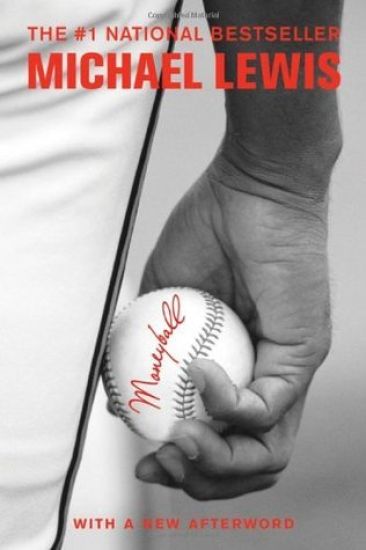
Moneyball

Moneyball

Michael Lewis

WW Norton Co
2004
nidottu

Halvin toimitettuna 20,30 €

Explains how Billie Beene, the general manager of the Oakland Athletics, is putting into play a new kind of thinking and ball playing with a compilation of statistics, locker room knowledge, and players rethinking what they know about playing baseball, demonstrating how success can be obtained without spending enormous sums of money. Reprint. 200,000 first printing.
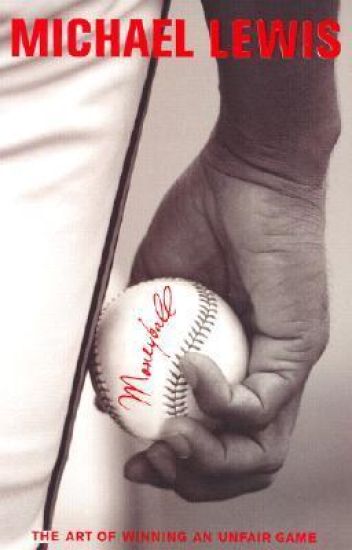
Moneyball

Moneyball

Michael Lewis

WW Norton Co
2003
sidottu

Halvin toimitettuna 27,20 €

Explains how Billie Beene, the general manager of the Oakland Athletics, is putting into play a new kind of thinking and ball playing where a compilation of statistics, locker room knowledge and players rethinking what they know about playing baseball, demonstrating how success can be obtained without spending enormous sums of money. 100,000 first printing.
Floating Off the Page

Floating Off the Page

Ken Wells; Michael Lewis

Simon Schuster
2003
pokkari
On any given day, millions of Wall Street Journal readers put aside the serious business and economic news of the day to focus first on the paper's middle column (a.k.a. the A-hed), a virtual sound-bubble for light literary fare -- a short story, a tall tale, an old yarn, a series of vignettes, and other unexpected delights that seem to "float off the page." In this first-ever compendium of middle-column pieces, you'll find an eclectic selection of writings, from the outlandish to the oddly enlightening. Read about: ? one man's attempt to translate the Bible into Klingon ? sheep orthodontics, pet-freezing, and toad-smoking ? being hip in Cairo, modeling at auto shows, piano-throwing ? the fate of mail destined for the World Trade Center after 9/11 ? the plight of oiled otters in Prince William Sound ...and much, much more. Edited by 20-year Journal veteran Ken Wells, and with a foreword by Liar's Poker author Michael Lewis, Floating Off the Page is the perfect elixir for fans of innovative prose in all its forms and function.
Next: The Future Just Happened

Next: The Future Just Happened

Michael Lewis

W. W. Norton Company
2002
nidottu
With his knowing eye and wicked pen, Michael Lewis reveals how the Internet boom has encouraged changes in the way we live, work, and think. In the midst of one of the greatest status revolutions in the history of the world, the Internet has become a weapon in the hands of revolutionaries. Old priesthoods are crumbling. In the new order, the amateur is king: fourteen-year-olds manipulate the stock market and nineteen-year-olds take down the music industry. Unseen forces undermine all forms of collectivism, from the family to the mass market: one black box has the power to end television as we know it, and another one may dictate significant changes in our practice of democracy. With a new afterword by the author.
Economics for Social Workers

Economics for Social Workers

Michael Lewis; Karl Widerquist

Columbia University Press
2002
sidottu
This primer for social work students introduces the general definitions and concepts of economics and uses case studies in social work to develop applied knowledge. The case studies include stories of job training, substance abuse centers, counseling, therapy, child protective services, and services for the poor. The concluding chapters are devoted to topics directly related to social work: economics of poverty, health economics, household economics, the economics of labor, and government failure.
Economics for Social Workers

Economics for Social Workers

Michael Lewis; Karl Widerquist

Columbia University Press
2002
pokkari
This primer for social work students introduces the general definitions and concepts of economics and uses case studies in social work to develop applied knowledge. The case studies include stories of job training, substance abuse centers, counseling, therapy, child protective services, and services for the poor. The concluding chapters are devoted to topics directly related to social work: economics of poverty, health economics, household economics, the economics of labor, and government failure.
The New New Thing

The New New Thing

Michael Lewis

Hodder Paperback
2000
pokkari

Halvin toimitettuna 19,30 €

*The classic New York Times Bestseller*'Hugely enjoyable...it reads like a novel, a fantasy tale of rags and riches that happens to be true' Sunday Times'A superb book... Lewis makes Silicon Valley as thrilling and intelligible as he made Wall Street in his best-selling Liar's Poker' Time'A fascinating journey into the Wild West of American capitalism' Daily Telegraph__________ In the last years of the millennium, Michael Lewis sets out to find the world's most important technology entrepreneur, the man who embodies the spirit of the coming age. He finds him in Jim Clark, the billionaire who founded Netscape and Silicon Graphics and who now aims to turn the healthcare industry on its head with his latest billion-dollar project. Lewis accompanies Clark on the maiden voyage of his vast yacht and, on the sometimes hazardous journey, takes the reader on the ride of a lifetime through a landscape of geeks and billionaires. Through every brilliant anecdote and funny character sketch, Michael Lewis allows us an inside look at the world of the super-rich, whilst drawing a map of free enterprise in the twenty-first century.__________From the author of the #1 bestseller THE BIG SHORT and the original business classic LIAR'S POKER comes the definitive 21st-century business story. 'A superb book. . . . Lewis makes Silicon Valley as thrilling and intelligible as he made Wall Street in his best-selling Liar's Poker.' Time
Becoming Apart

Becoming Apart

Michael Lewis

Harvard University Press
2000
sidottu
What ties bound region to center in the making of the modern Japanese state? What forces shaped these bonds? How did the local–center relationship change over time? What is its current legacy? Focusing on the marginal region of Toyama, on the Sea of Japan, the author explores the interplay of central and regional authorities, local and national perceptions of rights, and the emerging political practices in Toyama and Tokyo that became part of the new political culture that took shape in Japan following the Meiji Restoration. Michael Lewis argues that in response to the demands of the centralizing state, local elites and leaders in Toyama developed a repertoire of supple responses that varied with the political or economic issue at stake.
TEACHING COLLOCATION

TEACHING COLLOCATION

Michael Lewis

Cengage ELT
2000
nidottu
TEACHING COLLOCATION provides further follow-up to THE LEXICAL APPROACH. It contains papers by a number of teachers and theoreticians interested in the practical classroom implications of incorporating collocation into everyday classroom teaching.
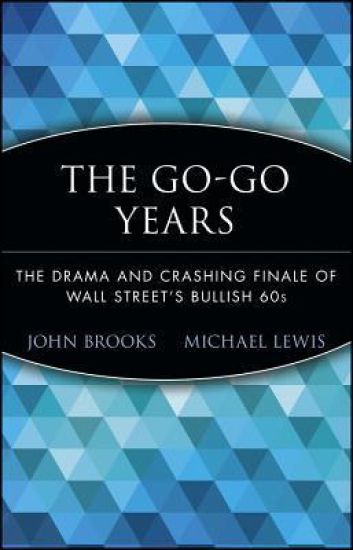
The Go-Go Years

The Go-Go Years

John Brooks; Michael Lewis

John Wiley Sons Inc
1999
nidottu
The Go-Go Years "The Go-Go Years is not to be read in the usual manner of Wall Street classics. You do not read this book to see our present situation reenacted in the past, with only the names changed. You read it because it is a wonderful description of the way things were in a different time and place." —From the Foreword by Michael Lewis The Go-Go Years is the harrowing and humorous story of the growth stocks of the 1960s and how their meteoric rise caused a multitude of small investors to thrive until the devastating market crashes in the 1970s. It was a time when greed drove the market and fast money was being made and lost as the "go-go" stocks surged and plunged. Included are the stories of such high-profile personalities as H. Ross Perot who lost $450 million in one day, Saul Steinberg’s attempt to take over Chemical Bank, and the fall of America’s "Last Gatsby, " Eddie Gilbert. Praise for The Go-Go Years "Those for whom the stock market is mostly a spectator sport will relish the book’s verve, color, and memorable one-liners." —New York Review of Books "Please don’t take The Go-Go Years too much for granted: as effortlessly as it seems to fly, it is nonetheless an unusually complex and thoughtful work of social history." —New York Times "Brooks’s great contribution is his synthesis of all the elements that made the 1960s the most volatile in Wall Street history and making so much material easily digestible for the uninitiated." —Publishers Weekly "Brooks is about the only writer around who combines a thorough knowledge of finance with the ability to perceive behind the dance of numbers ‘high, pure, moral melodrama on the themes of possession, domination, and belonging.’" —Time
The Go-Go Years

The Go-Go Years

John Brooks; Michael Lewis

John Wiley Sons Inc
1999
sidottu

Halvin toimitettuna 39,80 €

Praise for The Go-Go Years "Those for whom the stock market is mostly a spectator sport will relish the book’s verve, color, and memorable one-liners."—New York Review of Books "Please don’t take The Go-Go Years too much for granted: as effortlessly as it seems to fly, it is nonetheless an unusually complex and thoughtful work of social history." —New York Times "Brooks’s great contribution is his synthesis of all the elements that made the 1960s the most volatile in Wall Street history . . . and making so much material easily digestible for the uninitiated."—Publishers Weekly "Brooks . . . is about the only writer around who combines a thorough knowledge of finance with the ability to perceive behind the dance of numbers ‘high, pure, moral melodrama on the themes of possession, domination, and belonging.’" —Time
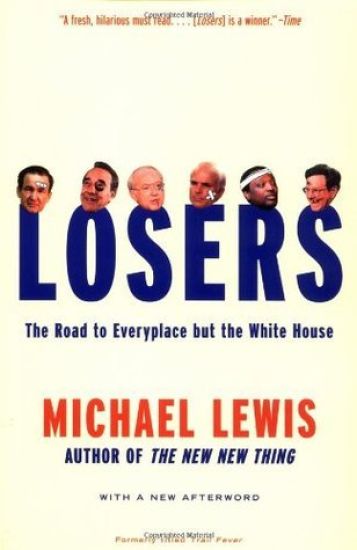
Losers

Losers

Michael Lewis

Vintage Books
1998
pokkari
A wickedly funny and astute chronicle of the 1996 presidential campaign--and how we go about choosing our leaders at the turn of the century. In it Michael Lewis brings to the political scene the same brilliance that distinguished his celebrated best-seller about the financial world, Liar's Poker. Beginning with the primaries, Lewis traveled across America--a concerned citizen who happened to ride in candidates' airplanes (as well as rented cars in blinding New Hampshire blizzards) and write about their adventures. Among the contenders he observed: Pat Buchanan, a walking tour of American anger; Lamar Alexander, who appealed to people who pretend to be nice to get ahead; Steve Forbes, frozen in a smile and refusing to answer questions about his father's motorcycles; Alan Keyes, one of the great political speakers of our age, whom no one has ever heard of; Morry Taylor--"the Grizz"--the hugely successful businessman who became the refreshing embodiment of ordinary Americans' appetites and ambitions; Bob Dole, a man who set out to prove he would never be president; and Bill Clinton, the big snow goose who flew too high to be shot out of the sky. We watch the clichés of this peculiar subculture collide with characters from the real world: a pig farmer in Iowa; an evangelical preacher in Colorado Springs; a homeless person in Manhattan; a prospective illegal immigrant in Mexico. The politicians speak and speak, often reversing positions, denying direct quotations, mastering the sound bite, dodging hard questions, wreaking havoc on the English language. Spin doctors spin. Rented strangers (campaign workers) proliferate. One particular toe sucker goes awry. Ads are honed to misrepresent and distort. Money makes the world go round. And the citizens are left dumbfounded or cheering empty platitudes. When trail fever breaks on Election Day, half of America's eligible voters stay home. This book offers a striking look at us and our politics and the mammoth unlikelihood of connection between the inauthentic modern candidate and the voter's passions, needs, and desires. In telling the story, Michael Lewis once again proves himself a masterful observer of the American scene.