Kirjojen hintavertailu – 12 859 818 kirjaa ja 27 kauppaa

Kirjailija

Michael Martin

Kirjat ja teokset yhdessä paikassa: 116 kirjaa, julkaisuja vuosilta 1980–2026, suosituimpiin kuuluu Zondervan 2020 Minister's Tax and Financial Guide. Vertaile teosten hintoja ja tarkista saatavuus suomalaisista kirjakaupoista.

Nimi esiintyy myös muodoissa: Michaël Martin

116 kirjaa

Kirjojen julkaisuvuodet: 1980–2026.

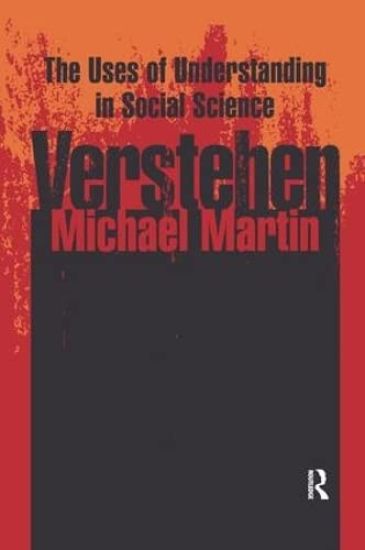
Verstehen

Verstehen

Michael Martin

Routledge
2018
nidottu
In late nineteenth-century German academic circles, the term verstehen (literally, understanding, or comprehension) came to be associated with the view that social phenomena must be understood from the point of view of the social actor. Advocates of this approach were opposed by positivists who stressed the unity of method between the social and natural sciences and an external, experimental, and quantitative knowledge. Although modified over time, the dispute between positivists and antipositivists--nowadays called naturalists and antinaturalists--has persisted and still defines many debates in the field of philosophy of social sciences. In this volume, Michael Martin offers a critical appraisal of verstehen as a method of verification and discovery as well as a necessary condition for understanding. In its strongest forms, verstehen entails subjectively reliving the experience of the social actor or at least rethinking his or her thoughts, while in its weaker forms it only involves reconstructing the rationale for acting. Martin's opening chapter offers a reconsideration of the debate between the classical verstehen theorists--Wilhelm Dilthey, Max Weber, R. G. Collingwood--and the positivists. Chapters 2 and 3 deal with positivist critiques of verstehen as a method of social scientific verification and understanding. In the subsequent chapters Martin considers contemporary varieties of the verstehen position and argues that they like the classical positions, they conflict with the pluralistic nature of social science. Chapter 4 discusses Peter Winch's and William Dray's variants of verstehen, while chapters 5 through 9 consider recent theorists--Karl Popper, Charles Taylor, Clifford Geertz--whose work can be characterized in verstehenist terms: In his conclusion Martin defines the limitations of the classical and recent verstehen positions and proposes a methodological pluralism in which verstehen is justified pragmatically in terms of the purposes and contexts of inquiry. This volume is the only comprehensive and sustained critique of verstehen theory currently available. It will be of interest to sociologists, philosophers, political scientists, and anthropologists.

Practically Spiritual: Bringing Spirit Down to Earth

Practically Spiritual: Bringing Spirit Down to Earth

Michael Martin

Createspace Independent Publishing Platform
2017
nidottu
Achieve true personal power by reconnecting your mind and body to the universe within which we're all woven together. Contained in Practically Spiritual you'll find what you need to bridge the gap between mystical fantasy and metaphysical reality. Everything in this universe takes form from the same universal spiritual intelligence manifested in disguise within infinite forms. Practically Spiritual was written with the specific purpose of breaking down the illusions we all carry which keep us believing we're somehow separate from the very universe we live in. Spirit isn't somewhere outside of ourselves among the stars, we're the living embodiment of spiritual intelligence.
Literature and the Encounter with God in Post-Reformation England
Each of the figures examined in this study”John Dee, John Donne, Sir Kenelm Digby, Henry and Thomas Vaughan, and Jane Lead”is concerned with the ways in which God can be approached or experienced. Michael Martin analyzes the ways in which the encounter with God is figured among these early modern writers who inhabit the shared cultural space of poets and preachers, mystics and scientists. The three main themes that inform this study are Cura animarum, the care of souls, and the diminished role of spiritual direction in post-Reformation religious life; the rise of scientific rationality; and the struggle against the disappearance of the Holy. Arising from the methods and commitments of phenomenology, the primary mode of inquiry of this study resides in contemplation, not in a religious sense, but in the realm of perception, attendance, and acceptance. Martin portrays figures such as Dee, Digby, and Thomas Vaughan not as the eccentrics they are often depicted to have been, but rather as participating in a religious mainstream that had been radically altered by the disappearance of any kind of mandatory or regular spiritual direction, a problem which was further complicated and exacerbated by the rise of science. Thus this study contributes to a reconfiguration of our notion of what ’religious orthodoxy’ really meant during the period, and calls into question our own assumptions about what is (or was) ’orthodox’ and ’heterodox.’
Breaking Ranks

Breaking Ranks

Michael Martin

Nonsuch Publishing
2016
nidottu
In the late 1980s, the 'army crisis' was dominating headlines in Ireland. Complaints of poor pay, low morale and unsatisfactory conditions for those serving in the Defence Forces were growing louder against the background of a government accused of being indifferent and an army hierarchy accused of being incapable. From amidst the turmoil, a group of women stepped up to pursue the rights of their men. Political crisis and a general election followed, but a commission established to examine the Defence Forces ignored the call for soldiers to acquire their own representative body. This book reveals for the first time, the deep-seated philosophies, tensions and reservations between Ireland's military and its government from the foundation of the State to the present day. It explores in detail the events that led to the successful pursuit of the democratic right of association for members of the armed forces in Ireland. It articulates the concept of the citizen in uniform and the special relationship between members of the armed forces and society. This is the story of the breaking of ranks.
Blending Instruction with Technology

Blending Instruction with Technology

Michael Martin

Rowman Littlefield
2016
sidottu
Blending Instruction with Technology is a book that offers educators guidelines and solutions for implementing blended learning in today’s classrooms. There has been a strong push by many communities, schools and educators to move to a 1:1 environment. However, once there… • How does one teach or facilitate learning in such an environment? • What are the researched best practices for implementing blended learning in classrooms? • How do schools provide professional development to teachers to implement best practices in their classroom? • Regarding the twenty year veteran who just recently mastered email, how do schools provide the proper guidance, training and support for him/her? This books aims to answer these questions and many more. This book is designed to be a blueprint for preparing staff members to be successful in a 1:1 environment. This book also focuses on providing students with a blended learning lesson that incorporates both cognitive and 21st Century Skills.
Blending Instruction with Technology

Blending Instruction with Technology

Michael Martin

Rowman Littlefield
2016
nidottu
Blending Instruction with Technology is a book that offers educators guidelines and solutions for implementing blended learning in today’s classrooms. There has been a strong push by many communities, schools and educators to move to a 1:1 environment. However, once there… • How does one teach or facilitate learning in such an environment? • What are the researched best practices for implementing blended learning in classrooms? • How do schools provide professional development to teachers to implement best practices in their classroom? • Regarding the twenty year veteran who just recently mastered email, how do schools provide the proper guidance, training and support for him/her? This books aims to answer these questions and many more. This book is designed to be a blueprint for preparing staff members to be successful in a 1:1 environment. This book also focuses on providing students with a blended learning lesson that incorporates both cognitive and 21st Century Skills.
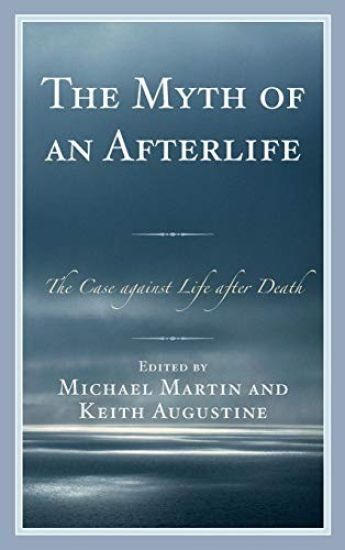
The Myth of an Afterlife

The Myth of an Afterlife

Michael Martin; Keith Augustine

Rowman Littlefield Publishers
2015
sidottu
Because every single one of us will die, most of us would like to know what—if anything—awaits us afterward, not to mention the fate of lost loved ones. Given the nearly universal vested interest in deciding this question in favor of an afterlife, it is no surprise that the vast majority of books on the topic affirm the reality of life after death without a backward glance. But the evidence of our senses and the ever-gaining strength of scientific evidence strongly suggest otherwise. In The Myth of an Afterlife: The Case against Life after Death, Michael Martin and Keith Augustine collect a series of contributions that redress this imbalance in the literature by providing a strong, comprehensive, and up-to-date casebook of the chief arguments against an afterlife. Divided into four separate sections, this collection opens with a broad overview of the issues, as contributors consider the strongest evidence of whether or not we survive death—in particular the biological basis of all mental states and their grounding in brain activity that ceases to function at death. Next, contributors consider a host of conceptual and empirical difficulties that confront the various ways of “surviving” death—from bodiless minds to bodily resurrection to any form of posthumous survival. Then essayists turn to internal inconsistencies between traditional theological conceptions of an afterlife—heaven, hell, karmic rebirth—and widely held ethical principles central to the belief systems supporting those notions. In the final section, authors offer critical evaluations of the main types of evidence for an afterlife. Fully interdisciplinary, The Myth of an Afterlife: The Case against Life after Death brings together a variety of fields of research to make that case, including cognitive neuroscience, philosophy of mind, personal identity, philosophy of religion, moral philosophy, psychical research, and anomalistic psychology. As the definitive casebook of arguments against life after death, this collection is required reading for any instructor, researcher, and student of philosophy, religious studies, or theology. It is sure to raise provocative issues new to readers, regardless of background, from those who believe fervently in the reality of an afterlife to those who do not or are undecided on the matter.