

Kirjailija
Michael Martin
Kirjat ja teokset yhdessä paikassa: 116 kirjaa, julkaisuja vuosilta 1980–2026, suosituimpiin kuuluu Zondervan 2020 Minister's Tax and Financial Guide. Vertaile teosten hintoja ja tarkista saatavuus suomalaisista kirjakaupoista.
Nimi esiintyy myös muodoissa: Michaël Martin
116 kirjaa
Kirjojen julkaisuvuodet: 1980–2026.

A gritty collection of 35 stories, written with raw emotion and cool melancholy, told in a compelling narrative voice that will make you smile as it breaks your heart, FUNERALS FOR FRIENDS explores the extraordinary details of ordinary lives. A sobering downhill ride through love and loss, these exciting stories take place in the home, in the office, on the street corner, and within the often disturbing relationships between men and women. But more important, these stories come from a place within the heart that is familiar to all.

The dominant star shaped fortress on Spike Island testifies to it's strategic importance in the once heavily fortified bastion of British military might that was Cork Harbour. Beneath and around this edifice however lies the story of an island steeped in extensive Irish heritage that stretches further back into the mists of Irelands past beyond the arrival of the Normans and on through to the darkest period of Irish history. From an island of ecclesiastical retreat and contemplation to a dark and godforsaken destination of victims of Ireland's Great Famine, Spike Island has been a part of two contrasting periods in Irish history. The era of saints and scholars during which Spike was described as a Holy Island is set against a later backdrop of famine, disease and death and the dark judicial practice that saw men and boys transported from it to the penal colonies of distant Australia. This book explores the island through these two very different environments from the founding of the monastery there by Saint Carthage to the use of the island as a place of detention, punishment and undignified death. From saints to starvation, 'Spike Island' embodies a part of the brightest a darkest legacy of Ireland's history.
Despite the pluralism of contemporary American culture, the Judaeo-Christian legacy still has a great deal of influence on the popular imagination. Thus it is not surprising that in this context atheism has a slightly scandalous ring, and unbelief is often associated with lack of morality and a meaningless existence. Distinguished philosopher and committed atheist Michael Martin sets out to refute this notion in this thorough defense of atheism as a both moral and meaningful philosophy of life. Martin shows not only that objective morality and a meaningful life are possible without belief in God but that the predominantly Christian world view of American society is seriously flawed as the basis of morality and meaning. Divided into four parts, this cogent and tightly argued treatise begins with well-known criticisms of nonreligious ethics and then develops an atheistic meta-ethics. In Part 2, Martin criticizes the Christian foundation of ethics, specifically the Divine Command Theory and the idea of imitating the life of Jesus as the basis of Christian morality. Part 3 demonstrates that life can be meaningful in the absence of religious belief. Part 4 criticizes the theistic point of view in general terms as well as the specific Christian doctrines of the Atonement, Salvation, and the Resurrection. This highly informed and sophisticated defense of atheism is a stimulating challenge to religious believers and a serious contribution to ethical theory.
Developments in the field of hearing health care have been significant over the last five years. This complete revision of Deafness reflects these changes and is not only an updating of the previous information but also adds new areas such as social aspects of deafness and mental health and deafness. The book maintains its original aim to be targeted at a wide range of readers who have a need for information on deafness. It will provide easily digested information for a wide range of professionals who have no experience in the field as well as for lay people such as parents of deaf children and deaf people themselves. As it covers a very wide range of topics in one volume it will also serve as an initial reference work for professionals already working with deaf and hard of hearing people. The 27 chapters are written by experts currently practising in their respective subjects. The chapters describe the nature and number of people with hearing loss, the anatomy and physiology of the ear, causes of deafness and their treatment, the measurement of hearing and screening for hearing loss, hearing loss in children and its diagnosis treatment and management, the effects of ageing and noise on hearing, psychological and psychiatric aspects of deafness, hearing aids and assistive devices, cochlear and other implanted devices.


In late nineteenth-century German academic circles, the term verstehen (literally, understanding, or comprehension) came to be associated with the view that social phenomena must be understood from the point of view of the social actor. Advocates of this approach were opposed by positivists who stressed the unity of method between the social and natural sciences and an external, experimental, and quantitative knowledge. Although modified over time, the dispute between positivists and antipositivists--nowadays called naturalists and antinaturalists--has persisted and still defines many debates in the field of philosophy of social sciences. In this volume, Michael Martin offers a critical appraisal of verstehen as a method of verification and discovery as well as a necessary condition for understanding. In its strongest forms, verstehen entails subjectively reliving the experience of the social actor or at least rethinking his or her thoughts, while in its weaker forms it only involves reconstructing the rationale for acting. Martin's opening chapter offers a reconsideration of the debate between the classical verstehen theorists--Wilhelm Dilthey, Max Weber, R. G. Collingwood--and the positivists. Chapters 2 and 3 deal with positivist critiques of verstehen as a method of social scientific verification and understanding. In the subsequent chapters Martin considers contemporary varieties of the verstehen position and argues that they like the classical positions, they conflict with the pluralistic nature of social science. Chapter 4 discusses Peter Winch's and William Dray's variants of verstehen, while chapters 5 through 9 consider recent theorists--Karl Popper, Charles Taylor, Clifford Geertz--whose work can be characterized in verstehenist terms: In his conclusion Martin defines the limitations of the classical and recent verstehen positions and proposes a methodological pluralism in which verstehen is justified pragmatically in terms of the purposes and contexts of inquiry. This volume is the only comprehensive and sustained critique of verstehen theory currently available. It will be of interest to sociologists, philosophers, political scientists, and anthropologists.

This dictionary includes a wide range of terms that are in general use in relation to the multi-disciplinary subject of hearing. It covers the fields of acoustics, audiology, electronics, medicine, phonetics, rehabilitation and social administration. The dictionary has been compiled to meet the needs of the professional who is non-specialist in some of the fields, of students taking courses related to hearing, of the lay person and of those whose first language is not English. The needs of the specialist are supported by the availability of concise definitions of terms in common usage.
The second edition describes and reflects the nature and impact of the numerous developments that have occurred in this field over the past decade, such as the emergence of new speech testing materials; the advancement in the provision of cochlear implants to both adults and children; and the availability of new technology in the form of compact and video discs which has enabled a far wider range of professionals to have access to more sophisticated forms of speech testing.

Demonstrating that important, well-reasoned positions don't have to be presented in dry, philosophical prose, this collection is the only defense of atheism written in the form of engaging short stories that will arouse, provoke, and inspire. This book contains works of science fiction, historical fiction, and fantasy. Open-minded readers will find the tales entertaining and enlightening. Martin's unforgettable cast of characters includes the unique: A Catholic detective-priest, an android professor, a fideistic Harvard student, polytheistic aliens, and the more familiar: con men, a sadistic Marine Corps drill instructor, and Satan.

In this systematic philosophical critique of the major tenets of Christianity, Michael Martin examines the semantic and epistemological bases of religious claims and beliefs. Beginning with a comparison and evaluation of the Apostles’ Creed, the Niceno-Chalcedonian Creed, and the Athanasian Creed, Martin discusses the principal theological, historical, and eschatological assumptions of Christianity. These include the historicity of Jesus, the Incarnation, the Second Coming, the Virgin Birth, the Resurrection, Salvation through faith in Jesus, and Jesus as a model of ethical behavior. Until now, an adequately convincing criticism of Christianity did not exist. Martin’s use of historical evidence, textual analysis, and interpretations by philosophers and theologians provides the strongest case made to date against the rational justification of Christian doctrines.
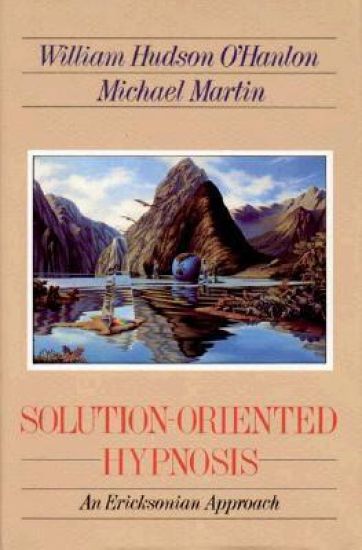
When most people think of "hypnosis" they imagine either a sinister, Mesmeresque figure declaring to his subject "you're getting sleepier and sleepier ... your eyelids are getting heavier and heavier, you vill go into trance," or an entertainer compelling a subject to "cluck like a chicken." In this comprehensive introduction to hypnosis based on the pioneering work of Milton H. Erickson, Bill O'Hanlon demystifies the concept of "trance" and "hypnosis." He goes to the heart of the subject by answering the question: "What is trance?" But be forewarned: This is no dry, formal discourse on trance induction techniques. Rather, readers are invited to share the experience of attending one of O'Hanlon's lively and popular two-day workshops on Ericksonian hypnosis. In an energetic and often humorous manner, O'Hanlon takes his audience through the basics of trance induction and explains the how, what, and why of hypnosis. Readers familiar with Erickson's work will be delighted at the author's Class of Problems/Class of Solutions approach, which deconstructs Ericksonian interventions and provides a powerful new tool in directing clients toward solution. Each individual element of trance induction is explained clearly, through the use of case examples, demonstrations, and audience participation exercises. The book's gradual approach takes readers through the hypnotic process in a step-by-step fashion, increasing their skills and confidence.
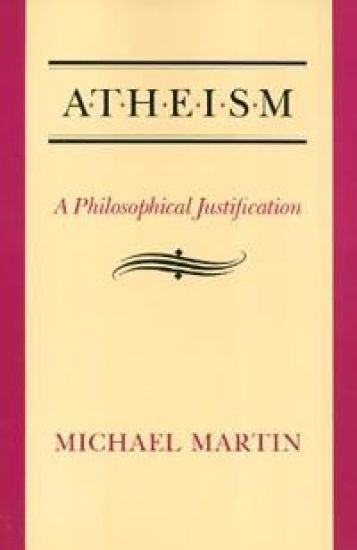
Logical reasons for being an atheist

"DUV Wirtschaftswissenschaft"--P. [4] of cover.

This easy-to-use dictionary contains succinct descriptions of more than 4,000-significant people, places, laws, institutions, events, political and social movements, catchphrases, and other terms important in American history. An ideal reference guide for all researchers of American history, the Dictionary of American History also includes the complete text of The Constitution of the United States.

Überlagerung von Mischkristall- und Teilchenhärtung im System (CuAu)-Co
Michael Martin
VS Verlag fur Sozialwissenschaften
1980
nidottu