Kirjailija
Michael North
Kirjat ja teokset yhdessä paikassa: 42 kirjaa, julkaisuja vuosilta 1983–2026, suosituimpiin kuuluu Die Geburt Des Kunstmarkts: Rembrandt, Ruisdael, Van Goyen Und Die Kunst Des Goldenen Zeitalters. Vertaile teosten hintoja ja tarkista saatavuus suomalaisista kirjakaupoista.
42 kirjaa
Kirjojen julkaisuvuodet: 1983–2026.
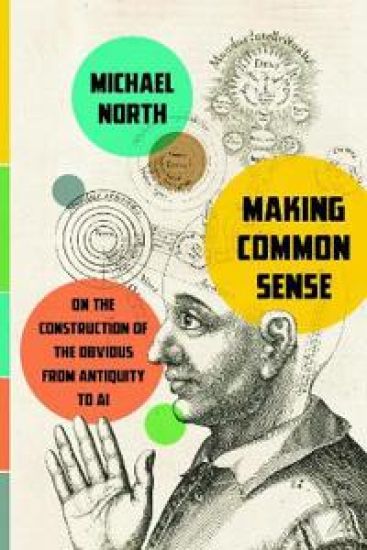
Common sense is supposed to be so obvious it can go without saying. And yet, it has been hard to pin down, partly because its contents are vague and inconsistent, and partly because it has always been difficult to say what kind of sense common sense is. Making Common Sense is an historical account of attempts, from antiquity to the present, to solve this puzzle. The ambiguity began centuries ago with the merger of the common sense, the sensorium commune, a kind of sixth sense responsible for coordinating the other five, with the sensus communis, a collection of implicit social habits and beliefs. Ever since, common sense, as a power both practical and thoughtful, has promised to split the difference between sensation and reason, the body and the mind, and between individuals and their society. As challenges from medical science and skeptical philosophy accumulated, though, common sense assumed a number of different forms in response. It has been a physical organ, a mental faculty, a body of knowledge, a system of axioms, an ethical principle, and a synonym for culture, until finally, with game theory and artificial intelligence, it becomes a number. Michael North tracks the obvious through these changes, showing why it remains, even now in the age of AI, as dark and mysterious as it was in the beginning.

What Is the Present?
Michael North
PRINCETON UNIVERSITY PRESS
2025
pokkari
Halvin toimitettuna 30,00 €
A provocative new look at concepts of the present, their connection to ideas about time, and their effect on literature, art, and cultureThe problem of the present—what it is and what it means—is one that has vexed generations of thinkers and artists. Because modernity places so much value on the present, many critics argue that people today spend far too much time in the here and now—but how can we tell without first knowing what the here and now actually is? What Is the Present? takes a provocative new look at this moment in time that remains a mystery even though it is always with us. Michael North tackles puzzles that have preoccupied philosophy, neuroscience, psychology, history, and aesthetic theory and examines the complex role of the present in painting, fiction, and film. He engages with a range of thinkers, from Aristotle and Augustine to William James and Henri Bergson. He draws illuminating examples from artists such as Fra Angelico and Richard McGuire, filmmakers like D. W. Griffith and Christopher Nolan, and novelists such as Elizabeth Bowen and Willa Cather. North offers a critical analysis of previous models of the present, from the experiential present to the historical period we call the contemporary. He argues that the present is not a cosmological or experiential fact but a metaphor, a figurative relationship with the whole of time. Presenting an entirely new conception of the temporal mystery Georg Lukács called the "unexplained instant," What Is the Present? explores how the arts have traditionally represented the present—and also how artists have offered radical alternatives to that tradition.
Come le aziende Fortune 500 interagiscono con gli stakeholder su Twitter
Michael North
Edizioni Sapienza
2025
nidottu
Comment les entreprises du classement Fortune 500 interagissent avec leurs parties prenantes sur Twitter
Michael North
Editions Notre Savoir
2025
nidottu
Cómo interactúan las empresas de Fortune 500 con sus grupos de interés en Twitter
Michael North
Ediciones Nuestro Conocimiento
2025
nidottu
Wie die Fortune 500 mit ihren Stakeholdern auf Twitter interagieren
Michael North
Verlag Unser Wissen
2025
nidottu
Como é que a Fortune 500 interage com as partes interessadas no Twitter
Michael North
Edições Nosso Conhecimento
2025
nidottu
Jak firmy z listy Fortune 500 wchodz¿ w interakcje z interesariuszami na Twitterze
Michael North
Wydawnictwo Nasza Wiedza
2025
nidottu
Offering an introduction to the world’s seas as a platform for global exchange and connection, Michael North offers an impressive world history of the seas over more than 3,000 years. Exploring the challenges and dangers of the oceans that humans have struggled with for centuries, he also shows the possibilities and opportunities they have provided from antiquity to the modern day. Written to demonstrate the global connectivity of the seas, but also to highlight regional maritime power during different eras, A World History of the Seas takes sailors, merchants and migrants as the protagonists of these histories and explores how their experiences and perceptions of the seas were consolidated through trade and cultural exchange. Bringing together the various maritime historiographies of the world and underlining their unity, this book shows how the ocean has been a vital and natural space of globalization. Carrying goods, creating alliances, linking continents and conveying culture, the history of the ocean played a central role in creating our modern globalized world.
The reinvention of art-history during the 1980s has provided a serious challenge to the earlier formalist and connoisseurial approaches to the discipline, in ways which can only help economic and social historians in the current drive to study past societies in terms of what they consumed, produced, perceived and imagined. This group of essays focuses on three main issues: the demand for art, including the range of art objects purchased by various social groups; the conditions of artistic creativity and communication between different production centres and artistic millieux; and the emergence of art markets which served to link the first two phenomena. The work draws on new research by art historians and economic and social historians from Europe and the United States, and covers the period from the late Middle Ages to the early nineteenth century.
A provocative new look at concepts of the present, their connection to ideas about time, and their effect on literature, art, and cultureThe problem of the present—what it is and what it means—is one that has vexed generations of thinkers and artists. Because modernity places so much value on the present, many critics argue that people today spend far too much time in the here and now—but how can we tell without first knowing what the here and now actually is? What Is the Present? takes a provocative new look at this moment in time that remains a mystery even though it is always with us. Michael North tackles puzzles that have preoccupied philosophy, neuroscience, psychology, history, and aesthetic theory and examines the complex role of the present in painting, fiction, and film. He engages with a range of thinkers, from Aristotle and Augustine to William James and Henri Bergson. He draws illuminating examples from artists such as Fra Angelico and Richard McGuire, filmmakers like D. W. Griffith and Christopher Nolan, and novelists such as Elizabeth Bowen and Willa Cather. North offers a critical analysis of previous models of the present, from the experiential present to the historical period we call the contemporary. He argues that the present is not a cosmological or experiential fact but a metaphor, a figurative relationship with the whole of time. Presenting an entirely new conception of the temporal mystery Georg Lukács called the "unexplained instant," What Is the Present? explores how the arts have traditionally represented the present—and also how artists have offered radical alternatives to that tradition.
A thorough understanding of stereochemistry is essential for the comprehension of almost all aspects of modern organic chemistry. It is also of great significance in many biochemical and medicinal disciplines, since the stereoisomers of a compound can have dramatically different biological properties. This text explains how the different properties of stereoisomers of a compound arise, and what processes can be used to prepare and analyze stereoisomerically pure compounds. It also presents prominent coverage of the stereochemistry of inorganic and organometallic compounds, which is likely to increase in importance, as these compounds are used as symmetric catalysts in asymmetric synthesis. Modern stereochemical terminology is used throughout, although reference is also made to older terms which are still widely used. A set of problems at the end of each chapter aims to further the reader's understanding of how the content can be applied. The book is designed mainly as a textbook for undergraduate students and as a reference source for more advanced levels, but is also intended for academic and professional organic chemists.
Die Geburt Des Kunstmarkts: Rembrandt, Ruisdael, Van Goyen Und Die Kunst Des Goldenen Zeitalters
Franz Wilhelm Kaiser; Michael North
Hirmer Verlag GmbH
2017
sidottu
The Baltic A History
Michael North
Harvard University Press
2016
nidottu
Halvin toimitettuna 33,00 €
In this overview of the Baltic region from the Vikings to the European Union, Michael North presents the sea and the lands that surround it as a Nordic Mediterranean, a maritime zone of shared influence, with its own distinct patterns of trade, cultural exchange, and conflict. Covering over a thousand years in a part of the world where seas have been much more connective than land, The Baltic: A History transforms the way we think about a body of water too often ignored in studies of the world’s major waterways. The Baltic lands have been populated since prehistory by diverse linguistic groups: Balts, Slavs, Germans, and Finns. North traces how the various tribes, peoples, and states of the region have lived in peace and at war, as both global powers and pawns of foreign regimes, and as exceptionally creative interpreters of cultural movements from Christianity to Romanticism and Modernism. He examines the golden age of the Vikings, the Hanseatic League, Gustavus Adolphus of Sweden, and Peter the Great, and looks at the hard choices people had to make in the twentieth century as fascists, communists, and liberal democrats played out their ambitions on the region’s doorstep. With its vigorous trade in furs, fish, timber, amber, and grain and its strategic position as a thruway for oil and natural gas, the Baltic has been—and remains—one of the great economic and cultural crossroads of the world.
How the Fortune 500 interacts with stakeholders on Twitter
Michael North
Lap Lambert Academic Publishing
2016
nidottu
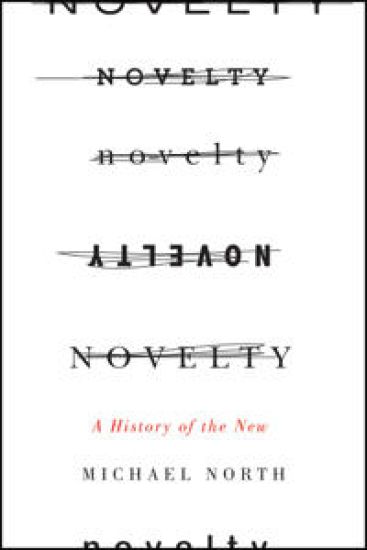
If art and science have one thing in common, it's a hunger for the new—new ideas and innovations, new ways of seeing and depicting the world. But that desire for novelty carries with it a fundamental philosophical problem: If everything has to come from something, how can anything truly new emerge? Is novelty even possible? In Novelty, Michael North takes us on a dazzling tour of more than two millennia of thinking about the problem of the new, from the puzzles of the pre-Socratics all the way up to the art world of the 1960s and '70s. The terms of the debate, North shows, were established before Plato, and have changed very little since: novelty, philosophers argued, could only arise from either recurrence or recombination. The former, found in nature's cycles of renewal, and the latter, seen most clearly in the workings of language, between them have accounted for nearly all the ways in which novelty has been conceived in Western history, taking in reformation, renaissance, invention, revolution, and even evolution. As he pursues this idea through centuries and across disciplines, North exhibits astonishing range, drawing on figures as diverse as Charles Darwin and Robert Smithson, Thomas Kuhn and Ezra Pound, Norbert Wiener and Andy Warhol, all of whom offer different ways of grappling with the idea of originality. Novelty, North demonstrates, remains a central problem of contemporary science and literature—an ever-receding target that, in its complexity and evasiveness, continues to inspire and propel the modern. A heady, ambitious intellectual feast, Novelty is rich with insight, a masterpiece of perceptive synthesis.