Kirjojen hintavertailu – 12 859 819 kirjaa ja 27 kauppaa
Kirjailija
Michael Williams
Kirjat ja teokset yhdessä paikassa: 149 kirjaa, julkaisuja vuosilta 1970–2027, suosituimpiin kuuluu Expressivism, Pragmatism and Representationalism. Vertaile teosten hintoja ja tarkista saatavuus suomalaisista kirjakaupoista.
Steeped in legend and mystery, the dramatic coastline of North Cornwall is riddled with stories of hauntings throughout history. The eerie wilds of Bodmin Moor, the haunted historic castles and of course the spirited, rugged coastline all have terrifying tales to tell. Michael Williams has been at the heart of some incredible investigations, and shares here some of the most chilling accounts of hauntings. Including previously unpublished accounts of ghostly activity, this is a treasure trove of original material and re-examined cases. It unravels stories which will send a shiver down the spine of anyone interested in the rarely advertised scary side of North Cornwall.
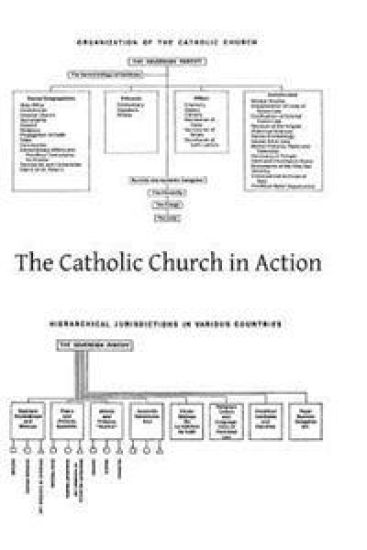
IN THIS book an attempt is made to describe briefly and accurately the main outlines of the organized system by means of which the Catholic Church carries on its work in the world today. Only the most elementary summary of this tremendous subject is possible within the limits of a single volume, not meant for ecclesiastical students, but for the average reader, whether Catholic or non-Catholic, who would like to know in a general way how the Church is constructed and how its various parts are put together to function within the framework of the institution as a whole. There are a multitude of works, ranging from the most profound theological, historical, and scientific studies of the universal Church, or of its various parts, down to the most elementary pamphlets, but so far as we know, there is no other book in English which provides the average reader with a non-controversial, general account of the whole subject. It is a non-controversial account in the sense that its authors (or perhaps its compilers would be the more accurate designation) make no effort to prove or to defend the fundamental, spiritual, moral, and intellectual teachings of the Church. These teachings are simply stated, or reported, when and where their statement is necessary for the reader to grasp the meaning, the purpose, . the end of the operations of the Church as an entity, or of any particular department of its intricate organization. There are at least two good reasons for believing that a book like this is likely to be useful today and in the years immediately ahead of us. There is, first of all, the interest created by the steadily increasing activities of the Catholic Church throughout the world and, secondly, the still more important fact that the effects and consequences of these activities are not confined to the avowed members of the Church, but are also affecting profoundly the whole human society of which Catholics form a comparatively small minority, yet a highly important one because of the social consequences of their beliefs as taught and controlled by a worldwide, centralized organization, by far the oldest and most deeply rooted of all human institutions. That the Catholic Church is, to say the least, certainly one of the major forces of the world-even if it only represents, as its enemies believe, a declining and baseless superstition-is generally admitted. Its own claim, of course, is that it is incomparably, uniquely, the supreme spiritual power in all the world. As we have already stated, it is not the purpose of this book to argue for the truth of this claim. Yet in order to make comprehensible even an outline sketch of the mechanism by means of which the Catholic Church attempts to realize this claim, it is necessary to give a brief definition of what is meant by the term, "the Catholic Church in Action." Upon that definition each and every item of the multitudinous activities of the Catholic Church absolutely depends for justification by the believers in the Church, and for correct understanding by others. First of all, then, by the term "the Catholic Church" we mean that visible society, real, one, and actively at work in the world today, which was established by Jesus Christ nineteen hundred and thirty-four years ago. Furthermore, we mean that visible society, real, one, and clearly present before the world today, which is in communion with the Apostolic See of Rome, and which accepts not only the supremacy of that See, but also the infallibility of its occupant, the Pope, when, as shepherd and teacher of all the faithful, he defines a matter of faith or morals
When tragedy strikes, Deo's love of soccer is all he has left. Can he use that gift to find hope once more? Just down the road from their families, Deo and his friends play soccer in the dusty fields of Zimbabwe, cheered on by Deo's older brother, Innocent. It is a day like any other ..until the soldiers arrive and Deo and Innocent are forced to run for their lives, fleeing the wreckage of their village for the distant promise of safe haven. Along the way, they face the prejudice and poverty that await refugees everywhere, and must rely on the kindness of people they meet to make it through. Relevant, timely, and accessibly written, Now Is the Time For Running is a staggering story of survival that follows Deo and his mentally handicapped older brother on a transformative journey that will stick with readers long after the last page.
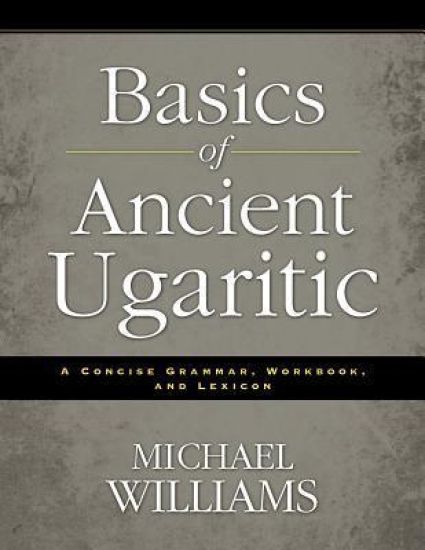
Basics of Ancient Ugaritic is a teaching grammar of this ancient language, one of vital importance for understanding the wider world and culture surrounding the Old Testament text. It begins with the alphabet, and each new lesson builds on the ones before it. It is not, therefore, a synthetic Ugaritic grammar—these types of texts often prove to be overwhelming for students. Instead, Basics of Ancient Ugaritic can be used for learning the language by individuals on their own or in a classroom setting. Each chapter concludes with a set of exercises allowing students to know whether they are grasping the fundamentals of the language. In short, Basics of Ancient Ugaritic represents an ideal first text for entering the larger world of Semitic languages.
Erik Sigsgaard; Allan Holmgren; Anette Holmgren; Martin Nevers; Troels Hammer; Jacob Folke Rasmussen; Anne Sofie Faarkrog Götzsche; Lene Præst; Karina Johansen; Lis Gaarde-Johansen; Lene Gaarn; Michael Williams
Jo mere alsidige og righoldige fortællinger en person og en kultur har om sig selv og andre, jo flere handlemuligheder har de, og jo mere rummelige bliver de. Derfor denne bog om narrativ praksis i skolen. I Danmark har vi i de seneste fem-syv år set, hvordan en narrativ tilgang til arbejdet med børn, unge og familier er blevet udbredt i mange behandlingsmæssige og pædagogiske sammenhænge. Med denne bog er den narrative praksis nået til folkeskolen. Bogen er den anden i en serie af bøger, der beskriver den narrative tilgang i detaljer og med tilhørende metodiske og teoretiske overvejelser. Den første bog udkom i 2010 med titlen: Fra terapi til pædagogik – en brugsbog i narrativ praksis. Bogen er en samling af konkrete, velfunderede eksempler fra en genkendelig hverdag på narrativ praksis i skolen. Forfatterne viser, hvordan narrative perspektiver og metoder har inspireret og bidraget til meningsskabelse og (op)løsning af vanskeligheder og til skabelse af nye handlemuligheder og nye forståelser for elever, lærer og forældre. Herudover giver den læseren en grundforståelse af den narrative tænkning, dens teori og dens begreber. Narrativ praksis i skolen er redigeret af Anette Holmgren, leder af konsulentfirmaet DISPUK, og Martin Nevers, underviser hos DISPUK.
Winner of the 2014 UKLA Award Deo is a great footballer, a fierce protector of his older brother, Innocent. His brother is easily nervous, easily happy but good at keeping score on the dusty fields of Zimbabwe where the boys play. Then Mugabe's soldiers come, destroying the only home the boys have known.
Michael Williams has spent the past year travelling along the fascinating rail byways of Britain for this new collection of journeys. Here is the 'train to the end of the world' running for more than four splendid hours through lake, loch and moorland from Inverness to Wick, the most northerly town in Britain. He discovers a perfect country branch line in London's commuterland, and travels on one of the slowest services in the land along the shores of the lovely Dovey estuary to the far west of Wales. He takes the stopping train across the Pennines on a line with so few services that its glorious scenery is a secret known only to the regulars. Here, too, is the Bittern Line in Norfolk and the Tarka Line in North Devon as well as the little branch line to the fishing port of Looe in Cornwall, rescued from closure in the 1960s and now celebrating its 150th anniversary taking families on holiday to the seaside. From the most luxurious and historic - aboard the Orient Express - to the most futuristic - on the driverless trains of London's Docklands Light Railway - here is a unique travel companion celebrating the treasures of our railway heritage from one of Britain's most knowledgeable railway writers.
Many Christians today experience Bible teaching in isolated, unconnected pieces, receiving little or no guidance into how these pieces form a coherent picture in Christ. How to Read the Bible through the Jesus Lens presents Christ as the central focus of each biblical book and the primary way the Bible relates to contemporary circumstances. It shows how each book of the Bible has an identifiable theme ultimately fulfilled in the person and work of Christ. Williams provides the following for his readers:A succinct statement of the theme of every biblical bookAn explanation of how that theme finds its focus in ChristA brief discussion of how the New Testament treats that theme as fulfilled in ChristSuggestions for contemporary implicationsScripture memory electronic flashcardsA convenient summary chartAn excellent tool for Bible teachers, ministry leaders, and students, How to Read the Bible through the Jesus Lens facilitates other Christian disciplines such as Bible reading, Scripture memory and evangelism. By demonstrating how each theme relates to living the Christian life, this book promises to be an invaluable guide for reading and understanding the Bible.
Historically, the major emphasis on the study of purinergic systems has been predominantly in the areas of physiology and gross pharmacology. The last decade has seen an exponential in- crease in the number of publications related to the role of both adenosine and A TP in mammalian tissue function, a level of interest that has evolved from a more molecular focus on the identity of adenosine and A TP receptor subtypes and the search for selective ligands and development of radioligand binding assays by Fred Bruns and colleagues (especially that for A receptors) that played z a highly significant role in advancing research in the area. In the 60 years since adenosine was first shown to be a potent hypotensive agent, a considerable investment has been made by several pharmaceutical companies-including Abbott, Byk Gulden, Takeda, Warner-LambertlParke Davis, Boehringer Mann- heim, Boehringer Ingelheim, Nelson/Whitby Research and CffiA- Geigy-as well as John Daly's laboratory at the National Institutes of Health, to design new adenosine receptor ligands, and both agon- ists and antagonists with the aim of developing new therapeutic entiities. Numerous research tools have derived from these efforts including: 2-chloroadenosine, R-PIA (~-phenylisopropyladeno- sine; NECA (5' N-ethylcarboxamidoadenosine); CV1808; CI936; PD 125,944; ~-benzyladenosine; PACPX; CPX; CPT; XAC; CGS 15943 and CGS 21680. Yet in the realm of therapeutics it was only in 1989 that adenosine itself was approved for human use in the treatment of supraventricular arrythmias.
The conceptual process of drug discovery is one that is often the result of an identified need in a defined disease area. This need represents a mandate from the marketing department of a phar- maceutical company or a breakthrough at the research level that has agreed applicability in response to a valid therapeutic demand. Although the intelligent design and development of new thera- peutic entities, as evidenced by Sir James Black's H -receptor an- 2 tagonist cimetidine (Tagamet), is intellectually satisfying, many novel drugs arise from serendipity, from the chance observation of the research scientist or the clinician, that a compound has unex- pected actions of use for the treatment of human disease states. Drugs that have been identified by this route include the antipsy- chotic chlorpromazine and the putative anxiolytic buspirone. The events surrounding the process of drug discovery and de- velopment are the theme of the present volume, which attempts to present, in a logical and lucid manner, the complexity of a process that is often naively assumed to represent nothing more than the identification of a new compound and its rapid introduction into humans, free of such complications as efficacy, selectivity, safety, bioavailability, toxicity, and need.