Kirjojen hintavertailu – 12 859 818 kirjaa ja 27 kauppaa
Kirjailija
Michel Foucault
Kirjat ja teokset yhdessä paikassa: 207 kirjaa, julkaisuja vuosilta 1968–2027, suosituimpiin kuuluu Fronesis 2. Utopier. Vertaile teosten hintoja ja tarkista saatavuus suomalaisista kirjakaupoista.
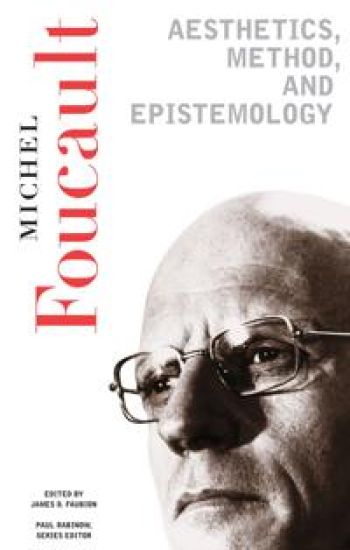
Few philosophers have had as strong an influence on the twentieth century as Michel Foucault. His work has affected the teaching of any number of disciplines and remains, twenty years after his death, critically important. This newly available edition is drawn from the complete collection of all of Foucault's courses, articles, and interviews, and brings his most important work to a new generation of readers. Aesthetics, Method and Epistemology (edited by James D. Faubion) surveys Foucault's diverse but sustained address of the historical forms and interplay of passion, experience, and truth.
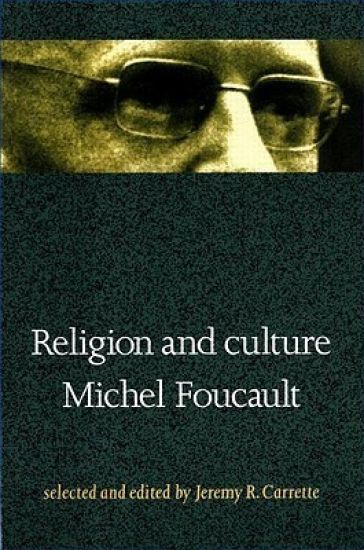
First Published in 1999. Postmodern theorist Michel Foucault is best known for his work on power/ knowledge, and on the regulation of sexuality in modern society. Yet throughout his life, Foucault was continually concerned with Christianity, other spiritual movements and religious traditions, and the death of God, and these themes and materials scattered are throughout his many writings. Religion and Culture collects for the first time this important thinker's work on religion, religious experience, and society. Here are classic essays such as The Battle for Chastity , alongside those that have been less widely read in English or in French. Selections are arranged in three groupings: Madness, Religion and the Avant-Garde; Religions, Politics and the East; and Christianity, Sexuality and the Self: Fragments of an Unpublished Volume. Ranging from Foucault's earliest studies of madness to Confessions of the Flesh , the unpublished fourth volume of his History of Sexuality , his final thoughts on early Christianity, Religion and Culture makes Foucault's work an indispensable part of contemporary religious thought, while also making an important link between religious studies and cultural studies.
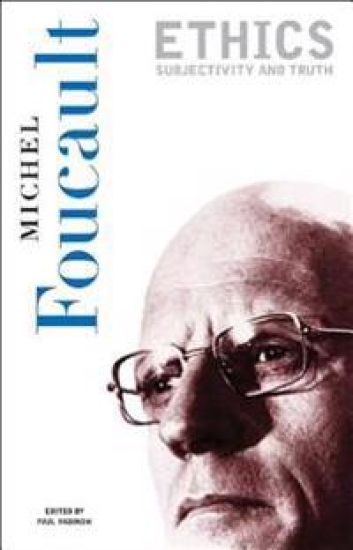
The definitive edition of articles, interviews, and seminars by the renowned philosopher and historian Few philosophers have had as strong an influence on the way we think about power and knowledge as Michel Foucault (1926-1984). His work has influenced the teaching of any number of disciplines and remains critically important. This lucid and accessible volume is drawn from the complete collection of all of Foucault's courses, articles, and interviews, and brings his most important work to a new generation of readers. Ethics (edited by Paul Rabinow) contains the summaries of Foucault's renowned courses at the Coll egrave;ge de France, paired with key writings and interviews on friendship, sexuality, and the care of the self and others.
Michel Foucault var en fransk filosof og idéhistoriker, der er bedst kendt for sine studier af sociale institutioner og arbejde omkring seksualitet. "Viljen til viden. Seksualitetens historie 1" er det indledende bind i et større værk om seksualitetens historie. Michel Foucault har skrevet fem bind i serien, men nåede ikke at færddiggøre sit værk før sin død. I "Viljen til viden. Seksualitetens historie 1" behandlede Michel Foucault vidensdannelsen, der refererer til seksualiteten og de magtmekanismer, som søger at regulere dens udøvelse. For Foucault er seksualitet ikke mere end det, som vi gør det til. Oversat af Søren Gosvig Olesen. som også ahr skrevet bogens indledning.
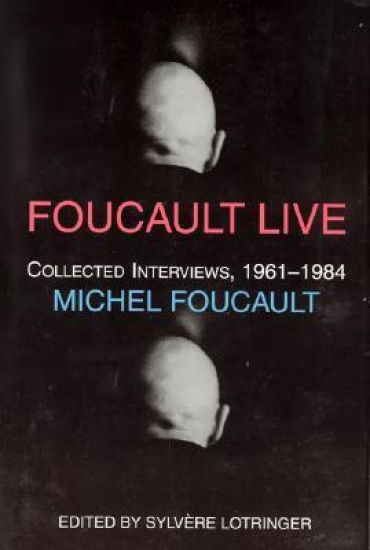
The most accessible and exhaustive introduction to Foucault's thought to date, including every extant interview made by Foucault from the mid-60s until his death in 1984. Currently in its fourth printing, Foucault Live is the most accessible and exhaustive introduction to Foucault's thought to date. Composed of every extant interview made by Foucault from the mid-60s until his death in 1984, Foucault Live sheds new light on the philosopher's ideas about friendship, the intent behind his classical studies, while clarifying many of the professional and popular misinterpretations of his ideas over the course of his career. As Gilles Deleuze noted, "the interviews in this book go much further than anything Foucault ever wrote, and they are indispensable in understanding his life work." Most notably, Foucault Live includes interviews he made with the gay underground press during his stays in America during the 1970s. In them, Foucault suggests that homosexuality presents a new paradigm for ways of living beyond the predictable, binary couple. All of the philosopher's interests, from madness and delinquency to film and sexuality, and their resultant writings, are probed by knowledgeable critics and journalists. After reading this book, the reader can explore key notions such as episteme, savoir and connaissance, archeology, and archive, without the knitted brow that plagued Foucault's public when he was alive. This is the guide to Foucault's life as an agent provocateur in the world of philosophy and scholarship.
In the eighteenth century, medicine underwent a mutation. For the first time, medical knowledge took on a precision that had formerly belonged only to mathematics. The body became something that could be mapped. Disease became subject to new rules of classification. And doctors begin to describe phenomena that for centuries had remained below the threshold of the visible and expressible. In The Birth of the Clinic the philosopher and intellectual historian who may be the true heir to Nietzsche charts this dramatic transformation of medical knowledge. As in his classic Madness and Civilization, Michel Foucault shows how much what we think of as pure science owes to social and cultural attitude--in this case, to the climate of the French Revolution. Brilliant, provocative, and omnivorously learned, his book sheds new light on the origins of our current notions of health and sickness, life and death.
Michel Foucault voulait avec son séminaire du Collège de France étudier les rapports entre psychiatrie et justice pénale au XIXe siècle. Chemin faisant, il a rencontré l’affaire Rivière : dans un village de Normandie, en 1835, un adolescent massacre froidement sa mère enceinte, son frère et sa sœur. De quoi s’agit-il ? Aux rapports des psychiatres, à toutes les pièces judiciaires, s’ajoute ici un stupéfiant et admirable Mémoire rédigé par le jeune accusé qui prétendait savoir à peine lire et écrire. Parricide apparemment banal, mais ensemble unique de textes qui, à eux tous, «forment une lutte singulière, un affrontement, un rapport de pouvoir, une bataille de discours» dont déchiffre ici la signification, pour nous, l’auteur de l’Histoire de la folie.
Why we are so fascinated with sex and sexuality--from the preeminent philosopher of the 20th century. Michel Foucault offers an iconoclastic exploration of why we feel compelled to continually analyze and discuss sex, and of the social and mental mechanisms of power that cause us to direct the questions of what we are to what our sexuality is.
In this sequel to The History of Sexuality, Volume I: An Introduction, the brilliantly original French thinker who died in 1984 gives an analysis of how the ancient Greeks perceived sexuality. Throughout The Uses of Pleasure Foucault analyzes an irresistible array of ancient Greek texts on eroticism as he tries to answer basic questions: How in the West did sexual experience become a moral issue? And why were other appetites of the body, such as hunger, and collective concerns, such as civic duty, not subjected to the numberless rules and regulations and judgments that have defined, if not confined, sexual behavior? "Required reading for those who cling to stereotyped ideas about our difference from the Greeks in terms of pagan license versus Christian austerity or their hedonism versus our anxiety."-- Los Angeles Times Book Review
Politics, Philosophy, Culture contains a rich selection of interviews and other writings by the late Michel Foucault. Drawing upon his revolutionary concept of power as well as his critique of the institutions that organize social life, Foucault discusses literature, music, and the power of art while also examining concrete issues such as the Left in contemporary France, the social security system, the penal system, homosexuality, madness, and the Iranian Revolution.
In this brilliant work, the most influential philosopher since Sartre suggests that such vaunted reforms as the abolition of torture and the emergence of the modern penitentiary have merely shifted the focus of punishment from the prisoner's body to his soul.
Michel Foucault takes us into the first two centuries of our own era, into the Golden Age of Rome, to reveal a subtle but decisive break from the classical Greek vision of sexual pleasure. He skillfully explores the whole corpus of moral reflection among philosophers (Plutarch, Epictetus, Marcus Aurelius, Seneca) and physicians of the era, and uncovers an increasing mistrust of pleasure and growing anxiety over sexual activity and its consequences.
Michel Foucault has become famous for a series of books that have permanently altered our understanding of many institutions of Western society. He analyzed mental institutions in the remarkable Madness and Civilization; hospitals in The Birth of the Clinic; prisons in Discipline and Punish; and schools and families in The History of Sexuality. But the general reader as well as the specialist is apt to miss the consistent purposes that lay behind these difficult individual studies, thus losing sight of the broad social vision and political aims that unified them. Now, in this superb set of essays and interviews, Foucault has provided a much-needed guide to Foucault. These pieces, ranging over the entire spectrum of his concerns, enabled Foucault, in his most intimate and accessible voice, to interpret the conclusions of his research in each area and to demonstrate the contribution of each to the magnificent -- and terrifying -- portrait of society that he was patiently compiling. For, as Foucault shows, what he was always describing was the nature of power in society; not the conventional treatment of power that concentrates on powerful individuals and repressive institutions, but the much more pervasive and insidious mechanisms by which power "reaches into the very grain of individuals, touches their bodies and inserts itself into their actions and attitudes, their discourses, learning processes and everyday lives"Foucault's investigations of prisons, schools, barracks, hospitals, factories, cities, lodgings, families, and other organized forms of social life are each a segment of one of the most astonishing intellectual enterprises of all time -- and, as this book proves, one which possesses profound implications for understanding the social control of our bodies and our minds.
Michel Foucault was one of the most influential thinkers in the contemporary world, someone whose work has affected the teaching of half a dozen disciplines ranging from literary criticism to the history of criminology. But of his many books, not one offers a satisfactory introduction to the entire complex body of his work. The Foucault Reader was commissioned precisely to serve that purpose. The Reader contains selections from each area of Foucault's work as well as a wealth of previously unpublished writings, including important material written especially for this volume, the preface to the long-awaited second volume of The History of Sexuality, and interviews with Foucault himself, in the course of which he discussed his philosophy at first hand and with unprecedented candor. This philosophy comprises an astonishing intellectual enterprise: a minute and ongoing investigation of the nature of power in society. Foucault's analyses of this power as it manifests itself in society, schools, hospitals, factories, homes, families, and other forms of organized society are brought together in The Foucault Reader to create an overview of this theme and of the broad social and political vision that underlies it.