Kirjailija
Michel Foucault
Kirjat ja teokset yhdessä paikassa: 207 kirjaa, julkaisuja vuosilta 1968–2027, suosituimpiin kuuluu Fronesis 2. Utopier. Vertaile teosten hintoja ja tarkista saatavuus suomalaisista kirjakaupoista.
207 kirjaa
Kirjojen julkaisuvuodet: 1968–2027.
"Forelæsningerne er et uvurderligt bidrag til nutidig politisk filosofi." Hans Hauge, Jyllands-Posten I denne række epokegørende foredrag analyserer Michel Foucault, hvordan moderne stater udøver magt over sine borgere. Med afsæt i de studier af biopolitik, han havde indledt året forinden, introducerer Foucault begrebet ”guvernementalitet” som betegnelse for den særlige styringslogik, der – stærk inspireret af Kirken – brød igennem i 1700-tallet og stadig udgør grundlaget for moderne velfærdsstaters biopolitiske befolkningsomsorg. Foucault afdækker, hvordan denne på en gang individualiserende og totaliserende magtteknologi søger at herske over sjælene. I stedet for at styre og disciplinere befolkningens adfærd introduceres en ny form for indirekte og diskret magtudøvelse. Forbud og tvang afløses af ”sociale teknologier” og ”biopolitik”, der tilskynder den enkelte til selv-disciplin og til at tage vare på og regere sig selv. Til den enkelte og statens bedste. Sikkerhed, territorium, befolkning blev oprindelig holdt på Collège de France i 1978, men udkom først i 2004. Afdækningen af de pastorale træk og rationaler i nyere former for politisk rationalitet hører til nogle af de mest originale, men også omstridte indsigter hos den sene Foucault. MICHEL FOUCAULT (1926-1984) var professor i ”tankesystemernes historie” på Collège de France i Paris, og hører til blandt vor tids mest citerede og indflydelsesrige tænkere. Blandt hans hovedværker kan nævnes Galskabens historie (1961), Sindssygdom og psykologi (1962), Klinikkens fødsel (1963), Ordene og tingene (1966), Talens forfatning (1971), Overvågning og straf (1975) og det store ufuldendte Seksualitetens historie (1976-1984). Oversat fra fransk efter Securité, territoire, population af Carsten Sestoft og Peer F. Bundgård.

Foucault's previously unpublished doctoral dissertation on Kant offers the definitive statement of his relationship to Kant and to the critical tradition of philosophy. This introduction and commentary to Kant's least discussed work, Anthropology from a Pragmatic Point of View, is the dissertation that Michel Foucault presented in 1961 as his doctoral thesis. It has remained unpublished, in any language, until now. In his exegesis and critical interpretation of Kant's Anthropology, Foucault raises the question of the relation between psychology and anthropology, and how they are affected by time. Though a Kantian "critique of the anthropological slumber," Foucault warns against the dangers of treating psychology as a new metaphysics, explores the possibilities of studying man empirically, and reflects on the nature of time, art and technique, self-perception, and language. Extending Kant's suggestion that any empirical knowledge of man is inextricably tied up with language, Foucault asserts that man is a world citizen insofar as he speaks. For both Kant and Foucault, anthropology concerns not the human animal or self-consciousness but, rather, involves the questioning of the limits of human knowledge and concrete existence. This long-unknown text is a valuable contribution not only to a scholarly appreciation of Kant's work but as the first outline of what would later become Foucault's own frame of reference within the history of philosophy. It is thus a definitive statement of Foucault's relation to Kant as well as Foucault's relation to the critical tradition of philosophy. By going to the heart of the debate on structuralist anthropology and the status of the human sciences in relation to finitude, Foucault also creates something of a prologue to his foundational The Order of Things. Michel Foucault (1926-84) is widely considered to be one of the most important academic voices of the twentieth century and has proven influential across disciplines.
This Is Not a Pipe
Michel Foucault
University of California Press
2008
pokkari
Halvin toimitettuna 30,30 €
What does it mean to write "This is not a pipe" across a bluntly literal painting of a pipe? Rene Magritte's famous canvas provides the starting point for a delightful homage by French philosopher and historian Michel Foucault. Much better known for his incisive and mordant explorations of power and social exclusion, Foucault here assumes a more playful stance. By exploring the nuances and ambiguities of Magritte's visual critique of language, he finds the painter less removed than previously thought from the pioneers of modern abstraction.
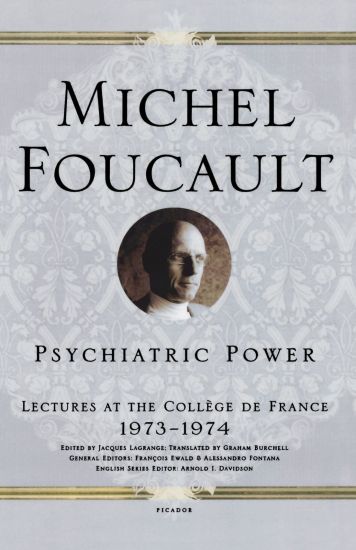
Psychiatric Power: Lectures at the Collège de France, 1973--1974
Michel Foucault
Picador USA
2008
nidottu
In Psychiatric Power, the fourth volume in the collection of his groundbreaking lectures at the Coll ge de France, Michel Foucault addresses and expands upon the ideas in his seminal Madness and Civilization, sketching the genealogy of psychiatry and of its characteristic form of power/knowledge. Madness and Civilization undertook the archeology of the division according to which, in Western Society, the madman found himself separated from the sane. That book ends with the medicalization of madness at the beginning of the nineteenth century. Psychiatric Power continues this discourse up to the end of the nineteenth century, and the double "depsychiatrization" of madness, now dispersed between the neurologist and the psychoanalyst. Presented in a conversational tone, Psychiatric Power brings fresh access and light to the work of one of the past century's preeminent thinkers.
Ranging from reflections on the Enlightenment and revolution to a consideration of the Frankfurt School, this collection offers insight into the topics preoccupying Foucault as he worked on what would be his last body of published work, the three-volume History of Sexuality. In 1784, the German newspaper Berlinische Monatsschrift asked its audience to reply to the question "What is Enlightenment?" Immanuel Kant took the opportunity to investigate the purported truths and assumptions of his age. Two hundred years later, Michel Foucault wrote a response to Kant's initial essay, positioning Kant as the initiator of the discourse and critique of modernity. The Politics of Truth takes this initial encounter between Foucault and Kant, as a framework for its selection of unpublished essays and transcripts of lectures Foucault gave in America and France between 1978 and 1984, the year of his death. Ranging from reflections on the Enlightenment and revolution to a consideration of the Frankfurt School, this collection offers insight into the topics preoccupying Foucault as he worked on what would be his last body of published work, the three-volume History of Sexuality. It also offers what is in a sense the most "American" moment of Foucault's thinking, for it was in America that he realized the necessity of tying his own thought to that of the Frankfurt School.
"Ordene og tingene" er en kompleks undersøgelse af den vestlige kultur og dens strukturer af viden. I bogen udforsker Foucault, hvordan vores måder at tænke og organisere viden på har ændret sig radikalt i forskellige historiske perioder. Foucault indførte begrebet "episteme" som den særlige måde, hvorpå viden er organiseret i en given historisk periode. Han identificerer tre større epistemer i vestlig kultur: Renæssancen, den klassiske periode og den moderne periode. Foucault argumenterer for, at der i hver episteme er forskellige måder at klassificere og organisere viden på, hvilket former, hvad det er muligt at tænke og sige i den pågældende periode. For eksempel blev al viden i den klassiske periode set som en form for representational ækvivalens, hvorimod viden i den moderne periode ermmere orienteret mod menneskets subjektivitet. Bogen er en del af Foucaults bredere engagement i spørgsmålet om magt og videnproduktion. Oversat af Mogens Chrom Jacobsen.
Den første versjonen: En pipe tegnet med omhu; og under den, denne ordlyden: «Dette er ikke en pipe» (skrevet med en regelmessig håndskrift, med flid, kunstferdig, en søndagsskoleskrift - av det slaget man kan finne som mønster i skoleelevenes skrivehefter eller på en sort tavle etter at skoletimen er over). Den andre versjonen: samme pipe, samme utsagn, samme skrift. Men i stedet for å være stilt opp mot hverandre i et forskjellsløst rom, uten hverken å være avgrenset eller nærmere bestemt, er teksten og figuren plassert på et staffeli, og dette står i sin tur på de svært tydelig markerte bordene i et plankegulv. Ovenfor, en pipe, fullstendig lik den som er tegnet på bildet, men mye, mye større. Den første versjonen foruroliger kun ved sin enkelhet. Den andre mangfoldiggjør på et svært iøynefallende vis de overlagte usikkerhetsmomentene.
Overvåkning og straff (1975) er den franske filosofen Michel Foucaults kanskje mest innflytelsesrike verk, og en bok han selv satte meget høyt i sitt forfatterskap. Foucault søker her å forklare maktens rolle i fremveksten av det moderne fengselssystemet, fra 1600- og 1700-tallet til i dag. Foucault ser fengselet som uttrykk for den overvåknings- og disiplineringsteknikk som har utviklet seg innen hæren, i skolene, sykehusene, fabrikkene og verkstedene. En teknikk for innlemmelse og utelukkelse og en maktmekanisme som i våre dager gjennomsyrer store deler av samfunnet. Overvåkning og straff utkom første gang på norsk i 1977 under tittelen Det moderne fengsels historie. Den utgis nå for tredje gang i Fakkel-serien. Bokens forord er skrevet av Thomas Mathiesen.
Galskapens historie gir en meget tankevekkende beskrivelse av hvordan de sinnssyke har blitt behandlet i Europa fra middelalderen og frem til våre dager. Foucault peker på hvordan de gale i middelalderen var en naturlig del av samfunnet, men etter hvert ble støtt ut. I den fornuftens verden som den fremvoksende kapitalisme og opplysningstid skapte, hadde de gale ingen plass, men ble sendt til arbeidshus og tukthus. De måtte avgrenses og defineres som noe «hinsidig». Det er særlig denne utstøtelsen Michel Foucault går nærmere inn på. Han fremhever den som historisk bakgrunn for psykiatriens sykdomsbegrep og språk. Galskapens historie utkom første gang på norsk i 1973, og utgis nå for tredje gang i Fakkel-serien.
For filosofen Michel Foucault er makt et relasjonelt, produktivt og allestedsnærværende fenomen, men det antar forskjellige former alt etter sin konkrete sammenheng. Makten må derfor studeres som et konkret fenomen. I norsk Foucault-resepsjon, som presenteres i bokens innledning, er Foucault spesielt kjent for sine studier av makt som disiplinering, i institusjoner som anstalter, klinikker og skoler. Mot slutten av sitt liv viet han imidlertid også mye tid til en annen maktform enn disiplinering, nemlig det han kalte gouvernementalité, her oversatt med regjering. Mot slutten av europeisk middelalderen vokser det frem et samfunn mellom kongen og hans undersåtter. Dette samfunnet må styres indirekte. I de tre forelesningene som presenteres her analyserer Foucault de historiske handlingsbetingelsene som muliggjorde en slik indirekte styringsform. Den liberale stat, som i stor grad støtter seg på indirekte regjering, vil i følge Focault støte på en sentral utfordring: hva gjør man med dem som ikke klarer å styre seg selv? Dette spørsmålet taler direkte til dagens politiske ordskifte, der nyliberalisme og globaliseringprosesser står sentralt. Nr. 42 i Cappelens upopulære skrifter.
"Death and the Labyrinth" is unique, being Foucault's only work on literature. For Foucault this was "by far the book I wrote most easily and with the greatest pleasure". Here, Foucault explores theory, criticism and psychology through the texts of Raymond Roussel, one of the fathers of experimental writing, whose work has been celebrated by the likes of Cocteau, Duchamp, Breton, Robbe Grillet, Gide and Giacometti. This revised edition includes: an introduction, chronology and bibliography to Foucault's work by James Faubion, an interview with Foucault, conducted only nine months before his death, and concludes with an essay on Roussel by the poet, John Ashbery.
Chomsky vs Foucault
Michel Foucault; Noam Chomsky
THE NEW PRESS
2006
nidottu
Halvin toimitettuna 19,00 €
"Chomsky vs Foucault" deals with current affairs/political science.
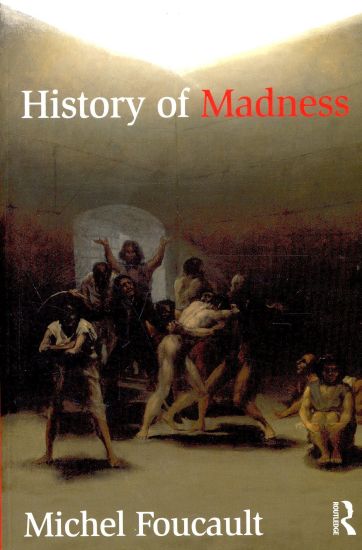
When it was first published in France in 1961 as Folie et Déraison: Histoire de la Folie à l'âge Classique, few had heard of a thirty-four year old philosopher by the name of Michel Foucault. By the time an abridged English edition was published in 1967 as Madness and Civilization, Michel Foucault had shaken the intellectual world. This translation is the first English edition of the complete French texts of the first and second edition, including all prefaces and appendices, some of them unavailable in the existing French edition. History of Madness begins in the Middle Ages with vivid descriptions of the exclusion and confinement of lepers. Why, Foucault asks, when the leper houses were emptied at the end of the Middle Ages, were they turned into places of confinement for the mad? Why, within the space of several months in 1656, was one out of every hundred people in Paris confined? Shifting brilliantly from Descartes and early Enlightenment thought to the founding of the Hôpital Général in Paris and the work of early psychiatrists Philippe Pinel and Samuel Tuke, Foucault focuses throughout, not only on scientific and medical analyses of madness, but also on the philosophical and cultural values attached to the mad. He also urges us to recognize the creative and liberating forces that madness represents, brilliantly drawing on examples from Goya, Nietzsche, Van Gogh and Artaud. The History of Madness is an inspiring and classic work that challenges us to understand madness, reason and power and the forces that shape them.
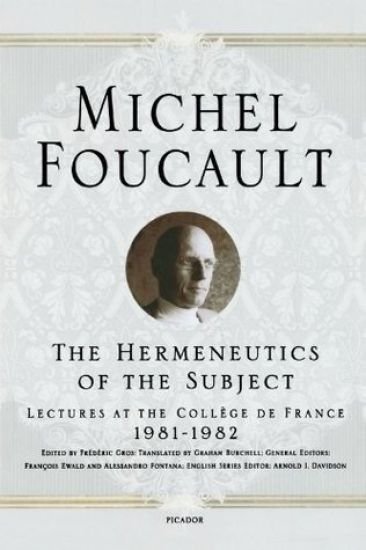
The Hermeneutics of the Subject
Michel Foucault; François Ewald; Alessandro Fontana
St Martin's Press
2005
pokkari
Halvin toimitettuna 28,10 €
The Hermeneutics of the Subject is the third volume in the collection of Michel Foucault's lectures at the Coll ge de France, where faculty give public lectures on any topic of their choosing. Attended by thousands, Foucault's lectures were seminal events in the world of French letters, and his ideas expressed there remain benchmarks of contemporary critical inquiry. Foucault's wide-ranging lectures at this school, delivered throughout the 1970s and early 1980s, clearly influenced his groundbreaking books, especially The History of Sexuality and Discipline and Punish. In the lectures comprising this volume, Foucault focuses on how the "self" and the "care of the self" were conceived during the period of antiquity, beginning with Socrates. The problems of the ethical formation of the self, Foucault argues, form the background for our own questions about subjectivity and remain at the center of contemporary moral thought. This series of lectures continues to throw new light on Foucault's final works, and shows the full depth of his engagement with ancient thought. Lucid and provocative, The Hermeneutics of the Subject reveals Foucault at the height of his powers.
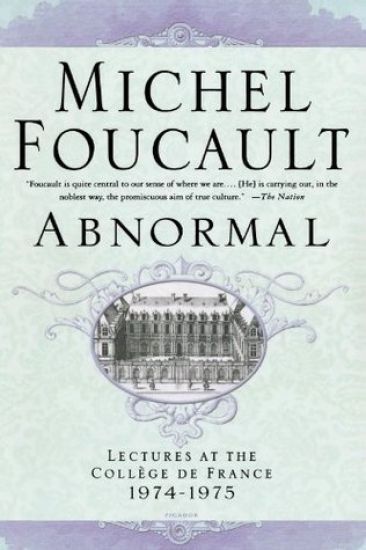
Abnormal: Lectures at the College de France 1974-1975
Michel Foucault
Picador USA
2004
nidottu
Halvin toimitettuna 27,50 €
From 1971 until his death in 1984, Foucault gave public lectures at the world-famous College de France. Attended by thousands, these were seminal events in the world of French letters. Picador is proud to be publishing the lectures in thirteen volumes. The lectures comprising Abnormal begin by examining the role of psychiatry in modern criminal justice, and its method of categorizing individuals who "resemble their crime before they commit it." Building on the themes of societal self-defense in "Society Must Be Defended," Foucault shows how and why defining "abnormality" and "normality" were prerogatives of power in the nineteenth century. The College de France lectures add immeasurably to our appreciation of Foucault's work and offer a unique window into his thinking.
"Brugen af nydelserne" er bind 2 i Foucoults store projekt om seksualitetens historie. "Brugen af nydelserne" udforsker ideen om 'pleje af selvet' (en æstetisk praksis, hvor individet aktivt former sin egen adfærd og erfaringer) og hvordan denne ide og opfattelse af selvpleje og -styring er forbundet med seksualitet i antikken. Foucault ser på det skiftende forhold mellem nydelse, seksualitet, etik og det individuelle 'selv' igennem antikken. Foucault argumenterer for, at det græske samfund havde en meget forskellig opfattelse af seksualitet end den moderne vestlige kultur. Dette understreger hans teser om, hvordan koncepter om seksualitet og lyst er kulturelt og historisk bestemte. Bogen er en vigtig del af Foucaults bredere arbejde med magt, viden og individets rolle i samfundet. Oversat af Mogens Chrom Jacobsen.
"Omsorgen for sig selv" er bind 3 i det store projekt om seksualitetens historie, som Michel Foucault lagde grunden til med Viljen til viden og nåede at følge op på med et bind 3, Omsorgen for sig selv. Mens man i Indien, Kina og Arabien tidligt indrettede sig med en´ars erotica´, en elskovskunst, har vi i Europa være meget optaget af en etik omkring det seksuelle, sekunderet af en ´scientia sexualis´, en seksualitetsvidenskad, der både vidste besked og gav anbefalinger om den rette.