Kirjojen hintavertailu – 12 859 828 kirjaa ja 27 kauppaa

Kirjailija

Miranda Brown

Kirjat ja teokset yhdessä paikassa: 7 kirjaa, julkaisuja vuosilta 2007–2023, suosituimpiin kuuluu Rethinking Recarving. Vertaile teosten hintoja ja tarkista saatavuus suomalaisista kirjakaupoista.

7 kirjaa

Kirjojen julkaisuvuodet: 2007–2023.

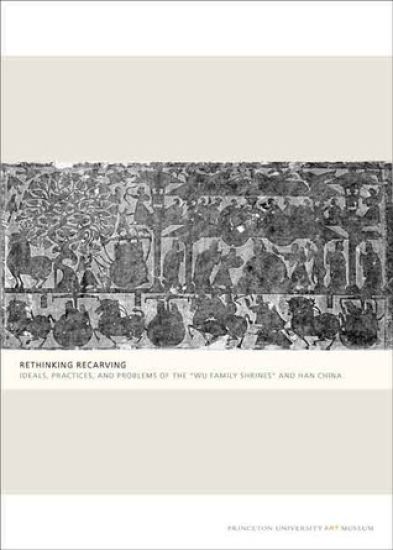
Rethinking Recarving

Rethinking Recarving

Cary Y. Liu; Michael Loewe; Lydia Thompson; Zheng Yan; Susan N. Erickson; Klaas Ruitenbeek; Jiang Yingju; Miranda Brown; Michael Nylan; Hsing I-tien; Eileen Hsiang-ling Hsu; Lillian Lan-ying Tseng; Qianshen Bai

Yale University Press
2008
pokkari
The "Wu Family Shrines" pictorial carvings from Han dynasty China (206 BCE–220 CE) are among the earliest works of Chinese art examined in an international arena. Since the eleventh century, the carvings have been identified by scholars as one of the most valuable and authentic materials for the study of antiquity. This important book presents essays by archaeologists, art and architectural historians, curators, and historians that reexamine the carvings, adding to our understanding of the long cultural history behind them and to our knowledge of Han practices. The authors offer a thorough analysis of surviving physical and visual sources, invoking fresh perspectives from new disciplines. Essays address the ideals, practices, and problems of the "Wu Family Shrines" and Han China; Han funerary art and architecture in Shandong and other regions; architectural functions and carved meanings; Qing Dynasty Reception of the Wu Family Shrines; and more. Distributed for the Princeton University Art Museum
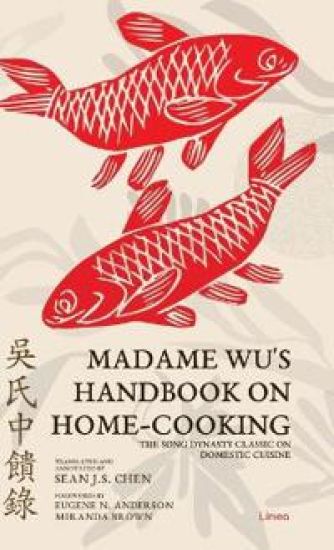
Madame Wu's Handbook on Home-Cooking

Madame Wu's Handbook on Home-Cooking

Eugene N Anderson; Miranda Brown

Linea
2023
sidottu
Madame Wu's Handbook on Home-Cooking: The Song Dynasty Classic on Domestic Cuisine is the first Western language edition of the Wushi Zhongkuilu 吳氏中饋錄, one of the earliest Chinese works on home cooking and the only culinary work written by a Chinese woman from premodern China preserved in its entirety. This translation and annotation by Sean J. S. Chen of this enigmatic cookbook reveal details on the preparation and preservation of foods essential on household tables of Medieval China. It is a valuable snap-shot of Medieval Chinese gastronomy, documenting, among other things, the myriad of home fermentation techniques used in the Song dynasty household, the beginning of soy-sauce use in Chinese cuisine, and the prevalent consumption of Central Asian foods and sweets in Eastern China. The book includes forewords by academic reviewers Eugene N. Anderson and Miranda Brown, as well as preface and notes by the translator.
Whoopee Cushion War

Whoopee Cushion War

Miranda Brown

Colorless Creations Press
2022
sidottu
The yearly Whoopee Cushion War is about to begin. Willa, the youngest of 7 siblings, has high hopes of winning the grand prize, her choice of dessert. She must be sneaky to eliminate each of her siblings, particularly Jack, the oldest, who manages to win every year. Can Willa outwit her family and finally become the whoopee cushion champion?
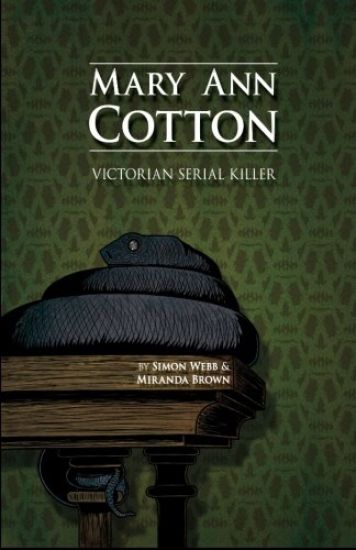
Mary Ann Cotton

Mary Ann Cotton

Miranda Brown; Simon Webb

Createspace Independent Publishing Platform
2015
pokkari
A native of County Durham, Mary Ann Cotton is regarded as the most prolific female serial killer in British history. This book from Simon Webb and Miranda Brown re-tells her story, re-examines the evidence and includes a startling new theory about the so-called West Auckland Poisoner.
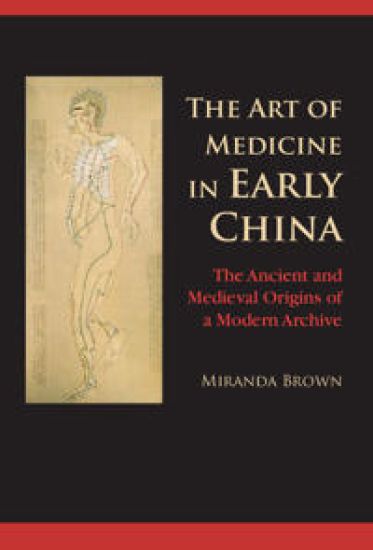
The Art of Medicine in Early China

The Art of Medicine in Early China

Miranda Brown

Cambridge University Press
2015
sidottu
In this book, Miranda Brown investigates the myths that acupuncturists and herbalists have told about the birth of the healing arts. Moving from the Han (206 BC–AD 220) and Song (960–1279) dynasties to the twentieth century, Brown traces the rich history of Chinese medical historiography and the gradual emergence of the archive of medical tradition. She exposes the historical circumstances that shaped the current image of medical progenitors: the ancient bibliographers, medieval editors, and modern reformers and defenders of Chinese medicine who contributed to the contemporary shape of the archive. Brown demonstrates how ancient and medieval ways of knowing live on in popular narratives of medical history, both in modern Asia and in the West. She also reveals the surprising and often unacknowledged debt that contemporary scholars owe to their pre-modern forebears for the categories, frameworks, and analytic tools with which to study the distant past.
The Politics of Mourning in Early China

The Politics of Mourning in Early China

Miranda Brown

State University of New York Press
2008
pokkari
Looks at mourning practices during the Han dynasty to reassess whether filial piety was the overriding model for society and governance in early China. The Politics of Mourning in Early China reevaluates the longstanding assumptions about early imperial political culture. According to most explanations, filial piety served as the linchpin of the social and political order, as all political relations were a seamless extension of the relationship between father and son-a relationship that was hierarchical, paternalistic, and personal. Offering a new perspective on the mourning practices and funerary monuments of the Han dynasty, Miranda Brown asks whether the early imperial elite did in fact imagine political participation solely along the lines of the father-son relationship or whether there were alternative visions of political association. The early imperial elite held remarkably varied and contradictory beliefs about political life, and they had multiple templates and changing scripts for political action. This book documents and explains such diversity and variation and shows that the Han dynasty practice of mourning expressed many visions of political life, visions that left lasting legacies.
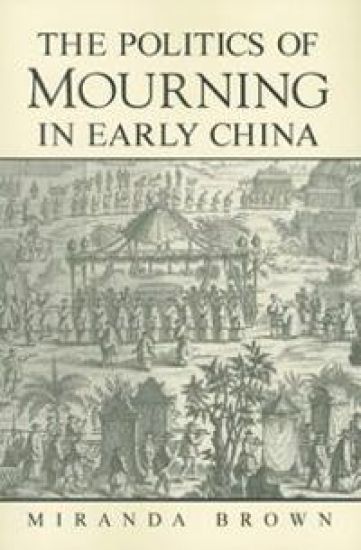
The Politics of Mourning in Early China

The Politics of Mourning in Early China

Miranda Brown

State University of New York Press
2007
sidottu
Looks at mourning practices during the Han dynasty to reassess whether filial piety was the overriding model for society and governance in early China. The Politics of Mourning in Early China reevaluates the longstanding assumptions about early imperial political culture. According to most explanations, filial piety served as the linchpin of the social and political order, as all political relations were a seamless extension of the relationship between father and son-a relationship that was hierarchical, paternalistic, and personal. Offering a new perspective on the mourning practices and funerary monuments of the Han dynasty, Miranda Brown asks whether the early imperial elite did in fact imagine political participation solely along the lines of the father-son relationship or whether there were alternative visions of political association. The early imperial elite held remarkably varied and contradictory beliefs about political life, and they had multiple templates and changing scripts for political action. This book documents and explains such diversity and variation and shows that the Han dynasty practice of mourning expressed many visions of political life, visions that left lasting legacies.