Kirjojen hintavertailu – 12 859 829 kirjaa ja 27 kauppaa

Kirjailija

Mukesh Maithani

Kirjat ja teokset yhdessä paikassa: 16 kirjaa, julkaisuja vuosilta 2011–2023, suosituimpiin kuuluu Development of Novel Stability Indicating Methods Using Liquid Chromatography. Vertaile teosten hintoja ja tarkista saatavuus suomalaisista kirjakaupoista.

16 kirjaa

Kirjojen julkaisuvuodet: 2011–2023.

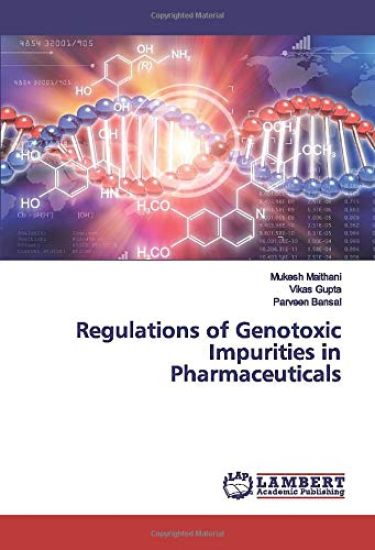
Regolamentazione delle impurità genotossiche nei prodotti farmaceutici

Regolamentazione delle impurità genotossiche nei prodotti farmaceutici

Mukesh Maithani; Vikas Gupta; Parveen Bansal

Edizioni Sapienza
2023
pokkari
Le impurit nei prodotti farmaceutici sono sostanze chimiche superflue che rimangono con gli ingredienti farmaceutici attivi (API) o si sviluppano durante la formulazione o con l'invecchiamento degli ingredienti farmaceutici e della formulazione. La presenza di queste sostanze chimiche superflue, anche in piccole quantit , pu alterare la sicurezza e l'efficacia del prodotto farmaceutico. Alcune di queste impurit , note anche come impurit genotossiche (IG), potrebbero essere mutagene o cancerogene e causare effetti negativi sul corpo umano anche in tracce. Materiali di partenza, reagenti, intermedi, prodotti secondari e prodotti di degradazione sono spesso presenti come impurit negli ingredienti farmaceutici attivi. Esistono diverse linee guida e documenti di posizione regolatori incentrati sul controllo della quantit di impurit entro limiti specifici. La presente raccolta fornisce un resoconto delle informazioni aggiornate sulle IG e passa in rassegna gli aspetti normativi relativi alle IG negli ingredienti farmaceutici attivi/formulazioni di farmaci. Viene inoltre descritta con precisione una discussione dettagliata sulle strategie di controllo nel contesto delle IG.
Vorschriften für genotoxische Verunreinigungen in Arzneimitteln

Vorschriften für genotoxische Verunreinigungen in Arzneimitteln

Mukesh Maithani; Vikas Gupta; Parveen Bansal

Verlag Unser Wissen
2023
pokkari
Bei den Verunreinigungen in Arzneimitteln handelt es sich um berfl ssige Chemikalien, die in den pharmazeutischen Wirkstoffen verbleiben oder sich w hrend der Formulierung oder bei der Alterung sowohl der pharmazeutischen Wirkstoffe als auch der Formulierung entwickeln. Das Vorhandensein dieser berfl ssigen Chemikalien, selbst in geringen Mengen, kann die Sicherheit und Wirksamkeit eines pharmazeutischen Produkts beeintr chtigen. Einige dieser Verunreinigungen, die auch als genotoxische Verunreinigungen (GIs) bekannt sind, k nnen Mutagene oder Karzinogene sein und selbst in Spuren sch dliche Auswirkungen auf den menschlichen K rper haben. Ausgangsstoffe, Reagenzien, Zwischenprodukte, Nebenprodukte und Abbauprodukte sind h ufig als Verunreinigungen in pharmazeutischen Wirkstoffen zu finden. Es gibt mehrere beh rdliche Leitlinien und Positionspapiere, die sich auf die Kontrolle der Menge an Verunreinigungen innerhalb bestimmter Grenzwerte konzentrieren. Die vorliegende Zusammenstellung enth lt aktuelle Informationen ber geografische Angaben und gibt einen berblick ber die regulatorischen Aspekte f r geografische Angaben in pharmazeutischen Wirkstoffen und Arzneimittelformulierungen. Eine detaillierte Diskussion ber Kontrollstrategien im Zusammenhang mit geografischen Angaben wird ebenfalls genau beschrieben.
Réglementation des impuretés génotoxiques dans les produits pharmaceutiques

Réglementation des impuretés génotoxiques dans les produits pharmaceutiques

Mukesh Maithani; Vikas Gupta; Parveen Bansal

Editions Notre Savoir
2023
pokkari
Les impuret s dans les produits pharmaceutiques sont des produits chimiques superflus qui restent avec les ingr dients pharmaceutiques actifs (API) ou se d veloppent pendant la formulation ou lors du vieillissement des ingr dients pharmaceutiques et de la formulation. La pr sence de ces produits chimiques superflus, m me en petite quantit , peut alt rer la s curit et l'efficacit du produit pharmaceutique. Certaines de ces impuret s, galement connues sous le nom d'impuret s g notoxiques (IG), peuvent tre mutag nes ou canc rig nes et avoir des effets ind sirables sur le corps humain, m me l' tat de traces. Les mati res premi res, les r actifs, les produits interm diaires, les sous-produits et les produits de d gradation sont souvent trouv s comme impuret s dans les ingr dients pharmaceutiques actifs. Il existe plusieurs directives r glementaires et documents de synth se ax s sur le contr le de la quantit d'impuret s dans les limites sp cifi es. La pr sente compilation rend compte des informations actualis es sur les IG et passe en revue les aspects r glementaires des IG dans les ingr dients pharmaceutiques actifs/formulations m dicamenteuses. Une discussion d taill e sur les strat gies de contr le dans le contexte des IG est galement d crite avec pr cision.
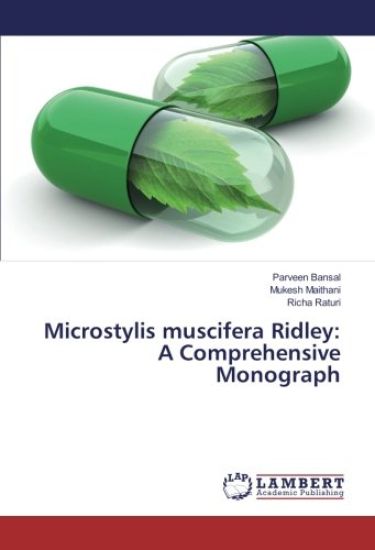
Malaxis acuminata D. Don

Malaxis acuminata D. Don

Parveen Bansal; Mukesh Maithani; Richa Raturi

Editions Notre Savoir
2022
pokkari
Les plantes Ashtawarga, qui constituent une partie importante de nombreuses formulations ayurv diques, sont galement disponibles en quantit tr s limit e et sont susceptibles d' tre remplac es par des adult rants bon march . Malaxis acuminata est l'une des plantes importantes du groupe Ashtawarga. Le minist re de l'AYUSH a sugg r l'utilisation de substituts dans les formulations en l'absence de plantes originales, mais cette option est exploit e par les fabricants, ce qui fait que cette plante pr cieuse est ignor e. Il devient donc important de mettre en vidence les potentiels th rapeutiques de cette plante devant les scientifiques afin qu'une recherche justifi e soit men e sur une plante importante mais ignor e. La litt rature moderne et les sources Internet ne fournissent qu'un nombre limit de donn es avec des preuves scientifiques, alors que les textes anciens contiennent des preuves pr cieuses dans les langues r gionales ou en sanskrit. Par cons quent, les utilisations r elles de la plante ne sont pas bien comprises par la fraternit scientifique. L'objectif de cette compilation est de rassembler tous les potentiels th rapeutiques sur une seule plateforme afin de permettre aux scientifiques travaillant sur ces plantes de conna tre les indices scientifiques. La compilation refl te les multiples utilisations des composants actifs des plantes dans un certain nombre de formulations ayurv diques utiles dans une pl thore de troubles.
Malaxis acuminata D. Don

Malaxis acuminata D. Don

Parveen Bansal; Mukesh Maithani; Richa Raturi

Edizioni Sapienza
2022
pokkari
Le piante Ashtawarga, essendo una parte importante di molte formulazioni ayurvediche, sono disponibili in quantit molto limitata e possono essere sostituite da adulteranti a basso costo. La Malaxis acuminata una delle piante importanti del gruppo Ashtawarga. Il Dipartimento di AYUSH ha suggerito l'uso di sostituti nelle formulazioni in assenza di piante originali, ma questa opzione viene sfruttata dai produttori rendendo questa preziosa pianta in condizioni ignorate. Diventa quindi importante mettere in evidenza le potenzialit terapeutiche di questa pianta di fronte agli scienziati, in modo da condurre una ricerca giustificata su una pianta importante ma ignorata. Nella letteratura moderna/fonti internet sono disponibili pochi dati con evidenze scientifiche, mentre i testi antichi mostrano preziose testimonianze nelle lingue regionali o in sanscrito. Di conseguenza, gli usi reali della pianta non sono ben compresi dalla comunit scientifica. Lo scopo di questa raccolta quello di riunire tutti i potenziali terapeutici in un'unica piattaforma, in modo da consentire agli scienziati che lavorano su queste piante di conoscerne gli indizi scientifici. La compilazione riflette i molteplici usi dei componenti attivi delle piante in una serie di formulazioni ayurvediche utili in una pletora di disturbi.
Malaxis acuminata D. Don

Malaxis acuminata D. Don

Parveen Bansal; Mukesh Maithani; Richa Raturi

Verlag Unser Wissen
2022
pokkari
Ashtawarga-Pflanzen, die ein wichtiger Bestandteil vieler ayurvedischer Rezepturen sind, sind ebenfalls nur in sehr begrenzten Mengen verf gbar und k nnen durch billige Verf lschungen ersetzt werden. Malaxis acuminata ist eine der wichtigsten Pflanzen der Ashtawarga-Gruppe. Das AYUSH-Ministerium hat vorgeschlagen, Ersatzstoffe in Formulierungen zu verwenden, wenn keine Originalpflanzen zur Verf gung stehen, doch diese M glichkeit wird von den Herstellern ausgenutzt, so dass diese wertvolle Pflanze nicht mehr genutzt wird. Daher ist es wichtig, das therapeutische Potenzial dieser Pflanze vor den Wissenschaftlern hervorzuheben, damit eine gerechtfertigte Forschung ber eine wichtige, aber ignorierte Pflanze durchgef hrt wird. In der modernen Literatur/Internetquellen sind nur wenige Daten mit wissenschaftlichen Beweisen verf gbar, w hrend alte Texte in regionalen Sprachen oder in Sanskrit wertvolle Beweise enthalten. Daher sind die tats chlichen Verwendungszwecke der Pflanze in der Wissenschaft nicht gut bekannt. Ziel dieser Zusammenstellung ist es, alle therapeutischen Potenziale auf einer einzigen Plattform zusammenzufassen, um den Wissenschaftlern, die sich mit diesen Pflanzen besch ftigen, die M glichkeit zu geben, die wissenschaftlichen Anhaltspunkte zu kennen. Die Zusammenstellung spiegelt die vielf ltigen Verwendungsm glichkeiten der aktiven Bestandteile der Pflanzen in einer Reihe von ayurvedischen Rezepturen wider, die bei einer Vielzahl von Erkrankungen n tzlich sind.
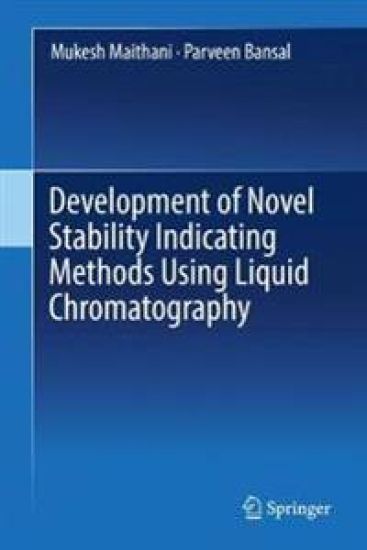
Development of Novel Stability Indicating Methods Using Liquid Chromatography

Development of Novel Stability Indicating Methods Using Liquid Chromatography

Mukesh Maithani; Parveen Bansal

Springer Verlag, Singapore
2020
nidottu
Reversed-phase high-performance liquid chromatography (RP-HPLC) has become the most widely used method for pharmaceutical analysis, as it ensures accuracy, specificity and reproducibility for the quantification of drugs, while avoiding interference from any of the excipients that are normally present in pharmaceutical dosage forms. This book presents a simple methodology for developing stability-indicating methods and offers a ‘how-to guide’ to creating novel stability-indicating methods using liquid chromatography. It provides the detailed information needed to devise a stability-indicating method for drug substances and drug products that comply with international regulatory guidelines. As such, it is a must-read for anyone engaged in analytical and bioanalytical chemistry: professionals at reference, test, and control laboratories; students and academics at research laboratories, and scientists working for chemical, pharmaceutical, and biotechnology companies.
Development of Novel Stability Indicating Methods Using Liquid Chromatography

Development of Novel Stability Indicating Methods Using Liquid Chromatography

Mukesh Maithani; Parveen Bansal

Springer Verlag, Singapore
2019
sidottu
Reversed-phase high-performance liquid chromatography (RP-HPLC) has become the most widely used method for pharmaceutical analysis, as it ensures accuracy, specificity and reproducibility for the quantification of drugs, while avoiding interference from any of the excipients that are normally present in pharmaceutical dosage forms. This book presents a simple methodology for developing stability-indicating methods and offers a ‘how-to guide’ to creating novel stability-indicating methods using liquid chromatography. It provides the detailed information needed to devise a stability-indicating method for drug substances and drug products that comply with international regulatory guidelines. As such, it is a must-read for anyone engaged in analytical and bioanalytical chemistry: professionals at reference, test, and control laboratories; students and academics at research laboratories, and scientists working for chemical, pharmaceutical, and biotechnology companies.