Kirjojen hintavertailu – 12 903 724 kirjaa ja 27 kauppaa

Kirjailija

Murray N. Rothbard

Kirjat ja teokset yhdessä paikassa: 54 kirjaa, julkaisuja vuosilta 1994–2025, suosituimpiin kuuluu America's Great Depression. Vertaile teosten hintoja ja tarkista saatavuus suomalaisista kirjakaupoista.

Nimi esiintyy myös muodoissa: Murray N Rothbard

54 kirjaa

Kirjojen julkaisuvuodet: 1994–2025.

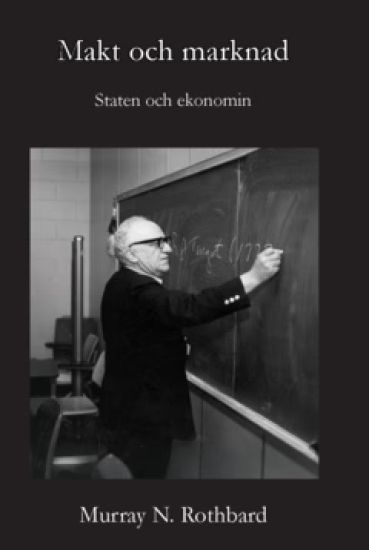
Makt och marknad : Staten och ekonomin

Makt och marknad : Staten och ekonomin

Murray N. Rothbard; Per Bylund

fredrik_pettersson93.hotmail.se
2025
sidottu
Makt och Marknad: Staten och Ekonomin av Murray N. Rothbard, översatt av Fredrik Pettersson, är en teoretisk och ekonomisk analys av statens påverkan på marknaden. Verket är en fristående del av Rothbards större arbete Människa, ekonomi och stat och belyser statens roll som en aktör som ingriper i fria marknader genom våldsamma interventioner, såsom beskattning och reglering. Rothbard argumenterar för att marknaden kan tillhandahålla samtliga funktioner som traditionellt tillskrivs staten, inklusive försvar och rättskipning, på ett frivilligt och effektivt sätt. Boken är både banbrytande och kontroversiell, då den teoretiskt ifrågasätter statens nödvändighet ur ett ekonomiskt perspektiv och föreslår att ett samhälle utan stat är genomförbart. Rothbard använder en praxeologisk metod för att visa på konflikt och exploatering som oundvikliga följder av statlig intervention, i kontrast till den harmoni som uppstår på en fri marknad. Makt och Marknad är ett centralt verk inom den libertarianska filosofin och den österrikiska ekonomiska skolan.
Amerikas Große Depression

Amerikas Große Depression

Murray N Rothbard

tredition GmbH
2024
pokkari
Murray Rothbard beschreibt die Gro e Depression von 1929 extrem detailliert und erkl rt dabei ganz konkret, warum Pr sident Herbert Hoover keineswegs, wie oft angenommen, eine Laissez-faire-Politik betrieben hat, sondern ganz im Gegenteil: Unter Pr sident Hoover wurden bis dahin nie dagewesene Interventionen in den freien Markt betrieben, die der Vorreiter des New Deal unter Franklin D. Roosevelt darstellten und die Inflation sowie Arbeitslosigkeit in bislang unerreichte H hen getrieben haben.
Vad har staten gjort med våra pengar?

Vad har staten gjort med våra pengar?

Murray N. Rothbard; Per Bylund

Fredrik Pettersson
2024
nidottu
Vad har staten gjort med våra pengar? är en svensk översättning av Murray N. Rothbards klassiska verk What Has Government Done to Our Money?, publicerad av Ludwig von Mises Institute. I denna kortfattade men kraftfulla bok undersöker Rothbard hur statlig inblandning har undergrävt penningvärdet och orsakat ekonomiska kriser genom inflation och manipulering av pengar. Boken ger en tydlig och lättbegriplig introduktion till österrikisk monetär teori och förklarar hur och varför pengar förlorar sitt värde. Perfekt för alla som vill förstå grunderna i vad pengar är och hur statlig politik påverkar våra pengar på ett negativt sätt.
Ekonomiska depressioner : deras orsak och botemedel

Ekonomiska depressioner : deras orsak och botemedel

Murray N. Rothbard

Fredrik Pettersson
2024
nidottu
Detta verk av Murray Rothbard undersöker orsakerna till ekonomiska depressioner och presenterar en kritisk analys av statens roll i att orsaka och förvärra ekonomiska cykler genom bankkreditexpansion. Rothbard diskuterar hur inflation, skapad av centralbanker, leder till konstgjorda uppgångar som i sin tur orsakar oundvikliga nedgångar och depressioner. Rothbard utgår från Ludwig von Mises' österrikiska konjunkturcykelteori, där statligt ingripande och kreditexpansion pekas ut som huvudorsaker till ekonomiska kriser, med förslaget att endast en återgång till en frimarknadsekonomi kan förhindra dessa cykler?.
Utbildning : fri och påtvingad

Utbildning : fri och påtvingad

Murray N. Rothbard

Fredrik Pettersson
2024
nidottu
Utbildning: Fri och Påtvingad av Murray N. Rothbard undersöker de grundläggande frågorna kring statens roll i utbildning och argumenterar för individens rätt att själv bestämma över sin utbildning. Rothbard analyserar hur statligt tvång i skolgång underminerar den individuella utvecklingen och främjar likformighet snarare än mångfald. Genom historiska exempel och teoretisk analys visar författaren att fri utbildning, där staten inte styr, bättre främjar ett samhälle baserat på frivilliga associationer och individuell frihet.
What Has Government Done to Our Money?

What Has Government Done to Our Money?

Murray N. Rothbard

Must Have Books
2021
nidottu

Halvin toimitettuna 12,00 €

What Has Government Done to Our Money? was first published in 1962 as "Money, free and unfree", and details the history of money, from early barter systems, to the gold standard, to present-day systems of paper money. Rothbard explains how money was originally developed, and why gold was chosen as the preferred commodity to use as money. The author also explains how the gold standard makes money a commodity, and how market forces create a stable economy. Rothbard shows that many European governments went bankrupt due to World War I and left the gold standard in order to try to solve their financial issues, which was not the right solution. He also argues that this strategy was partially responsible for World War II and led to economic problems throughout the world.
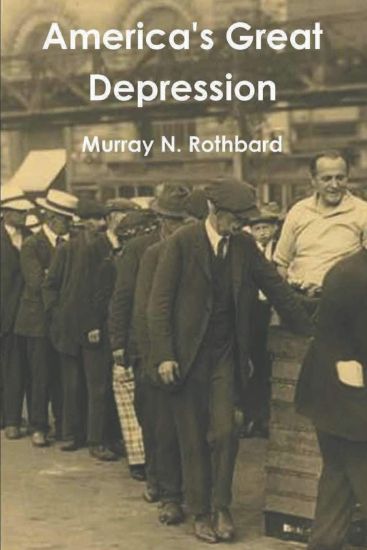
America's Great Depression

America's Great Depression

Murray N. Rothbard; Murray Rothbard

Must Have Books
2021
nidottu

Halvin toimitettuna 21,20 €

First published in 1963, America's Great Depression is the classic treatise on the 1930s Great Depression and its root causes. Author Rothbard blames government interventionist policies for magnifying the duration, breadth, and intensity of the Great Depression. He explains how government manipulation of the money supply sets the stage for the familiar "boom-bust" phases of the modern market which we know all too well. He then details the inflationary policies of the Federal Reserve from 1921 to 1929 as evidence that the depression was essentially caused not by speculation, but by government and central bank interference in the market. Clearly we find history tragically repeating itself today. A must-read.
Never a Dull Moment: A Libertarian Look at the Sixties

Never a Dull Moment: A Libertarian Look at the Sixties

Murray N. Rothbard

Ludwig Von Mises Institute
2016
nidottu
For Murray Rothbard, libertarianism wasn't an intellectual parlor game, nor was it a personal affectation: for him, it was a banner that was meant to be carried into battle. Ever the happy warrior, he sought to bring the radical libertarian perspective to bear on the events of the day, and it was a task he delighted in. From 1967 thru 1968, Rothbard churned out 58 columns for the Freedom Newspapers, addressing the campus revolt; the massive antiwar demonstrations; the Six-Day War between Israel and the Arab powers; the Newark riots; the Vietnam war; the persecution of H. Rap Brown, the assassination of Martin Luther King, the abdication of Lyndon Baines Johnson, the rise of Richard Nixon - in those two crucial years there was, as they say, never a dull moment.
The Essential von Mises

The Essential von Mises

Murray N. Rothbard

Createspace Independent Publishing Platform
2016
nidottu
A year following the death of Ludwig von Mises, Murray Rothbard wrote the book designed to inspire a new generation to take up the Misesian cause in economic theory and political action. His task was to provide an overview of Mises's writings and place in the social sciences. The essay achieved extraordinary fame. We might even say that "The Essential von Mises," distributed in the form of a mini-book, was more responsible for immortalizing Mises than any other essay ever written. The Mises Institute is thrilled to be able to bring it back again. It has lost none of its power in the intervening years. Here it is coupled with an outstanding biographical piece that Rothbard wrote in the 1990s: "Scholar, Creator, Hero." It goes into greater biographical depth, and incorporates many discoveries made over twenty years. The content really serves as an expansion on the first essay rather than an updated form of the same, so it makes sense to have them placed together. Therefore this book might be called "Rothbard on Mises" but it really serves as the best, short, all-round introduction to Misesian thought to ever appear in print. It is all the essentials of what you must know about this great man and thinker. By the way, the cover is extremely cool, though you might not be able to tell it from the small picture. It is actually made from dozens of tiny pictures of Mises, and really constitutes an artistic and technological marvel.
The Rothbard Reader

The Rothbard Reader

Murray N. Rothbard

Ludwig Von Mises Institute
2016
nidottu
Few economists manage to produce a body of work that boasts a serious following twenty years after their deaths. Murray N. Rothbard is a rare exception. More than two decades since his passing, his influence lives on, both in the work of a new generation of social scientists, and among a growing number of the general public. One reason for Rothbard's continuing popularity is his ability to reach across disciplines, and to connect them: unlike many contemporary economists, who specialize in increasingly narrow fields within the science, Rothbard's research agenda was expansive and interdisciplinary, covering most of the social sciences and humanities. Some readers of this book will already be familiar with Rothbard's major works, such as his path-breaking treatise on economics, Man, Economy, and State. Yet Rothbard also produced hundreds of shorter works for both academic and popular audiences. Unfortunately, many lack the time to explore his writings; what's more, his oeuvre is so enormous it is often difficult to know where to begin. This book aims to solve these problems by providing a window into Rothbard's achievements in the social sciences, humanities, and beyond. It includes introductory, intermediate, and advanced material, to ensure the book can be enjoyed by readers of all levels of understanding and familiarity with Rothbard's work. Therefore although it is intended primarily for newcomers, veteran readers will also find much to discover or re-discover in these pages. The individual articles in this collection can be read in any order; with that in mind, we propose two ways to explore them. Those new to Rothbard's writing may want to begin with the shorter, more accessible chapters that interest them most, before continuing on to more difficult topics. However, we have intentionally arranged the articles and sections so that readers who prefer a systematic discussion, or who are already acquainted with Rothbard's ideas, can read the book cover to cover. The volume begins with a personal look at Rothbard's life and work, as told in his own words. The opening section, "Rothbard: Man, Economist, and Anti-Statist," brings together three rare interviews, each highlighting different aspects of his unique personality and worldview. Readers will soon recognize an overarching theme running through Rothbard's life and work: a passion for liberty, a unifying principle in his thought, no matter the discipline. This commitment can be seen further in the next section, "Foundations of Social Science and the Free Society." In the first essay, Rothbard stresses "The Discipline of Liberty" as the foundation for the study of humanity. This central interest serves as inspiration and foundation for the project that follows, namely, an outline of the human sciences and their primary method of investigation: praxeology. Although Rothbard wrote on many subjects, his training-and heart-were in economics, and so too are the majority of the writings in this collection. The next two sections provide a concise exposition of economic theory, beginning with individual value and choice. They explore in turn Rothbard's insights into the "Principles of Economics and Government Intervention" and "Money, Banking, and the Business Cycle." Together, these chapters provide a brief overview of Rothbard's more comprehensive account of economic theory in Man, Economy, and State. Austrian economists have always been fascinated by the history of their science, and Rothbard was no exception. In fact, his writings on the subject are among his most original and controversial. The section devoted to the "History of Economic Thought" surveys the contributions of many influential economists, outlining the development of economics from mercantilism to the modern Austrian school. However, Rothbard's historical interests extended far beyond the history of economic doctrines. The section on "Economic History" illustrates how he consistently applied economic th

Anatomy of the State

Anatomy of the State

Murray N. Rothbard

Createspace Independent Publishing Platform
2015
nidottu

Halvin toimitettuna 12,40 €

LARGE PRINT EDITION More at LargePrintLiberty.com. This gives a succinct account of Rothbard's view of the state. Following Franz Oppenheimer and Albert Jay Nock, Rothbard regards the state as a predatory entity. It does not produce anything but rather steals resources from those engaged in production. In applying this view to American history, Rothbard makes use of the work of John C. CalhounHow can an organization of this type sustain itself? It must engage in propaganda to induce popular support for its policies. Court intellectuals play a key role here, and Rothbard cites as an example of ideological mystification the work of the influential legal theorist Charles Black, Jr., on the way the Supreme Court has become a revered institution.
The Ethics of Liberty (Large Print Edition)

The Ethics of Liberty (Large Print Edition)

Murray N. Rothbard

Createspace Independent Publishing Platform
2014
nidottu

Halvin toimitettuna 22,30 €

LARGE PRINT EDITION More at LargePrintLiberty.com. This book is a masterpiece of argumentation, and shockingly radical in its conclusions. Rothbard says that the very existence of the state--the entity with a monopoly privilege to invade private property--is contrary to the ethics of liberty. A society without a state is not only viable; it is the only one consistent with natural rights. In this volume, Rothbard first familiarizes the reader with Natural Law theory. After this ethical introduction, he goes on to address numerous ethical issues, showing how liberty is in the right in every case. In the final two sections, Rothbard enumerates the state's role in society as inherently anti-liberty, and details the structure of alternate theories of liberty.