Kirjojen hintavertailu – 12 903 724 kirjaa ja 27 kauppaa

Kirjailija

Murray N. Rothbard

Kirjat ja teokset yhdessä paikassa: 54 kirjaa, julkaisuja vuosilta 1994–2025, suosituimpiin kuuluu America's Great Depression. Vertaile teosten hintoja ja tarkista saatavuus suomalaisista kirjakaupoista.

Nimi esiintyy myös muodoissa: Murray N Rothbard

54 kirjaa

Kirjojen julkaisuvuodet: 1994–2025.

Por una Nueva Libertad: El Manifiesto Libertario

Por una Nueva Libertad: El Manifiesto Libertario

Murray N. Rothbard

Createspace Independent Publishing Platform
2014
nidottu
Murray Rothbard era conocido como el "Sr. Libertario", y tambi n como "el enemigo m s grande del Estado." Y lo sigue siendo. S , l tuvo muchos predecesores de quienes aprendi toda la tradici n liberal cl sica, los economistas austriacos, la tradici n estadounidense anti-guerra, y la tradici n de derechos naturales. Sin embargo, fue l quien puso todas las piezas juntas en un sistema unificado que parece poco posible en un primer momento, pero inevitable una vez que ha sido definido y defendido por Rothbard. Las piezas del sistema son sencillas y claras (propiedad sobre uno mismo, estrictos derechos de propiedad, libre mercado, anti-estado en todo aspecto concebible), pero las implicancias estremecen la Tierra. Este libro, m s que cualquier otro, explica porqu Rothbard crece en estatura cada a o (su influencia ha aumentado mucho desde su muerte) y por qu el Rothbardianismo tiene tantos enemigos en la izquierda, la derecha y el centro. En palabras simples, la ciencia de la libertad que l trajo a la luz es tan emocionante en la esperanza que crea de un mundo libre, como intolerante de errores. Su coherencia l gica y moral, junto con su fuerza explicativa emp rica, representa una amenaza para cualquier visi n intelectual que pretende usar al Estado para dar forma al mundo seg n un plan pre-programado. Y al mismo tiempo impacta al lector con una visi n esperanzadora de lo que podr a ser." For a New Liberty", Spanish EditionTraducci n por MisesHispano.org.

Por una Nueva Libertad (Edición en Letras Grandes): El Manifiesto Libertario

Por una Nueva Libertad (Edición en Letras Grandes): El Manifiesto Libertario

Murray N. Rothbard

Createspace Independent Publishing Platform
2014
nidottu
Edici n en Letras Grandes M s en LargePrintLiberty.com. Murray Rothbard era conocido como el "Sr. Libertario", y tambi n como "el enemigo m s grande del Estado." Y lo sigue siendo. S , l tuvo muchos predecesores de quienes aprendi toda la tradici n liberal cl sica, los economistas austriacos, la tradici n estadounidense anti-guerra, y la tradici n de derechos naturales. Sin embargo, fue l quien puso todas las piezas juntas en un sistema unificado que parece poco posible en un primer momento, pero inevitable una vez que ha sido definido y defendido por Rothbard. Las piezas del sistema son sencillas y claras (propiedad sobre uno mismo, estrictos derechos de propiedad, libre mercado, anti-estado en todo aspecto concebible), pero las implicancias estremecen la Tierra. Este libro, m s que cualquier otro, explica porqu Rothbard crece en estatura cada a o (su influencia ha aumentado mucho desde su muerte) y por qu el Rothbardianismo tiene tantos enemigos en la izquierda, la derecha y el centro. En palabras simples, la ciencia de la libertad que l trajo a la luz es tan emocionante en la esperanza que crea de un mundo libre, como intolerante de errores. Su coherencia l gica y moral, junto con su fuerza explicativa emp rica, representa una amenaza para cualquier visi n intelectual que pretende usar al Estado para dar forma al mundo seg n un plan pre-programado. Y al mismo tiempo impacta al lector con una visi n esperanzadora de lo que podr a ser." For a New Liberty", Spanish EditionTraducci n por MisesHispano.org.
Man, Economy, and State, V2: A Treatise on Economic Principles

Man, Economy, and State, V2: A Treatise on Economic Principles

Murray N. Rothbard

Literary Licensing, LLC
2013
sidottu

Halvin toimitettuna 63,40 €

""Man, Economy, and State, V2: A Treatise on Economic Principles"" is a comprehensive book on economics written by Murray N. Rothbard. The book is the second volume of a two-volume series and focuses on the principles of economics. It covers a wide range of economic topics including production, consumption, exchange, market structures, and government intervention in the economy. The book is written in a clear and concise style and is aimed at both students and professionals in the field of economics. The author presents a libertarian perspective on economics, arguing that free markets, individual freedom, and private property are the key to economic prosperity. The book is a classic in the field of economics and has been widely read and studied by economists and policymakers around the world. This is a new release of the original 1962 edition. This scarce antiquarian book is a facsimile reprint of the old original and may contain some imperfections such as library marks and notations. Because we believe this work is culturally important, we have made it available as part of our commitment for protecting, preserving, and promoting the world's literature in affordable, high quality, modern editions, that are true to their original work.
Man, Economy, and State, V1: A Treatise on Economic Principles

Man, Economy, and State, V1: A Treatise on Economic Principles

Murray N. Rothbard

Literary Licensing, LLC
2013
sidottu
Man, Economy, and State is a comprehensive treatise on economic principles written by Murray N. Rothbard. The book is divided into two volumes, with Volume 1 focusing on economic theory and Volume 2 addressing specific policy issues. In Volume 1, Rothbard explores the fundamental principles of economics, including the nature of human action, the role of markets in allocating resources, and the importance of property rights. He also examines the concept of value, the theory of production, and the role of money in the economy. Throughout the book, Rothbard emphasizes the importance of individual freedom and the free market. He argues that government intervention in the economy is not only unnecessary, but also harmful to economic growth and prosperity. Overall, Man, Economy, and State is a seminal work in the field of economics, offering a comprehensive and rigorous analysis of economic principles and their application to real-world policy issues. This is a new release of the original 1962 edition. This scarce antiquarian book is a facsimile reprint of the old original and may contain some imperfections such as library marks and notations. Because we believe this work is culturally important, we have made it available as part of our commitment for protecting, preserving, and promoting the world's literature in affordable, high quality, modern editions, that are true to their original work.
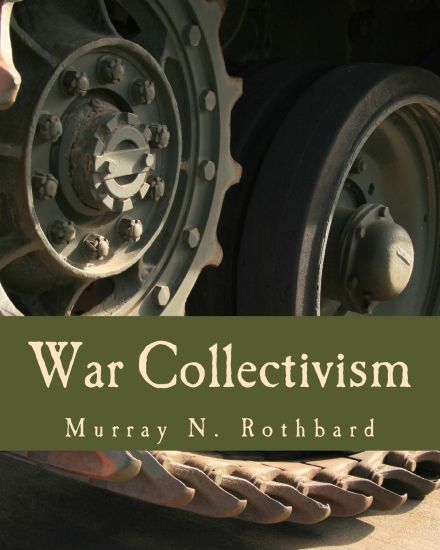
War Collectivism (Large Print Edition): Power, Business, and the Intellectual Class in World War I
LARGE PRINT EDITION More at LargePrintLiberty.com More than any other single period, World War I was the critical watershed for the American business system. It was a "war collectivism," a totally planned economy run largely by big-business interest through the instrumentality of the central government, which served as the model, the precedent, and the inspiration for state corporate capitalism for the remainder of the century.
The Panic of 1819: Reactions and Policies

The Panic of 1819: Reactions and Policies

Murray N. Rothbard

Literary Licensing, LLC
2011
sidottu
""The Panic of 1819: Reactions and Policies"" by Murray N. Rothbard is a comprehensive analysis of the economic crisis that occurred in the United States in 1819. The book explores the causes of the panic, including the expansion of credit and the overproduction of goods, and the subsequent reactions and policies that were implemented by the government and financial institutions to combat the crisis. Rothbard delves into the various economic theories and debates that were prevalent during this time period, including the role of government intervention in the economy and the efficacy of a free-market system. He also examines the impact of the panic on different sectors of society, such as farmers, merchants, and laborers, and how they responded to the crisis. Throughout the book, Rothbard provides detailed historical analysis and draws on primary sources to support his arguments. He also offers a critical assessment of the policies that were implemented in response to the panic, arguing that they ultimately prolonged the economic downturn and stifled growth. Overall, ""The Panic of 1819: Reactions and Policies"" is a valuable resource for anyone interested in the history of American economics and the impact of financial crises on society. Columbia Studies In The Social Sciences, No. 605. This scarce antiquarian book is a facsimile reprint of the old original and may contain some imperfections such as library marks and notations. Because we believe this work is culturally important, we have made it available as part of our commitment for protecting, preserving, and promoting the world's literature in affordable, high quality, modern editions, that are true to their original work.
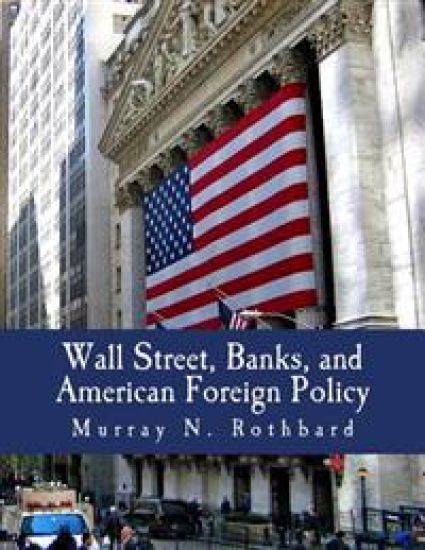
Wall Street, Banks, and American Foreign Policy (Large Print Edition)

Wall Street, Banks, and American Foreign Policy (Large Print Edition)

Murray N. Rothbard

Createspace Independent Publishing Platform
2011
nidottu
LARGE PRINT EDITION More at LargePrintLiberty.com This fiery monograph shows a side of Murray Rothbard not seen in his theoretical treatise: his ability to employ "power elite" analysis to understand the relationship between money, power, and war. Rather than allow the left to dominate this approach to history, Rothbard shows how wealthy elites are only able to manipulate world affairs via their connection to state power. Those mainstream historians might deride Rothbard's history as a "conspiracy" approach, Rothbard himself is only out to show that world affairs are not random historical forces but the consequence of choices and paths chosen by real human beings. Here he gives the grim details of how a network of banks, bond dealers, and Wall Street insiders have both favored war and profited from it.
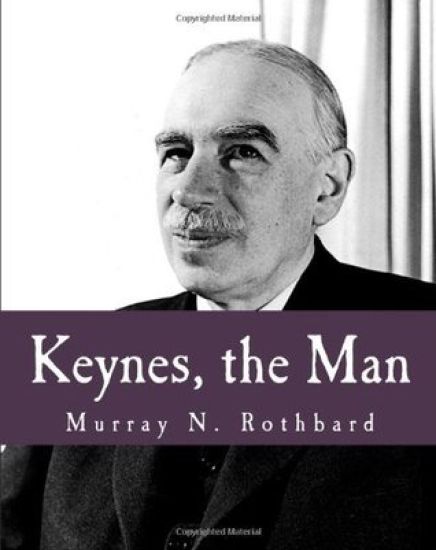
Keynes, the Man (Large Print Edition)

Keynes, the Man (Large Print Edition)

Murray N. Rothbard

Createspace Independent Publishing Platform
2011
nidottu
LARGE PRINT EDITION More at LargePrintLiberty.com Here is Rothbard's mini-biography of Lord Keynes, one that makes use of all modern research to reconstruct Keynes's life and works in a way that is absolutely devastating. We read about his schooling, his secret societies, his political associations and sponsors - as well as his intellectual shifts and dodges throughout his life. To put it mildly, Keynes was not the genius liberal of his reputation. He shifty, duplicitous, and manipulative from beginning to end, and his deliberately obfuscating economic theory reflects those traits. When the newscasters go on about how Keynes saved us and will continue to do so, it would be good to be armed with the truth about the man who reconstructed economics as he saw fit. You will be alternately amazed and outraged that the thoughts of this man have inspired government policy for so many decades. In fact, as Murray demonstrates, that explains so much about what is wrong with government policy. Murray Rothbard writes with spunk and verve in this investigative report.
The Mystery of Banking (Large Print Edition)

The Mystery of Banking (Large Print Edition)

Murray N. Rothbard

Createspace Independent Publishing Platform
2010
nidottu

Halvin toimitettuna 21,30 €

LARGE PRINT EDITION More at LargePrintLiberty.com. Talk about great timing. Rothbard's extraordinary book unravels the mystery of banking: what is legitimate enterprise and what is a government-backed shell game that can't last. His explanation is clear enough for anyone to follow and yet precise and rigorous enough to be the best textbook for college classes on the topic. This is because its expositional clarity--in its history and theory--is essentially unrivaled. Most notably, he uses the T-account method of explaining the relationship between deposits and loans, showing the inherent instability of fractional-reserve banking and how it sets the stage for centralization, inflation, and the boom-bust cycle. But there is more. This book provides an explanation of money's origins and its meaning in the free market. The abstract theory is here, but always with real application to history and modern banking practice. Never does a paragraph go by without an example drawn from his massive knowledge of the subject.
What Has Government Done to Our Money? (Large Print Edition)

What Has Government Done to Our Money? (Large Print Edition)

Murray N. Rothbard

Createspace Independent Publishing Platform
2010
nidottu
LARGE PRINT EDITION More at LargePrintLiberty.com When this gem first appeared in 1963, it took the form of a small paperback designed for mass distribution. We've conjured up that spirit again with this special edition of Rothbard's primer on money and government. Innumerable economists, investors, commentators, and authors have learned from this book through the decades. After fifty years, it remains the best book in print on the topic, a real manifesto of sound money. Rothbard boils down the Austrian theory to its essentials. The book also made huge theoretical advances. Rothbard was the first to prove that the government, and only the government, can destroy money on a mass scale, and he showed exactly how they go about this dirty deed. But just as importantly, it is beautifully written. He tells a thrilling story because he loves the subject so much. The passion that Murray feels for the topic comes through in the prose and transfers to the reader. Readers become excited about the subject, and tell others. Students tell professors. Some, like the great Ron Paul of Texas, have even run for political office after having read it. Rothbard shows precisely how banks create money out of thin air and how the central bank, backed by government power, allows them to get away with it. He shows how exchange rates and interest rates would work in a true free market. When it comes to describing the end of the gold standard, he is not content to describe the big trends. He names names and ferrets out all the interest groups involved. Since Rothbard's death, scholars have worked to assess his legacy, and many of them agree that this little book is one of his most important. Though it has sometimes been inauspiciously packaged and is surprisingly short, its argument took huge strides toward explaining that it is impossible to understand public affairs in our time without understanding money and its destruction.
Economic Depressions (Large Print Edition): Their Cause and Cure

Economic Depressions (Large Print Edition): Their Cause and Cure

Murray N. Rothbard

Createspace Independent Publishing Platform
2010
nidottu
LARGE PRINT EDITION More at LargePrintLiberty.com Need a short monograph on Austrian business cycle theory? This is the one to get. Murray Rothbard was the master of reducing complicated theories to their very essence while retaining theoretical rigor, and this essay is a case in point. It was written in 1969 and published in the form of a tiny book that achieved a huge circulation. It has not been in print since that time, but it is now back in this new release. It is thrilling how Rothbard is able to present the theory in an easy-to-digest format. Its continued relevance speaks to an aspect of the Austrian theory that other theories can't boast. It is a real theory that applies across time and place, and its persuasive power is not contingent on the particulars of any individual boom bust cycle. You will not only learn from this 50-page book; it is the perfect item to pass on to others who are wondering about the economic crisis of 2008 and following.
Left & Right (Large Print Edition): The Prospects for Liberty

Left & Right (Large Print Edition): The Prospects for Liberty

Murray N. Rothbard

Createspace Independent Publishing Platform
2010
nidottu
LARGE PRINT EDITION More at LargePrintLiberty.com For many who have read this book-length essay, it marked a turning point in a new understanding. The mainstream will forever attempt to pigeonhole belief systems based on the left-right dichotomy. The right supposedly favors economic freedom plus militarism, while the left favors socialism plus peace. Rothbard says that this breakdown is not only incoherent, it has no support in the history of ideas. In fact, Rothbard goes further to say that traditionally, the right has been the party of the establishment, of stasis, of the status quo, while the left in history has been the party of progress, freedom, and peace. These roles have periodically reversed based on the times and the country in question. But in these reversals, the intellectual coherence of these paradigms has gotten lost and confused. Rothbard's broad look is a mind-opening experience. It has the effect of liberating you from the prevailing paradigm. Rothbard's main task, however, is to provide a completely new and ideologically consistent lens with which to view history and current events.
The Origins of the Federal Reserve (Large Print Edition)

The Origins of the Federal Reserve (Large Print Edition)

Murray N. Rothbard

Createspace Independent Publishing Platform
2009
nidottu
LARGE PRINT EDITION More at LargePrintLiberty.com Where did this thing called the Fed come from? Murray Rothbard has the answer here -- in phenomenal detail that will make your head spin. In one extended essay, one that reads like a detective story, he has put together the most comprehensive and fascinating account based on a century's accumulation of scholarship. The conclusion is that the Fed did not originate as a policy response to national need. It wasn't erected for any of its stated purposes. It was founded by two groups of elites: government officials and large financial and banking interests. Rothbard adds a third critical element: economists hired to give the scheme a scientific patina.