Kirjojen hintavertailu – 12 859 819 kirjaa ja 27 kauppaa

Kirjailija

Nancy Frey

Kirjat ja teokset yhdessä paikassa: 146 kirjaa, julkaisuja vuosilta 2001–2026, suosituimpiin kuuluu Your Students, My Students, Our Students. Vertaile teosten hintoja ja tarkista saatavuus suomalaisista kirjakaupoista.

146 kirjaa

Kirjojen julkaisuvuodet: 2001–2026.

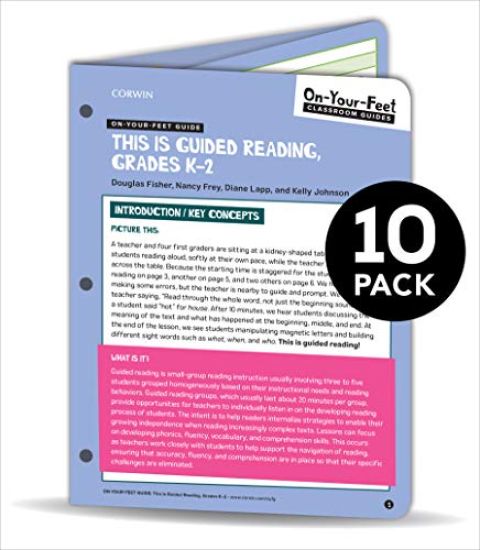
BUNDLE: Fisher: On-Your-Feet Guide: This is Guided Reading, Grades K-2: 10 Pack

BUNDLE: Fisher: On-Your-Feet Guide: This is Guided Reading, Grades K-2: 10 Pack

Douglas Fisher; Nancy Frey; Diane K. Lapp; Kelly Johnson

SAGE Publications Inc
2020
nidottu
All On-Your-Feet Guide orders receive FREE SHIPPING! Use code SHIPOYFG at check out. In this easy-to-use but comprehensive guide to Guided Reading, Grades K-2, teachers will learn what guided reading is in the primary grades is, how to prepare before, during and after guided reading, and how to assess it. This On-Your-Feet Guide includes: Lesson outline included with "What the teacher says/does and What the student does displayed side-by-side. An If-Then chart that helps teachers troubleshoot common problems. Student language frames for narrative and nonfiction text are included. Both the why and the how of assessing students includedNumerous helpful hints On-Your-Feet Guides (OYFGs) provide you with the ultimate "cheat sheet" to implement effective change in your classroom while in the moment of teaching. Designed for accessibility, and providing step-by-step guidance, the OYFGs are written by experts who take research-based practices and make them doable for the busy teacher. Each On-Your-Feet Guide is laminated, 8.5"x11" tri-fold (6 pages), and 3-hole punched. Use the On-Your-Feet Guides When you know the "what" but need help with the "how"As a quick reference to support a practice you learned in a PD workshop or bookTo learn how to implement foundational practicesWhen you want to help your students learn a specific strategy, routine, or approach, but aren’t sure how to do it yourself
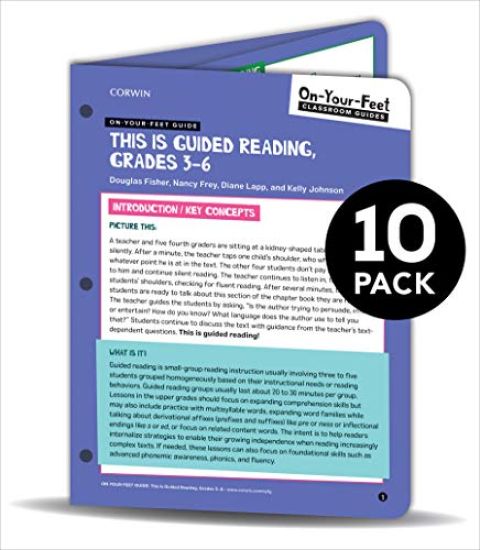
BUNDLE: Fisher: On-Your-Feet Guide: This is Guided Reading, Grades 3-5: 10 Pack

BUNDLE: Fisher: On-Your-Feet Guide: This is Guided Reading, Grades 3-5: 10 Pack

Douglas Fisher; Nancy Frey; Diane K. Lapp; Kelly Johnson

SAGE Publications Inc
2020
nidottu
All On-Your-Feet Guide orders receive FREE SHIPPING! Use code SHIPOYFG at check out. In this easy-to-use but comprehensive guide to Guided Reading, Grades 3-5, teachers will learn what guided reading is in the upper elementary grades is, how to prepare before, during and after guided reading, and how to assess it. In this On-Your-Feet Guide, teachers will find: Lesson outline included with "What the teacher says/does and What the student does displayed side-by-side. An If-Then chart helps teachers troubleshoot common problems. Student language frames for narrative and nonfiction text are included. Both the why and the how of assessing students included. On-Your-Feet Guides (OYFGs) provide you with the ultimate "cheat sheet" to implement effective change in your classroom while in the moment of teaching. Designed for accessibility, and providing step-by-step guidance, the OYFGs are written by experts who take research-based practices and make them doable for the busy teacher. Each On-Your-Feet Guide is laminated, 8.5"x11" tri-fold (6 pages), and 3-hole punched. Use the On-Your-Feet Guides When you know the "what" but need help with the "how"As a quick reference to support a practice you learned in a PD workshop or bookTo learn how to implement foundational practicesWhen you want to help your students learn a specific strategy, routine, or approach, but aren’t sure how to do it yourself
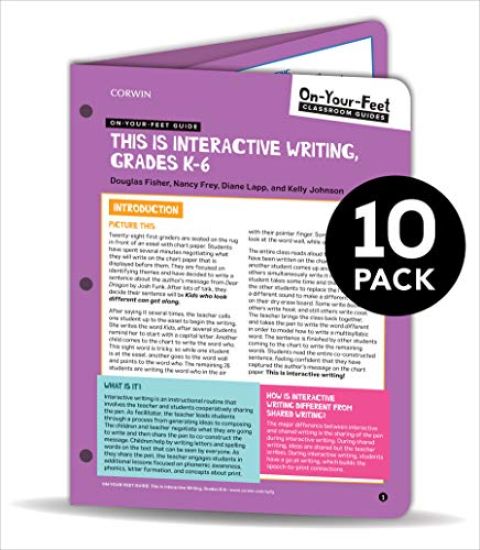
BUNDLE: Fisher: On-Your-Feet Guide: This is Interactive Writing: 10 Pack

BUNDLE: Fisher: On-Your-Feet Guide: This is Interactive Writing: 10 Pack

Douglas Fisher; Nancy Frey; Diane K. Lapp; Kelly Johnson

SAGE Publications Inc
2020
nidottu
All On-Your-Feet Guide orders receive FREE SHIPPING! Use code SHIPOYFG at check out. In this easy-to-use but comprehensive guide to Interactive Writing, teachers will learn what interactive writing is, how to prepare before, during and after interactive writing, and how to assess it. In this On-Your-Feet Guide, teachers will find: A list of teaching points or purposes that you might address during your interactive writing lessonsIf-Then chart that helps you troubleshoot common problems in implementationLessons for both K-2 and 3-5, complete with teaching language and what the student does in each part of the lesson On-Your-Feet Guides (OYFGs) provide you with the ultimate "cheat sheet" to implement effective change in your classroom while in the moment of teaching. Designed for accessibility, and providing step-by-step guidance, the OYFGs are written by experts who take research-based practices and make them doable for the busy teacher. Each On-Your-Feet Guide is laminated, 8.5"x11" tri-fold (6 pages), and 3-hole punched. Use the On-Your-Feet Guides When you know the "what" but need help with the "how"As a quick reference to support a practice you learned in a PD workshop or bookTo learn how to implement foundational practicesWhen you want to help your students learn a specific strategy, routine, or approach, but aren’t sure how to do it yourself
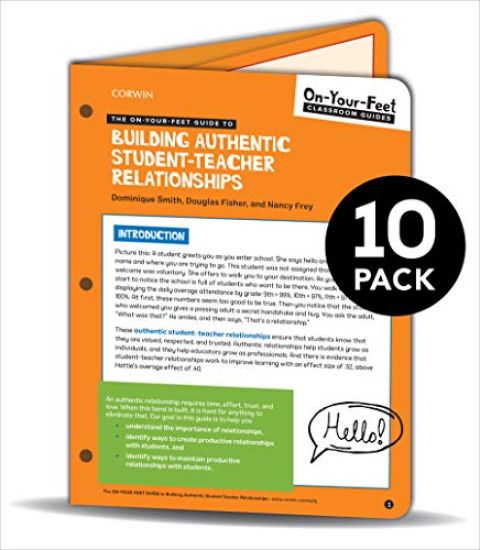
BUNDLE: Smith: The On-Your-Feet Guide to Building Authentic Student-Teacher Relationships: 10 Pack
All On-Your-Feet Guide orders receive FREE SHIPPING! Use code SHIPOYFG at check out. This On-Your-Feet Guide provides tested strategies for building authentic relationships with your students. These authentic relationships between students and adults ensure that students know that they are valued, respected, and trusted. Authentic relationships help students grow as individuals and they help educators grow as professionals. And, there is evidence that student-teacher relationships work to improve learning with an effect size of .52, above Hattie’s average effect of .40. An authentic relationship requires, time, effort, trust, and love. When this bond is built, it is hard for anything to eliminate that. Our goal in this guide is to help you: understand the importance of relationshipsidentify ways to create productive relationships with studentsidentify ways maintain productive relationships with students On-Your-Feet Guides (OYFGs) provide you with the ultimate "cheat sheet" to implement effective change in your classroom while in the moment of teaching. Designed for accessibility, and providing step-by-step guidance, the OYFGs are written by experts who take research-based practices and make them doable for the busy teacher. Each On-Your-Feet Guide is laminated, 8.5"x11" tri-fold (6 pages), and 3-hole punched. Use the On-Your-Feet Guides • When you know the "what" but need help with the "how" • As a quick reference to support a practice you learned in a PD workshop or book • To learn how to implement foundational practices • When you want to help your students learn a specific strategy, routine, or approach, but aren’t sure how to do it yourself
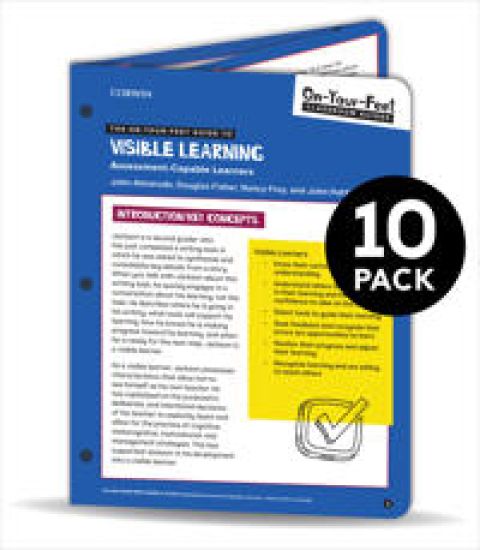
BUNDLE: Almarode: The On-Your-Feet Guide to Visible Learning: Assessment-Capable Learners: 10 Pack

BUNDLE: Almarode: The On-Your-Feet Guide to Visible Learning: Assessment-Capable Learners: 10 Pack

John T. Almarode; Douglas Fisher; Nancy Frey; John Hattie

SAGE Publications Inc
2020
nidottu
All On-Your-Feet Guide orders receive FREE SHIPPING! Use code SHIPOYFG at check out. Developing learners who know where they are in their learning, where they’re going, and how to get there—in other words, learners who are assessment-capable—is one of the principal aims of Visible Learning. Through videos and helpful quick strategies, this On-Your-Feet Guide will help you build learners’ abilities to: Create their own learning goalsCo-construct success criteriaSelf-assessSeek and give feedback On-Your-Feet Guides (OYFGs) provide you with the ultimate "cheat sheet" to implement effective change in your classroom while in the moment of teaching. Designed for accessibility, and providing step-by-step guidance, the OYFGs are written by experts who take research-based practices and make them doable for the busy teacher. Each On-Your-Feet Guide is laminated, 8.5"x11" tri-fold (6 pages), and 3-hole punched. Use the On-Your-Feet Guides When you know the "what" but need help with the "how"As a quick reference to support a practice you learned in a PD workshop or bookTo learn how to implement foundational practicesWhen you want to help your students learn a specific strategy, routine, or approach, but aren’t sure how to do it yourself
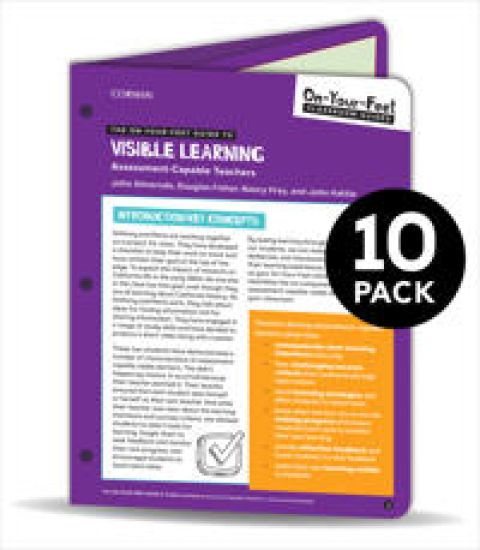
BUNDLE: Almarode: The On-Your-Feet Guide to Visible Learning: Assessment-Capable Teachers: 10 Pack

BUNDLE: Almarode: The On-Your-Feet Guide to Visible Learning: Assessment-Capable Teachers: 10 Pack

John T. Almarode; Douglas Fisher; Nancy Frey; John Hattie

SAGE Publications Inc
2020
nidottu
All On-Your-Feet Guide orders receive FREE SHIPPING! Use code SHIPOYFG at check out. Developing learners who know where they are in their learning, where they’re going, and how to get there—in other words, learners who are assessment-capable—is one of the principal aims of Visible Learning. However, we cannot help students be assessment-capable learners if teachers are not assessment-capable themselves. Teachers create assessment-capable learners through various targeted "moves" designed to: Increase teacher clarity Use the right teaching strategies at the right timeProvide effective feedback to learnersModel effective learning strategies themselves On-Your-Feet Guides (OYFGs) provide you with the ultimate "cheat sheet" to implement effective change in your classroom while in the moment of teaching. Designed for accessibility, and providing step-by-step guidance, the OYFGs are written by experts who take research-based practices and make them doable for the busy teacher. Each On-Your-Feet Guide is laminated, 8.5"x11" tri-fold (6 pages), and 3-hole punched. Use the On-Your-Feet Guides When you know the "what" but need help with the "how"As a quick reference to support a practice you learned in a PD workshop or bookTo learn how to implement foundational practicesWhen you want to help your students learn a specific strategy, routine, or approach, but aren’t sure how to do it yourself
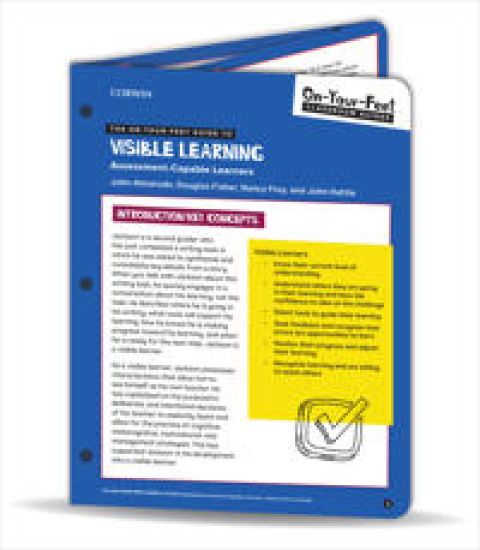
The On-Your-Feet Guide to Visible Learning

The On-Your-Feet Guide to Visible Learning

John T. Almarode; Douglas Fisher; Nancy Frey; John Hattie

SAGE Publications Inc
2019
irtolehti
All On-Your-Feet Guide orders receive FREE SHIPPING! Use code SHIPOYFG at check out. Developing learners who know where they are in their learning, where they’re going, and how to get there—in other words, learners who are assessment-capable—is one of the principal aims of Visible Learning. Through videos and helpful quick strategies, this On-Your-Feet Guide will help you build learners’ abilities to: Create their own learning goalsCo-construct success criteriaSelf-assess Seek and give feedback On-Your-Feet Guides (OYFGs) provide you with the ultimate "cheat sheet" to implement effective change in your classroom while in the moment of teaching. Designed for accessibility, and providing step-by-step guidance, the OYFGs are written by experts who take research-based practices and make them doable for the busy teacher. Each On-Your-Feet Guide is laminated, 8.5"x11" tri-fold (6 pages), and 3-hole punched. Use the On-Your-Feet Guides When you know the "what" but need help with the "how"As a quick reference to support a practice you learned in a PD workshop or bookTo learn how to implement foundational practicesWhen you want to help your students learn a specific strategy, routine, or approach, but aren’t sure how to do it yourself
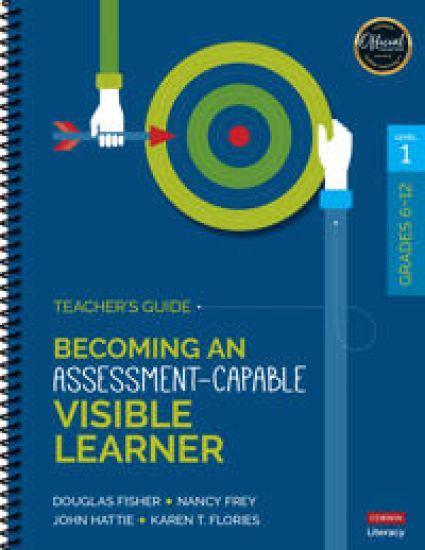
Becoming an Assessment-Capable Visible Learner, Grades 6-12, Level 1: Teacher's Guide

Becoming an Assessment-Capable Visible Learner, Grades 6-12, Level 1: Teacher's Guide

Douglas Fisher; Nancy Frey; Hattie John; Karen T. Flories

Corwin Press Inc
2019
kierre
Agency, self-regulation, motivation, for far too long we’ve chased these outcomes without a plan. But now this: a Teacher’s Guide for the most important curriculum of all—teaching learners how to learn. Douglas Fisher and Nancy Frey deliver, with coauthors John Hattie and Karen Flories, the lessons and tools you need to teach students to thrive using the tenets of Visible Learning. With 15 focus lessons, you help students to build the skills to become assessment capable: setting learning goals, measuring against success criteria, soliciting feedback, and more. These lessons along with many practical templates correlate with the companion Learner’s Notebook.
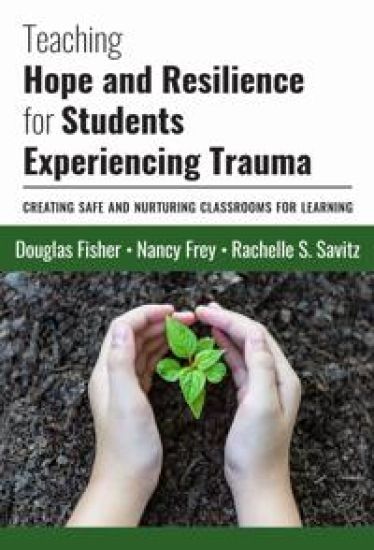
Teaching Hope and Resilience for Students Experiencing Trauma

Teaching Hope and Resilience for Students Experiencing Trauma

Douglas Fisher; Nancy Frey; Rachelle S. Savitz

Teachers' College Press
2019
sidottu
Huge numbers of our students are caught in storms of trauma—whether stemming from abuse, homelessness, poverty, discrimination, violent neighborhoods, or fears of school shootings or family deportations. This practical book focuses on actions that teachers can take to facilitate learning for these students. Identifying positive, connected teacher–student relationships as foundational, the authors offer direction for creating an emotionally safe classroom environment in which students find a refuge from trauma and a space in which to process events. The text shows how social and emotional learning can be woven into the school day; how literacies can be used to help students see a path through challenges; how to empower learners through debate, civic action, and service learning; and how to use the vital nature of the school community as an agent of change. This book will serve as a roadmap for creating uniformly consistent and excellent classrooms and schools that better serve children who experience trauma in their lives. Book Features:Makes a clear case for the need and responsibility of schools to equip students with tools to learn despite the trauma in their lives. Shows practical classroom instructional and curricular interactions that address trauma while advancing student academic learning. Uses literacy and civic action as pathways to empowerment. Provides a method and tools for developing a coherent plan for creating a trauma-sensitive school.
Teaching Hope and Resilience for Students Experiencing Trauma

Teaching Hope and Resilience for Students Experiencing Trauma

Douglas Fisher; Nancy Frey; Rachelle S. Savitz

Teachers' College Press
2019
nidottu
Huge numbers of our students are caught in storms of trauma—whether stemming from abuse, homelessness, poverty, discrimination, violent neighborhoods, or fears of school shootings or family deportations. This practical book focuses on actions that teachers can take to facilitate learning for these students. Identifying positive, connected teacher–student relationships as foundational, the authors offer direction for creating an emotionally safe classroom environment in which students find a refuge from trauma and a space in which to process events. The text shows how social and emotional learning can be woven into the school day; how literacies can be used to help students see a path through challenges; how to empower learners through debate, civic action, and service learning; and how to use the vital nature of the school community as an agent of change. This book will serve as a roadmap for creating uniformly consistent and excellent classrooms and schools that better serve children who experience trauma in their lives. Book Features:Makes a clear case for the need and responsibility of schools to equip students with tools to learn despite the trauma in their lives. Shows practical classroom instructional and curricular interactions that address trauma while advancing student academic learning. Uses literacy and civic action as pathways to empowerment. Provides a method and tools for developing a coherent plan for creating a trauma-sensitive school.
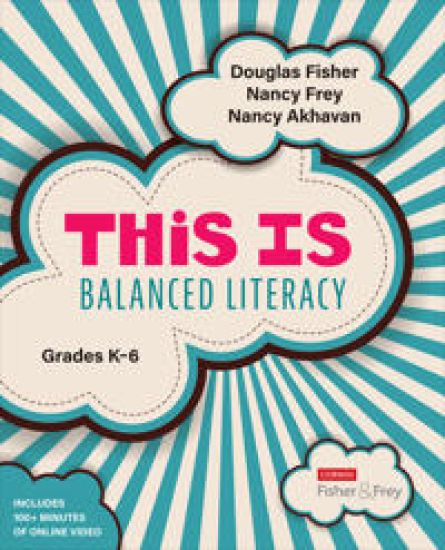
This Is Balanced Literacy, Grades K-6

This Is Balanced Literacy, Grades K-6

Douglas Fisher; Nancy Frey; Nancy Akhavan

SAGE Publications Inc
2019
nidottu
This is Balanced Literacy: Grades K-6 Students learn to read and write best when their teachers balance literacy instruction. But how do you strike the right balance of skills and knowledge, reading and writing, small and whole group instruction, and direct and dialogic instruction, so that all students can learn to their maximum potential? The answer lies in the intentional design of learning activities, purposeful selection of instructional materials, evidence-based teaching methods, and in strategic groupings of students based on assessment data. Together, these create the perfect balance of high impact learning experiences that engage and excite learners. In this hands-on essential guide, best-selling authors Douglas Fisher, Nancy Frey, and Nancy Akhavan help you define that balance for your students, lighting the path to implementing balanced literacy in your classroom. Their plan empowers you to integrate evidence-based approaches that include: • Instructional materials comprised of both informational and narrative texts. • The best uses of instructional delivery modes, including direct and dialogic instruction. • Grouping patterns that work best to accomplish learning aims for different learners at different stages. • Instruction in foundational skills and meaning making, including oral language, phonemic awareness, phonics, fluency, vocabulary, comprehension, and writing. • Technology used as a tool for increasing learning of a specific literary process. All the tips and tools you need to realize the goal of balanced literacy learning are included, with classroom videos that show strategies in action. Tap your intuition, collaborate with your peers, and put the research-based strategies embedded in this roadmap to work in your classroom to implement or deepen a strong, successful balanced literacy program. Grow as a reading and writing teacher while leading your students to grow as readers and writers.
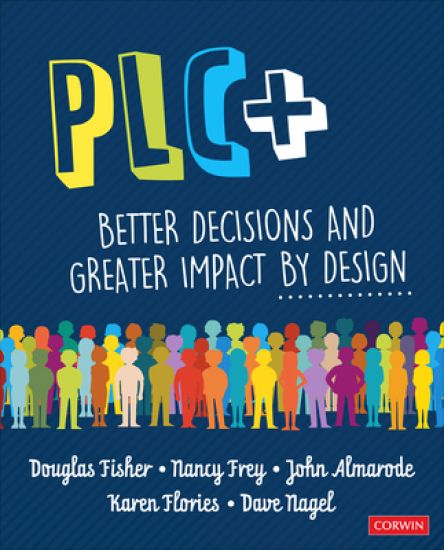
PLC+

PLC+

Douglas Fisher; Nancy Frey; John T. Almarode; Karen T. Flories; Dave Nagel

SAGE Publications Inc
2019
nidottu
What makes a powerful and results-driven Professional Learning Community (PLC)? The answer is collaborative work that expands the emphasis on student learning and leverages individual teacher efficacy into collective teacher efficacy. PLC+: Better Decisions and Greater Impact by Design calls for strong and effective PLCs plus—and that plus is YOU. Until now, the PLC movement has been focused almost exclusively on students and what they were or were not learning. But keeping student learning at the forefront requires that we also recognize the vital role that you play in the equation of teaching and learning. This means that PLCs must take on two additional challenges: maximizing your individual expertise, while harnessing the power of the collaborative expertise you can develop with your peers. PLC+ is grounded in four cross-cutting themes—a focus on equity of access and opportunity, high expectations for all students, a commitment to building individual self-efficacy and the collective efficacy of the professional learning community and effective team activation and facilitation to move from discussion to action. The PLC+ framework supports educators in considering five essential questions as they work together to improve student learning: Where are we going? Where are we now? How do we move learning forward? What did we learn today? Who benefited and who did not benefit? The PLC+ framework leads educators to question practices as well as outcomes. It broadens the focus on student learning to encompass educational equity and teaching efficacy, and, in doing so, it leads educators to plan and implement learning communities that maximize individual expertise while harnessing the power of collaborative efficacy.
Teaching Mathematics in the Visible Learning Classroom, Grades 3-5

Teaching Mathematics in the Visible Learning Classroom, Grades 3-5

John T. Almarode; Douglas Fisher; Kateri Thunder; Sara Delano Moore; John Hattie; Nancy Frey

SAGE Publications Inc
2019
nidottu
It could happen in the morning during homework review. Or perhaps it happens when listening to students as they struggle through a challenging problem. Or maybe even after class, when planning a lesson. At some point, the question arises: How do I influence students' learning—what’s going to generate that light bulb "aha" moment of understanding? In this sequel to the megawatt best seller Visible Learning for Mathematics, John Almarode, Douglas Fisher, Nancy Frey, John Hattie, and Kateri Thunder help you answer that question by showing how Visible Learning strategies look in action in the mathematics classroom. Walk in the shoes of elementary school teachers as they engage in the 200 micro-decisions-per-minute needed to balance the strategies, tasks, and assessments seminal to high-impact mathematics instruction. Using grade-leveled examples and a decision-making matrix, you’ll learn to Articulate clear learning intentions and success criteria at surface, deep, and transfer levelsEmploy evidence to guide students along the path of becoming metacognitive and self-directed mathematics achieversUse formative assessments to track what students understand, what they don’t, and whySelect the right task for the conceptual, procedural, or application emphasis you want, ensuring the task is for the right phase of learningAdjust the difficulty and complexity of any task to meet the needs of all learners It’s not only what works, but when. Exemplary lessons, video clips, and online resources help you leverage the most effective teaching practices at the most effective time to meet the surface, deep, and transfer learning needs of every student.
Teaching Mathematics in the Visible Learning Classroom, Grades K-2

Teaching Mathematics in the Visible Learning Classroom, Grades K-2

John T. Almarode; Douglas Fisher; Kateri Thunder; John Hattie; Nancy Frey

SAGE Publications Inc
2019
nidottu
Select the right task, at the right time, for the right phase of learning Young students come to elementary classrooms with different background knowledge, levels of readiness, and learning needs. What works best to help K–2 students develop the tools to become visible learners in mathematics? What works best for K-=–2 mathematics learning at the surface, deep, and transfer levels? In this sequel to the megawatt bestseller Visible Learning for Mathematics, John Almarode, Douglas Fisher, Kateri Thunder, John Hattie, and Nancy Frey help you answer those questions by showing how Visible Learning strategies look in action in K–2 mathematics classrooms. Walk in the shoes of teachers as they mix and match the strategies, tasks, and assessments seminal to making conceptual understanding, procedural knowledge, and the application of mathematical concepts and thinking skills visible to young students as well as to you. Using grade-leveled examples and a decision-making matrix, you’ll learn to Articulate clear learning intentions and success criteria at surface, deep, and transfer levelsEmploy evidence to guide students along the path of becoming metacognitive and self-directed mathematics achieversUse formative assessments to track what students understand, what they don’t, and whySelect the right task for the conceptual, procedural, or application emphasis you want, ensuring the task is for the right phase of learningAdjust the difficulty and complexity of any task to meet the needs of all learners It’s not only what works, but when. Exemplary lessons, video clips, and online resources help you leverage the most effective teaching practices at the most effective time to meet the surface, deep, and transfer learning needs of every K–2 student.
Becoming an Assessment-Capable Visible Learner, Grades 6-12, Level 1: Learner's Notebook

Becoming an Assessment-Capable Visible Learner, Grades 6-12, Level 1: Learner's Notebook

Douglas Fisher; Nancy Frey; Hattie John; Karen T. Flories

Corwin Press Inc
2019
kierre
Continue the Journey of Visible Learning With Your Students The power of Visible Learning is simple yet transforming: Help students understand how to learn, and they can become their own teachers. These notebooks are the first of their kind to continue the Journey of Visible Learning by helping students monitor their own progress. With an emphasis on developing and strengthening foundational metacognitive skills, the notebooks guide students to understand what they’re learning, why they’re learning it, and the strategies they need along the way. Designed to be used with the Becoming a Visible Learner Teacher’s Guide, and structured to support a year’s worth of learning, this resource gives you an actionable framework for bringing Visible Learning success to every student in your classroom. Learner’s notebooks can be purchased as a Becoming a Visible Learner, Grades 6–12, Level 1 Classroom Set which includes 20 Learner’s Notebooks and a Teacher’s Guide designed specifically for grades 6–12. Additional Learner’s Notebooks, Grades 6–12, Level 1 are available in packs of 10.
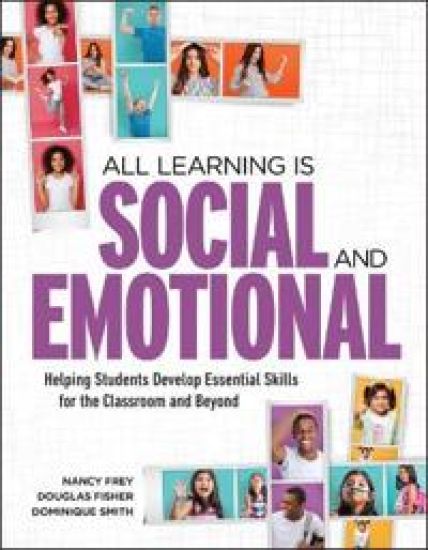
All Learning Is Social and Emotional

All Learning Is Social and Emotional

Nancy Frey; Douglas Fisher; Dominique Smith

Association for Supervision Curriculum Development
2019
nidottu
While social and emotional learning (SEL) is most familiar as compartmentalized programs separate from academics, the truth is, all learning is social and emotional. What teachers say, the values we express, the materials and activities we choose, and the skills we prioritize all influence how students think, see themselves, and interact with content and with others. If you teach kids rather than standards, and if you want all kids to get what they need to thrive, Nancy Frey, Douglas Fisher, and Dominique Smith offer a solution: a comprehensive, five-part model of SEL that's easy to integrate into everyday content instruction, no matter what subject or grade level you teach. You'll learn the hows and whys of:Building students' sense of identity and confidence in their ability to learn, overcome challenge, and influence the world around them. Helping students identify, describe, and regulate their emotional responses. Promoting the cognitive regulation skills critical to decision making and problem solving. Fostering students' social skills, including teamwork and sharing, and their ability to establish and repair relationships. Equipping students to becoming informed and involved citizens. Along with a toolbox of strategies for addressing 33 essential competencies, you'll find real-life examples highlighting the many opportunities for social and emotional learning within the K–12 academic curriculum. Children's social and emotional development is too important to be an add-on or an afterthought, too important to be left to chance. Use this book's integrated SEL approach to help your students build essential skills that will serve them in the classroom and throughout their lives.
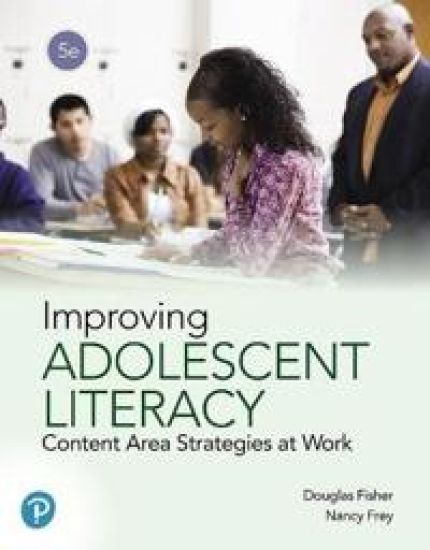
Improving Adolescent Literacy

Improving Adolescent Literacy

Douglas Fisher; Nancy Frey

Pearson
2019
nidottu
Straightforward, affordable, and practical, Improving Adolescent Literacy gives all middle and secondary school teachers instructional routines that will allow them to develop the content literacy skills of their students. Chapter-opening vignettes from actual classrooms show readers effective teaching in action and give them a look at how the chapter’s instructional approach works within content area teaching. Research-based rationales for each strategy follow the vignettes and provide an in-depth look at how to implement the strategy, along with examples of each strategy across the curriculum. In this 5th Edition, the authors provide new classroom examples from their colleagues across the disciplines as well as new instructional routines that have been researched and validated since the publication of the last edition. Also, this edition has been re-organized, adding three new chapters, to focus on the ways in which teachers can use reading, writing, speaking, and listening in their classes, emphasizing reading and comprehending texts, creating graphic organizers, developing vocabulary knowledge, and writing to learn.
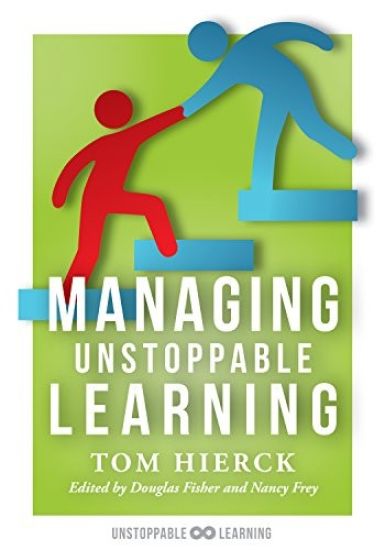
Managing Unstoppable Learning: (classroom Behavior Management Strategies to Support Social and Emotional Learning)
First introduced in Unstoppable Learning, the Unstoppable Learning framework details seven essential elements of teaching and learning: (1) planning, (2) launching, (3) consolidating, (4) assessing, (5) adapting, (6) managing, and (7) leading. This resource by Tom Hierck focuses specifically on the element of managing learning outcomes in the classroom environment, outlining a collective approach to behavior management strategies and student engagement that minimizes the impact of negative behaviors and maximizes the potential (as well as the social and emotional learning) of each student. Effective classroom management strategies to create a positive learning environment: Review the Unstoppable Learning framework originally laid out by Douglas Fisher and Nancy Frey. Closely examine how to manage student behavior and classroom climate using the Unstoppable Learning framework's proven approach. Become familiar with classroom management strategies for creating a positive learning environment, developing teacher-student relationships, and dealing with problem behaviors. Benefit from summaries of key points at the end of each chapter, as well as questions for reflection. Access free reproducibles designed for reader reflection on classroom behavior management strategies. Contents: Introduction Chapter 1: Improving Behavior Management Through Cultural Change Chapter 2: Supporting Teacher-Student Relationships Chapter 3: Supporting Group Interactions and Peer Relationships Chapter 4: Supporting a Positive Learning Environment Chapter 5: Responding to Problem Behaviors Epilogue Appendix
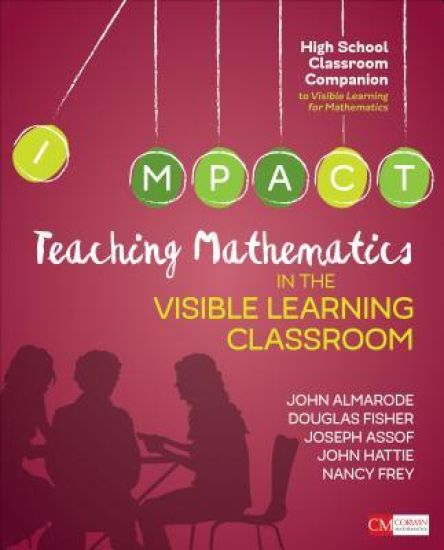
Teaching Mathematics in the Visible Learning Classroom, High School

Teaching Mathematics in the Visible Learning Classroom, High School

Almarode John T.; Douglas Fisher; Joseph Assof; Hattie John; Nancy Frey

SAGE Publications Inc
2018
nidottu
In high-impact mathematics instruction, it's not only what works, but when. This hands-on sequel to Visible Learning for Mathematics puts visible learning strategies in action in high school classrooms to help teachers leverage the most effective teaching practices at the most effective time to meet the surface, deep, and transfer learning needs of every student.