Kirjojen hintavertailu – 12 859 819 kirjaa ja 27 kauppaa

Kirjailija

Nancy Frey

Kirjat ja teokset yhdessä paikassa: 146 kirjaa, julkaisuja vuosilta 2001–2026, suosituimpiin kuuluu Your Students, My Students, Our Students. Vertaile teosten hintoja ja tarkista saatavuus suomalaisista kirjakaupoista.

146 kirjaa

Kirjojen julkaisuvuodet: 2001–2026.

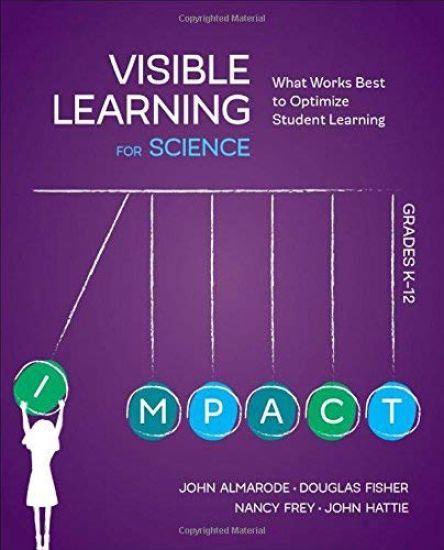
Visible Learning for Science, Grades K-12

Visible Learning for Science, Grades K-12

Almarode John T.; Douglas Fisher; Nancy Frey; Hattie John

Corwin Press Inc
2018
nidottu
In Visible Learning for Science, the authors reveal that it's not about which strategy to use, but when to use it, and plot a vital K-12 framework for choosing the right approach at the right time, depending on where students are within the three phases of learning: surface, deep, and transfer. Synthesizing state-of-the-art science instruction and assessment with over fifteen years of John Hattie's cornerstone educational research, this framework for maximum learning spans the range of topics in the life and physical sciences. Employing classroom examples from all grade levels, the authors empower teachers to plan, develop, and implement high-impact instruction for each phase of the learning cycle.

Framgångsrik undervisning i literacy : En praktisk handbok

Framgångsrik undervisning i literacy : En praktisk handbok

John Hattie; Douglas Fisher; Nancy Frey

Natur Kultur Läromedel och Akademi
2018
nidottu
Det finns idag en uppsjö av metoder och strategier för undervisning i literacy. De flesta fungerar. Men vilka av dem har starkast stöd i forskningen och vilka skapar bäst förutsättningar för att dina elever ska lyckas? I denna praktiska handbok vägleds du av några av världens främsta skolforskare under ledning av John Hattie. Du får ta del av deras bästa råd om hur du utvecklar din didaktiska skicklighet utifrån de senaste forskningsresultaten. Utgångspunkten är väldens största forskningsöversikt om effektiva undervisningsmetoder. Med ett verksamhetsnära språk visar författarna hur du kan förena skolans kunskapsuppdrag inom literacy med de sociala lärandemålen. Målet är att alla elever ska få möjlighet att optimera sitt lärande genom balans mellan ytlärande, djuplärande och transferering av lärande, det vill säga lärande som kan omsättas i andra sammanhang. Boken ligger i linje med den svenska läroplanens övergripande mål och riktlinjer samt med kursplanen i svenska. Den vänder sig till lärare från förskoleklass till gymnasiet, lärarutbildare och lärarstudenter i alla ämnen.
Framgångsrik undervisning i matematik : en praktisk handbok

Framgångsrik undervisning i matematik : en praktisk handbok

John Hattie; Douglas Fisher; Nancy Frey

Natur Kultur Läromedel och Akademi
2017
nidottu
Vad kännetecknar rika matematikuppgifter? Hur arbetar vi med problemlösning, frågor, bedömning och begreppskunskap? Hur undervisar vi för ett långsiktigt, metakognitivt lärande? Med utgångspunkt i den allra senaste pedagogiska och psykologiska forskningen behandlar och exemplifierar denna matematikdidaktiska grundbok de absolut centrala delarna av matematikundervisningen i relation till effektstorlekar. Men … för läraren handlar effektiv matematikundervisning inte bara om att välja och använda rätt metod, utan framför allt om att veta när vilken metod ska användas beroende på var eleverna befinner sig i sin kunskapsutveckling. Kapitel för kapitel, kompletterade med videoklipp, planeringsverktyg och mallar, får du som lärare undervisningsstrategier att använda inom elevernas olika inlärningsfaser. Boken pendlar mellan evidensbaserad teori och praktik på ett medvetet och balanserat sätt. Här får du som lärare – från förskoleklass till gymnasiet – en sammanfattning av övergripande strategier och modeller som med precision balanserar undervisning mot ytinlärning, djupinlärning och lärande som kan omsättas. I boken, som är trevligt skriven och lättläst med ett utmärkt figurmaterial, förekommer rikligt med exempel. Den kan rekommenderas till alla matematiklärare och lärarstuderande. Michael Norberg, BTJ-häftet nr 3, 2018
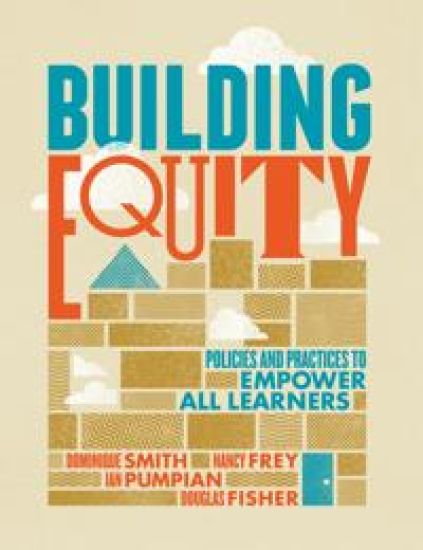
Building Equity

Building Equity

Dominique Smith; Nancy Frey; Ian Pumpian; Douglas Fisher

Association for Supervision Curriculum Development
2017
nidottu
Imagine a school with a diverse student body where everyone feels safe and valued, and all—regardless of race, culture, home language, sexual orientation, gender identity, academic history, and individual challenges—have the opportunity to succeed with interesting classes, projects, and activities. In this school, teachers notice and meet individual instructional needs and foster a harmonious and supportive environment. All students feel empowered to learn, to grow, and to pursue their dreams. This is the school every student needs and deserves. In Building Equity, Dominique Smith, Nancy Frey, Ian Pumpian, and Douglas Fisher, colleagues at San Diego's innovative Health Sciences High & Middle College, introduce the Building Equity Taxonomy, a new model to clarify the structural and interpersonal components of an equitable and excellent schooling experience, and the Building Equity Review and Audit, survey-based tools to help school and teacher leaders uncover equity-related issues and organize their efforts to achieve:Physical integration. Social-emotional engagement. Opportunity to learn. Instructional excellence. Engaged and inspired learners. Built on the authors' own experiences and those of hundreds of educators throughout the United States, this book is filled with examples of policy initiatives and practices that support high-quality, inclusive learning experiences and deliver education that meets critical standards of equality and equity.
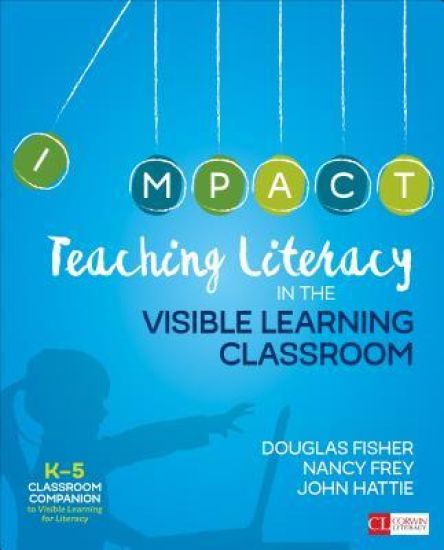
Teaching Literacy in the Visible Learning Classroom, Grades K-5

Teaching Literacy in the Visible Learning Classroom, Grades K-5

Douglas Fisher; Nancy Frey; Hattie John

Corwin Press Inc
2017
nidottu

Halvin toimitettuna 38,20 €

Visible Learning schools, districts and teachers will benefit greatly from this highly practical resource with ready-to-go lessons that will aid them as they transition from learning about VL, to implementing and practicing these principals in their ELA classroom teaching. In each chapter, the authors also profile three teachers of various grade levels and locations who have worked to make learning visible for their students and have impacted learning in significant ways.
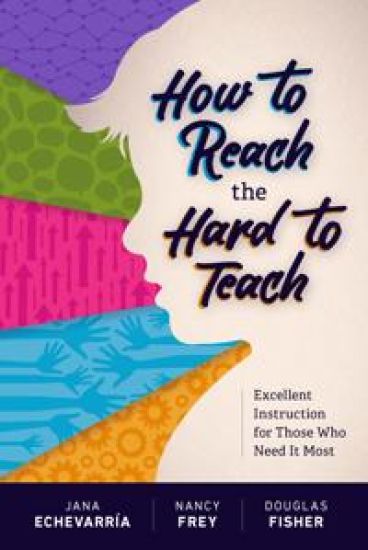
How to Reach the Hard to Teach

How to Reach the Hard to Teach

Jana Echevarria; Nancy Frey; Douglas Fisher

Association for Supervision Curriculum Development
2016
nidottu
For every teacher it's different, but you know who they are for you—the students who are "hard to teach." Maybe they're reading far below grade level. Maybe they're English learners. Maybe they have diagnosed learning disabilities or behavioral issues. Maybe they're underachieving for reasons that are unknown. They have been overlooked or underserved or frustrated, and they're not learning as they should. Until now. Until you. How to Reach the Hard to Teach presents a thoughtful and practical approach to achieving breakthrough success with linguistically and culturally diverse students who struggle in school. Combining elements of the SIOP® Model and the FIT Teaching® approach, authors Jana Echevarria, Nancy Frey, and Douglas Fisher take stock of what we know about excellent instruction and distill it into five guiding principles:Set high expectations. Provide access to the core curriculum. Use assessment to inform instruction. Attend to language development—both English and academic. Create a supportive classroom climate. You'll learn specific practices associated with each principle and see how real-life teachers are employing these practices in their classrooms so that all students have the opportunity to learn and receive optimal support for that learning. Every teacher has had the experience of seeing a "hard to teach" student in a new light and realizing all he or she might achieve. This book is about shining that light of possibility on the students who challenge us most, interrogating our beliefs, and taking action to ensure they receive the best instruction we have to offer.
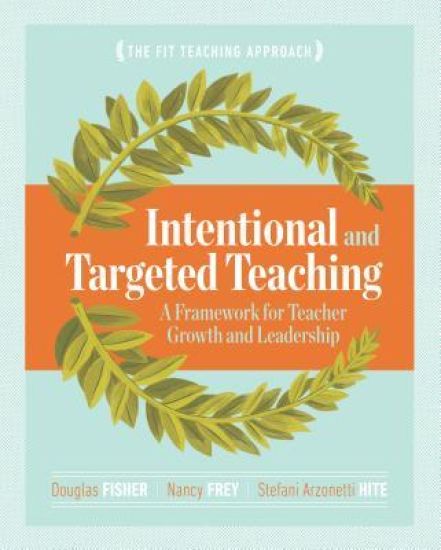
Intentional and Targeted Teaching

Intentional and Targeted Teaching

Douglas Fisher; Nancy Frey; Stefani Arzonetti Hite

Association for Supervision Curriculum Development
2016
nidottu
What is FIT Teaching? What is a FIT Teacher? The Framework for Intentional and Targeted Teaching®—or FIT Teaching®—is a research-based, field-tested, and experience-honed process that captures the essentials of the best educational environments. In contrast to restrictive pedagogical prescriptions or formulas, FIT Teaching empowers teachers to adapt the most effective planning, instructional, and assessment practices to their particular context in order to move their students' learning from where it is now to where it should be. To be a FIT Teacher is to make a heroic commitment to learning—not just to the learning of every student in the classroom, but to the professional learning necessary to grow, inspire, and lead. This book introduces the powerful FIT Teaching Tool, which harnesses the FIT Teaching approach and presents a detailed continuum of growth and leadership. It's a close-up look at what intentional and targeting teaching is and what successful teachers do to:Plan with purpose. Cultivate a learning climate. Instruct with intention. Assess with a system. Impact student learning. Designed to foster discussion among educators about what they are doing in the classroom, the FIT Teaching Tool can be used by teachers for self-assessment; by teacher peers for collegial feedback in professional learning communities; by instructional coaches to focus on the skills teachers need both onstage and off; and by school leaders to highlight their teachers' strengths and value. Join authors Douglas Fisher, Nancy Frey, and Stefani Arzonetti Hite for an examination of what makes great teachers great, and see how educators at all grade levels and all levels of experience are taking intentional steps toward enhanced professional practice.
Visible Learning for Literacy, Grades K-12

Visible Learning for Literacy, Grades K-12

Douglas Fisher; Nancy Frey; Hattie John

Corwin Press Inc
2016
nidottu
"Every student deserves a great teacher, not by chance, but by design" — Douglas Fisher, Nancy Frey, & John Hattie What if someone slipped you a piece of paper listing the literacy practices that ensure students demonstrate more than a year’s worth of learning for a year spent in school? Would you keep the paper or throw it away? We think you’d keep it. And that’s precisely why acclaimed educators Douglas Fisher, Nancy Frey, and John Hattie wrote Visible Learning for Literacy. They know teachers will want to apply Hattie’s head-turning synthesis of more than 15 years of research involving millions of students, which he used to identify the instructional routines that have the biggest impact on student learning. These practices are "visible" for teachers and students to see, because their purpose has been made clear, they are implemented at the right moment in a student’s learning, and their effect is tangible. Yes, the "aha" moments made visible by design. With their trademark clarity and command of the research, and dozens of classroom scenarios to make it all replicable, these authors apply Hattie’s research, and show you: How to use the right approach at the right time, so that you can more intentionally design classroom experiences that hit the surface, deep, and transfer phases of learning, and more expertly see when a student is ready to dive from surface to deep. Which routines are most effective at specific phases of learning, including word sorts, concept mapping, close reading, annotating, discussion, formative assessment, feedback, collaborative learning, reciprocal teaching, and many more. Why the 8 mind frames for teachers apply so well to curriculum planning and can inspire you to be a change agent in students’ lives—and part of a faculty that embraces the idea that visible teaching is a continual evaluation of one’s impact on student’s learning.
Text Complexity

Text Complexity

Douglas Fisher; Nancy Frey; Lapp Diane K.

Corwin Press Inc
2016
nidottu
Guides teachers on how to craft instruction pitched to students’ comprehension capacities, curriculum themes, and teachers’ own assessments on what students need next. Updates to this new edition include and a rubric for analysing text complexity and new ideas on close, small group reading, and independent reading.
Better Than Carrots or Sticks

Better Than Carrots or Sticks

Dominique Smith; Douglas Fisher; Nancy Frey

Association for Supervision Curriculum Development
2015
nidottu
Classroom management is traditionally a matter of encouraging good behavior and discouraging bad by doling out rewards and punishments. But studies show that when educators empower students to address and correct misbehavior among themselves, positive results are longer lasting and more wide reaching. In Better Than Carrots or Sticks, longtime educators and best-selling authors Dominique Smith, Douglas Fisher, and Nancy Frey provide a practical blueprint for creating a cooperative and respectful classroom climate in which students and teachers work through behavioral issues together. After a comprehensive overview of the roots of the restorative practices movement in schools, the authors explain how to:Establish procedures and expectations for student behavior that encourage the development of positive interpersonal skills. Develop a nonconfrontational rapport with even the most challenging students. Implement conflict resolution strategies that prioritize relationship building and mutual understanding over finger-pointing and retribution. Rewards and punishments may help to maintain order in the short term, but they're at best superficially effective and at worst counterproductive. This book will prepare teachers at all levels to ensure that their classrooms are welcoming, enriching, and constructive environments built on collective respect and focused on student achievement.
Checking for Understanding

Checking for Understanding

Douglas Fisher; Nancy Frey

Association for Supervision Curriculum Development
2014
nidottu
A teacher presents a lesson, and at the end asks students if they understand the material. The students nod and say they get it. Later, the teacher is dismayed when many of the students fail a test on the material. Why aren't students getting it? And, just as important, why didn't the teacher recognize the problem? In Checking for Understanding, Douglas Fisher and Nancy Frey show how to increase students' understanding with the help of creative formative assessments. When used regularly, formative assessments enable every teacher to determine what students know and what they still need to learn. Fisher and Frey explore a variety of engaging activities that check for and increase understanding, including interactive writing, portfolios, multimedia presentations, audience response systems, and much more. This new 2nd edition of Checking for Understanding has been updated to reflect the latest thinking in formative assessment and to show how the concepts apply in the context of Fisher and Frey's work on gradual release of responsibility, guided instruction, formative assessment systems, data analysis, and quality instruction.
Text-Dependent Questions, Grades 6-12

Text-Dependent Questions, Grades 6-12

Douglas Fisher; Nancy Frey; Anderson Heather L.; Marisol Thayre

Corwin Press Inc
2014
nidottu
Fisher & Frey’s answer to close and critical reading Learn the best ways to use text-dependent questions as scaffolds during close reading and the big understandings they yield. But that’s just for starters. Fisher and Frey also include illustrative video, texts and questions, cross-curricular examples, and an online facilitator’s guide—making the two volumes of TDQ a potent professional development tool across all of K–12. The genius of TDQ is the way Fisher and Frey break down the process into four cognitive pathways: What does the text say? How does the text work? What does the text mean? What does the text inspire you to do?
Text-Dependent Questions, Grades K-5

Text-Dependent Questions, Grades K-5

Douglas Fisher; Nancy Frey; Anderson Heather L.; Marisol Thayre

Corwin Press Inc
2014
nidottu
Fisher & Frey’s answer to close and critical reading Learn the best ways to use text-dependent questions as scaffolds during close reading and the big understandings they yield. But that’s just for starters. Fisher and Frey also include illustrative video, texts and questions, cross-curricular examples, and an online facilitator’s guide—making the two volumes of TDQ a potent professional development tool across all of K–12. The genius of TDQ is the way Fisher and Frey break down the process into four cognitive pathways: What does the text say? How does the text work? What does the text mean? What does the text inspire you to do?
50 Instructional Routines to Develop Content Literacy

50 Instructional Routines to Develop Content Literacy

Douglas Fisher; William Brozo; Nancy Frey; Gay Ivey

Pearson
2014
nidottu
50 Instructional Routines to Develop Content Literacy, 3/e helps adolescents read more and read better. Middle and high school teachers can immediately put to use its practical information and classroom examples from science, social studies, English, math, the visual and performing arts, and core electives to improve students’ reading, writing, and oral language development. Going above and beyond basic classroom strategies, the instructional routines recommend simple changes to teachers’ everyday procedures that foster student comprehension, such as thinking aloud, using question-answer relationships, and teaching with word walls.
Rigorous Reading

Rigorous Reading

Nancy Frey; Douglas Fisher

Corwin Press Inc
2013
nidottu
Bestselling authors Douglas B. Fisher and Nancy Frey show how teachers can help students develop stronger learning skills by ensuring that their literacy instruction moves from modeling and guided practice (situations where the teacher has most of the responsibility) to collaborative learning and, finally, to independent tasks. The 2-book series is based on the authors' groundbreaking ASCD book, Better Learning Through Structured Teaching: A Framework for the Gradual Release of Responsibility (2008), but tailored to the English language arts and aligned with the ELA common core state standards.
Teaching with Tablets

Teaching with Tablets

Nancy Frey; Doug Fisher; Alex Gonzalez

Association for Supervision Curriculum Development
2013
nidottu
In the few short years since tablets were introduced, they have become a popular addition to classrooms across all grade levels and content areas. By putting this device in the hands of students and teachers, we can grab hold of their interest, interact with content on a more personalized level, and monitor real-time learning. But how we use tablets in the classroom needs thoughtful planning to ensure that the technology actually improves the teaching and learning process. Nancy Frey, Doug Fisher, and Alex Gonzalez offer practical advice on how to effectively use tablets as part of the gradual release of responsibility from teacher to student. You'll learn how to ensure that tablets are integrated into high-quality instruction, including strategies for using tablets for modeling, guided instruction, collaborative learning, independent learning, and formative assessment. Filled with examples of teachers successfully using tablets in their classrooms, this resource will help you maximize the potential of tablet technology to facilitate student understanding.
The Path to Get There

The Path to Get There

Douglas Fisher; Nancy Frey; Cristina Alfaro

Teachers' College Press
2013
nidottu
The Common Core State Standards represents a call for all teachers to focus on the literacy learning of their students. Together, these skills reading, writing, speaking, listening, and viewing comprise the literacies that students must develop if they are to master content and be successful in college or the workplace. This book will assist content-area teachers in understanding the Common Core State Standards that apply to their various courses. Standards in history, social studies, science, and technical subjects are explained in detail, including examples of lessons designed to ensure that students master each Standard.
Using Data to Focus Instructional Improvement

Using Data to Focus Instructional Improvement

Cheryl James-Ward; Douglas Fisher; Nancy Frey; Diane Lapp

Association for Supervision Curriculum Development
2013
nidottu
Data. Does the word make you cringe? Does it evoke feelings of guilt? Are you unsure how to distill it and use it effectively? Grab this book and learn how to empower yourself and your school community with information gleaned from your school's data. Experienced educators and authors offer simple instructions that can help focus school improvement efforts and result in increasing teacher expertise—a factor that positively affects the quality of life for students long after they have left the classroom. Accepting responsibility for such far-reaching influence requires educators to adopt instructional improvement as a standard by which a school needs to operate and as a means to collaborate and interact with one another. More than that, though, instructional improvement is an important component of successful schools.
How to Create a Culture of Achievement in Your School and Classroom

How to Create a Culture of Achievement in Your School and Classroom

Douglas Fisher; Nancy Frey; Ian Pumpian

Association for Supervision Curriculum Development
2012
nidottu
What does it feel like to walk into your school? Is it a welcoming place, where everyone feels valued? Most school improvement efforts focus on academic goals, instructional models, curriculum, and assessments. But sometimes what can make or break your learning community are the intangibles--the relationships, identity, and connections that make up its culture. Authors Fisher, Frey, and Pumpian believe that no school improvement effort will be effective unless school culture is addressed. They identify five pillars that are critical to building a culture of achievement:1. Welcome: Imagine if all staff members in your school considered it their job to make every student, parent, and visitor feel noticed, welcomed, and valued.2. Do no harm: Your school rules should be tools for teaching students to become the moral and ethical citizens you expect them to be.3. Choice words: When the language students hear helps them tell a story about themselves that is one of possibility and potential, students perform in ways that are consistent with that belief.>4. It's never too late to learn: Can you push students to go beyond the minimum needed to get by, to discover what they are capable of achieving?.5. Best school in the universe: Is your school the best place to teach and learn? The best place to work? Drawing on their years of experience in the classroom, the authors explain how these pillars support good teaching and learning. In addition, they provide 19 action research tools that will help you create a culture of achievement, so that your school or classroom is the best it can be. After reading this book, you'll see why culture makes the difference between a school that enables success for all students and a school that merely houses those students during the school day.
The Purposeful Classroom

The Purposeful Classroom

Douglas Fisher; Nancy Frey

Association for Supervision Curriculum Development
2011
nidottu
How can teachers guarantee that what they teach results in students learning what they really need to know? In The Purposeful Classroom: How to Structure Lessons with Learning Goals in Mind, Douglas Fisher and Nancy Frey present a variety of strategies that teachers at all levels can use to ensure that students clearly understand the purpose behind every lesson. They provide step-by-step guidance to help teachers:Understand the difference between standards, objectives, and purpose statements, and craft the latter in terms that students can easily grasp. Involve students in understanding and ""owning"" the purpose of every lesson. Motivate students by conveying the relevance of content to students' lives. Develop classroom activities and assessments that allow students to demonstrate both their mastery of lesson content and their understanding of the lesson's core purpose. From initiating lesson plans to evaluating student work, all aspects of lesson development and implementation are discussed in this lively and practical book. Filled with specific examples of effective purpose statements, assignments, and tests across grade levels and content areas, The Purposeful Classroom is essential reading for all teachers who want their students to truly understand what they are learning and why.