Kirjojen hintavertailu – 12 859 827 kirjaa ja 27 kauppaa
Kirjailija
Nathaniel Hawthorne
Kirjat ja teokset yhdessä paikassa: 2 037 kirjaa, julkaisuja vuosilta 1842–2026, suosituimpiin kuuluu Kävelyn ylistys ja muita kirjoituksia kävelystä. Vertaile teosten hintoja ja tarkista saatavuus suomalaisista kirjakaupoista.
And when, and where, do you think we find the children next? No longer in the winter-time, but in the merry month of May. No longer in Tauglewood play-room, or at Tanglewood fireside, but more than half-way up a monstrous hill, or a mountain, as perhaps it would be better pleased to have us call it. They had set out from home with the mighty purpose of climbing this high hill, even to the very tiptop of its bald head. To be sure, it was not quite so high as Chimborazo, or Mont Blanc, and was even a good deal lower than old Graylock. But, at any rate, it was higher than a thousand ant-hillocks, or a million of mole hills; and, when measured by the short strides of little children, might be reckoned a very respectable mountain. And was Cousin Eustace with the party? Of that you may be certain; else how could the book go on a step further? He was now in the middle of the spring vacation, and looked pretty much as we saw him four or five months ago, except that, if you gazed quite closely at his upper lip, you could discern the funniest little bit of a mustache upon it.
The Author makes the Reader acquainted with his Abode. Between two tall gate-posts of rough-hewn stone (the gate itself having fallen from its hinges at some unknown epoch) we beheld the gray front of the old parsonage, terminating the vista of an avenue of black-ash trees. It was now a twelvemonth since the funeral procession of the venerable clergyman, its last inhabitant, had turned from that gateway towards the village burying-ground. The wheel-track leading to the door, as well as the whole breadth of the avenue, was almost overgrown with grass, affording dainty mouthfuls to two or three vagrant cows and an old white horse who had his own living to pick up along the roadside. The glimmering shadows that lay half asleep between the door of the house and the public highway were a kind of spiritual medium, seen through which the edifice had not quite the aspect of belonging to the material world. Certainly it had little in common with those ordinary abodes which stand so imminent upon the road that every passer-by can thrust his head, as it were, into the domestic circle.
The golden days of October passed away, as so many other Octobers have, and brown Novemher likewise, and the greater part of chill December, too. At last came merry Christmas, and Eustace Bright along with it, making it all the merrier by his presence. And, the day after his arrival from college, there came a mighty snow-storm. Up to this time, the winter had held back, and had given us a good many mild days, which were like smiles upon its wrinkled visage. The grass had kept itself green, in sheltered places, such as the nooks of southern hill-slopes, and along the lee of the stone fences. It was but a week or two ago, and since the beginning of the month, that the children had found a dandelion in bloom, on the margin of Shadow Brook, where it glides out of the dell. But no more green grass and dandelions now. This was such a snow-storm Twenty miles of it might have been visible at once, between the windows of Tanglewood and the dome of Taconic, had it been possible to see so far, among the eddying drifts that whitened all the atmosphere.
Nathaniel Hawthorne was born on July 4, 1804, in Salem, Massachusetts, where his birthplace is now a museum. William Hathorne, who emigrated from England in 1630, was the first of Hawthorne's ancestors to arrive in the colonies. After arriving, William persecuted Quakers. William's son John Hathorne was one of the judges who oversaw the Salem Witch Trials.
Gathered here are master storyteller Nathaniel Hawthorne's delightful retellings for children of six Greek myths, including The Gorgon's Head, The Golden Touch, The Three Golden Apples, The Chimaera, The Miraculous Pitcher, and The Paradise of Children. These stories within a larger story-that of a college student telling the myths to a group of children-will delight young and old.
This work has been selected by scholars as being culturally important, and is part of the knowledge base of civilization as we know it. This work was reproduced from the original artifact, and remains as true to the original work as possible. Therefore, you will see the original copyright references, library stamps (as most of these works have been housed in our most important libraries around the world), and other notations in the work. This work is in the public domain in the United States of America, and possibly other nations. Within the United States, you may freely copy and distribute this work, as no entity (individual or corporate) has a copyright on the body of the work. As a reproduction of a historical artifact, this work may contain missing or blurred pages, poor pictures, errant marks, etc. Scholars believe, and we concur, that this work is important enough to be preserved, reproduced, and made generally available to the public. We appreciate your support of the preservation process, and thank you for being an important part of keeping this knowledge alive and relevant.
This work has been selected by scholars as being culturally important, and is part of the knowledge base of civilization as we know it. This work was reproduced from the original artifact, and remains as true to the original work as possible. Therefore, you will see the original copyright references, library stamps (as most of these works have been housed in our most important libraries around the world), and other notations in the work. This work is in the public domain in the United States of America, and possibly other nations. Within the United States, you may freely copy and distribute this work, as no entity (individual or corporate) has a copyright on the body of the work. As a reproduction of a historical artifact, this work may contain missing or blurred pages, poor pictures, errant marks, etc. Scholars believe, and we concur, that this work is important enough to be preserved, reproduced, and made generally available to the public. We appreciate your support of the preservation process, and thank you for being an important part of keeping this knowledge alive and relevant.
This work has been selected by scholars as being culturally important, and is part of the knowledge base of civilization as we know it. This work was reproduced from the original artifact, and remains as true to the original work as possible. Therefore, you will see the original copyright references, library stamps (as most of these works have been housed in our most important libraries around the world), and other notations in the work. This work is in the public domain in the United States of America, and possibly other nations. Within the United States, you may freely copy and distribute this work, as no entity (individual or corporate) has a copyright on the body of the work. As a reproduction of a historical artifact, this work may contain missing or blurred pages, poor pictures, errant marks, etc. Scholars believe, and we concur, that this work is important enough to be preserved, reproduced, and made generally available to the public. We appreciate your support of the preservation process, and thank you for being an important part of keeping this knowledge alive and relevant.
This work has been selected by scholars as being culturally important, and is part of the knowledge base of civilization as we know it. This work was reproduced from the original artifact, and remains as true to the original work as possible. Therefore, you will see the original copyright references, library stamps (as most of these works have been housed in our most important libraries around the world), and other notations in the work. This work is in the public domain in the United States of America, and possibly other nations. Within the United States, you may freely copy and distribute this work, as no entity (individual or corporate) has a copyright on the body of the work. As a reproduction of a historical artifact, this work may contain missing or blurred pages, poor pictures, errant marks, etc. Scholars believe, and we concur, that this work is important enough to be preserved, reproduced, and made generally available to the public. We appreciate your support of the preservation process, and thank you for being an important part of keeping this knowledge alive and relevant.
This work has been selected by scholars as being culturally important, and is part of the knowledge base of civilization as we know it. This work was reproduced from the original artifact, and remains as true to the original work as possible. Therefore, you will see the original copyright references, library stamps (as most of these works have been housed in our most important libraries around the world), and other notations in the work. This work is in the public domain in the United States of America, and possibly other nations. Within the United States, you may freely copy and distribute this work, as no entity (individual or corporate) has a copyright on the body of the work. As a reproduction of a historical artifact, this work may contain missing or blurred pages, poor pictures, errant marks, etc. Scholars believe, and we concur, that this work is important enough to be preserved, reproduced, and made generally available to the public. We appreciate your support of the preservation process, and thank you for being an important part of keeping this knowledge alive and relevant.
Cadmus, Phoenix, and Cilix, the three sons of King Agenor, and their little sister Europa (who was a very beautiful child), were at play together near the seashore in their father's kingdom of Phoenicia. They had rambled to some distance from the palace where their parents dwelt, and were now in a verdant meadow, on one side of which lay the sea, all sparkling and dimpling in the sunshine, and murmuring gently against the beach.
Bartram the lime-burner, a rough, heavy-looking man, begrimed with charcoal, sat watching his kiln at nightfall, while his little son played at building houses with the scattered fragments of marble, when, on the hill-side below them, they heard a roar of laughter, not mirthful, but slow, and even solemn, like a wind shaking the boughs of the forest. "Father, what is that?" asked the little boy, leaving his play, and pressing betwixt his father's knees. "Oh, some drunken man, I suppose," answered the lime-burner; "some merry fellow from the bar-room in the village, who dared not laugh loud enough within doors lest he should blow the roof of the house off. So here he is, shaking his jolly sides at the foot of Graylock." "But, father," said the child, more sensitive than the obtuse, middle-aged clown, "he does not laugh like a man that is glad. So the noise frightens me " "Don't be a fool, child " cried his father, gruffly.
En Italie, durant la Renaissance, un tudiant amoureux observe depuis sa fen tre la fille d'un scientifique taciturne: celle-ci se prom ne constamment dans les strictes limites des jardins o abondent de myst rieuses plantes v n neuses. Mais le jeune homme s'interroge: existe-t-il une parent entre la belle B atrice et cette flore ? Car des fleurs fra ches d p rissent et des insectes meurent au contact de la peau ou du souffle de la jeune femme... Liant merveille le fantastique et l'all gorie, l'imagination la plus blouissante l'humour le plus d licat, Nathaniel Hawthorne aura forc l'admiration de moult auteurs (Edgar Allan Poe, Charles Baudelaire, Th ophile Gautier), influen ant m me Herman Melville. Parmi ces chefs-d'oeuvre, sa nouvelle La Fille de Rappaccini confine au sublime. En dition bilingue anglais/fran ais, avec lecture audio int gr e: Non seulement vous pouvez lire La Fille de Rappaccini en fran ais et en anglais, mais vous pouvez aussi couter la lecture de cet ouvrage dans la langue de Nathalie Hawthorne, gr ce votre t l phone, tablette ou webcam. L'id al pour am liorer votre ma trise de l'anglais
Not a great while ago, passing through the gate of dreams, I visited that region of the earth in which lies the famous City of Destruction. It interested me much to learn that by the public spirit of some of the inhabitants a railroad has recently been established between this populous and flourishing town and the Celestial City. Having a little time upon my hands, I resolved to gratify a liberal curiosity by making a trip thither. Accordingly, one fine morning after paying my bill at the hotel, and directing the porter to stow my luggage behind a coach, I took my seat in the vehicle and set out for the station-house. It was my good fortune to enjoy the company of a gentleman-one Mr. Smooth-it-away-who, though he had never actually visited the Celestial City, yet seemed as well acquainted with its laws, customs, policy, and statistics, as with those of the City of Destruction, of which he was a native townsman. Being, moreover, a director of the railroad corporation and one of its largest stockholders, he had it in his power to give me all desirable information respecting that praiseworthy enterprise.
CADMUS, Phoenix, and Cilix, the three sons of King Agenor, and their little sister Europa, (who was a very beautiful child, ) were at play together, near the sea shore, in their father's kingdom of Phoenicia. They had rambled to some distance from the palace where their parents dwelt, and were now in a verdant meadow, on one side of which lay the sea, all sparkling and dimpling in the sunshine, and murmuring gently against the beach. The three boys were very happy, gathering flowers, and twining them into garlands, with which they adorned the little Europa. Seated on the grass, the child was almost hidden under an abundance of buds and blossoms, whence her rosy face peeped merrily out, and, as Cadmus said, was the prettiest of all the flowers.
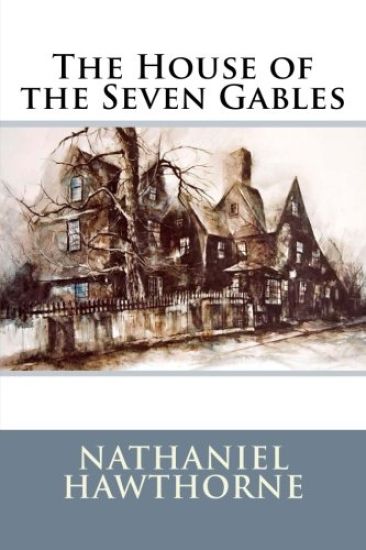
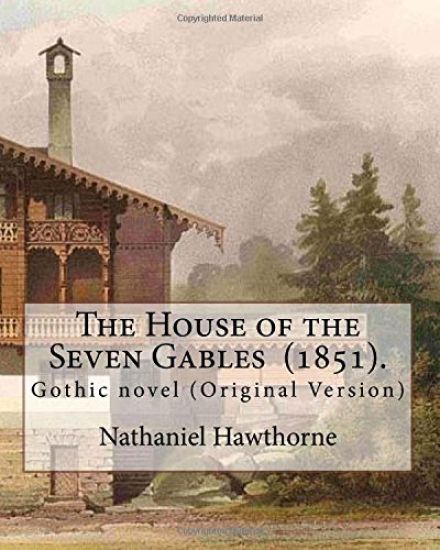
The House of the Seven Gables is a Gothic novel written beginning in mid-1850 by American author Nathaniel Hawthorne. The novel follows a New England family and their ancestral home. In the book, Hawthorne explores themes of guilt, retribution, and atonement and colors the tale with suggestions of the supernatural and witchcraft. The setting for the book was inspired by a gabled house in Salem belonging to Hawthorne's cousin Susanna Ingersoll and by ancestors of Hawthorne who had played a part in the Salem Witch Trials of 1692.
After the kings of Great Britain had assumed the right of appointing the colonial governors, the measures of the latter seldom met with the ready and generous approbation which had been paid to those of their predecessors, under the original charters. The people looked with most jealous scrutiny to the exercise of power which did not emanate from themselves, and they usually rewarded their rulers with slender gratitude for the compliances by which, in softening their instructions from beyond the sea, they had incurred the reprehension of those who gave them. The annals of Massachusetts Bay will inform us, that of six governors in the space of about forty years from the surrender of the old charter, under James II, two were imprisoned by a popular insurrection; a third, as Hutchinson inclines to believe, was driven from the province by the whizzing of a musket-ball; a fourth, in the opinion of the same historian, was hastened to his grave by continual bickerings with the House of Representatives; and the remaining two, as well as their successors, till the Revolution, were favored with few and brief intervals of peaceful sway. The inferior members of the court party, in times of high political excitement, led scarcely a more desirable life. These remarks may serve as a preface to the following adventures, which chanced upon a summer night, not far from a hundred years ago. The reader, in order to avoid a long and dry detail of colonial affairs, is requested to dispense with an account of the train of circumstances that had caused much temporary inflammation of the popular mind.
Rappaccini's Daughter" is a short story by Nathaniel Hawthorne first published in the December 1844 issue of The United States Magazine and Democratic Review, and later in the 1846 collection Mosses from an Old Manse. It is about Giacomo Rappaccini, a medical researcher in medieval Padua who grows a garden of poisonous plants. He brings up his daughter to tend the plants, and she becomes resistant to the poisons, but in the process she herself becomes poisonous to others.
The House of the Seven Gables is a Gothic novel written beginning in mid-1850 by American author Nathaniel Hawthorne and published in April 1851 by Ticknor and Fields of Boston. The novel follows a New England family and their ancestral home. In the book, Hawthorne explores themes of guilt, retribution, and atonement and colors the tale with suggestions of the supernatural and witchcraft. The setting for the book was inspired by a gabled house in Salem belonging to Hawthorne's cousin Susanna Ingersoll and by ancestors of Hawthorne who had played a part in the Salem Witch Trials of 1692. The book was well received upon publication and later had a strong influence on the work of H. P. Lovecraft. The House of the Seven Gables has been adapted several times to film and television. Plot edit] The novel is set in the mid-19th century, but flashbacks to the history of the house, which was built in the late 17th century, are set in other periods. The house of the title is a gloomy New England mansion, haunted since its construction by fraudulent dealings, accusations of witchcraft, and sudden death. The current resident, the dignified but desperately poor Hepzibah Pyncheon, opens a shop in a side room to support her brother Clifford, who has completed a thirty-year sentence for murder. She refuses all assistance from her wealthy but unpleasant cousin, Judge Jaffrey Pyncheon. A distant relative, the lively and pretty young Phoebe, arrives and quickly becomes invaluable, charming customers and rousing Clifford from depression. A delicate romance grows between Phoebe and the mysterious attic lodger Holgrave, who is writing a history of the Pyncheon family. The house was built on ground wrongfully seized from its rightful owner, Matthew Maule, by Colonel Pyncheon, the founder of the Massachusetts branch of the family. Maule was accused of practicing witchcraft and was executed. According to legend, at his death Maule laid a curse upon the Pyncheon family. During the housewarming festivities, Colonel Pyncheon was found dead in his armchair; whether he actually died from the curse or from a congenital disease is unclear. His portrait remains in the house as a symbol of its dark past and the weight of the curse upon the spirit of its inhabitants. Phoebe arranges to visit her country home, but plans to return soon. Clifford, depressed by his isolation from humanity and his lost youth spent in prison, stands at a large arched window above the stairs and has a sudden urge to jump. The departure of Phoebe, the focus of his attention, leaves him bed-ridden. Judge Pyncheon arrives to find information about land in Maine, rumored to belong to the family. He threatens Clifford with an insanity hearing unless he reveals details about the land or the location of the missing deed. Clifford is unable to comply. Before Clifford can be brought before the Judge (which would destroy Clifford's fragile psyche), the Judge mysteriously dies while sitting in Colonel Pyncheon's chair. Hepzibah and Clifford flee by train. The next day, Phoebe returns and finds that Holgrave has discovered the Judge's body. The townsfolk begin to gossip about Hepzibah and Clifford's sudden disappearance. Phoebe is relieved when Hepzibah and Clifford return, having recovered their wits. New evidence in the crime that sent Clifford to prison proves his innocence. He was framed for the death of his uncle by Jaffrey, who was even then looking for the missing deed. Holgrave is revealed as Maule's descendant, but he bears no ill will toward the remaining Pyncheons. The missing deed is discovered behind the old Colonel's portrait, but the paper is worthless: the land is already settled by others. The characters abandon the old house and start a new life in the countryside, free from the burdens of the past.... Nathaniel Hawthorne ( born Nathaniel Hathorne; July 4, 1804 - May 19, 1864) was an American novelist, dark romantic, and short story writer.....
A Wonder-Book for Girls and Boys (1851) is a children's book by American author Nathaniel Hawthorne in which he retells several Greek myths. It was followed by a sequel, Tanglewood Tales. Overview edit] The stories in A Wonder-Book for Girls and Boys are all stories within a story, the frame story being that a Williams College student, Eustace Bright, is telling these tales to a group of children at Tanglewood, an area in Lenox, Massachusetts, where Hawthorne lived for a time. All the tales are modified from the original myths. A Wonder-Book for Girls and Boys covers the myths of The Gorgon's Head - recounts the story of Perseus killing Medusa at the request of the king of the island, Polydectes. The Golden Touch - recounts the story of King Midas and his "Golden Touch". The Paradise of Children - recounts the story of Pandora opening the box filled with all of mankind's Troubles. The Three Golden Apples - recounts the story of Heracles procuring the Three Golden Apples from the Hesperides' orchard, with the help of Atlas. The Miraculous Pitcher - recounts the story of Baucis and Philemon providing food and shelter to two strangers who were Zeus and "Quicksilver" (Hermes) in disguise. Baucis and Philemon were rewarded by the gods for their kindness; they were promised never to live apart from one another. The Chim ra - recounts the story of Bellerophon taming Pegasus and killing the Chim ra....... Nathaniel Hawthorne ( born Nathaniel Hathorne; July 4, 1804 - May 19, 1864) was an American novelist, dark romantic, and short story writer. He was born in 1804 in Salem, Massachusetts to Nathaniel Hathorne and the former Elizabeth Clarke Manning. His ancestors include John Hathorne, the only judge involved in the Salem witch trials who never repented of his actions. He entered Bowdoin College in 1821, was elected to Phi Beta Kappa in 1824, and graduated in 1825. He published his first work in 1828, the novel Fanshawe; he later tried to suppress it, feeling that it was not equal to the standard of his later work. He published several short stories in periodicals, which he collected in 1837 as Twice-Told Tales. The next year, he became engaged to Sophia Peabody. He worked at the Boston Custom House and joined Brook Farm, a transcendentalist community, before marrying Peabody in 1842. The couple moved to The Old Manse in Concord, Massachusetts, later moving to Salem, the Berkshires, then to The Wayside in Concord. The Scarlet Letter was published in 1850, followed by a succession of other novels. A political appointment as consul took Hawthorne and family to Europe before their return to Concord in 1860. Hawthorne died on May 19, 1864, and was survived by his wife and their three children. Much of Hawthorne's writing centers on New England, many works featuring moral metaphors with an anti-Puritan inspiration. His fiction works are considered part of the Romantic movement and, more specifically, dark romanticism. His themes often center on the inherent evil and sin of humanity, and his works often have moral messages and deep psychological complexity. His published works include novels, short stories, and a biography of his college friend Franklin Pierce, the 14th President of the United States..........