Kirjojen hintavertailu – 12 859 827 kirjaa ja 27 kauppaa
Kirjailija
Nathaniel Hawthorne
Kirjat ja teokset yhdessä paikassa: 2 037 kirjaa, julkaisuja vuosilta 1842–2026, suosituimpiin kuuluu Kävelyn ylistys ja muita kirjoituksia kävelystä. Vertaile teosten hintoja ja tarkista saatavuus suomalaisista kirjakaupoista.
"Roger Malvin's Burial" is a short story by American author Nathaniel Hawthorne. It was first published anonymously in 1832 before its inclusion in the 1846 collection Mosses from an Old Manse. The tale concerns two fictional colonial survivors returning home after the historical battle known as Battle of Pequawket
Once upon a time-but whether in the time past or time to come is a matter of little or no moment-this wide world had become so overburdened with an accumulation of worn-out trumpery, that the inhabitants determined to rid themselves of it by a general bonfire. The site fixed upon at the representation of the insurance companies, and as being as central a spot as any other on the globe, was one of the broadest prairies of the West, where no human habitation would be endangered by the flames, and where a vast assemblage of spectators might commodiously admire the show. Having a taste for sights of this kind, and imagining, likewise, that the illumination of the bonfire might reveal some profundity of moral truth heretofore hidden in mist or darkness, I made it convenient to journey thither and be present. At my arrival, although the heap of condemned rubbish was as yet comparatively small, the torch had already been applied. Amid that boundless plain, in the dusk of the evening, like a far off star alone in the firmament, there was merely visible one tremulous gleam, whence none could have anticipated so fierce a blaze as was destined to ensue.
The author has long been of opinion that many of the classical myths were capable of being rendered into very capital reading for children. In the little volume here offered to the public, he has worked up half a dozen of them, with this end in view. A great freedom of treatment was necessary to his plan; but it will be observed by every one who attempts to render these legends malleable in his intellectual furnace, that they are marvellously independent of all temporary modes and circumstances. They remain essentially the same, after changes that would affect the identity of almost anything else. He does not, therefore, plead guilty to a sacrilege, in having sometimes shaped anew, as his fancy dictated, the forms that have been hallowed by an antiquity of two or three thousand years. No epoch of time can claim a copyright in these immortal fables.
A great many hurricanes at once, which drove his fleet of vessels into a strange part of the sea, where neither himself nor any of his mariners had ever sailed. This misfortune was entirely owing to the foolish curiosity of his shipmates, who, while Ulysses lay asleep, had untied some very bulky leathern bags, in which they supposed a valuable treasure to be concealed. But in each of these stout bags, King Aeolus, the ruler of the winds, had tied up a tempest, and had given it to Ulysses to keep in order that he might be sure of a favorable passage homeward to Ithaca; and when the strings were loosened, forth rushed the whistling blasts, like air out of a blown bladder, whitening the sea with foam, and scattering the vessels nobody could tell whither.
Nathaniel Hawthorne ( born Nathaniel Hathorne; July 4, 1804 - May 19, 1864) was an American novelist, dark romantic, and short story writer. He was born in 1804 in Salem, Massachusetts to Nathaniel Hathorne and the former Elizabeth Clarke Manning. His ancestors include John Hathorne, the only judge involved in the Salem witch trials who never repented of his actions. He entered Bowdoin College in 1821, was elected to Phi Beta Kappa in 1824, and graduated in 1825. He published his first work in 1828, the novel Fanshawe; he later tried to suppress it, feeling that it was not equal to the standard of his later work. He published several short stories in periodicals, which he collected in 1837 as Twice-Told Tales. The next year, he became engaged to Sophia Peabody. He worked at the Boston Custom House and joined Brook Farm, a transcendentalist community, before marrying Peabody in 1842. The couple moved to The Old Manse in Concord, Massachusetts, later moving to Salem, the Berkshires, then to The Wayside in Concord. The Scarlet Letter was published in 1850, followed by a succession of other novels. A political appointment as consul took Hawthorne and family to Europe before their return to Concord in 1860. Hawthorne died on May 19, 1864, and was survived by his wife and their three children. Much of Hawthorne's writing centers on New England, many works featuring moral metaphors with an anti-Puritan inspiration. His fiction works are considered part of the Romantic movement and, more specifically, dark romanticism. His themes often center on the inherent evil and sin of humanity, and his works often have moral messages and deep psychological complexity. His published works include novels, short stories, and a biography of his college friend Franklin Pierce, the 14th President of the United States.
Virginia Frances Sterrett (1900-1931) 1] was an American artist and illustrator. Sterrett received her first commission at the age of 19 (shortly after she was diagnosed with tuberculosis) from the Penn Publishing Company to illustrate Old French Fairy Tales (1920), a collection of works from the 19th-century French author, Comtesse de S gur (Sophie Fedorovna Rostopchine)...... Tanglewood Tales for Boys and Girls (1853) is a book by American author Nathaniel Hawthorne, a sequel to A Wonder-Book for Girls and Boys. It is a re-writing of well-known Greek myths in a volume for children. Overview: The book includes the myths of: Theseus and the Minotaur (Chapter: "The Minotaur")Antaeus and the Pygmies (Chapter: "The Pygmies")Dragon's Teeth (Chapter: "The Dragon's Teeth")Circe's Palace (Chapter: "Circe's Palace")Proserpina, Ceres, Pluto, and the Pomegranate Seed (Chapter: "The Pomegranate Seed")Jason and the Golden Fleece (Chapter: "The Golden Fleece")Hawthorne wrote introduction, titled "The Wayside", referring to The Wayside in Concord, where he lived from 1852 until his death. In the introduction, Hawthorne writes about a visit from his young friend Eustace Bright, who requested a sequel to A Wonder-Book, which impelled him to write the Tales. Although Hawthorne informs us in the introduction that these stories were also later retold by Cousin Eustace, the frame stories of A Wonder-Book have been abandoned. Hawthorne wrote the first book while renting a small cottage in the Berkshires, a vacation area for industrialists during the Gilded Age. The owner of the cottage, a railroad baron, renamed the cottage "Tanglewood" in honor of the book written there. Later, a nearby mansion was renamed Tanglewood, where outdoor classical concerts were held, which became a Berkshire summer tradition. Ironically, Hawthorne hated living in the Berkshires. The Tanglewood neighborhood of Houston was named after the book. The book was a favorite of Mary Catherine Farrington, the daughter of Tanglewood developer William Farrington. It reportedly inspired the name of the thickly wooded Tanglewood Island in the state of Washington............ Nathaniel Hawthorne ( born Nathaniel Hathorne; July 4, 1804 - May 19, 1864) was an American novelist, dark romantic, and short story writer. He was born in 1804 in Salem, Massachusetts to Nathaniel Hathorne and the former Elizabeth Clarke Manning. His ancestors include John Hathorne, the only judge involved in the Salem witch trials who never repented of his actions. He entered Bowdoin College in 1821, was elected to Phi Beta Kappa in 1824, and graduated in 1825. He published his first work in 1828, the novel Fanshawe; he later tried to suppress it, feeling that it was not equal to the standard of his later work. He published several short stories in periodicals, which he collected in 1837 as Twice-Told Tales. The next year, he became engaged to Sophia Peabody. He worked at the Boston Custom House and joined Brook Farm, a transcendentalist community, before marrying Peabody in 1842. The couple moved to The Old Manse in Concord, Massachusetts, later moving to Salem, the Berkshires, then to The Wayside in Concord. The Scarlet Letter was published in 1850, followed by a succession of other novels. A political appointment as consul took Hawthorne and family to Europe before their return to Concord in 1860. Hawthorne died on May 19, 1864, and was survived by his wife and their three children. Much of Hawthorne's writing centers on New England, many works featuring moral metaphors with an anti-Puritan inspiration. His fiction works are considered part of the Romantic movement and, more specifically, dark romanticism. His themes often center on the inherent evil and sin of humanity, and his works often have moral messages and deep psychological complexity. His published works include novels, short stories, and a biography of his college friend Franklin Pierce, the 14th President of the United States......
Nathaniel Hawthorne ( born Nathaniel Hathorne; July 4, 1804 - May 19, 1864) was an American novelist, dark romantic, and short story writer. He was born in 1804 in Salem, Massachusetts to Nathaniel Hathorne and the former Elizabeth Clarke Manning. His ancestors include John Hathorne, the only judge involved in the Salem witch trials who never repented of his actions. He entered Bowdoin College in 1821, was elected to Phi Beta Kappa in 1824, and graduated in 1825. He published his first work in 1828, the novel Fanshawe; he later tried to suppress it, feeling that it was not equal to the standard of his later work. He published several short stories in periodicals, which he collected in 1837 as Twice-Told Tales. The next year, he became engaged to Sophia Peabody. He worked at the Boston Custom House and joined Brook Farm, a transcendentalist community, before marrying Peabody in 1842. The couple moved to The Old Manse in Concord, Massachusetts, later moving to Salem, the Berkshires, then to The Wayside in Concord. The Scarlet Letter was published in 1850, followed by a succession of other novels. A political appointment as consul took Hawthorne and family to Europe before their return to Concord in 1860. Hawthorne died on May 19, 1864, and was survived by his wife and their three children. Much of Hawthorne's writing centers on New England, many works featuring moral metaphors with an anti-Puritan inspiration. His fiction works are considered part of the Romantic movement and, more specifically, dark romanticism. His themes often center on the inherent evil and sin of humanity, and his works often have moral messages and deep psychological complexity. His published works include novels, short stories, and a biography of his college friend Franklin Pierce, the 14th President of the United States. In April 1846, Hawthorne was officially appointed as the "Surveyor for the District of Salem and Beverly and Inspector of the Revenue for the Port of Salem" at an annual salary of $1,200. He had difficulty writing during this period, as he admitted to Longfellow: I am trying to resume my pen ... Whenever I sit alone, or walk alone, I find myself dreaming about stories, as of old; but these forenoons in the Custom House undo all that the afternoons and evenings have done. I should be happier if I could write. This employment, like his earlier appointment to the custom house in Boston, was vulnerable to the politics of the spoils system. Hawthorne was a Democrat and lost this job due to the change of administration in Washington after the presidential election of 1848. He wrote a letter of protest to the Boston Daily Advertiser which was attacked by the Whigs and supported by the Democrats, making Hawthorne's dismissal a much-talked about event in New England. He was deeply affected by the death of his mother in late July, calling it "the darkest hour I ever lived". He was appointed the corresponding secretary of the Salem Lyceum in 1848. Guests who came to speak that season included Emerson, Thoreau, Louis Agassiz, and Theodore Parker. Hawthorne returned to writing and published The Scarlet Letter in mid-March 1850, including a preface that refers to his three-year tenure in the Custom House and makes several allusions to local politicians-who did not appreciate their treatment. It was one of the first mass-produced books in America, selling 2,500 volumes within ten days and earning Hawthorne $1,500 over 14 years. The book was pirated by booksellers in London citation needed] and became a best-seller in the United States; it initiated his most lucrative period as a writer.....
Mosses from an Old Manse is a short story collection by Nathaniel Hawthorne, first published in 1846. Background and publication history edit] The collection includes several previously-published short stories, and was named in honor of The Old Manse where Hawthorne and his wife lived for the first three years of their marriage. The first edition was published in 1846. Hawthorne seems to have been paid $75 for the publication. Critical reception After the book's first publication, Hawthorne sent copies to critics including Margaret Fuller, Rufus Wilmot Griswold, Edgar Allan Poe, and Henry Theodore Tuckerman. Poe responded with a lengthy review in which he praised Hawthorne's writing but faulted him for associating with New England journals, Ralph Waldo Emerson, and the Transcendentalists. He wrote, "Let him mend his pen, get a bottle of visible ink, come out from the Old Manse, cut Mr. Alcott, hang (if possible) the editor of 'The Dial, ' and throw out of the window to the pigs all his odd numbers of the North American Review. A young Walt Whitman wrote that Hawthorne was underpaid, and it was unfair that his book competed with imported European books. He asked, "Shall real American genius shiver with neglect while the public runs after this foreign trash?" Generally, most contemporary critics praised the collection and considered it better than Hawthorne's earlier collection, Twice-Told Tales. Regarding the second edition, published in 1854, Hawthorne wrote to publisher James Thomas Fields that he no longer understood the messages he was sending in these stories. He shared, "I remember that I always had a meaning-or, at least, thought I had", and noted, "Upon my honor, I am not quite sure that I entirely comprehend my own meaning in some of these blasted allegories... I am a good deal changed since those times; and to tell you the truth, my past self is not very much to my taste, as I see in this book.".......................................... Nathaniel Hawthorne ( born Nathaniel Hathorne; July 4, 1804 - May 19, 1864) was an American novelist, dark romantic, and short story writer. He was born in 1804 in Salem, Massachusetts to Nathaniel Hathorne and the former Elizabeth Clarke Manning. His ancestors include John Hathorne, the only judge involved in the Salem witch trials who never repented of his actions. He entered Bowdoin College in 1821, was elected to Phi Beta Kappa in 1824, and graduated in 1825. He published his first work in 1828, the novel Fanshawe; he later tried to suppress it, feeling that it was not equal to the standard of his later work. He published several short stories in periodicals, which he collected in 1837 as Twice-Told Tales. The next year, he became engaged to Sophia Peabody. He worked at the Boston Custom House and joined Brook Farm, a transcendentalist community, before marrying Peabody in 1842. The couple moved to The Old Manse in Concord, Massachusetts, later moving to Salem, the Berkshires, then to The Wayside in Concord. The Scarlet Letter was published in 1850, followed by a succession of other novels. A political appointment as consul took Hawthorne and family to Europe before their return to Concord in 1860. Hawthorne died on May 19, 1864, and was survived by his wife and their three children. Much of Hawthorne's writing centers on New England, many works featuring moral metaphors with an anti-Puritan inspiration. His fiction works are considered part of the Romantic movement and, more specifically, dark romanticism. His themes often center on the inherent evil and sin of humanity, and his works often have moral messages and deep psychological complexity. His published works include novels, short stories, and a biography of his college friend Franklin Pierce, the 14th President of the United States...........
Nathaniel Hawthorne ( born Nathaniel Hathorne; July 4, 1804 - May 19, 1864) was an American novelist, dark romantic, and short story writer. He was born in 1804 in Salem, Massachusetts to Nathaniel Hathorne and the former Elizabeth Clarke Manning. His ancestors include John Hathorne, the only judge involved in the Salem witch trials who never repented of his actions. He entered Bowdoin College in 1821, was elected to Phi Beta Kappa in 1824, and graduated in 1825. He published his first work in 1828, the novel Fanshawe; he later tried to suppress it, feeling that it was not equal to the standard of his later work. He published several short stories in periodicals, which he collected in 1837 as Twice-Told Tales. The next year, he became engaged to Sophia Peabody. He worked at the Boston Custom House and joined Brook Farm, a transcendentalist community, before marrying Peabody in 1842. The couple moved to The Old Manse in Concord, Massachusetts, later moving to Salem, the Berkshires, then to The Wayside in Concord. The Scarlet Letter was published in 1850, followed by a succession of other novels. A political appointment as consul took Hawthorne and family to Europe before their return to Concord in 1860. Hawthorne died on May 19, 1864, and was survived by his wife and their three children. Much of Hawthorne's writing centers on New England, many works featuring moral metaphors with an anti-Puritan inspiration. His fiction works are considered part of the Romantic movement and, more specifically, dark romanticism. His themes often center on the inherent evil and sin of humanity, and his works often have moral messages and deep psychological complexity. His published works include novels, short stories, and a biography of his college friend Franklin Pierce, the 14th President of the United States.
In a sleepy little New England village stands a dark, weather-beaten, many-gabled house. This brooding mansion is haunted by a centuries-old curse that casts the shadow of ancestral sin upon the last four members of the distinctive Pyncheon family. Mysterious deaths threaten the living. Musty documents nestle behind hidden panels carrying the secret of the family's salvation-or its downfall.
The evening before my departure for Blithedale, I was returning to my bachelor apartments, after attending the wonderful exhibition of the Veiled Lady, when an elderly man of rather shabby appearance met me in an obscure part of the street. "Mr. Coverdale," said he softly, "can I speak with you a moment?" As I have casually alluded to the Veiled Lady, it may not be amiss to mention, for the benefit of such of my readers as are unacquainted with her now forgotten celebrity, that she was a phenomenon in the mesmeric line; one of the earliest that had indicated the birth of a new science, or the revival of an old humbug. Since those times her sisterhood have grown too numerous to attract much individual notice; nor, in fact, has any one of them come before the public under such skilfully contrived circumstances of stage effect as those which at once mystified and illuminated the remarkable performances of the lady in question.
In the latter part of the last century there lived a man of science, an eminent proficient in every branch of natural philosophy, who not long before our story opens had made experience of a spiritual affinity more attractive than any chemical one. He had left his laboratory to the care of an assistant, cleared his fine countenance from the furnace smoke, washed the stain of acids from his fingers, and persuaded a beautiful woman to become his wife. In those days when the comparatively recent discovery of electricity and other kindred mysteries of Nature seemed to open paths into the region of miracle, it was not unusual for the love of science to rival the love of woman in its depth and absorbing energy. The higher intellect, the imagination, the spirit, and even the heart might all find their congenial aliment in pursuits which, as some of their ardent votaries believed, would ascend from one step of powerful intelligence to another, until the philosopher should lay his hand on the secret of creative force and perhaps make new worlds for himself.
An elderly man, with his pretty daughter on his arm, was passing along the street, and emerged from the gloom of the cloudy evening into the light that fell across the pavement from the window of a small shop. It was a projecting window; and on the inside were suspended a variety of watches, pinchbeck, silver, and one or two of gold, all with their faces turned from the streets, as if churlishly disinclined to inform the wayfarers what o'clock it was. Seated within the shop, sidelong to the window with his pale face bent earnestly over some delicate piece of mechanism on which was thrown the concentrated lustre of a shade lamp, appeared a young man. "What can Owen Warland be about?" muttered old Peter Hovenden, himself a retired watchmaker, and the former master of this same young man whose occupation he was now wondering at. "What can the fellow be about? These six months past I have never come by his shop without seeing him just as steadily at work as now.
"Dickon," cried Mother Rigby, "a coal for my pipe " The pipe was in the old dame's mouth when she said these words. She had thrust it there after filling it with tobacco, but without stooping to light it at the hearth, where indeed there was no appearance of a fire having been kindled that morning. Forthwith, however, as soon as the order was given, there was an intense red glow out of the bowl of the pipe, and a whiff of smoke came from Mother Rigby's lips. Whence the coal came, and how brought thither by an invisible hand, I have never been able to discover. "Good " quoth Mother Rigby, with a nod of her head. "Thank ye, Dickon And now for making this scarecrow. Be within call, Dickon, in case I need you again.
Fanshawe is a novel written by American author Nathaniel Hawthorne. It was his first published work, which he published anonymously in 1828. Summary: Dr. Melmoth, the President of fictional Harley College, takes into his care Ellen Langton, the daughter of his friend, Mr. Langton, who is at sea. Ellen is a young, beautiful girl and attracts the attentions of the college boys, especially Edward Walcott, a strapping though immature student, and Fanshawe, a reclusive, meek intellectual. While out walking, the three young people meet a nameless character called "the angler", a name he gets for appearing an expert fisherman. The angler asks for a word with Ellen, tells her something in secret, and apparently flusters her. Walcott and Fanshawe become suspicious of his intentions. We learn that the angler is an old friend of the reformed Inn owner, Hugh Crombie. The two had been at sea together, where Mr. Langton had been the angler's mentor and caretaker. Langton and the angler had a falling out, however, and, thinking that Langton has been killed at sea, the angler undertakes to marry Ellen in order to inherit her father's considerable wealth. Thus in his secret meeting with Ellen, the angler instructs her to sneak out of Melmoth's home and follow him, telling her he has information about her father's whereabouts. His real aim, though, is to kidnap her, to tell her of her father's death, and to manipulate her into marrying him. When the various men (Melmoth, Edward, Fanshawe) learn that she is not in her chamber, they go searching for her. The search reveals the nature of each: Melmoth, an aged scholar unused to physical labor, enlists the help of Walcott, who is the most skilled rider and the most likely to be able to contend with the angler in a fight. Fanshawe, who lags behind the search because of his weak constitution and his slow horse, is given information by an old woman in a cabin (where another old woman, Widow Butler, who turns out to be the angler's mother, has just died) that allows him to reach the angler and Ellen first. The angler has taken Ellen to a craggy cliff and cave, where he intends to hold her captive. Ellen has finally realized the angler's intentions. When Fanshawe arrives, he stands above them, looking over the edge of the cliff. The angler begins to climb up the cliff to fight Fanshawe but grabs a twig too weak to support him and tumbles to his death. Fanshawe awakens Ellen from a faint, and they travel back to town together. Fanshawe loves Ellen but knows that he will die young because of his shut-in lifestyle. When Langton offers Ellen's hand in marriage to Fanshawe in exchange for rescuing her, he refuses, sacrificing his happiness so as not to subject her to a life of widowhood. He also knows that Ellen has affections for Walcott. Fanshawe dies at 20. Ellen and Walcott marry four years later. The narrator states that Walcott grows out of his childish ways (drunkenness, impulsiveness, the suggestion of teenage affairs) and becomes content with Ellen. They are, according to the narrator, happy, but the book ends on an ambivalent note, stating that the couple did not produce children................ Nathaniel Hawthorne ( born Nathaniel Hathorne; July 4, 1804 - May 19, 1864) was an American novelist, dark romantic, and short story writer............
George Parsons Lathrop (August 25, 1851 - April 19, 1898) was an American poet and novelist........ The Scarlet Letter: A Romance, an 1850 novel, is a work of historical fiction written by American author Nathaniel Hawthorne. It is considered his "masterwork". Set in 17th-century Puritan Massachusetts Bay Colony, during the years 1642 to 1649, it tells the story of Hester Prynne, who conceives a daughter through an affair and struggles to create a new life of repentance and dignity. Throughout the book, Hawthorne explores themes of legalism, sin, and guilt. PLOT: In an extended introduction, Hawthorne describes his employment in the Salem Custom House, and how he purportedly found an old document and a piece of cloth embroidered with the letter "A" in a pile of old papers. This fictitious document being the germ of the story that Hawthorne writes, as follows. In June 1642, in a Puritan Boston, Massachusetts, a crowd gathers to witness the punishment of Hester Prynne, a young woman who has given birth to a baby of unknown parentage. She is required to wear a scarlet "A" on her dress when she is in front of the townspeople to shame her. "A" stands for adulteress, although this is never said explicitly in the novel. Her "punishment" (because adultery is illegal at the time) is to stand on the scaffold for three hours, exposed to public humiliation, and to wear the scarlet "A" for the rest of her life. As Hester approaches the scaffold, many of the women in the crowd are angered by her beauty and quiet dignity. When demanded and cajoled to name the father of her child, Hester refuses. As Hester looks out over the crowd, she notices a small, misshapen man and recognizes him as her long-lost husband, who has been presumed lost at sea. When the husband sees Hester's shame, he asks a man in the crowd about her and is told the story of his wife's adultery. He angrily exclaims that the child's father, the partner in the adulterous act, should also be punished and vows to find the man. He chooses a new name - Roger Chillingworth - to aid him in his plan. The Reverend John Wilson and the minister of Hester's church, Arthur Dimmesdale, question the woman, but she refuses to name her lover. After she returns to her prison cell, the jailer brings in Roger Chillingworth, a physician, to calm Hester and her child with his roots and herbs. He and Hester have an open conversation regarding their marriage and the fact that they were both in the wrong. Her lover, however, is another matter and he demands to know who it is; Hester refuses to divulge such information. He accepts this, stating that he will find out anyway, and forces her to hide that he is her husband. If she ever reveals him, he warns her, he will destroy the child's father. Hester agrees to Chillingworth's terms although she suspects she will regret it. Following her release from prison, Hester settles in a cottage at the edge of town and earns a meager living with her needlework, which is of extraordinary quality. She lives a quiet, somber life with her daughter, Pearl, and performs acts of charity for the poor. She is troubled by her daughter's unusual fascination with Hester's scarlet "A". The shunning of Hester also extends to Pearl, who has no playmates or friends except her mother. As she grows older, Pearl becomes capricious and unruly. Her conduct starts rumours, and, not surprisingly, the church members suggest Pearl be taken away from Hester. Hester, hearing rumors that she may lose Pearl, goes to speak to Governor Bellingham. With him are ministers Wilson and Dimmesdale. Hester appeals to Dimmesdale in desperation, and the minister persuades the governor to let Pearl remain in Hester's care.... Nathaniel Hawthorne ( born Nathaniel Hathorne; July 4, 1804 - May 19, 1864) was an American novelist, dark romantic, and short story writer......
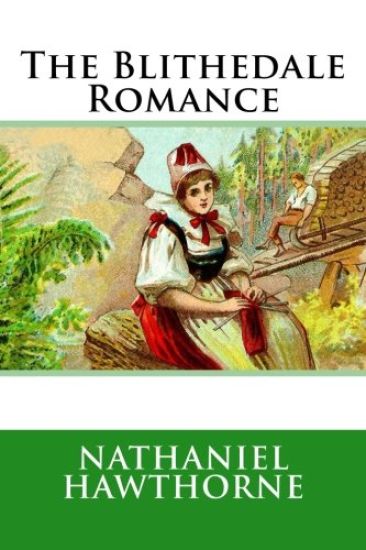
The Blithedale Romance (1852) is Nathaniel Hawthorne's third major romance. In Hawthorne (1879), Henry James called it "the lightest, the brightest, the liveliest" of Hawthorne's "unhumorous fictions." Plot summary edit] The story takes place primarily in the utopian community of Blithedale, presumably in the mid-1800s. The main character, Miles Coverdale, embarks on a quest for the betterment of the world through the agrarian lifestyle and community of the Blithedale Farm. The story begins with a conversation between Coverdale and Old Moodie, a character who reappears throughout the story. The legend of the mysterious Veiled Lady is introduced; she is a popular clairvoyant who disappears unannounced from the social scene. Coverdale then makes the voyage to Blithedale, where he is introduced to such characters as Zenobia and Mr. and Mrs. Silas Foster. At their first community dinner they are interrupted by the arrival of Hollingsworth, a previous acquaintance of Coverdale's, who is carrying a frail, pale girl. Though Hollingsworth believes the girl (whose age is never clarified) is an expected guest, none of the Blithedale citizens recognize her. She immediately develops a strong attachment to Zenobia, and reveals her name to be Priscilla. Soon after, Coverdale becomes severely ill and is bedridden. During his sickness, he believes he is on the brink of death and develops a closeness with Hollingsworth due to their anxiety-ridden situation and discussion of worldly ideals. Hollingsworth and Zenobia take care of him, and he returns to health shortly. As he recovers and spring comes, the residents of the community begin to work the land successfully and prove to their neighbors the plausibility of their cause. Priscilla starts to open up, and relationships between the other characters develop as well. Tension in the friendship between Coverdale and Hollingsworth intensifies as their philosophical disagreements continue. Meanwhile, Zenobia and Hollingsworth become close and rumor flies they might build a house together. Mr. Moodie makes a reappearance and asks about Priscilla and Zenobia for reasons to be revealed later. Coverdale then meets a stranger who turns out to be a Professor Westervelt. Westervelt also asks about Zenobia and Hollingsworth. Coverdale does not like the Professor, and when he is retreating in a tree he overhears the Professor talking to Zenobia and implying that they have a prior relationship. At this point, the narrator of the story briefly switches to Zenobia as she tells a tale entitled "The Silvery Veil." She describes the Veiled Lady and her background, though it is never revealed whether her version of the story is true or not. After switching narration back to Coverdale, the story proceeds to Eliot's Pulpit, a place of rest and discourse for the four main characters (Coverdale, Hollingsworth, Priscilla, and Zenobia). There they discuss women's rights, and Zenobia and Hollingsworth agree, against Coverdale, on a more misogynistic point of view. Their disagreements intensify the next day when Hollingsworth and Coverdale discuss their hopes for the future of Blithedale. They disagree so thoroughly that Coverdale renounces Hollingsworth and effectively ends their friendship. A turning point in the novel, the drama culminates with Coverdale's leaving the farm and returning to the city. He there shows a sort of voyeurism, peeping through hotel windows at a young man and another family. Whilst peeping, he spies Zenobia and Westervelt in another window..... Nathaniel Hawthorne ( born Nathaniel Hathorne; July 4, 1804 - May 19, 1864) was an American novelist, dark romantic, and short story writer...............
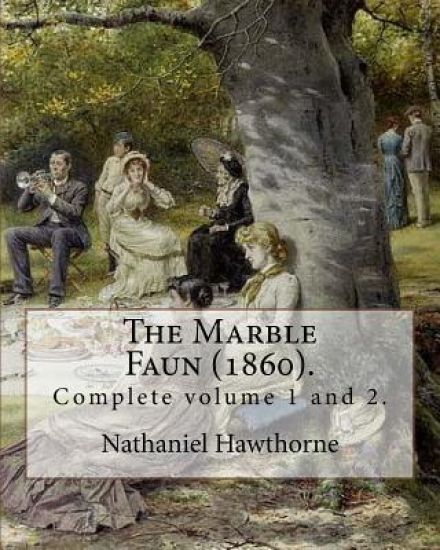
The Marble Faun: Or, The Romance of Monte Beni, also known by the British title Transformation, was the last of the four major romances by Nathaniel Hawthorne, and was published in 1860. The Marble Faun, written on the eve of the American Civil War, is set in a fantastical Italy. The romance mixes elements of a fable, pastoral, gothic novel, and travel guide. Characters edit] This romance focuses on four main characters: Miriam, Hilda, Kenyon, and Donatello. Miriam is a beautiful painter with an unknown past. Throughout the novel, she is compared to many other women including Eve, Beatrice Cenci, Judith, and Cleopatra. Miriam is pursued by a mysterious, threatening man who is her "evil genius" through life. Hilda is an innocent copyist. She is compared to the Virgin Mary and the white dove. Her simple, unbendable moral principles can make her severe in spite of her tender heart. Miriam and Hilda are often contrasted. Kenyon is a sculptor who represents rationalist humanism. He cherishes a romantic affection towards Hilda. Donatello, the Count of Monte Beni, is often compared to Adam and is in love with Miriam. Donatello amazingly resembles the marble Faun of Praxiteles, and the novel plays with the characters' belief that the Count may be a descendant of the antique Faun. Hawthorne, however, withholds a definite statement even in the novel's concluding chapters and postscript...................... Nathaniel Hawthorne ( born Nathaniel Hathorne; July 4, 1804 - May 19, 1864) was an American novelist, dark romantic, and short story writer. He was born in 1804 in Salem, Massachusetts to Nathaniel Hathorne and the former Elizabeth Clarke Manning. His ancestors include John Hathorne, the only judge involved in the Salem witch trials who never repented of his actions. He entered Bowdoin College in 1821, was elected to Phi Beta Kappa in 1824, and graduated in 1825. He published his first work in 1828, the novel Fanshawe; he later tried to suppress it, feeling that it was not equal to the standard of his later work. He published several short stories in periodicals, which he collected in 1837 as Twice-Told Tales. The next year, he became engaged to Sophia Peabody. He worked at the Boston Custom House and joined Brook Farm, a transcendentalist community, before marrying Peabody in 1842. The couple moved to The Old Manse in Concord, Massachusetts, later moving to Salem, the Berkshires, then to The Wayside in Concord. The Scarlet Letter was published in 1850, followed by a succession of other novels. A political appointment as consul took Hawthorne and family to Europe before their return to Concord in 1860. Hawthorne died on May 19, 1864, and was survived by his wife and their three children. Much of Hawthorne's writing centers on New England, many works featuring moral metaphors with an anti-Puritan inspiration. His fiction works are considered part of the Romantic movement and, more specifically, dark romanticism. His themes often center on the inherent evil and sin of humanity, and his works often have moral messages and deep psychological complexity. His published works include novels, short stories, and a biography of his college friend Franklin Pierce, the 14th President of the United States...............
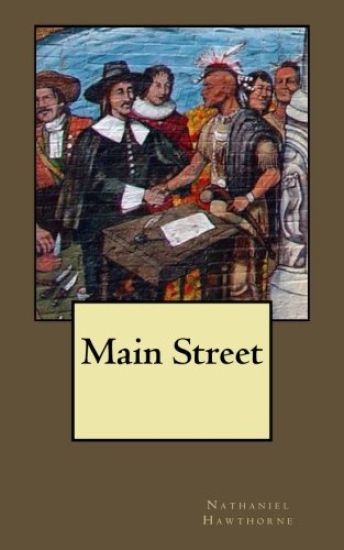
"Main-Street" is a narrative history of the metamorphosis of a pathway through a primordial, untouched forest barely trodden by moccasined Indians into a busy main-street thoroughfare that winds through a large, bustling town trodden by increasingly sophisticated white settlers. In the story a showman turns the crank of a picture show that captures a 100- year history of a single spot in New England to an audience which includes a critical viewer who mocks the poor workmanship of the cardboard people and buildings while he belittles the story-teller's condensed portrayal of people important to the region.
The principal setting is a communal farm called Blithedale (i.e., "Happy Valley"), a would-be modern Arcadia along the lines of the anti-capitalist ideals of Charles Fourier, yet is nonetheless destroyed by the self-interested behavior of some of its members. Among those members are: Hollingsworth, a monomaniacal philanthropist and confirmed misogynist who intends to turn Blithedale into a colony for the reformation of criminals; Zenobia, a passionate feminist of...