Kirjojen hintavertailu – 12 903 724 kirjaa ja 27 kauppaa
Kirjailija
National Aeronautics and Administration
Kirjat ja teokset yhdessä paikassa: 295 kirjaa, julkaisuja vuosilta 2012–2015, suosituimpiin kuuluu William H. Pickering: America's Deep Space Pioneer. Vertaile teosten hintoja ja tarkista saatavuus suomalaisista kirjakaupoista.
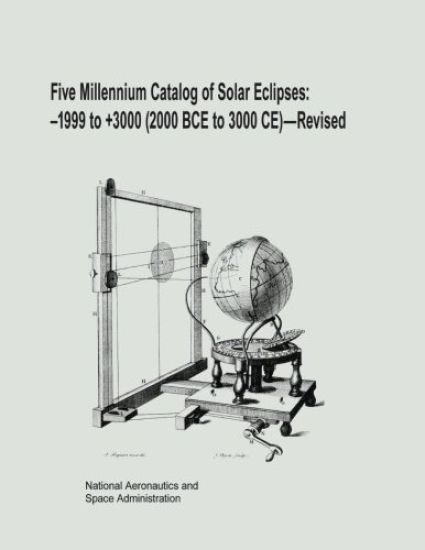
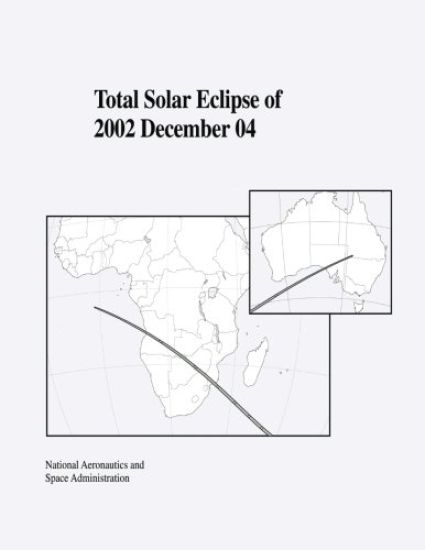
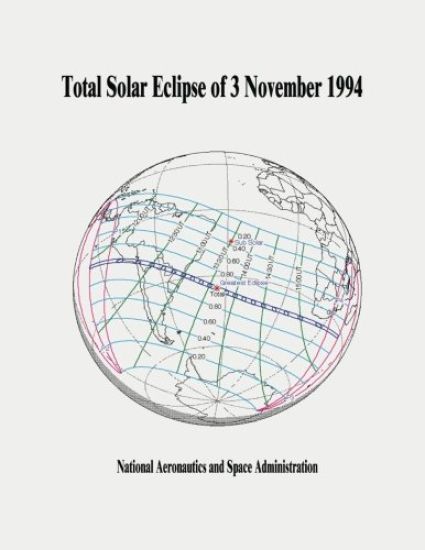
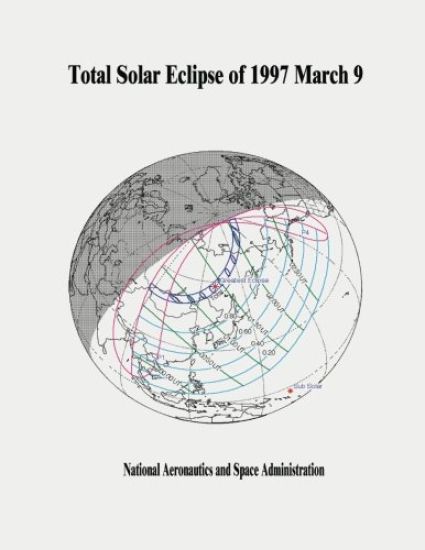
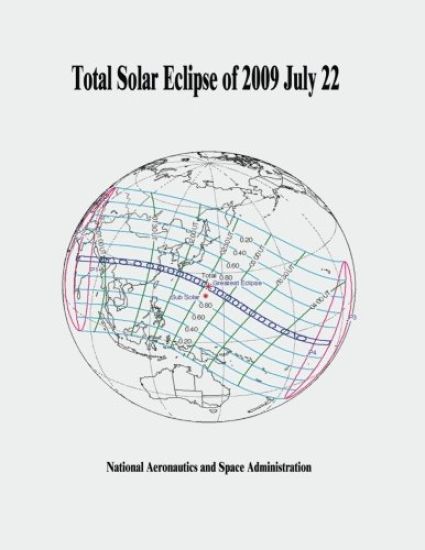
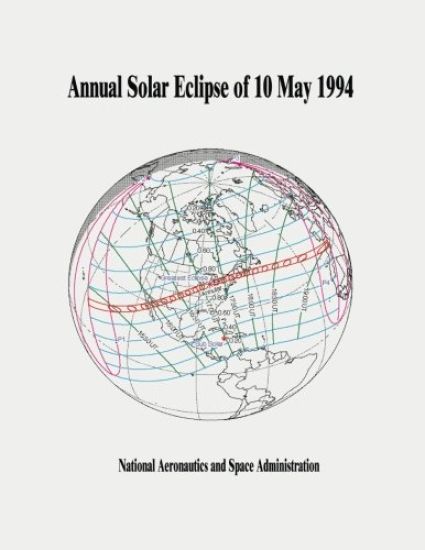
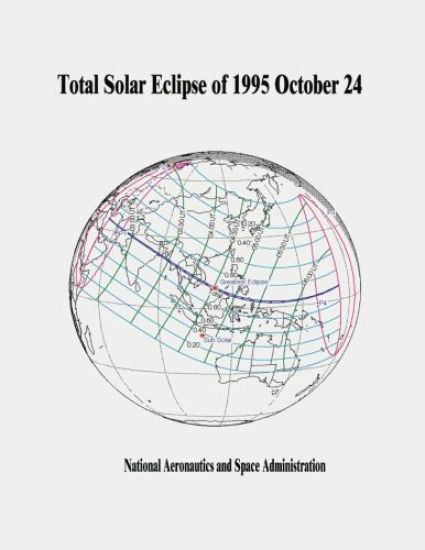
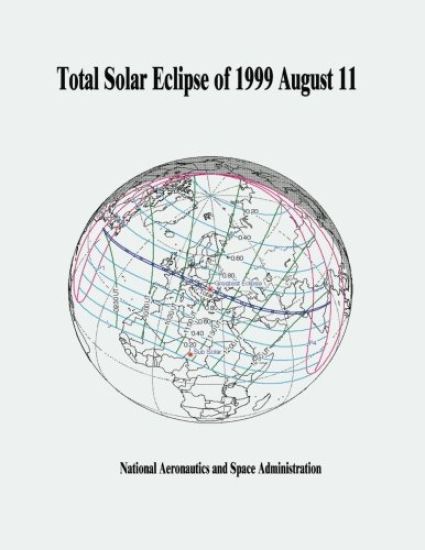
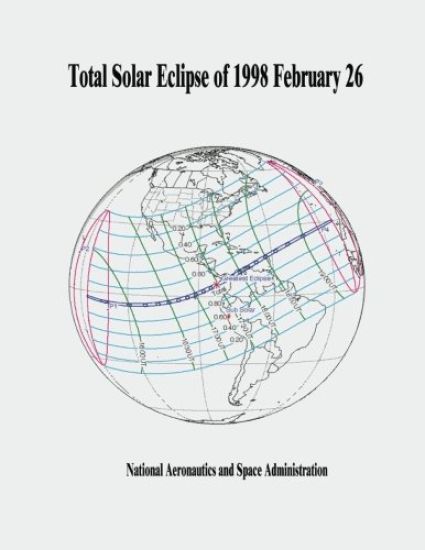
Solar eclipse canons have traditionally been publications offering maps of past and future eclipse paths using the best ephemerides of their day for calculating the positions of the Sun and Moon. The first major work of this kind was Theodor von Oppolzer's 1887 Canon der Finsternisse (Translated as Canon of Eclipses, Gingerich, 1962). It stands as one of the greatest achievements in computational astronomy of the 19th century and contains the elements of all 8,000 solar eclipses (and 5,200 lunar eclipses) occurring between the years -1207 and +2161 (1208 BCE and 2161 CE, respectively), together with maps showing the approximate positions of the central lines. The recently published Five Millennium Canon of Solar Eclipses: -1999 to +3000 (Espenak and Meeus, 2007) con¬tains individual maps for each of the 11,898 solar eclipses occurring over this period. The following points highlight the features and characteristics of this work. Based on modern theories of the Sun and the Moon constructed at the Bureau des Longitudes of Paris rather than the older Newcomb and Brown ephemerides; Ephemerides and eclipse predictions performed in Terrestrial Dynamical Time; Covers historical period of eclipses, as well as one millennium into the future; Global maps for each eclipse depict the actual northern and southern limits of the Moon's penumbral and umbral or antumbral shadows, as well as the sunrise and sunset curves; Maps include curve of eclipse magnitude 0.5; Maps include continental outlines with contemporary political boundaries and are large enough to identify geographic regions of eclipse visibility; Maps are based on the most current determination of the historical values of DELTA T; Estimates of eclipse path accuracy based on the uncertainty in the value of DELTA T (i.e., standard error in DELTA T) A primary goal of this work is to assist historians and archeologists in the identification and dating of eclipses found in references and records from antiquity. This is no easy task because there are usually several possible candidates. Accurate maps using the best available values of DELTA T coupled with estimates in the standard error of DELTA T, are critical in discriminating among potential eclipse candidates. Ultimately, historical eclipse identification can lead to improved chronologies in the timeline of a particular culture.
In the last decades, loss of control in flight was the largest category of commercial jet fatal accidents worldwide. Precipitating factors in these accidents have included equipment failures and system anomalies, weather phenomena, inappropriate use of flight controls or systems, inappropriate control responses by crew, or some combination of these factors. In many of these accidents flight crews could have recovered from the initial upset attitude by promptly applying appropriate control inputs. However, recovery from upset attitudes is challenging, even for highly experienced airline pilots, for the following reasons: 1) pilots rarely have opportunities to practice the appropriate procedures and 2) demanding time constraints and, in some cases, altitude constraints. Also, recovery from some upset accidents requires not only correctly manipulating the controls hut also recognizing the underlying problem causing the upset. The initial upset is generally sudden and unexpected; the crew must not only quickly and correctly assess the situation but also implement recovery procedures appropriate to the situation. Usually the crew does not have enough time for the relatively slow cognitive processes of reasoning and problem solving; rather, the appropriate actions must be highly learned skilled responses that can be executed more quickly. The NTSB has on several occasions recommended that pilots be trained to recover proficiently from abnormal regimes of flight and unusual attitudes. Both the FAA and the ATA encourage airlines to conduct upset attitude recovery training, and many U. S. carriers now include some limited training of this sort, although the content and extent of the training varies widely. Typically, the training consists of a combination of classroom presentations and simulator training. In 1997-98 a consortium of airplane manufacturers, airlines, pilot associations, flight training organizations, and government agencies developed an airplane upset recovery training aid that included recommended procedures for excessive nose-high and nose-low attitudes. To date, no formal study of the effectiveness of existing airplane upset recovery training programs has been made. Many questions remain unanswered, for example: How extensively must pilots practice recovery maneuvers to obtain proficiency? How often must pilots train to maintain proficiency? To what extent does generic training enable pilots to recover from a wide range of potential upset attitude scenarios? To what extent can training address the factor of surprise that occurs in actual line upsets? To what extent will training in ground-based simulators transfer appropriately to actual flight, given that ground-based simulators cannot match the forces and accelerations encountered in actual upsets and given that the fidelity of the aerodynamic models of the simulators is not well established or implemented outside of normal operating parameters? Supported by a contract from the training element of NASA's Aviation Safety Training Program, Veridian Engineering recently completed a study that bears on some of these questions. 1. The primary objective of this study was to generate data to support decision-making on the part of the FAA and the airlines. NASA's specific objectives in sponsoring the study were: To compare the relative effectiveness of no training, aerobatic training (in light aircraft), ground simulation, combined aerobatic and ground simulation training, and in-flight simulation training on airplane upset recovery; 2. To determine how well currently trained, new-hire airline pilots are able to respond to a representative set of prototypical airplane upset scenarios; 3. To identify any specific weakness in pilots' recovery techniques and to identify areas in which current training should be improved; and 4. To determine whether some types of airplane upset scenarios are more difficult to recover from than others.
The "Second Workshop on New Concepts for Far-Infrared and Submillimeter Space Astronomy" aimed to highlight the groundbreaking opportunities available for astronomical investigations in the far-infrared to submillimeter using advanced, space-based telescopes. The National Research Council's Decade Report, "Astronomy and Astrophysics in the New Millennium," assigned a high priority to a Single Aperture Far-Infrared (SAFIR) observatory and encouraged the subsequent development of space-based far-infrared interferometry. With community guidance from the Origins and Structure and Evolution of the Universe Subcommittees of the Space Science Advisory Committee, NASA recently incorporated SAFIR and a kilometer maximum baseline far-IR interferometer into the Space Science roadmap. The interferometer is widely known as SPECS, the Submillimeter Probe of the Evolution of Cosmic Structure. An important outcome of this workshop was the development of a "Community Plan for Far-IR/Submillimeter Space Astronomy". The name "Community Plan" was adopted because this paper gives the consensus view of the workshop participants. The Community Plan addresses practical considerations, such as the tradeoffs associated with alternative mission designs and the flowdown from scientific objectives to measurement requirements, engineering requirements, and technology needs. It recommends an implementation strategy for technology development and validation, and recommends specific science and technology pathfinder missions that would pave the way for the "roadmap missions" SAFIR and SPECS. The community plan concludes by saying: "The time is right to place SAFIR on the NASA plan as one of the successors of SIRTF and JWST, to set our sights on a longbaseline far-infrared/submillimeter interferometric imaging telescope, to further develop far-infrared/submillimeter single-aperture and interferometric mission concepts, and to invest strategically in the technology that will enable future far-infrared/submillimeter missions. Supporting studies and smaller mission opportunities should be actively pursued."