Kirjojen hintavertailu – 12 903 725 kirjaa ja 27 kauppaa
Kirjailija
National Aeronautics and Administration
Kirjat ja teokset yhdessä paikassa: 295 kirjaa, julkaisuja vuosilta 2012–2015, suosituimpiin kuuluu William H. Pickering: America's Deep Space Pioneer. Vertaile teosten hintoja ja tarkista saatavuus suomalaisista kirjakaupoista.
The NASA Historical Data Book Series provides a statistical summary of the first 20 years of the National Aeronautics and Space Administration. NASA finances, personnel, and installations, 1958-1968, are covered in the first volume; while the second and third volumes provide information on the agency's major pro- grams and projects for 1958-1968 and 1969-1978, respectively. Congress established the civilian space agency in July 1958, when it passed the National Aeronautics and Space Act. NASA opened its doors the following October. The new organization was charged not only with expanding man's knowledge of the universe, but also with such monumental tasks as sending man to the moon. The story of NASA's first decade is one of enthusiasm, competition, growth, and success. Congress, the White House, and the public largely supported the young agency fiscally and morally. But after Apollo ll's exciting lunar landing and Neil Armstrong's first steps onto the moon in 1969, the attention of many of NASA's supporters turned elsewhere. The space agency would survive its second decade, but not with big budgets and large-scale programs. President Richard M. Nixon urged NASA to build on the knowledge and experience of its first 10 years to develop programs that would lead to the solution o practical problems on earth. There would be no space spectaculars during the 1970s. Personnel cuts, minimal budgets, and more sober objectives would flavor the decade. Like Volume II, this book covers NASA's six major program areas: launch vehicles, manned spaceflight, space science, space applications, tracking, and aeronautics and space research.
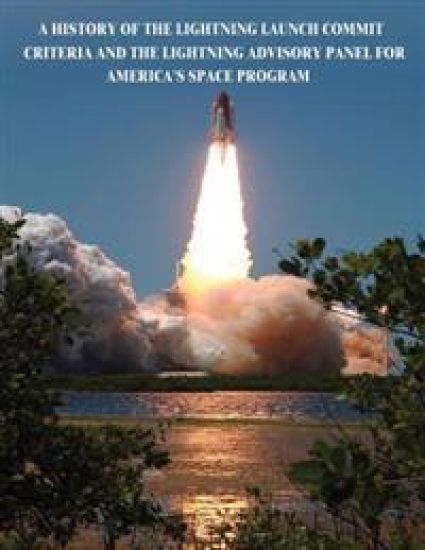
Since natural and artificially-initiated (or 'triggered') lightning are demonstrated hazards to the launch of space vehicles, the American space program has responded by establishing a set of Lightning Launch Commit Criteria (LLCC) and Definitions to mitigate the risk. The LLCC apply to all Federal Government ranges and have been adopted by the Federal Aviation Administration for application at state-operated and private spaceports. The LLCC and their associated definitions have been developed, reviewed, and approved over the years of the American space program starting from relatively simple rules in the mid-twentieth century (that were not adequate) to a complex suite for launch operations in the early 21st century. During this evolutionary process, a "Lightning Advisory Panel (LAP)" of top American scientists in the field of atmospheric electricity was established to guide it. This history document provides a context for and explanation of the evolution of the LLCC and the LAP. A companion document on the rationale is currently being prepared by the LAP to provide the physical, mathematical, and operational justification for the current LLCC. Lightning that takes place naturally in thunderstorms was recognized as a threat to spaceflight early in the space age, and the early launch rules prohibited flight through thunderstorms. What had not been recognized until Apollo XII was launched in 1969 was that an ascending rocket could "trigger" lightning if it flew into highly electrified clouds, even in the absence of natural lightning. Apollo XII was struck twice by triggered lightning, and as a result, additional rules were added to forbid flying within 5 NM of thunderstorms or through certain non-thunderstorm clouds that experience showed had the potential of being electrified. During the time between Apollo XII and the beginning of the Space Shuttle Program, several important research programs were carried out to learn more about lightning and cloud electricity in Florida, and additional instrumentation was installed at the KSC and Eastern Range (ER). The LLCC were modified for the Skylab program in 1973 and again for the Apollo-Soyuz Test Project in 1975. Expendable launch vehicles (ELV) had their own separate but similar rules. In 1979 the nascent Shuttle program adopted a set of LLCC that included constraints and waivers that were based on surface electric field mill measurements. The ELV rules did not adopt the field mill criteria. In 1987, triggered lightning caused the loss of Atlas/Centaur 67 (AC 67) and its Fleetsatcom payload. A major cause of this accident was the failure of the ELV rules to include a field mill criterion. The Shuttle rules would have prohibited the launch of AC 67. In the aftermath of several investigations and a Congressional Hearing, a lightning "Peer Review Committee", a predecessor of the LAP, was established to guide NASA and the Air Force in the drafting of LLCC and the conduct of associated research. Several major research projects were undertaken, including the first "Airborne Field Mill Program" (ABFM I, 1990-1992) in which direct measurements of electric fields in Florida clouds were made from a specially instrumented aircraft. ABFM I resulted in several improvements to the LLCC, and the lessons learned ultimately led to an even more successful ABFM II campaign a decade later. As new knowledge and additional operational experience has been gained, the LLCC have been updated to preserve or increase their safety and increase launch availability. All launches of ELV and manned vehicles now use the same rules, which simplifies their understanding and application and minimizes the cost of the weather infrastructure to support them. In the future, the processes and procedures that have evolved can be used to facilitate further improvements in both launch availability and safety as new research findings become available.