Kirjojen hintavertailu – 12 859 829 kirjaa ja 27 kauppaa
Kirjailija
National Defense University
Kirjat ja teokset yhdessä paikassa: 68 kirjaa, julkaisuja vuosilta 2012–2019, suosituimpiin kuuluu Strengthening the Army R&D Program. Vertaile teosten hintoja ja tarkista saatavuus suomalaisista kirjakaupoista.
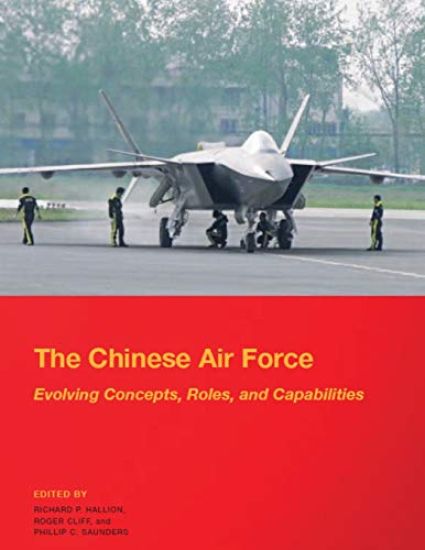
An extraordinary list of contributors addresses the Chinese Air Force in a truly comprehensive manner, providing insight to a level that hasn't been seen before in any single volume on the PLA or its components. The chapters offer a complete picture of where the Chinese Air Force is today, where it has come from, and most importantly, where it is headed. Aging F-16A/B, AIDC F-CK-1 Ching-Kuo, and Mirage 2000 fighters are increasingly being outclassed and outnumbered by newer PRC aircraft such as the Su-27, J-10, J-11, and Su-30 aircraft. Where a decade ago, adversaries could operate with relative impunity facing a limited-range surface-to-air missile threat built around derivatives of the then 40-year-old Khrushchev-era SA-2, today they face far more dangerous S-300 (SA-10/20) systems and the S-400. Why buy a book you can download for free? We print this book so you don't have to. First you gotta find a good clean (legible) copy and make sure it's the latest version (not always easy). Some documents found on the web are missing some pages or the image quality is so poor, they are difficult to read. We look over each document carefully and replace poor quality images by going back to the original source document. We proof each document to make sure it's all there - including all changes. If you find a good copy, you could print it using a network printer you share with 100 other people (typically its either out of paper or toner). If it's just a 10-page document, no problem, but if it's 250-pages, you will need to punch 3 holes in all those pages and put it in a 3-ring binder. Takes at least an hour. It's much more cost-effective to just order the latest version from Amazon.com This book includes original commentary which is copyright material. Note that government documents are in the public domain. We print these large documents as a service so you don't have to. The books are compact, tightly-bound, full-size (8 1/2 by 11 inches), with large text and glossy covers. 4th Watch Publishing Co. is a HUBZONE SDVOSB. https: //usgovpub.com
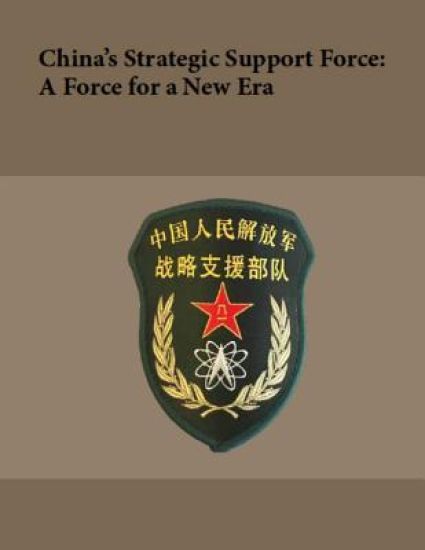
The People's Liberation Army (PLA) reforms have brought dramatic changes to its structure, model of warfighting, and organizational culture, including the creation of a Strategic Support Force (SSF) that centralizes most PLA space, cyber, electronic, and psychological warfare capabilities. These reforms come at a time when the PLA is transitioning from land-based territorial defense to extended power projection to protect Chinese interests in the "strategic frontiers" of space, cyberspace, and the far seas. Why buy a book you can download for free? We print this book so you don't have to. First you gotta find a good clean (legible) copy and make sure it's the latest version (not always easy). Some documents found on the web are missing some pages or the image quality is so poor, they are difficult to read. We look over each document carefully and replace poor quality images by going back to the original source document. We proof each document to make sure it's all there - including all changes. If you find a good copy, you could print it using a network printer you share with 100 other people (typically its either out of paper or toner). If it's just a 10-page document, no problem, but if it's 250-pages, you will need to punch 3 holes in all those pages and put it in a 3-ring binder. Takes at least an hour. It's much more cost-effective to just order the latest version from Amazon.com This book includes original commentary which is copyright material. Note that government documents are in the public domain. We print these large documents as a service so you don't have to. The books are compact, tightly-bound, full-size (8 1/2 by 11 inches), with large text and glossy covers. 4th Watch Publishing Co. is a HUBZONE SDVOSB. https: //usgovpub.com
We have entered a particularly dangerous era in the Near East and South Asia- that is, the Greater Middle East. The context of today's situation is more alarming than respective current crises-as bad as they may be. Rather, there is an increasingly radicalized and violent sectarian environment made up of crosscutting crises occurring in the midst of proliferation; precision weapons; cyber war; increased ungoverned territory vulnerable to global, regional, and local jihadist exploitation; majoritarian authoritarianism; uncompromising sectarianism; ethnic, tribal, and sectarian- driven civil wars; massive popular anger and frustration over the lack of essential services and a diminishing quality of life, particularly in areas such as water, electricity, health, education, employment, and economic collapse; water wars and environmental endangerment; and the vulnerability of sensitive infrastructure targeted by state and nonstate actors, or an empowered lone wolf in the service of a state or nonstate actors.
The Center for the Study of Chinese Military Affairs (CSCMA) in the Institute for National Strategic Studies at the National Defense University commissioned this book to fill this gap in the open-source literature on the People's Liberation Army (PLA). The book helps fulfill the CSCMA's congressionally-mandated mission "to study and inform policymakers in the Department of Defense, Congress, and throughout the Government regarding the national goals and strategic posture of the People's Republic of China and the ability of that nation to develop, field, and deploy an effective military instrument in support of its national strategic goals." The authors combine extensive individual expertise in cruise missiles, arms control, and nonproliferation, Asian security, the Chinese military, and the Chinese defense industry. Dennis Gormley, a Senior Lecturer at the University of Pittsburgh's Graduate School of Public and International Affairs, is an internationally recognized expert on cruise missiles.
This volume represents an early attempt at assessing the Long War, now in its 14th year. Forged in the fires of the 9/11 attacks, the war includes campaigns against al Qaeda, major conflicts in Iraq and Afghanistan, and operations in the Horn of Africa, the Republic of the Philippines, and globally, in the air and on the sea. The authors herein treat only the campaigns in Afghanistan and Iraq, the largest U. S. efforts. It is intended for future senior officers, their advisors, and other national security decisionmakers. By derivation, it is also a book for students in joint professional military education courses, which will qualify them to work in the field of strategy. While the book tends to focus on strategic decisions and developments of land wars among the people, it acknowledges that the status of the United States as a great power and the strength of its ground forces depend in large measure on the dominance of the U. S. Navy and U. S. Air Force in their respective domains.
From the earliest days of the Republic, the outlines of an evolving American grand strategy have been evident in our foreign and domestic policy.1 Much of that history continues to inform our strategic conduct, and therefore American grand strategy rests today on traditional foundations. Despite a welter of theory and debate, grand strategy as a practical matter is remarkably consistent from decade to decade, with its means altering as technology advances and institutions evolve but its ends and ways showing marked continuity. Grand strategy can be understood simply as the use of power to secure the state.2 Thus, it exists at a level above particular strategies intended to secure particular ends and above the use of military power alone to achieve political objectives. One way to comprehend grand strategy is to look for long-term state behavior as defined by enduring, core security interests and how the state secures and advances them over time.
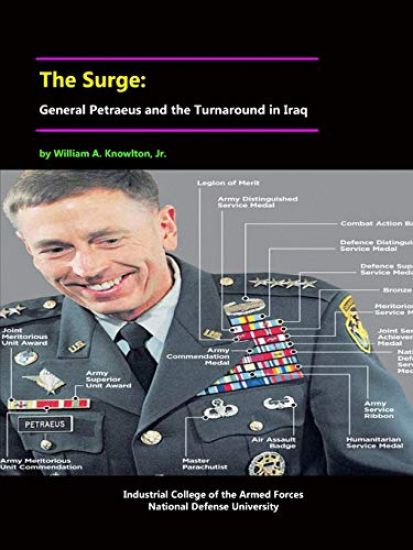
When General David H. Petraeus, USA, took command of Multi-National Force-Iraq (MNF-I) on February 10, 2007, beginning his 3d tour and 28th month in Iraq, the situation was grim. Increasing sectarian violence had led to an escalation of killings of civilians in Iraq, with up to 150 corpses being found daily in Baghdad.1 The government of Prime Minister Nouri al- Maliki was viewed by almost everyone as ineffective at best, and the U. S. military strategy was not well defined and clearly not working. Iraq appeared to be sliding out of control toward civil war or disintegration, and the United States appeared to be headed inexorably toward defeat- another Vietnam. Popular sentiment held that the best course of action was to cut our losses and disengage from a fight we were losing. General George Casey, USA, the outgoing commander of MNF-I, had supported a gradual drawdown of U. S. forces and a handoff of security tasks to Iraqi forces even as the situation got worse.
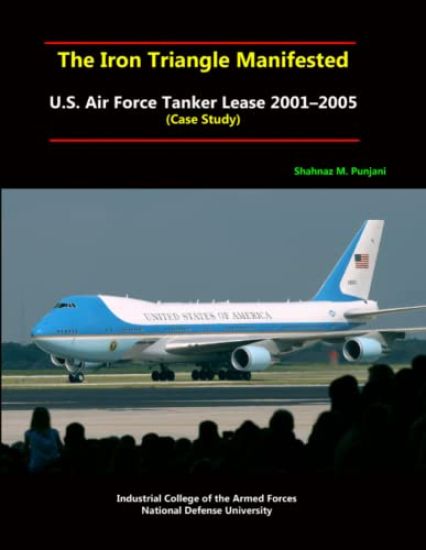
The proposed lease of the KC-767 tanker aircraft was one of the most infamous procurement scandals of the post-Cold War era. Interactions within the military-industrial-congressional complex led to legislation permitting the Air Force to lease tankers from Boeing using an operating lease rather than standard procurement. Following the outcry from Congress, industry, the media, and numerous watchdog groups, Congress and the Department of Defense (DOD) launched a wave of investigations and hearings. During the lease debate, participants reached a number of compromises documented in congressional legislation. However, this was not sufficient to continue the lease process. After nearly 4 years, Congress cancelled the tanker lease and directed the Air Force to pursue a traditional procurement approach.
The natural tendency of people to view problems from the perspective of their home organization is widely acknowledged in Washington. The corrosive effect this has on unity of intent and unity of effort is also acknowledged, documented, and lamented. As long as the stakes are small, the costs of such parochialism are apparently endurable. Our recent frustrations in Iraq and Afghanistan, however, have elevated the problem of so-called "stove-piping" to a high profile. The proposed remedy to stove-piping is the "whole of government" approach to complex problems. Also known as the "comprehensive approach," the putative advantage of whole of government approaches is that they lift the level of analysis to a higher altitude, providing a better view of the full extent and complexity of the problem in question. The inevitable decrease in resolution, or granularity, should be more than balanced by an improved strategic perspective. Regrettably, however, the discipline of the whole of government approach has not been consistently applied, as bureaucratic inertia pushes back against proposed new practices. Despite countless testimonials of commitment to whole of government collaboration, true collaboration remains ad hoc and dependent on specific circumstances, rather than institutionally hard-wired into the practices and behaviors of departments and agencies. Although efforts are being undertaken to improve collaboration, interagency secondments remain de-incentivized and bureaucratically cumbersome, thus discouraging the growth of a cadre of whole of government professionals. Interagency collaboration also remains stunted by incompatible communications systems, operational practices, and organizational cultures.