

Kirjailija
National Research Council
Kirjat ja teokset yhdessä paikassa: 34 kirjaa, julkaisuja vuosilta 1987–2019, suosituimpiin kuuluu Twenty-Fourth Symposium on Naval Hydrodynamics. Vertaile teosten hintoja ja tarkista saatavuus suomalaisista kirjakaupoista.
34 kirjaa
Kirjojen julkaisuvuodet: 1987–2019.
Methane Generation from Human, Animal, and Agricultural Wastes
National Academy of Sciences; National Research Council; International Development Commission
Lulu.com
2013
nidottu
Symposium on Shock: May 7-9, 1951
National Research Council; Army Medical Center
Literary Licensing, LLC
2013
sidottu
The book ""Symposium On Shock: May 7-9, 1951"" is a collection of scientific papers presented at a symposium organized by the National Research Council. The symposium was held from May 7 to May 9, 1951, and focused on the study of shock, a complex physiological response to injury or trauma. The book contains 16 chapters, each written by a different author, covering various aspects of shock. The topics discussed include the pathophysiology of shock, the effects of trauma on the body, the role of blood and fluids in shock, and the treatment and management of shock. The authors of the chapters are experts in their respective fields, and their contributions provide valuable insights into the mechanisms and effects of shock on the body. The book is intended for medical professionals, researchers, and students interested in the study of shock and its impact on the human body. Overall, ""Symposium On Shock: May 7-9, 1951"" is a comprehensive and informative resource on the topic of shock, providing a detailed overview of the current state of knowledge in the field. Contributors Include Edward D. Churchill, Ronald T. Grant, Richard V. Ebert And Others. This scarce antiquarian book is a facsimile reprint of the old original and may contain some imperfections such as library marks and notations. Because we believe this work is culturally important, we have made it available as part of our commitment for protecting, preserving, and promoting the world's literature in affordable, high quality, modern editions, that are true to their original work.
Symposium on Shock: May 7-9, 1951
National Research Council; Army Medical Center
Literary Licensing, LLC
2013
nidottu
Space Science in the Twenty-First Century: Imperatives for the Decades 1995 to 2015: Overview
Space Science Board; Commission On Physical Scienc Resources; National Research Council
Createspace Independent Publishing Platform
2012
nidottu
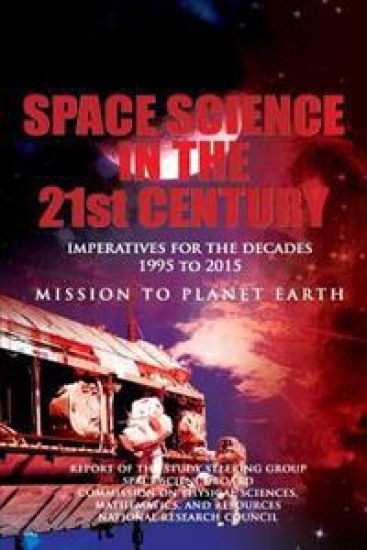
Space Science in the Twenty-First Century: Imperatives for the Decades 1995 to 2015: Mission to Planet Earth
Space Science Board; Commission On Physical Sc And Resources; National Research Council
Createspace Independent Publishing Platform
2012
nidottu
Drilling Thru the Earth's Crust: A Study of the Desirability and Feasibility of Drilling a Hole to the Mohorovicic Discontinuity
National Research Council
Literary Licensing, LLC
2012
sidottu
Drilling Thru The Earth's Crust is a scientific study conducted by the National Research Council exploring the possibility and practicality of drilling a hole all the way through the Earth's crust to the Mohorovicic Discontinuity (also known as the Moho). The Moho is the boundary between the Earth's crust and the mantle, located approximately 5 to 10 kilometers below the ocean floor and 20 to 90 kilometers below the continents. The book discusses the scientific reasons for drilling to the Moho, including the potential for new discoveries about the Earth's composition and geology, as well as the practical challenges and risks associated with such an endeavor. The study examines the various drilling technologies that could be used, the potential environmental impacts, and the costs and funding required for such a project. The book also includes a history of previous attempts to drill through the Earth's crust, including the famous Kola Superdeep Borehole in Russia, which reached a depth of 12 kilometers before being abandoned due to technical difficulties. Overall, Drilling Thru The Earth's Crust provides a comprehensive overview of the scientific and logistical considerations involved in drilling a hole to the Moho, and offers valuable insights into the potential benefits and challenges of such a project. This scarce antiquarian book is a facsimile reprint of the old original and may contain some imperfections such as library marks and notations. Because we believe this work is culturally important, we have made it available as part of our commitment for protecting, preserving, and promoting the world's literature in affordable, high quality, modern editions, that are true to their original work.
Status and Methods of Research in Economic and Agronomic Aspects of Fertilizer Response and Use
National Research Council
Literary Licensing, LLC
2012
nidottu
Status and Methods of Research in Economic and Agronomic Aspects of Fertilizer Response and Use
National Research Council
Literary Licensing, LLC
2012
sidottu
Status And Methods Of Research In Economic And Agronomic Aspects Of Fertilizer Response And Use is a book published by the National Research Council. The book focuses on the research conducted in the field of fertilizer response and use in both economic and agronomic aspects. It provides a comprehensive overview of the current status of research in this field and the methods used for conducting such research. The book covers various topics related to fertilizer response and use, including the economic and agronomic factors that affect fertilizer use, the impact of fertilizer use on crop yield and quality, and the environmental effects of fertilizer use. It also discusses the different methods used for evaluating fertilizer response and use, such as field experiments, laboratory analyses, and modeling. The book is intended for researchers, policymakers, and practitioners in the field of agriculture and environmental science, as well as for students and academics interested in this topic. It provides a valuable resource for anyone seeking to understand the current state of research in fertilizer response and use and the methods used for conducting such research. National Academy Of Sciences National Research Council, No. 918. This scarce antiquarian book is a facsimile reprint of the old original and may contain some imperfections such as library marks and notations. Because we believe this work is culturally important, we have made it available as part of our commitment for protecting, preserving, and promoting the world's literature in affordable, high quality, modern editions, that are true to their original work.
The U. S. intelligence community (IC) is a complex human enterprise whose success depends on how well the people in it perform their work. Although often aided by sophisticated technologies, these people ultimately rely on their own intellect to identify, synthesize, and communicate the information on which the nation's security depends. The IC's success depends on having trained, motivated, and thoughtful people working within organizations able to understand, value, and coordinate their capabilities. Intelligence Analysis provides up-to-date scientific guidance for the intelligence community (IC) so that it might improve individual and group judgments, communication between analysts, and analytic processes. The papers in this volume provide the detailed evidentiary base for the National Research Council's report, Intelligence Analysis for Tomorrow: Advances from the Behavioral and Social Sciences. The opening chapter focuses on the structure, missions, operations, and characteristics of the IC while the following 12 papers provide in-depth reviews of key topics in three areas: analytic methods, analysts, and organizations. Informed by the IC's unique missions and constraints, each paper documents the latest advancements of the relevant science and is a stand-alone resource for the IC's leadership and workforce. The collection allows readers to focus on one area of interest (analytic methods, analysts, or organizations) or even one particular aspect of a category. As a collection, the volume provides a broad perspective of the issues involved in making difficult decisions, which is at the heart of intelligence analysis.
Strengthening the National Institute of Justice
National Research Council
National Academies Press
2010
nidottu
The National Institute of Justice (NIJ) is the nation's primary resource for advancing scientific research, development, and evaluation on crime and crime control and the administration of justice in the United States. Headed by a presidentially appointed director, it is one of the major units in the Office of Justice Programs (OJP) of the U. S. Department of Justice. Under its authorizing legislation, NIJ awards grants and contracts to a variety of public and private organizations and individuals. At the request of NIJ, Strengthening the National Institute of Justice assesses the operations and quality of the full range of its programs. These include social science research, science and technology research and development, capacity building, and technology assistance. The book concludes that a federal research institute such as NIJ is vital to the nation's continuing efforts to control crime and administer justice. No other federal, state, local, or private organization can do what NIJ was created to do. Forty years ago, Congress envisioned a science agency dedicated to building knowledge to support crime prevention and control by developing a wide range of techniques for dealing with individual offenders, identifying injustices and biases in the administration of justice, and supporting more basic and operational research on crime and the criminal justice system and the involvement of the community in crime control efforts. As the embodiment of that vision, NIJ has accomplished a great deal. It has succeeded in developing a body of knowledge on such important topics as hot spots policing, violence against women, the role of firearms and drugs in crime, drug courts, and forensic DNA analysis. It has helped build the crime and justice research infrastructure. It has also widely disseminated the results of its research programs to help guide practice and policy. But its efforts have been severely hampered by a lack of independence, authority, and discretionary resources to carry out its mission.
An increase in global access to goods and knowledge is transforming world-class science and technology (S&T) by bringing it within the capability of an unprecedented number of global parties who must compete for resources, markets, and talent. In particular, globalization has facilitated the success of formal S&T plans in many developing countries, where traditional limitations can now be overcome through the accumulation and global trade of a wide variety of goods, skills, and knowledge. As a result, centers for technological research and development (R&D) are now globally dispersed, setting the stage for greater uncertainty in the political, economic, and security arenas. These changes will have a potentially enormous impact for the U. S. national security policy, which for the past half century was premised on U. S. economic and technological dominance. As the U. S. monopoly on talent and innovation wanes, arms export regulations and restrictions on visas for foreign S&T workers are becoming less useful as security strategies. The acute level of S&T competition among leading countries in the world today suggests that countries that fail to exploit new technologies or that lose the capability for proprietary use of their own new technologies will find their existing industries uncompetitive or obsolete. The increased access to information has transformed the 1950s' paradigm of "control and isolation" of information for innovation control into the current one of "engagement and partnerships" between innovators for innovation creation. Current and future strategies for S&T development need to be considered in light of these new realities. This book analyzes the S&T strategies of Japan, Brazil, Russia, India, China, and Singapore (JBRICS), six countries that have either undergone or are undergoing remarkable growth in their S&T capabilities for the purpose of identifying unique national features and how they are utilized in the evolving global S&T environment.
Application of Toxicogenomics to Cross-Species Extrapolation
National Research Council
National Academies Press
2006
nidottu
Some of what we know about the health effects of exposure to chemicals from food, drugs, and the environment come from studies of occupational, inadvertent, or accident-related exposures. When there is not enough human data, scientists rely on animal data to assess risk from chemical exposure and make health and safety decisions. However, humans and animals can respond differently to chemicals, including the types of adverse effects experienced and the dosages at which they occur. Scientists in the field of toxicogenomics are using new technologies to study the effects of chemicals. For example, in response to a particular chemical exposure, they can study gene expression ("transcriptomics"), proteins ("proteomics") and metabolites ("metabolomics"), and they can also look at how individual and species differences in the underlying DNA sequence itself can result in different responses to the environment. Based on a workshop held in August 2004, this report explores how toxicogenomics could enhance scientists' ability to make connections between data from experimental animal studies and human health. Table of ContentsFront MatterSummary of WorkshopAppendix A: Workshop AgendaAppendix B: Biographical Information on Workshop SpeakersAppendix C: Biographical Information on Workshop Planning Committee
Protection, Control, and Accounting of Nuclear Materials
National Research Council
National Academies Press
2006
nidottu
The U. S. and Russian academies convened a workshop in 2003 for sharing best practices in nuclear materials protection, control, and accounting (MPC&A), including the status and application of remote monitoring technologies, personnel issues, and both national and international safeguards worldwide. The goals of the workshop were to identify areas in which the United States and Russia can promote best practices in MPC&A globally and expand U. S.-Russian cooperation on nuclear non-proliferation. The papers presented in the workshop and the outcomes of workshop discussions form the basis for this workshop summary. Table of ContentsFront MatterIntroductionWorkshop BackgroundWorkshop ContextOverviews of the International Nuclear Nonproliferation ContextInternational Political Efforts to Address the Dangers of Nuclear Weapons and Materials The Legal and Regulatory Context for MPC&ASafeguards CultureIAEA Nonproliferation and MPC&A programsDomestic MPC&A ProgramsConcluding RemarksAppendix A: Workshop Participants ListAppendix B: Workshop Agenda
For more than 100 years, the Coeur d' Alene River Basin has been known as "The Silver Valley" for being one of the most productive silver, lead, and zinc mining areas in the United States. Over time, high levels of metals (including lead, arsenic, cadmium, and zinc) were discovered in the local environment and elevated blood lead levels were found in children in communities near the metal-refining and smelter complex. In 1983, the U. S. Environmental Protection Agency (EPA) listed a 21-square mile mining area in northern Idaho as a Superfund site. EPA extended those boundaries in 1998 to include areas throughout the 1500-square mile area Coeur d'Alene River Basin project area. Under Superfund, EPA has developed a plan to clean up the contaminated area that will cost an estimated $359 million over 3 decades—and this effort is only the first step in the cleanup process. Superfund and Mining Megasites: Lessons from Coeur d'Alene River Basin evaluates the issues and concerns that have been raised regarding EPA's decisions about cleaning up the area. The scientific and technical practices used by EPA to make decisions about human health risks at the Coeur d'Alene River Basin Superfund site are generally sound; however, there are substantial concerns regarding environmental protection decisions, particularly dealing with the effectiveness of long-term plans. Table of Contents Front Matter Summary 1 Introduction 2 Historical Background 3 The Coeur d'Alene System 4 Remedial Investigation Assessment 5 Human Health Risk Assessment in the Coeur d'Alene River Basin 6 Human Health Risk Assessment: Lead Exposure and Uptake - Use of the IEUBK Model 7 Ecologic Risk Assessment 8 Remediation Objectives and Approaches 9 Mining Megasites: Lessons Learned Appendix A Statement of Task and Committee Biosketches Appendix B Evaluation of the Methodology to Determine Background Concentrations in the Lower Basin Appendix C Detailed Comments on the Integrated Exposure Uptake Biokinetic Implementation Code Appendix D Procedures Used in Model Comparisons Appendix E Crustal Element Analyses for Following Soil Lead Transport Appendix F Assessment of the Probabilistic Model for Estimating Metal Loading and Effectiveness of Remedial Action
Water Resources Planning for the Upper Mississippi River and Illinois Waterway
National Research Council
National Academies Press
2005
nidottu
The U. S. Army Corps of Engineers recently completed its feasibility study for the Upper Mississippi River-Ilinois Waterway, which was one of the agency's longest and most complicated studies in its history. The first two reports from this WSTB committee reviewed analytical aspects of the Corps feasibility study. Water Resources Planning for the Upper Mississippi River and Illinois Waterway considers the broader issue of managing the multiple resources of the Upper Mississippi River and Illinois Waterway, especially with regard to several, recently-issued NRC reports on Corps of Engineers planning procedures. The report finds that a key issue regarding planning decisions on these river systems is the ambiguity related to several different pieces of legislation and acts that govern river management, and thus recommends that the administration and Congress clarify the federal intent for managing this river and waterway system. The report recommends an independent, retrospective reivew of the experience with a federal inter-agency Principals Group, which was convened to provide guidance to the Corps study. It is also recommended that the Corps strive to incorporate flexible, adaptive management principles through its entire water planning program, including operations of the lock and dam system. Table of ContentsFront Matter Summary1 Introduction2 The National Research Council "216" Studies: Corps of Engineers Water Resources Project Planning3 Improving UMR-IWW Resources Planning and Management4 EpilogueReferencesAppendix A: Water Resources Development Act of 2000Appendix B: National Research Council Board Membership and StaffAppendix C: Committee Members and Staff Biographies
Review of the GAPP Science and Implementation Plan
National Research Council
National Academies Press
2005
nidottu
Water managers rely on predicting changes in the hydrologic cycle on seasonal-to-interannual time frames to prepare for water resource needs. Seasonal to interannual predictability of the hydrologic cycle is related to local and remote influences involving land processes and ocean processes, such as the El Niño Southern Oscillation. Although advances in understanding land-surface processes show promise in improving climate prediction, incorporating this information into water management decision processes remains a challenge since current models provide only limited information for predictions on seasonal and longer time scales. To address these needs, the Global Energy and Water Cycle Experiment (GEWEX) Americas Prediction Project (GAPP) was established in 2001 to improve how changes in water resources are predicted on intraseasonal-to-interannual time scales for the continental United States. The GAPP program has developed a science and implementation plan to guide its science activities, which describes strategies for improving prediction and decision support in the hydrologic sciences. This report by the National Research Council provides a review of the GAPP Science and Implementation Plan, outlining suggestions to strengthen the plan and the GAPP program overall. Table of Contents Front Matter 1 Introduction 2 General Comments and Recommendations 3 Chapter Comments and Recommendations 4 GAPP and Related Programs References Appendix A: NRC Committee Statement of Task Appendix B: NRC Committee Public Meeting Agenda, March 30, 2005, Washington, D. C. Appendix C: Acronyms Appendix D: Biographical Sketches of Committee Members Appendix E: E GEWEX America Prediction Project (GAPP) Science and Implementation Plan
Review of the Research Program of the FreedomCAR and Fuel Partnership
National Research Council
National Academies Press
2005
nidottu
The FreedomCAR and Fuel Partnership is a collaborative effort among the Department of Energy (DOE), the U. S. Council for Automotive Research (USCAR), and five major energy companies to manage research that will enable the vision of "a clean and sustainable transportation energy future." It envisions a transition from more efficient internal combustion engines (ICEs), to advanced ICE hybrid electric vehicles, to enabling a private-sector decision by 2015 on hydrogen-fueled vehicle development. This report, which builds on an earlier NRC report, The Hydrogen Economy: Opportunities, Costs, Barriers, and R&D Needs, presents an evaluation of the Partnership's research efforts on hydrogen-fueled transportation systems, and provides findings and recommendations about technical directions, strategies, funding, and management. Table of ContentsFront MatterExecutive Summary1 Introduction2 Major Crosscutting Issues3 Vehicle Subsystems4 Hydrogen Production, Delivery, and Dispensing5 Overall AssessmentAppendix A U. S. Council for Automotive Research (USCAR) ConsortiaAppendix B Organization Chart for the U. S. Department of Energy's Office of Energy Efficiency and Renewable Energy (as of August 2004) Appendix C Biographical Sketches of Committee MembersAppendix D Presentations and Committee MeetingsAppendix E Participants in Hydrogen Storage Projects for FY04 and FY05Appendix F Acronyms and Abbreviations
Materials Science and Engineering (MSE) R&D is spreading globally at an accelerating rate. As a result, the relative U. S. position in a number of MSE subfields is in a state of flux. To understand better this trend and its implications for the U. S. economy and national security, the Department of Defense (DOD) asked the NRC to assess the status and impacts of the global spread of MSE R&D. This report presents a discussion of drivers affecting U. S. companies' decisions about location of MSE R&D, an analysis of impacts on the U. S. economy and national security, and recommendations to ensure continued U. S. access to critical MSE R&D. Table of ContentsFront MatterExecutive Summary1 Materials as Global Activity: Setting the Scene2 Globalization of Materials Research & Development Activity3 Benchmarking of Materials Science and Engineering R&D4 The Regulatory Regime as a Driver5 Assessing the Impacts of Materials Science and Engineering R&D Globalization6 Conclusions and RecommendationsAppendix A Committee BiographiesAppendix B Presentations to the Committee at its Public MeetingsAppendix C Global Trends in MSE PatentsAppendix D Global Trends in Literature AuthorshipAppendix E Results of Community PollAppendix F Superalloy Case StudyAppendix G Environmental and Safety and Health RegulationsAppendix H Defining 21st Century Defense Needs
Starting in the mid 1990s, the United States economy experienced an unprecedented upsurge in economic productivity. Rapid technological change in communications, computing, and information management continue to promise further gains in productivity, a phenomenon often referred to as the New Economy. To better understand this phenomenon, the National Academies Board on Science, Technology, and Economic Policy (STEP) has convened a series of workshops and commissioned papers on Measuring and Sustaining the New Economy. This major workshop, entitled Deconstructing the Computer, brought together leading industrialists and academic researchers to explore the contribution of the different components of computers to improved price-performance and quality of information systems. The objective was to help understand the sources of the remarkable growth of American productivity in the 1990s, the relative contributions of computers and their underlying components, and the evolution and future contributions of the technologies supporting this positive economic performance. Table of ContentsFront MatterI Proceedings: Introductory Remarks--Dale W. JorgensonPanel I : Performance Measurement and Current TrendsPanel II: Computer Hardware and ComponentsPanel III: Peripherals: Current Technology TrendsPanel IV: Peripherals: Current Technology Trends, continuedPanel V: What Have We Learned and What Does It Mean? Concluding Remarks--Dale W. JorgensonII RESEARCH PAPER: Performance Measures for Computers--Jack E. TriplettAppendix A Biographies of SpeakersAppendix B Participants ListAppendix C Bibliography